

In accordance with Article 13 of the Agreement on Common Principles and Rules of Technical Regulation in the Republic of Kazakhstan, the Republic of Belarus and the Russian Federation of 18 November 2010, the Customs Union Commission (hereinafter – the Commission) has decided:
1. To adopt the Technical Regulation of the Customs Union "On the Safety of Personal Protective Equipment" (TR CU 019/2011) (attached).
2. Repealed by Decision of the Board of the Eurasian Economic Commission of 03.03.2020 No. 30 (enters into force upon expiry of 30 calendar days from the date of its official publication).3. To establish that:
3.1. The Technical Regulation of the Customs Union "On the Safety of Personal Protective Equipment" (hereinafter – the Technical Regulation) enters into force on 1 June 2012;
3.2. Documents on conformity assessment (confirmation) with the mandatory requirements established by regulatory legal acts of the Customs Union or by the legislation of a Customs Union Member State, issued or adopted before the date of entry into force of the Technical Regulation for products that are objects of technical regulation of the Technical Regulation (hereinafter – products), remain valid until their expiry date, but no later than 15 February 2014. The said documents issued or adopted before the date of official publication of this Decision remain valid until their expiry date.
From the date of entry into force of the Technical Regulation, the issuance or adoption of documents on conformity assessment (confirmation) of products with the mandatory requirements previously established by regulatory legal acts of the Customs Union or by the legislation of a Customs Union Member State is not permitted;
3.3. Until 15 February 2014, the manufacture and placing on the market of products in accordance with the mandatory requirements previously established by regulatory legal acts of the Customs Union or by the legislation of a Customs Union Member State are permitted, provided that there are documents on conformity assessment (confirmation) of the products with the said mandatory requirements, issued or adopted before the date of entry into force of the Technical Regulation.
Such products are marked with the national conformity mark (market circulation mark) in accordance with the legislation of the Customs Union Member State or with Commission Decision No. 386 of 20 September 2010.
Marking of such products with the single mark of product circulation on the market of the Customs Union Member States is not permitted;
3.4. Circulation of products placed on the market during the validity period of the documents on conformity assessment (confirmation) specified in subparagraph 3.2 of this Decision is permitted during the shelf life (service life) of the products established in accordance with the legislation of the Customs Union Member State.
4. The Secretariat of the Commission, together with the Parties, shall prepare a draft Action Plan necessary for the implementation of the Technical Regulation and, within three months from the date of entry into force of this Decision, shall ensure its submission to the Commission for approval in the established procedure.
5. The Russian Party, with the participation of the Parties and on the basis of monitoring the results of applying the standards, shall ensure the preparation of proposals for updating the lists specified in paragraph 2 of this Decision and their submission to the Secretariat of the Commission at least once a year from the date of entry into force of the Technical Regulation, for approval by the Commission in the established procedure.
6. The Parties shall:
6.1. Before the date of entry into force of the Technical Regulation, designate the state control (supervision) authorities responsible for state control (supervision) of compliance with the requirements of the Technical Regulation and inform the Commission accordingly;
6.2. From the date of entry into force of the Technical Regulation, ensure state control (supervision) of compliance with the requirements of the Technical Regulation, taking into account subparagraphs 3.2 - 3.4 of this Decision.
7. This Decision enters into force on the date of its official publication.
Members of the Customs Union Commission:
For the Republic of Belarus | For the Republic of Kazakhstan | For the Russian Federation |
S. Rumas | U. Shukeyev | I. Shuvalov |
APPROVED
by Decision of the Commission
of the Customs Union
of 9 December 2011 No. 878
Footnote. Throughout the text of the Technical Regulation, the words "Customs Union Member State" in the relevant number and case have been replaced with the words "Member State" in the relevant number and case in accordance with Decision of the Council of the Eurasian Economic Commission of 28.05.2019 No. 55 (enters into force upon expiry of 180 days from the date of its official publication).
TECHNICAL REGULATION
OF THE CUSTOMS UNION
TR CU 019/2011
On the Safety of Personal Protective Equipment
Contents
Foreword 3
1.Scope
2. Definitions
3. Rules of Circulation on the Market
4. Safety Requirements
5. Conformity Confirmation
6. Marking with the Single Mark of Product Circulation on the Market of the Member States
7. Safeguard Clause
Annex No. 1. Types of Personal Protective Equipment Covered by the Technical Regulation of the Customs Union
Annex No. 2. Classification of Personal Protective Equipment (PPE Replacement Parts) by Purpose Depending on Protective Properties
Annex No. 3 Permissible Migration Level and Maximum Permissible Concentration of Chemical Substances Released from Components (Materials) of Personal Protective Equipment
Annex No. 4 Forms of Conformity Confirmation of Personal Protective Equipment
Annex No. 5 List of Personal Protective Equipment Subject to Mandatory Conformity Confirmation upon Placing on the Market in the Territory of the Member States
Foreword
1. This Technical Regulation of the Customs Union "On the Safety of Personal Protective Equipment" (hereinafter – the Technical Regulation of the Customs Union) has been developed in accordance with the Agreement on Common Principles and Rules of Technical Regulation in the Republic of Belarus, the Republic of Kazakhstan and the Russian Federation of 18 November 2010.
2. This Technical Regulation of the Customs Union has been developed to establish, in the single customs territory of the Customs Union, uniform requirements for personal protective equipment that are mandatory for application and compliance, and to ensure the free movement of personal protective equipment placed on the market in the single customs territory of the Customs Union.
If other Technical Regulations of the Customs Union establishing requirements for personal protective equipment are adopted in respect of personal protective equipment, the personal protective equipment shall comply with the requirements of those Technical Regulations of the Customs Union that apply to it.
1.Scope
1.1. This Technical Regulation of the Customs Union has been adopted to ensure, within the territory of the Customs Union, the protection of human life and health and of the environment, and the prevention of actions that mislead consumers.
1.2. This Technical Regulation of the Customs Union applies to personal protective equipment, regardless of the country of origin, that has not been previously used (new) and is placed on the market in the single customs territory of the Customs Union.
Requirements for the design, production, operation, storage, transportation, sale and disposal of personal protective equipment are not regulated by the provisions of this Technical Regulation of the Customs Union. They are established by the legislation of the Member State of the Eurasian Economic Union (hereinafter, the Member State).
Footnote. Paragraph 1.2 as amended by Decision of the Council of the Eurasian Economic Commission No. 55 of 28.05.2019 (enters into force upon expiry of 180 days from the date of its official publication).IZPI note!
An amendment to paragraph 1.3 is provided for by Decision of the Council of the Eurasian Economic Commission No. 40 of 13.03.2026 (enters into force upon expiry of 12 months from the date of its official publication).
1.3. In this Technical Regulation of the Customs Union, the safety of personal protective equipment means: the absence of unacceptable impact on humans and the environment caused by the use of personal protective equipment, including the impact of the materials from which it is made; and the protection of human safety against the harmful (hazardous) factors listed below during the use of personal protective equipment:
- mechanical impacts and general industrial soiling;
- harmful chemical substances;
- ionising and non-ionising radiation;
- exposure to elevated (reduced) temperature;
- exposure to electric current, electric fields and electromagnetic fields;
- exposure to biological factors (microorganisms, insects);
- reduced visibility.
1.4. The personal protective equipment covered by this Technical Regulation of the Customs Union is listed in Annex No. 1 to this Technical Regulation of the Customs Union.
1.5. Personal protective equipment (PPE components) is classified by purpose according to its protective properties in accordance with Annex No. 2 to this Technical Regulation of the Customs Union.
1.6. Identification of personal protective equipment is carried out
in accordance with the following rules:
1) identification of personal protective equipment is performed
by the applicant, the person performing the functions of a foreign manufacturer,
state supervision (control) authorities, authorities
exercising customs control, and certification bodies for
personal protective equipment (hereinafter, the identifying persons) for
the following purposes:
establishing whether the personal protective equipment falls within the scope of this Technical Regulation of the Customs Union;
preventing actions that mislead consumers (purchasers and users);
2) identification establishes:
the types of personal protective equipment in accordance with Annex No. 1 to this Technical Regulation of the Customs Union;
the protection group and subgroup provided for by Annex No. 2 to this Technical Regulation of the Customs Union; the name of the personal protective equipment in accordance with Section 4 of this Technical Regulation of the Customs Union;
3) to identify personal protective equipment for the purpose of
establishing whether it falls within the scope of this
Technical Regulation of the Customs Union, the identifying person
must verify that the name of the personal protective
equipment being identified corresponds to a specific type or combination
of types provided for by Annex No. 1 and Section 4 of this
Technical Regulation of the Customs Union, and that the intended protective
properties correspond to a protection group and subgroup, or a combination thereof,
provided for in Annex No. 2 to this Technical Regulation of the Customs Union;
IZPI note!An amendment to subparagraph 4) is provided for by Decision of the Council of the Eurasian Economic Commission No. 40 of 13.03.2026 (enters into force upon expiry of 12 months from the date of its official publication).
4) identification of personal protective equipment to establish
whether it falls within the scope of this Technical Regulation
of the Customs Union is carried out by visual comparison of the type and
name of the personal protective equipment indicated in the marking on the packaging or directly on the personal protective equipment with
the name and type provided for by Section 4 and Annex No. 1
to this Technical Regulation of the Customs Union;
5) to identify personal protective equipment for the purpose of
preventing actions that mislead consumers
(purchasers, users), the identifying person must
verify that, based on the results of the identification procedure provided for by subparagraphs 1-4 of this paragraph, the personal protective equipment being identified corresponds to the information indicated in the marking.
1.7. This Technical Regulation of the Customs Union does not apply to the following types of personal protective equipment. The safety requirements for these types are established by the relevant legislative and other documents of the Member State and by the relevant Technical Regulations of the Customs Union:
1) personal protective equipment used in sports competitions;
2) personal protective equipment specially designed for fire protection units and for units responsible for eliminating the consequences of natural and man-made emergencies;
3) personal protective equipment specially designed for use in aviation and space technology and in underwater work;
4) personal protective equipment specially designed for medical purposes and for use in microbiology;
5) personal protective equipment used as samples at exhibitions and trade fairs;
6) personal protective equipment designed or modified for protection against bacteriological (biological) agents and radioactive materials that may be used for military purposes, against toxic chemicals used in chemical weapons, and against riot control agents, as well as components specially designed for such equipment.
Footnote. Paragraph 1.7 as amended by Decision of the Council of the Eurasian Economic Commission No. 55 of 28.05.2019 (enters into force upon expiry of 180 days from the date of its official publication).2. Definitions
IZPI note!
Section 2 is to be amended by Decision of the Council of the Eurasian Economic Commission No. 40 of 13.03.2026 (enters into force upon expiry of 12 months from the date of its official publication).
Footnote. Section 2 as amended by Decision of the Council of the Eurasian Economic Commission No. 55 of 28.05.2019 (enters into force upon expiry of 180 days from the date of its official publication).
The following terms and definitions are used in this Customs Union Technical Regulation:
energy absorber - a separate part or component of a fall arrest system designed to dissipate the kinetic energy generated during a fall from a height;
biological factor - producer microorganisms, living cells and spores contained in bacterial preparations and their components; pathogenic microorganisms and viruses capable of causing infectious diseases; plants, insects, arachnids and animals capable of causing harm to health when they act on the body or enter the body or come into contact with the skin;
harmful factor - a factor whose effect on a person may lead to disease or deterioration of health;
protection time of personal protective equipment - the period from the start of use of personal protective equipment by the user under exposure to a harmful or hazardous factor until the moment when the level of exposure of the user to the harmful or hazardous factor exceeds the established standards under the specified conditions or, in the case of mechanical impact under the specified conditions, results in loss of integrity of the components of personal protective equipment;
chemical decontamination of personal protective equipment - rendering harmless (neutralisation, dilution) or removal of hazardous chemicals from personal protective equipment;
radioactive decontamination of personal protective equipment - removal (reduction) of radioactive contamination from personal protective equipment and PPE replacement parts;
disinfection of personal protective equipment - removal (reduction) of bacterial contamination from personal protective equipment and PPE replacement parts;
disinsection of personal protective equipment - removal of arthropods from personal protective equipment and PPE replacement parts;
industrial safety helmet - headgear intended to protect the upper part of the head against injury from falling objects and against moisture, electric current and metal splashes;
industrial bump cap - headgear intended to protect the upper part of the head against injury caused by striking hard stationary objects;
personal rescue device (PRD) – a device intended for the rescue of an untrained person from a height along the external façade of buildings (structures) on their own, without the assistance of a specialist;
PPE replacement parts - replaceable
component parts of personal protective equipment that are supplied by the manufacturer together with or separately from personal protective equipment in a form ready for sale (use), with marking and instructions for use;
PPE component - a functionally independent part of personal protective equipment (including materials) intended for the assembly of personal protective equipment, which can be dismantled without loss of its integrity and reused for the assembly of personal protective equipment;
radioactive decontamination factor of personal protective equipment - the ratio of the levels of radioactive contamination of personal protective equipment before and after its radioactive decontamination;
protection factor of personal protective equipment - the factor by which personal protective equipment reduces the level of exposure of a person to a harmful or hazardous factor;
inward leakage coefficient - an index expressed as the percentage ratio of the concentration of the test agent under the facepiece of a respiratory protective device to its concentration in the atmosphere, determined under conditions where air penetrates under the facepiece through the face seal area, through the exhalation and inhalation valves (if any) and through leaks at the joints of individual components of the respiratory protective device, bypassing the filter;
penetration coefficient - an index expressed as the percentage ratio of the concentration of the test agent under the facepiece of a respiratory protective device to the concentration of the test agent in the atmosphere of the test chamber under specified test conditions, determined on a test subject;
filter penetration coefficient (filtering material) - an index characterising penetration and expressed as the percentage ratio of the concentration of the test agent after its passage through the filter (filtering material) to the concentration of the test agent upstream of the filter (filtering material) under specified test conditions;
chemical decontamination factor - the ratio of the content of hazardous chemicals on the surface of personal protective equipment before and after chemical decontamination;
circulation of personal protective equipment - the life-cycle stages of personal protective equipment, including production, transportation, storage, use, disposal and sale of personal protective equipment within the single customs territory of the Customs Union;
hazardous factor - a factor whose effect on a person may lead to injury or death;
face seal area - the surface of contact between personal protective equipment and the human body that ensures sealing of the space inside the personal protective equipment;
user - a natural person who has acquired personal protective equipment and uses it for its intended purpose;
purchaser – a natural person or legal entity that has acquired personal protective equipment and organises its sale on the market and/or its use for the intended purpose;
radiation factor - exposure of a person to external ionising radiation and/or to radioactive substances entering the body and coming into contact with the skin;
regenerative cartridge – a replacement part of respiratory
protective equipment of the isolating type, containing chemicals that release oxygen and absorb carbon dioxide and water vapour when the cartridge is activated;
regenerative substance - chemicals that absorb carbon dioxide and water vapour and release oxygen during operation of the regenerative cartridge;
self-rescuer - a respiratory protective device for escape from a hazardous atmosphere characterised by the presence of chemical and biological factors at levels exceeding the established standards;
lead equivalent of personal protective equipment against
ionising radiation - an index of the protective efficiency of a material, equal to the thickness in millimetres of a lead plate that attenuates the X-ray dose rate by the same factor as the given material;
connector (karabiner) - an openable device for connecting components that enables the user to attach the fall arrest system in order to connect themselves directly or indirectly to an anchorage;
personal protective equipment (PPE) – equipment worn by a person
for individual use to prevent or reduce the exposure of a person to harmful and/or hazardous factors, and to protect against contamination;
respiratory protective device (RPD) - a technical device worn by a person that protects the body against inhalation exposure to hazardous and harmful factors;
isolating respiratory protective device (breathing apparatus) - a respiratory protective device that supplies the user with air (breathing mixture) from a source independent of the ambient atmosphere;
filtering respiratory protective device - a respiratory protective device that purifies the air inhaled by the user from the ambient atmosphere;
dermatological PPE (skin protection products) - products intended for application to human skin for its protection and cleansing in order to reduce exposure to harmful and hazardous factors in industrial production conditions, and which are not objects of technical regulation of the Customs Union Technical Regulation "On Safety of Perfumery and Cosmetic Products" (TR CU 009/2011);
full body harness - a component of a fall arrest system that encircles the human body to prevent a fall from a height, and which may include connecting straps, buckles and elements fastened
appropriately to support the whole human body and to hold the body during and after a fall;
fall arrest system - PPE against falls from a height, consisting of a full body harness and a subsystem attached for fall arrest;
user qualification requirements - a list of the knowledge, abilities and skills that the user must possess to ensure their own safety when using personal protective equipment;
test agent - a chemical substance (including an aerosol) used to determine the parameters of a respiratory protective device that characterise the effectiveness of its use;
hard-to-remove label – a label attached to the product that must ensure that information reaches the end consumer and exclude the possibility of its loss during circulation of the product on the market;
work positioning belt - a component that encircles the human torso and consists of separate parts which, in combination with lanyards, hold the user at a certain height during work;
"filtering self-rescuer for fire escape" – personal protective equipment for the respiratory organs, eyes and skin of the head, intended to protect a person against toxic combustion products during rescue and evacuation in a fire;
chemical factor - exposure to chemicals and mixtures, including certain substances of biological origin (antibiotics, vitamins, hormones, enzymes, protein preparations), that are obtained by chemical synthesis and/or are monitored using chemical analysis methods.
3. Rules of Circulation on the Market
Personal protective equipment shall be placed on the market if it complies with the requirements of this Customs Union Technical Regulation and of other Customs Union Technical Regulations applicable to it, provided that it has undergone conformity confirmation in accordance with Article 5 of this Customs Union Technical Regulation and in accordance with other Customs Union Technical Regulations applicable to it.
Personal protective equipment whose conformity with the requirements of this Customs Union Technical Regulation has not been confirmed shall not be marked with the single mark of product circulation on the market of the Member States and shall not be allowed to be placed on the market.
Personal protective equipment that is not marked with the single mark of product circulation on the market of the Member States shall not be allowed to be placed on the market.
4. Safety requirements
4.1. Personal protective equipment shall be designed and manufactured so that, when used for its intended purpose and when the requirements for operation and maintenance are met, it ensures: the necessary level of protection of human life and health against harmful and hazardous factors;
the absence of an unacceptable risk of situations that may lead to hazards;
the necessary level of protection of human life and health against hazards arising from the use of personal protective equipment;
4.2. Personal protective equipment (except dermatological PPE) shall meet the following general requirements:
1) PPE components (materials and seams) that are in contact with the user's body shall not have protrusions that may cause skin irritation, chafing, pain or injury;
2) personal protective equipment shall not release substances in quantities harmful to human health. The sanitary-chemical safety of personal protective equipment is characterised by the migration of harmful chemical substances into a simulant medium in accordance with Table 1 of Annex No. 3 to this Customs Union Technical Regulation:
for components (materials) of personal protective equipment in direct contact with the external skin and mucous membranes of the human body, including special clothing in contact with human skin over more than 5 percent of the area, the permissible migration level of chemical substances in an aqueous simulant medium shall not exceed the values established by this Customs Union Technical Regulation;
for components (materials) of personal protective equipment in contact with inhaled air, including special clothing not in contact with human skin over more than 5 percent of the area, the maximum permissible concentration (MPC) of chemical substances in an air simulant medium shall not exceed the values established by this Customs Union Technical Regulation;
3) personal protective equipment and its replacement parts and components (materials) shall comply with the sanitary-chemical, organoleptic, and toxicological and hygienic parameters specified in Table 2 of Annex No. 3 to this Customs Union Technical Regulation;
4) personal protective equipment shall have properties that, when used for its intended purpose under the conditions specified by the manufacturer, ensure that this protective equipment does not expose users to harmful and (or) hazardous factors, or ensure that the level of exposure to these factors does not exceed the standards given in Annex No. 3 to this Customs Union Technical Regulation;
5) personal protective equipment shall be designed and manufactured so that, under the conditions of use specified by the manufacturer, the user can carry out their activities and the personal protective equipment retains its protective properties, safety and reliability;
6) personal protective equipment shall have a design that corresponds to the anthropometric data of the user; the range of sizes and heights shall take into account all categories of users;
7) ease of use shall be ensured by adjustment and fastening systems and by the selection of the size range;
8) personal protective equipment of different types, regardless of design and manufacturing features, intended to protect different parts of the body at the same time against several simultaneously acting hazardous and (or) harmful factors, shall be compatible in design and ergonomic;
IZPI note!Subparagraph 9) is to be amended by Decision No. 40 of the Council of the Eurasian Economic Commission dated 13.03.2026 (enters into force 12 months after the date of its official publication).
9) personal protective equipment intended for use in fire- and explosion-hazardous environments shall be made of materials that exclude sparking;
10) personal protective equipment shall have the minimum possible weight without reducing the requirements for structural strength and for the effectiveness of protective properties during use;
11) personal protective equipment intended for use as self-rescue and (or) rescue equipment shall allow donning (bringing into working condition, activation) or removal within the time specified on the packaging and in the manufacturer's operating documentation;
12) the operating documentation for personal protective equipment shall specify the scope of supply, the storage period or shelf life, the warranty period (for personal protective equipment that loses its protective properties during storage and (or) use), the rules for safe storage, use (operation and care), transport and disposal, and, where necessary, the climatic version of the personal protective equipment and the rules for its chemical decontamination, radioactive decontamination and disinfection, as well as the methods for confirming its protective properties.
Footnote. Paragraph 4.2 as amended by Decision No. 55 of the Council of the Eurasian Economic Commission dated 28.05.2019 (enters into force 180 days after the date of its official publication).IZPI note!
Paragraph 4.3 is to be amended by Decision No. 40 of the Council of the Eurasian Economic Commission dated 13.03.2026 (enters into force 12 months after the date of its official publication).
4.3. Personal protective equipment against mechanical impacts shall meet the following requirements:
1) with respect to protective clothing and hand protection against mechanical impacts and general industrial soiling:
materials and products for protection against punctures shall have puncture resistance of not less than 13 N for fabrics, not less than 22 N for artificial leathers and not less than 58 N for natural leathers;
materials and products for protection against cuts shall have cut resistance of not less than 2 N/mm for fabrics, not less than 6 N/mm for artificial leathers and not less than 8 N/mm for natural leathers;
abrasion-resistant materials for hand protection shall have abrasion resistance against waterproof abrasive paper of not less than 500 cycles for fabrics, not less than 1600 cycles for artificial leathers and not less than 7000 cycles for natural leathers, and abrasion resistance against an abrasive stone of not less than 350 cycles for knitted fabrics;
abrasion-resistant special clothing and the fabrics for its manufacture shall have the following abrasion resistance: linen and linen-blend fabrics (canvas type) – against waterproof abrasive paper (not less than 500 cycles); other fabrics – against grey army greatcoat cloth (not less than 3 000 cycles); special clothing for protection against general industrial soiling and the textile materials for its manufacture – against grey army greatcoat cloth (not less than 1 300 cycles);
the breaking load of materials of hand protection against mechanical impacts shall be not less than 600 N in the warp direction and 400 N in the weft direction for fabrics, not less than 350 N for artificial leather and not less than 130 N for natural leather. The breaking strength of knitted fabrics of hand protection against mechanical impacts shall be not less than 140 N;
the breaking load of fabrics of special clothing for protection against mechanical impacts shall be not less than 400 N; for protection against general industrial soiling – not less than 400 N in the warp direction and not less than 250 N in the weft direction;
the breaking load of seams of special clothing for protection against mechanical impacts and general industrial soiling, and of hand protection against mechanical impacts, shall be not less than 250 N; for materials with a lower breaking load, the breaking load of the seams shall not be lower than the breaking load of the materials;
materials and products for protection against non-toxic dust shall have a dust permeability depending on the protection group, but not more than 40 g/m2, and shall retain their dust-protective properties after 5 washes or dry cleanings;
special clothing for protection against water and solutions of non-toxic substances shall have a water resistance of not less than 2 000 Pa, and under exposure to water jets – not less than 3 500 Pa;
hand protection against water and solutions of non-toxic substances and the materials for its manufacture shall be waterproof;
2) in the operating documentation for protective clothing and hand protection against mechanical impacts and general industrial soiling, the manufacturer shall specify their intended purpose and conditions of use;
3) special clothing for protection against possible entanglement in moving parts of machinery shall not have external loose components and shall have a breaking load of materials and seams such that, if this load is exceeded in the event of entanglement, the entangled material of the component or the adjacent seam of this personal protective equipment is destroyed without causing harm to the user;
4) in the operating documentation for special clothing for protection against possible entanglement in moving parts of machinery, the manufacturer shall specify the ranges of breaking load values of the attachment points of components and parts of the product;
5) with respect to hand protection against vibration:
hand protection against vibration shall prevent contact of the hand with the vibrating surface;
the maximum thickness of the palm part of the product with the protective pad (in the unstressed state) shall not exceed 8 mm;
the breaking load of seams shall be not less than 250 N;
vibration-absorbing materials shall retain the vibration-absorbing properties specified by the manufacturer; these properties shall not deteriorate in the event of loss of mechanical strength or displacement of these materials;
6) in the operating documentation for hand protection against vibration, the manufacturer shall specify the vibration protection effectiveness values and the conditions of use (intended purpose);
7) with respect to foot protection PPE (footwear) against vibration:
footwear shall have a vibration protection effectiveness of not less than 2 dB at a vibration frequency of 16 Hz and not less than 4 dB at vibration frequencies of 31,5 Hz and 63 Hz;
other requirements for the sole material of footwear, the attachment strength of footwear parts and its other parameters under vibration exposure are specified in subparagraph 9 of this paragraph;
8) in the operating documentation for foot protection PPE against vibration, the manufacturer shall specify the vibration protection effectiveness value (transmission coefficient);
9) with respect to foot protection PPE (footwear) against impacts, punctures and cuts, general industrial soiling, abrasion, water and solutions of non-toxic substances:
depending on its intended purpose, footwear for protection of the feet against impacts shall be equipped with the following protective devices: toecaps providing protection against impacts in the toe area with an energy of not less than 5 J; protective guards providing protection against impacts in the metatarsal (dorsal) area of the foot with an energy of not less than 3 J; protective guards providing protection against impacts in the ankle area with an energy of not less than 2 J; metatarsal guards providing protection against impacts in the instep area with an energy of not less than 15 J; protective guards providing protection against impacts in the shin area with an energy of not less than 1 J;
footwear for protection against punctures and cuts shall have a penetration-resistant insert and shall provide a resistance to through-puncture of not less than 1200 N;
it is permitted to equip footwear with the listed protective devices that provide simultaneous protection against several harmful mechanical effects;
the internal safety clearance of the toecap under impact with an energy of 5, 15, 25, 50, 100, 200 J shall be not less than 20 mm;
the sole material of footwear shall have a strength of not less than 2 N/mm² and a hardness of not more than 70 Shore units, except for footwear for protection against general industrial soiling;
the bond strength between the bottom components and the upper of footwear shall be not less than 45 N/cm (except for rubber and polymer footwear). Joints of footwear components, other than the joint between the bottom and the upper, shall have a breaking strength of not less than 120 N/cm;
footwear for protection against abrasion shall be manufactured with wear-resistant soles;
footwear for protection against water shall be waterproof;
10) in the operating documentation for personal protective
equipment for the feet against impacts, the manufacturer shall indicate its intended use and
conditions of use;
11) with respect to foot protection PPE (footwear) against
slipping:
the outsole tread of footwear (except for rubber and polymer footwear) shall have a breaking strength of not less than 180 N/cm and shall not lose more than 25 per cent of it over the entire service life;
the coefficient of sliding friction on greasy surfaces shall be not less than 0,2;
the requirements for the sole material of footwear, for the bond strength of footwear components and for its other parameters are specified in subparagraph 9 of this paragraph;
12. in the operating documentation for foot protection PPE against slipping, the manufacturer shall indicate the period during which the product retains its anti-slip properties and the conditions of use (intended use);
13. with respect to head protection PPE (industrial safety helmets):
industrial safety helmets shall not transmit a force of more than 5 kN to the head at an impact energy of not less than 50 J, and when exposed to sharp falling objects with an energy of not less than 30 J, the objects shall not come into contact with the head;
industrial safety helmets shall provide natural ventilation of the internal space;
in the event of contact with live parts, the helmet shell shall protect against electric shock from alternating current with a frequency of 50 Hz and a voltage of not less than 440 V, and in the event of exposure to an electric arc, the helmet shell shall provide protection against thermal hazards and shall not burn or melt;.
industrial safety helmets shall retain their protective properties within the temperature range specified by the manufacturer. Each industrial safety helmet shall bear a non-removable marking (including engraving, embossing, etc.) or a hard-to-remove label stating the temperature range within which the helmet may be used, the level of its electrical insulating properties, and the symbols for resistance to lateral deformation and to molten metal splash (if the helmet meets these requirements);
industrial safety helmets shall have a head retention system that prevents the helmet from falling off or shifting on the head spontaneously;
where a chin strap is used in the design of industrial safety helmets, its width shall be not less than 10 mm, and its fastening mechanisms shall release at a force of not less than 150 N and not more than 250 N;
the lateral deformation of an industrial safety helmet during testing shall not exceed 40 mm, and the residual deformation shall not exceed 15 mm;
after fitting and adjustment, the system for adjusting the position of an industrial safety helmet on the head shall not change spontaneously during the entire period of use;
14) in the operating documentation for personal protective
equipment for the head, the manufacturer shall indicate the operating temperature range, the protective properties against electric current and the conditions of use (intended use);
15) with respect to head protection PPE against impacts with stationary objects (bump caps):
bump caps shall not transmit a maximum force of more than 10 kN to the head at an impact energy of not less than 12,5 J, and in the event of impact with sharp objects, the sharp objects shall not come into contact with the head at an impact energy of not less than 2,5 J;
bump caps shall provide natural ventilation of the internal space;
where a chin strap is used in the design of bump caps, its width shall be not less than 10 mm, and its fastening mechanisms shall release at a force of not less than 150 N and not more than 250 N;
16) in the operating documentation for head protection PPE against impacts with stationary objects, the manufacturer shall indicate the intended use and the conditions of use;
17) with respect to eye protection PPE (protective eyewear), including protection against non-ionising radiation:
protective eyewear shall have no projections, sharp edges, burrs or other defects that cause discomfort or harm during use;
open-type protective eyewear intended for protection against high-speed particles shall withstand an impact with a kinetic energy of 0,84 J (low-energy impact), and closed-type protective eyewear shall withstand an impact with a kinetic energy of 0,84 J (low-energy impact) or 5,9 J (medium-energy impact);
protective eyewear of increased strength shall withstand frontal and lateral (where applicable) impacts delivered by a steel ball with a nominal diameter of 22 mm, a minimum mass of 43 g, an average velocity of 5,1 m/s and an energy of not more than 0,6 J;
in closed-type eyewear with indirect ventilation, the penetration of a dust mixture through the ventilation openings into the space behind the eyewear shall not exceed 3 mg/min;
the frame of closed-type protective eyewear intended for protection against non-ionising radiation shall provide the same or a higher level of protection against non-ionising radiation as the filter lens of the protective eyewear;
colourless, chemically resistant and cover oculars and filter lens substrates intended for use in eye protection PPE shall have a luminous transmittance of more than 74,4 per cent;
the optical components of protective eyewear (oculars) shall have no optical defects (bubbles, scratches, inclusions, cloudiness, erosion, moulding marks, streaks, graininess, pits, delamination and roughness) and shall have no optical effect that impairs visual perception; the spherical and astigmatic refractive power shall not exceed 0,06 D for optical class 1 and -0,12 D for optical class 2, and the prismatic power shall not exceed 0,25 prism dioptres in the vertical plane and, in the horizontal plane, 0.75 prism dioptres for optical class 1 and 1.00 prism dioptres for optical class 2;
during testing, oculars declared by the manufacturer as anti-fog for use in eye protection PPE shall remain free of fogging for not less than 8 s;
18) in the operating documentation for eye protection PPE, the manufacturer shall indicate the optical class, the protective properties and the conditions of use (intended use);
19) with respect to face protection PPE (face shields):
face shields equipped with adjustment systems shall be designed and manufactured so that their adjustment does not change spontaneously during use;
face shields shall be adjustable without removing the product from the head, and the head mounting shall not shift during adjustment;
the filter lenses of face shields shall be tinted throughout the material and, apart from their primary optical function (filtering), shall have no additional optical effect that impairs visual perception. The additional optical effect of filter lenses shall not exceed the values specified in subparagraph 17 of this paragraph;
face shields shall have a mass of not more than 0,65 kg;
face shields intended for protection against high-speed particles shall withstand an impact with a kinetic energy of 0,84 J (low-energy impact), 5,9 J (medium-energy impact) or 14,9 J (high-energy impact), depending on the intended use;
the optical components of face shields (protective viewing lenses, cover lenses and visors) shall have no optical effect that impairs visual perception. The optical effect of these components shall not exceed the values specified in subparagraph 17 of this paragraph;
face shields of increased strength shall withstand frontal and lateral (where applicable) impacts delivered by a steel ball with a nominal diameter of 22 mm, a minimum mass of 43 g, an average velocity of 5,1 m/s and an energy of not more than 0,6 J;
20) in the operating documentation for personal protective
equipment for the face, the manufacturer shall indicate the protective properties and
the conditions of use, listing the harmful and hazardous factors against which protection is provided and their exposure levels;
21) with respect to PPE against falls from a height: in fall arrest systems intended to arrest a fall, the force transmitted to the person at the moment of the fall shall not exceed 6 kN when a full body harness is used; when a work positioning belt is used, the force transmitted to the person shall not exceed 4 kN;
the components and connectors of fall arrest and work positioning systems shall withstand a static load of not less than 15 kN, and lanyards made of synthetic materials shall withstand not less than 22 kN;
PPE against falls from a height shall be designed to prevent back injury during work, including work in awkward postures, to prevent the person from slipping out of the PPE, and to prevent spontaneous disconnection of the PPE connectors;
PPE against falls from a height shall withstand the dynamic load produced by a 100 kg mass falling from a height of 4 m, 2 m and 1 m. and work positioning belts (safety belts without shoulder straps) shall withstand such a load from a height equal to twice the maximum lanyard length;
components of fall arrest systems with a retractable-type device with a wire rope lanyard or with an integrated energy-absorbing device, as well as ascending and descending devices and rescue devices, except for personal rescue devices, shall withstand a static load of not less than 12 kN;
the fasteners of PPE against falls from a height shall prevent spontaneous opening and shall be located at the front;
the maximum length of the lanyard, including the length of the end connections and the energy absorber, shall be not more than 2 m;
the design of the karabiner shall prevent accidental opening and shall prevent pinching and injury to the hands during handling;
the materials of connectors shall be corrosion-resistant; metal parts shall not come into direct contact with the human body, except for the hands;
additional safety requirements apply to personal rescue devices (PRDs):
PRDs shall ensure effective and safe use by any user, regardless of the architectural complexity of the building (structure), and shall be ready for use at all times;
a PRD shall prevent rotation and free fall of the user during descent, as well as a sudden stop of the descent;
the descent speed of a PRD shall be controlled automatically and shall not exceed 2 m/s;
a PRD shall make it possible to establish whether it has been used, in order to prevent reuse, and shall exclude any hazard to the user after the descent;
PRD components shall be resistant to high temperatures and biological exposure and shall retain their effectiveness after such exposure;
22) in the operating documentation for PPE against falls from a height, the manufacturer shall specify the total length of the fall arrest system with the lanyard, including the energy absorber, end terminations and connectors, as well as the climatic conditions of use; for PRDs, the maximum descent height shall additionally be specified;
23) with regard to hearing protectors:
the force pressing the earmuffs against the head around the ear shall be not less than 8 N and not more than 14 N; the pressure of the earmuff cushions shall not exceed 4500 Pa;
earmuff components shall not burn or smoulder after contact with a hot object;
earplugs intended for use in the
food and pharmaceutical industries shall have metal-detectable components;
when helmet-mounted earmuffs are used, the clamping force of the headband equivalent shall not exceed 14 N; where a device for adjusting this force is provided, this parameter shall be set at not more than 14 N;
the mean clamping force of the headband equivalent of helmet-mounted earmuffs shall not be less than 8 N;
the cushion pressure of helmet-mounted earmuffs shall not exceed 4500 Pa; where helmet-mounted earmuffs have a device for adjusting the clamping force of the headband equivalent, the maximum clamping force shall be set at not more than 14 N;
the attachment of hearing protectors shall withstand at least 2500 extension cycles; the clamping force shall not decrease by more than 15 percent of the initial value;
earplugs shall have a shape that allows them to be inserted into and removed from the external ear canal or the auricle without discomfort or harm to the user;
24) the manufacturer shall state on the packaging and in the operating documentation for hearing protectors the protective properties of this personal protective equipment and the conditions of use (intended purpose).
Footnote. Paragraph 4.3 as amended by Decision of the Council of the Eurasian Economic Commission of 28.05.2019 No. 55 (enters into force upon expiry of 180 days from the date of its official publication).IZPI note!
Paragraph 4.4 is to be amended by Decision of the Council of the Eurasian Economic Commission of 13.03.2026 No. 40 (enters into force upon expiry of 12 months from the date of its official publication).
4.4. Personal protective equipment against chemical hazards shall meet the following requirements:
1) with regard to isolating protective suits (including those used for protection against biological hazards):
air forcibly supplied to the under-suit space and the breathing zone shall be supplied at a rate of at least 150 l/min; the positive pressure in the under-suit space shall not exceed 300 Pa; the air temperature in the breathing zone shall not be higher than +500C at a relative humidity of more than 30 percent and +600C at a relative humidity of less than 30 percent;
in the event of a sudden (emergency) shutdown of the forced air supply system to the breathing zone, the suit design shall allow the wearer to breathe naturally without obstruction at a volumetric air flow rate of at least 60 l/min;
breathing resistance shall not exceed 200 Pa on inhalation and 160 Pa on exhalation in self-contained isolating suits, and 80 Pa on exhalation in airline-fed isolating suits, at a constant volumetric air flow rate of 0,5·10-3 m3/s;
the amount of air supplied to an airline-fed isolating suit shall be at least 4,2·10-3 m3/s (250 l/min), including at least 2,5·10-3 m3/s (150 l/min) to the breathing zone;
the volume fraction of carbon dioxide in the inhaled air shall not exceed 2 percent, and the volume fraction of oxygen shall be at least 18 percent;
the temperature of air forcibly supplied to the under-suit space shall be from +180C to +230C at a relative air humidity of 30 to 60 percent (except for suits with self-contained forced air supply systems);
the reduction of the field of vision area in an isolating protective suit shall not exceed 30 percent of the field of vision area without the isolating protective suit;
the design of the isolating protective suit shall allow the reception and transmission of audible, visual or device-transmitted information; sound attenuation in the speech frequency range shall not exceed 10 dB, the reduction in speech perception shall be not more than 15 percent, and the intelligibility of transmitted speech shall be at least 80 percent of words, or at least 94 percent of words for work that requires higher communication quality;
the sound level generated by the forced air flow shall not exceed 70 dB;
the design of the isolating protective suit shall prevent water and solutions sprayed onto the suit from leaking into the under-suit space for at least 10 minutes;
the design of the isolating protective suit, its mass and the distribution of this mass over the body surface shall not restrict the user's mobility and working capacity to an extent that prevents the user from performing work under the specified operating conditions of the personal protective equipment, or from moving and evacuating in an emergency; the mass of an airline-fed isolating suit shall not exceed 8,5 kg, and the mass of a self-contained isolating suit shall not exceed 11 kg;
the isolating protective suit shall retain the properties that ensure the specified protection factor after the relevant types of cleaning throughout its entire service life; its strength shall not decrease during use by more than 25 percent of the value declared by the manufacturer;
isolating protective suits intended for use in adverse microclimatic conditions shall allow the use of devices that provide thermal insulation, heat removal or heat supply;
2) the manufacturer shall state in the operating documentation for isolating protective suits the protection factor and the conditions under which it is achieved, the maximum protection time with the acting factors, the duration of continuous use and the conditions under which it is achieved, and the methods, means and frequency of chemical decontamination (where applicable);
3) with regard to isolating respiratory protective equipment:
each item shall have an identification number, which shall be applied to the item and its packaging and stated in the operating documentation;
a restriction of the field of vision area by not more than 30 percent is permitted for all respiratory protective equipment of this type, except for helmet-masks and breathing apparatus equipped with eyewear and a full face mask;
respiratory protective equipment shall make it possible to detect that the item has been put into working condition for the first time or has been opened;
the temperature of the mixture inhaled from respiratory protective equipment shall not exceed 600C for respiratory protective equipment with a protection time of up to 15 minutes, and 550C for a protection time of more than 15 minutes;
after exposure to an open flame at a temperature of 8000C for 5 seconds, respiratory protective equipment shall not ignite and shall not continue to burn after removal from the flame;
the volume fraction of oxygen in the inhaled mixture shall be at least 21 percent; in the initial period of use, a short-term decrease in the volume fraction of oxygen to 19 percent for not more than 3 minutes is permitted;
respiratory protective equipment and its components shall be leak-tight;
elastic components, where present in the design of respiratory protective equipment, shall not stick together during long-term storage in the folded state;
respiratory protective equipment shall withstand loads similar to those that occur when the respiratory protective equipment falls from a height of 1,5 m onto a concrete floor;
the controls of respiratory protective equipment of the breathing apparatus type (valves, levers, buttons, etc.) shall be accessible for actuation and protected against mechanical damage and accidental actuation; they shall actuate at a force of not more than 80 N, and for breathing apparatus intended for underground work – not more than 196 N;
4) the manufacturer shall state on the packaging and in the operating documentation for all isolating respiratory protective equipment the protection factor, the minimum activation temperature of the regenerative cartridge (if present), the breathing resistance on inhalation and exhalation, the protection time, the duration of continuous use and the conditions under which it is achieved, the rules for safe operation, the rules for recording, storage and transport with regard to preventing heating, falls, impacts and unauthorised access, the rules for disposal, including the need to carry out disposal at specialised organisations designated by the manufacturer, the general restrictions on use related to the age, health condition and other physiological characteristics of users that may affect the safe use of respiratory protective equipment, and the rules for training and admission of users to operation;
5) with regard to chemical-oxygen isolating respiratory protective equipment:
this respiratory protective equipment shall protect the respiratory organs and eyes and shall have a protection factor of at least 2·103;
breathing resistance on inhalation and exhalation shall not exceed 1960 Pa at a pulmonary ventilation of 70 dm3/min, and shall not exceed 980 Pa at a pulmonary ventilation of 35 dm3/min; the carbon dioxide content in the inhaled air shall not exceed 3 percent throughout the entire period of direct use of this respiratory protective equipment; at subzero temperatures, during the first 6 minutes of operation, a short-term (not more than 3 minutes) increase in the volume fraction of carbon dioxide in the inhaled breathing gas mixture up to 5 percent is permitted;
dust of the regenerative substance shall not enter the user's respiratory tract; saliva or condensate shall not impair the operation of the respiratory protective equipment and shall not have a harmful effect on the user;
the temperature of the surface of the respiratory protective equipment facing the user's body shall not cause discomfort to the user, and the design of the respiratory protective equipment shall protect the wearer against burns during use;
the joints of the air duct system elements shall withstand a breaking force of at least 98 N;
breathing apparatus intended for underground work shall withstand crushing by a force of 98 kN in the vertical and inclined positions and by a force of 392 kN in the horizontal position;
6) with regard to compressed-air (compressed-oxygen) isolating respiratory protective equipment:
this respiratory protective equipment without positive pressure in the facepiece shall protect the respiratory organs and eyes and shall have a protection factor of at least 2·104;
respiratory protective equipment with positive pressure in the facepiece shall protect the respiratory organs and eyes and shall have a protection factor of at least 1·105;
the volume fraction of carbon dioxide in the inhaled air in the under-mask space of compressed-air isolating respiratory protective equipment shall not exceed 1,5 percent at a pulmonary ventilation of 30 dm3/min and a carbon dioxide emission of 1 dm3/min;
this respiratory protective equipment (except for compressed-air (compressed-oxygen) self-rescuers) shall have a warning device that gives advance warning that the compressed air (oxygen) supply in the cylinder is running out; the sound level of the audible warning device at the entrance to the user's external ear canal shall be at least 80 dB, and the sound frequency response shall be within 800 - 5000 Hz;
breathing resistance shall not exceed 400 Pa on inhalation and 500 Pa on exhalation at a pulmonary ventilation of 30 dm3/min for breathing apparatus without positive pressure, and shall not be less than 0 Pa on inhalation or more than 600 Pa on exhalation at a pulmonary ventilation of 30 dm3/min for breathing apparatus with positive pressure;
for hose breathing apparatus, the connections between the components of the air supply system shall withstand a breaking force of at least 98 N; the hose shall remain leak-tight and shall withstand a tensile force of 50 N without the air supply decreasing by more than 5 percent; the elastic components of such respiratory protective equipment shall not stick together during long-term storage in the rolled-up state;
the air used to charge the cylinder (cylinders) of compressed-air respiratory protective equipment shall be dried and cleaned of mechanical impurities. It shall not contain traces of oil. It shall not contain substances harmful to breathing above the following maximum permissible concentrations: carbon dioxide - 0,1 percent by volume, carbon monoxide - 8 mg/m3, nitrogen oxides - 0,5 mg/m3, hydrocarbons (calculated as carbon) - 50 mg/m3;
compressed-air (compressed-oxygen) respiratory protective equipment shall allow the air pressure to be monitored when the equipment is brought into the operating position, and, for compressed-air (compressed-oxygen) self-rescuers, – in the standby position;
the sound level generated by the air flow during forced air supply shall not exceed 70 dB; where a warning device is fitted, the sound level emitted by it shall be at least 80 dB;
the cylinders or valves of compressed-air (compressed-oxygen) respiratory protective equipment shall have a safety device that prevents rupture of the cylinder due to heating. This safety device may be omitted where cylinders that fail without fragmentation are used;
the cylinders of compressed-air (compressed-oxygen) respiratory protective equipment shall comply with the requirements of the legislation of the Member State on pressure vessels and pressure equipment;
the documentation for each cylinder shall contain the following: data on the manufacturer, information on conformity confirmation with the established requirements, the operating and maintenance conditions of the cylinder in accordance with its intended use and design, the working pressure in the cylinder, capacity, weight, the service life of the cylinder, rejection criteria (for metal-composite and composite cylinders), the rules and procedure for periodic inspection of the cylinder, a space for recording information on the inspection performed, the product acceptance mark, the manufacturer's warranty, and safety requirements;
the connecting parts of breathing apparatus that operate under high, medium and low pressure shall not be interchangeable;
the positive pressure on inhalation in the facepiece of a compressed-air self-rescuer with lung-governed demand air supply at zero flow shall not exceed 400 Pa;
7) with regard to filtering respiratory protective equipment, including self-rescuers:
filtering respiratory protective equipment shall not be used when the oxygen content in the inhaled air is below 17 percent;
a restriction of the field of vision of not more than 30 percent is permitted for all personal protective equipment of this type, except helmet-masks;
the carbon dioxide content in the inhaled air for filtering respiratory protective equipment shall not exceed 1 percent (by volume);
filtering respiratory protective equipment shall remain operational after mechanical and thermal exposure;
components of filtering respiratory protective equipment with an isolating facepiece that may be exposed to flame during direct use shall not ignite readily and shall not continue to burn after removal from the flame, following exposure to an open flame at a temperature of 8000С (rotation over an open flame through 180о for 5 seconds);
filtering respiratory protective equipment intended for use where fire or explosion hazards may arise shall not contain pure aluminium, magnesium or titanium, or alloys containing these materials in proportions that may cause sparking during operation;
the weight of the filter (filters) connected directly to the facepiece of filtering respiratory protective equipment shall not exceed 250 g for a mouthpiece, 300 g - for half masks and 500 g - for full face masks; filters of greater weight shall be connected to the facepiece by means of a connecting tube;
filter materials and gaseous products carried out of the filter by the air flow shall not harm the user or cause discomfort to the user;
8) filtering respiratory protective equipment is divided, according to its efficiency, into three classes - low, medium and high efficiency;
9) the types of substances against which protection is provided, their concentrations and the protective characteristics of the personal protective equipment shall be indicated by the manufacturer by applying the appropriate marking to the filtering respiratory protective equipment and to its packaging. This information shall also be contained in the operating documentation for the specific product;
10) with regard to filtering respiratory protective equipment with a filtering half mask, and in addition to the requirements of subparagraphs 7-9 of this paragraph:
the penetration coefficient of the test agent through particle filtering equipment shall not exceed 22 percent, 8 percent and 2 percent for products of low, medium and high efficiency, respectively;
the penetration coefficient of filtering materials for two test agents (with liquid and solid dispersed phases) at a constant air flow rate of 95 dm3/min shall not exceed 20 percent, 6 percent and 1 percent for products of low, medium and high efficiency, respectively;
the initial airflow resistance of respiratory protective equipment shall not exceed, on inhalation at a constant air flow rate of 30 dm3/min, 60 Pa, 70 Pa and 100 Pa for respiratory protective equipment of low, medium and high efficiency, respectively; on exhalation at a constant air flow rate of 160 dm3/min - 300 Pa for respiratory protective equipment of any efficiency;
where a filtering half mask has an exhalation valve, the valve shall be protected against the ingress of dirt and against mechanical damage;
the exhalation valve shall remain operational throughout the storage period of the respiratory protective equipment declared by the manufacturer;
the inhalation airflow resistance after clogging of a filtering half mask with exhalation valves at a constant air flow rate of 95 dm3/min shall not exceed 400 Pa, 500 Pa and 700 Pa for half masks of low, medium and high efficiency, respectively;
the exhalation airflow resistance of a filtering half mask with exhalation valves after clogging shall not exceed 300 Pa at a constant air flow rate of 160 dm3/min;
the inhalation and exhalation airflow resistance after clogging of a filtering half mask without valves at a constant air flow rate of 95 dm3/min shall not exceed 500 Pa;
the inhalation and exhalation airflow resistance after clogging of a filtering half mask without valves at a constant air flow rate of 95 dm3/min shall not exceed 300 Pa, 400 Pa and 500 Pa for products of low, medium and high efficiency, respectively;
11) with regard to particle filtering respiratory protective equipment with an isolating facepiece, and in addition to the requirements of subparagraphs 7-9 of this paragraph:
the inward leakage coefficient of the test agent into the facepiece shall not exceed 2 percent for products with a half mask (quarter mask), 1 percent – for products with a mouthpiece and 0,05 percent – for products with a full face mask;
the airflow resistance of half masks/quarter masks shall not exceed 200 Pa on inhalation and 300 Pa on exhalation under a pulsating air flow of 25 cycles/min (2,0 dm3/stroke) or a constant air flow rate of 160 dm3/min;
the design of the inhalation and exhalation valves shall prevent the exhalation valves from operating during the inhalation cycle and the inhalation valves from operating during the exhalation cycle;
the exhalation valve shall be protected against the ingress of dirt and against mechanical damage;
the exhalation valve shall remain operational throughout the storage period of the respiratory protective equipment declared by the manufacturer;
the initial resistance of the particle filter to a constant air flow of 30 dm3/min shall not exceed 60 Pa, 70 Pa and 120 Pa for products of low, medium and high efficiency, respectively;
the penetration coefficient for two test agents (with liquid and solid dispersed phases) at an air flow rate of 95 dm3/min shall not exceed 20 percent, 6 percent and 0,05 percent for filters of low, medium and high efficiency, respectively;
the inhalation and exhalation airflow resistance after clogging of the filters at a constant air flow rate of 95 dm3/min shall not exceed 400 Pa, 500 Pa and 700 Pa for products of low, medium and high efficiency, respectively;
12) with regard to gas-filtering respiratory protective equipment with an isolating facepiece, and in addition to the requirements of subparagraphs 7-9 of this paragraph:
the inward leakage coefficient of the test agent sulphur hexafluoride into the facepiece shall not exceed 2 percent for products with a half mask (quarter mask), 1 percent – for products with a mouthpiece and 0,05 percent - for products with a full face mask;
the requirements for facepieces used in gas-filtering respiratory protective equipment with an isolating facepiece, except for the inward leakage coefficient, are the same as the requirements for the facepieces of particle filtering respiratory protective equipment;
gas filters are divided into filter types and efficiency classes according to the vapours and gases of hazardous and harmful substances, and their concentrations, against which they provide protection:
type A - for protection against organic gases and vapours with a boiling point above 650С;
type B - for protection against inorganic gases and vapours, except carbon monoxide and other substances to be specified by the manufacturer;
type E - for protection against sulphur dioxide and other acidic gases and vapours;
type K - for protection against ammonia and its organic derivatives;
type AX – for protection against organic gases and vapours with a boiling point of not more than 650С;
type SX – for protection against carbon monoxide (CO) and other gases and vapours not named in other types;
type HgP3 – for protection against mercury vapour;
type NOP3 – for protection against nitrogen oxides;
filters of types HgP3 and NOP3 shall be of high efficiency only;
the initial airflow resistance of gas filters at 30 dm3/min shall not exceed 100 Pa, 140 Pa and 160 Pa for filters of low, medium and high efficiency, respectively;
13) with regard to combined (gas-and-particle) filtering respiratory protective equipment with an isolating facepiece, and in addition to the requirements of subparagraphs 7-9 of this paragraph:
the requirements for facepieces used in this type of respiratory protective equipment are similar to the requirements for facepieces of gas-filtering respiratory protective equipment;
combined filters shall be divided into filter types and efficiency classes, in the same way as gas filters, depending on the aerosols, vapours and gases of hazardous and harmful substances against which they provide protection and on their concentrations;
the initial airflow resistance of combined filters shall not exceed 220 Pa, 260 Pa and 280 Pa at 30 dm3/min for low-, medium- and high-efficiency products respectively; and 820 Pa, 980 Pa and 1060 Pa at 95 dm3/min for low-, medium- and high-efficiency products respectively. The initial airflow resistance of combined filters of types AX, SX, NOP3, HgP3 shall not exceed 260 Pa at 30 dm3/min and 980 Pa at 95 dm3/min;
the airflow resistance of filters after clogging at 95 dm3/min shall not exceed 900 Pa for low-efficiency products and 1060 Pa for medium- and high-efficiency products;
the penetration coefficient for the test agent is 5 percent for low-efficiency products and 2 percent for medium- and high-efficiency products.
14) with regard to filtering self-rescuers, and in addition to the requirements of subparagraphs 7-9 of this paragraph:
universal filtering self-rescuers shall protect the respiratory organs, eyes and skin of the human head, at a relative air humidity of up to 98 percent, against aerosols of various origin and against vapours and gases of hazardous chemical substances of at least 4 groups corresponding to the filter types (A, B, E, K) specified in subparagraph 12 of this paragraph;
special filtering self-rescuers shall protect the respiratory organs, or the respiratory organs, eyes and skin of the human head, against one or more damaging factors (substances);
the penetration coefficients for the test agent through a universal filtering self-rescuer shall not exceed 2 percent, 1 percent and 0,01 percent for low-, medium- and high-efficiency self-rescuers respectively;
the inward leakage coefficients for the test agent (with a liquid or solid dispersed phase) into the breathing zone and into the eye zone of filtering self-rescuers shall not exceed 6 percent, 2 percent and 1 percent for low-, medium- and high-efficiency self-rescuers respectively; for the test agent sulphur hexafluoride, the inward leakage coefficient shall not exceed 2 percent for low-efficiency products, 1 percent for medium-efficiency products and 0,1 percent for high-efficiency products;
in filtering self-rescuers, the breathing resistance at an air flow rate of 95 dm3/min shall not exceed 800 Pa on inhalation and -300 Pa on exhalation;
the carbon dioxide content in the inhaled air shall not exceed 2 percent;
the time required to bring a filtering self-rescuer into operating condition shall not exceed 60 seconds;
the viewing window of a filtering self-rescuer shall not distort visibility and shall not fog up during the entire protection time;
filtering self-rescuers shall have a mass of not more than 1 kg;
15) with regard to filtering self-rescuers for fire escape:
the protection time of the self-rescuer filter shall be at least 15 min when exposed to the following substances:
carbon monoxide;
hydrogen chloride;
hydrogen cyanide;
acrolein;
filtering self-rescuers for fire escape are single-use products; their reuse is not permitted;
the inward leakage coefficient for two test agents (with liquid and solid dispersed phases) into the under-mask space of a filtering self-rescuer shall be not more than 2 percent;
the breathing resistance of a filtering self-rescuer for fire escape at a pulmonary ventilation of 30 dm3/min or at a constant air flow of 95 dm3/min shall be:
on inhalation – not more than 800 Pa;
on exhalation – not more than 300 Pa;
the carbon dioxide content on inhalation shall be not more than 3 percent (vol.), with an average value of not more than 1,5 percent (vol.);
the mass of a filtering self-rescuer for fire escape shall be not more than 1 kg;
a filtering self-rescuer shall be one-size;
the time for donning and activating a filtering self-rescuer for fire escape shall be not more than 60 s;
a filtering self-rescuer for fire escape shall completely cover the human head;
a filtering self-rescuer for fire escape shall remain operational after:
exposure to a vibration load with an acceleration of 3 g (g – acceleration of free fall) at a frequency of 2 – 3 Hz for (60 ± 1) min;
a drop in its case (bag) from a height of 1,5 m onto a flat concrete surface;
exposure to a temperature of (50 ± 3) °C for 24 h;
exposure to a temperature of (35 ± 2)°C at a relative humidity of (90 ± 5) percent for 24 h;
exposure to an environment with a temperature of 200 °C for (60 ± 5) s;
exposure to an open flame temperature of (800 ± 50) °C for (5,0 ± 0,2) s;
the marking of the packaging or case (bag) of a filtering self-rescuer for fire escape shall contain information on the intended use of the filtering self-rescuer for fire escape;
16) the manufacturer of the filtering respiratory protective equipment referred to in subparagraphs 7 - 15 of this paragraph shall state, in the operating documentation and (or) on the product packaging, the types of substances against which protection is provided, their concentration, the protection factor, and the specific conditions of use of the respiratory protective equipment related to the age of users and their physiognomic characteristics (head size, geometric parameters of the face and neck, presence of a beard, moustache, long hair, spectacles and facial defects);
17) with regard to protective clothing and filtering protective clothing, and hand protection against chemical hazards:
special clothing for protection against acids and the materials for its manufacture shall be acid-impermeable and acid-resistant and shall retain their acid-protective properties after 5 washes or dry cleanings; the loss of strength of materials due to exposure to acids shall not exceed 15%;
special clothing for protection against alkalis and the materials for its manufacture shall have an alkali permeability according to the established groups and shall retain their alkali-protective properties after 5 washes or dry cleanings; the loss of strength of materials due to exposure to alkalis shall not exceed 15%;
special clothing for protection against crude oil and petroleum products and the materials for its manufacture shall be oil-impermeable and oil-resistant and shall retain their oil-protective properties after 5 washes or dry cleanings; the loss of strength of materials due to exposure to crude oil and petroleum products shall not exceed 15%;
filtering protective clothing shall provide protection against gases, vapours and aerosols of the chemical substances specified by the manufacturer; it shall retain its protective properties for 12 or more months of use and after six or more washes, dry cleanings and neutralisations (chemical decontaminations); it shall be compatible with RPE and with hand and foot PPE; its design shall ensure the tightness of the product (complete coverage of the skin); ambient air shall enter the under-suit space by filtration through the material layers of the filtering protective clothing; it shall be used in the "sealed" position when the MPC of substances in the workplace air is exceeded; if the concentration of hazardous and (or) harmful substances does not exceed the permissible level, it shall be used in the unsealed state, in the "standby" position; the mass of filtering protective clothing shall not exceed 3,8 kg;
hand protection against chemical hazards shall be waterproof; its acid and alkali permeability shall be not more than 1,0 pH units;
18) the manufacturer shall state the protection time and the conditions of use (intended use) in the operating documentation for protective clothing, filtering protective clothing and hand protection against chemical hazards;
19) with regard to eye protection PPE (protective eyewear) against chemical hazards:
eye protection PPE shall meet the requirements set out in subparagraph 17 of paragraph 4.3 of this Technical Regulation of the Customs Union;
the oculars of protective eyewear shall not have an optical effect that impairs visual perception;
sealed protective eyewear shall protect the eyes against droplets of chemical products and against gas, vapours and aerosols;
20) the manufacturer shall state, in the operating documentation for eye protection PPE against chemical hazards, the optical class, the protection time, the types of chemical substances against which protection is provided, their concentrations and their physical state;
21) with regard to foot protection PPE (footwear) against chemical hazards:
for footwear made of rubber and polymeric materials, the change in volume of a sample of the upper and sole material after exposure to aggressive media (crude oil, petroleum products, oils and fats) shall be not more than 100 percent, and the change in nominal strength after exposure to aggressive media (acids and alkalis) shall be not more than 30 percent;
22) the strength reduction coefficient of the bottom component attachment of footwear due to exposure to chemical hazards shall be at least 0,5; the strength reduction coefficient of the stitched seams of footwear upper components due to exposure to chemical hazards shall be at least 0,6;
the requirements for the sole material, for the attachment strength of footwear components and for other footwear parameters are set out in subparagraph 9 of paragraph 4.3;
22) the manufacturer shall state, in the operating documentation for foot protection PPE against chemical hazards, the protection time and the conditions under which this protective effect is achieved, as well as the storage conditions.
Footnote. Paragraph 4.4 as amended by Decisions of the Council of the Eurasian Economic Commission of 28.05.2019 No. 55 (enters into force upon expiry of 180 days from the date of its official publication); of 13.03.2026 No. 40 (enter into force on the date of entry into force of the Decision of the Board of the Eurasian Economic Commission on amendments to the list of international and regional (interstate) standards and, in their absence, national (state) standards containing the rules and methods of research (testing) and measurement, including sampling rules, necessary for the application and fulfilment of the requirements of the Technical Regulation of the Customs Union "On Safety of Personal Protective Equipment" (TR CU 019/2011) and for the conformity assessment of objects of technical regulation, approved by Decision of the Board of the Eurasian Economic Commission of 03.03.2020 No. 30, with regard to the inclusion of the relevant interstate standards in that list).4.5. PPE against radiation hazards (external ionising radiation and radioactive substances) shall meet the following requirements:
1) with regard to general requirements for PPE against radiation hazards (external ionising radiation and radioactive substances):
the materials of PPE against beta radiation shall not contain chemical elements with an atomic number greater than 30;
the protection factors against beta radiation and soft photon radiation (60 keV) shall be at least 3;
the penetration coefficient of filtering self-rescuers for radioactive substances, at a concentration of iodine-131 vapour and methyl iodide of 10-5 Ci/m3, shall not exceed 2 percent for low-efficiency products, 1 percent for medium-efficiency products and 0,1 percent for high-efficiency products;
the radioactive decontamination factor for the outer shell of isolating
suits made of textile materials with an elastomeric coating, for
isolating elastomeric materials of the facepieces of respiratory protective equipment, and for the materials of primary protective footwear and head, eye and face PPE, shall be at least 10;
the radioactive decontamination factor for the outer shell materials of plastic-coated and film isolating protective suits, for the plastic and metal materials of isolating facepieces of respiratory protective equipment, and for the materials of protective clothing and supplementary protective footwear shall be at least 20;
PPE materials, except for
single-use PPE, shall retain their protective properties after 5 contamination - radioactive decontamination cycles:
the breaking load and the tear resistance of these materials shall not decrease by more than 10 percent;
the shrinkage of materials after 5 radioactive decontaminations shall not exceed 3,5 percent;
protective clothing and hand protection shall comply with the requirements of subparagraph 17 of paragraph 4.4 of this Customs Union Technical Regulation;
eye protection PPE shall comply with the requirements of subparagraph 19 of paragraph 4.4 of this Customs Union Technical Regulation;
foot protection PPE shall comply with the requirements of subparagraph 21 of paragraph 4.4 of this Customs Union Technical Regulation;
2) in the operating documentation for PPE against radiation hazards (external ionising radiation and radioactive substances), the manufacturer shall state the protection factors and the conditions under which these factors are achieved, as well as the means, methods and radioactive decontamination factor (if radioactive decontamination is provided for by the manufacturer);
3) with regard to isolating protective suits for the protection of the skin and respiratory organs against radioactive substances:
isolating protective suits shall exclude the risk of radioactive contamination of the user when being taken off and put on;
the design, cut and mass distribution of an isolating protective suit shall not restrict or impede the user's movements by more than 30 percent compared with movements without the suit;
the mass of an isolating protective suit shall not exceed 8,5 kg without breathing apparatus and 20 kg - with breathing apparatus;
isolating protective suits shall have a protection factor of at least 2000;
the design of an isolating protective suit shall prevent water and solutions applied to it by spraying for at least 10 minutes from leaking into the under-suit space;
the breaking load of materials used for the manufacture of decontaminable isolating protective suits shall be at least 150 N, and for non-decontaminable suits - at least 60 N;
the abrasion resistance of materials used for the manufacture of decontaminable isolating protective suits shall be at least 1500 cycles, and for non-decontaminable suits - at least 100 cycles;
the flex resistance of materials used for the manufacture of decontaminable isolating protective suits shall be at least 20000 cycles, and for non-decontaminable suits - at least 2000 cycles;
the puncture resistance of materials used for the manufacture of decontaminable isolating protective suits shall be at least 100 N, and for non-decontaminable suits - at least 10 N;
the tear resistance of materials shall be at least 20 N for single-use PPE and at least 40 N - for reusable PPE;
the stiffness of polymer-coated materials shall be not more than 0,2 N, and the stiffness of film materials with a thickness of 0,25 mm - not more than 0,02 N;
the strength of product seams shall be not less than the strength of the materials from which the products are made, and the strength of other types of joints - at least 100 N;
the strength of the suits shall not deteriorate during use by more than 25 percent of the value declared by the manufacturer in the operating documentation;
the carbon dioxide content in the inhaled air shall not exceed 1 percent by volume;
the requirement for the amount of air supplied to an isolating protective suit shall comply with the requirements set out in subparagraph 1 of paragraph 4.4 of this Customs Union Technical Regulation;
where audible (visual) warning devices are used, the user shall be warned of the need to use the emergency breathing device and to leave the zone affected by the radiation hazard. The sound level shall be from 85 to 90 dBA at the human ear, with a sound frequency range from 2000 to 4000 Hz;
the restriction of the field of vision area shall not exceed 30 percent. When viewing lenses are used, a reduction in visual acuity of not more than 2 lines of the optometric chart is permitted, and the mechanical strength of the viewing lenses shall meet the impact energy requirements set out in subparagraphs 17 and 19 of paragraph 4.3 of this Customs Union Technical Regulation; the positive pressure inside an isolating protective suit shall not exceed 1000 Pa as an average value and 2000 Pa - as a maximum value, and shall be maintained during the use of this type of PPE;
for airline-fed isolating suits, the connection between the suit and the external hose shall withstand a tensile force of 250 N. When a tensile force of 50 N is applied to the hose, the air flow shall not decrease by more than 5 percent, and the elongation of the hose shall not exceed 200 percent of its original length;
4) in the operating documentation for isolating protective suits for the protection of the skin and respiratory organs against radioactive substances, the manufacturer shall state the protection factor and the conditions under which it is achieved, the means, methods and radioactive decontamination factor (if radioactive decontamination is provided for by the manufacturer), as well as the duration of safe continuous use;
5) with regard to respiratory protective equipment (including filtering equipment) against radioactive substances:
isolating respiratory protective equipment shall comply with the requirements of subparagraphs 3, 5 and 6 of paragraph 4.4 of this Customs Union Technical Regulation;
filtering respiratory protective equipment, including equipment against radioactive substances, shall comply with the requirements of subparagraphs 7 - 14 of paragraph 4.4 of this Customs Union Technical Regulation;
the protection factor against radioactive aerosols of filtering respiratory protective equipment with facepieces made of filtering materials shall be at least 50, and the inhalation and exhalation resistance shall be not more than 60 Pa at a constant air flow rate of 30 dm3/min for combined gas-and-particle filtering respiratory protective equipment and not more than 50 Pa at a constant air flow rate of 30 dm3/min for particle-filtering respiratory protective equipment;
the protection factor against radioactive aerosols of filtering respiratory protective equipment with facepieces made of isolating materials shall be at least 500, and the inhalation and exhalation resistance shall be not more than 200 Pa at a constant air flow rate of 30 dm3/min;
6) in the operating documentation for filtering respiratory protective equipment against radioactive substances, the manufacturer shall state the protection factor against aerosols and the protection time against gases and vapours, as well as the conditions under which this factor and this time are achieved.
IZPI note!Paragraph 4.6 is to be amended by Decision of the Council of the Eurasian Economic Commission No. 40 of 13.03.2026 (enters into force upon expiry of 12 months from the date of its official publication).
4.6. PPE against low temperatures, high temperatures and thermal radiation shall meet the following requirements:
1) with regard to special clothing and hand protection against convective heat, thermal radiation, contact with a heated surface, short-term contact with a heated surface, sparks, molten metal splashes and molten metal ejections:
special clothing and hand protection shall ensure the inner-layer temperature specified in subparagraph 41 of Table 2 of Annex No. 3 to this Customs Union Technical Regulation throughout the entire period of use under the conditions specified by the manufacturer, whereby:
the convective heat transfer index shall be at least 3 seconds when a heat flux with a density of 80 kW/m2 passes through material that has undergone at least 5 washing (dry-cleaning) - drying cycles;
the radiant heat transfer index shall be at least 8 seconds when a heat flux with a density of 20 kW/m2 passes through material that has undergone at least 5 washing (dry-cleaning) - drying cycles;
after at least 5 washing (dry-cleaning)-drying cycles followed by exposure to a flame for 30 s, the materials of special clothing and hand protection shall not burn, smoulder or melt when removed from the flame; afterflame and afterglow are not permitted;
the breaking load of connecting seams shall be at least 250 N; the breaking load of fabrics of special clothing and hand PPE for protection against sparks and molten metal splashes shall be at least 800 N, the tearing load - at least 70 N in the warp direction and 60 N in the weft direction; PPE for protection against radiant heat shall have a resistance to repeated flexing of at least 9000 cycles;
the resistance of materials used in special clothing and hand protection for protection against sparks and molten metal splashes to a burn-through element heated to 800+30 °C shall be at least 50 seconds for overlays and products of protection class 3; at least 30 seconds – for a single layer of material or at least 50 seconds for two layers of materials (base material and protective overlay) in products of protection class 2;
the resistance of materials used in special clothing to sparks and molten metal splashes shall be at least 30 drops for protection class 1;
materials used in special clothing and hand protection for protection against molten metal ejections shall withstand an ejection of molten metal with a mass of at least 60 g for 30 seconds without the metal adhering to the outer layer of the material and without damage to the skin of the user's body;
materials used in special clothing and hand protection for protection against contact heat shall withstand contact with surfaces heated to 2500C for at least 5 seconds;
2) in the operating documentation for special clothing and hand protection against convective heat, thermal radiation, sparks and molten metal splashes, the manufacturer shall state the intended purpose of this PPE, the protection class and the protection level, including the limit temperature;
3) with regard to special clothing and hand protection against low temperatures:
special clothing, depending on the climatic region,
the time of continuous exposure to cold, the air permeability
of the outer material, and taking into account the severity of the work performed, shall have
thermal protective properties: the thermal insulation of the ensemble consisting of protective clothing, hand protection, head protection and foot protection shall be in the range from 0,451 to 0,8230C·m2/W, or the total thermal resistance of the material assembly of the special clothing, as determined by the protection class, shall be not less than 0,500C·m2/W;
the air permeability of the outer layer or of the material assembly of the special clothing shall not exceed 40 dm3/m2·s;
4) in the operating documentation for personal protective equipment against low temperatures, the manufacturer shall specify the conditions of use in the recommended climatic zones (regions);
5) self-contained heat sources placed under outerwear and in footwear shall not, during the entire operating time specified by the manufacturer, create conditions that raise the temperature of the human skin surface above +400C; the working surface of the heat source shall not heat up above + 650C;
6) in the operating documentation for an autonomous heat source placed under outerwear and in footwear, the manufacturer shall specify its temperature parameters on the surface of the heat source (nominal, minimum and maximum temperatures), the duration of continuous operation of the source and the conditions under which these parameters are achieved;
7) with regard to foot protection PPE (footwear) against elevated and (or) low temperatures, contact with a heated surface, sparks and molten metal splash:
footwear shall prevent sparks and molten metal splash from getting inside and shall be resistant to short-term exposure to open flame;
the strength reduction coefficient of the attachment of the bottom parts of footwear made by the nailed attachment method under exposure to elevated temperatures up to +1500C shall be at least 0,85;
footwear intended for use under exposure to low temperatures shall retain its protective properties within the temperature range (climatic zone) specified by the manufacturer throughout the entire standard service life;
requirements for the footwear sole material, the attachment strength of footwear parts and its other parameters are specified in subparagraph 9 of paragraph 4.3;
the attachment strength of the bottom parts to the upper of the footwear shall be at least 120 N/cm;
the footwear sole material shall have a heat resistance of at least 1600C;
8) in the operating documentation for foot protection PPE (footwear) against elevated and (or) low temperatures, contact with a heated surface, sparks and molten metal splash, the manufacturer shall specify the protective properties and the conditions of use (intended purpose);
9) with regard to head protection PPE used under elevated and (or) low temperatures (industrial safety helmets):
industrial safety helmets shall prevent molten metal from penetrating through the helmet shell (the shell shall not ignite 5 s after contact with molten metal or open flame);
industrial safety helmets intended for work at elevated and (or) low temperatures shall retain their protective properties within the ambient air temperature range specified by the manufacturer;
the mechanical characteristics, perforation resistance and shock absorption of industrial safety helmets shall comply with the requirements of subparagraph 13 of paragraph 4.3 of this Customs Union Technical Regulation;
10) in the operating documentation for head protection PPE against elevated and (or) low temperatures, the manufacturer shall specify the protective properties and the conditions of use (intended purpose); with regard to eye protection PPE (protective
11) eyewear) and face protection PPE (face shields) against molten metal splash and hot particles:
the minimum field of vision of the face shield along the central vertical line shall be at least 150 mm;
eye protection PPE (protective eyewear) and face protection PPE (face shields) shall meet the requirements of subparagraphs 17 and 19 of paragraph 4.3 of this Customs Union Technical Regulation;
when closed-type protective eyewear and face shields are tested for resistance to penetration by hot solids, complete penetration of the viewing lenses of protective eyewear and of all frame types shall not occur within at least 7 s, and complete penetration of the viewing lenses of face shields shall not occur within at least 5 s;
oculars reflecting the infrared region of the spectrum shall have a spectral reflectance of more than 60 percent in the wavelength range from 780 nm to 2000 nm;
the thickness of viewing lenses shall be at least 1,4 mm;
12) in the operating documentation for eye and face protection PPE against molten metal splash and hot particles, the manufacturer shall specify the protective properties and the conditions of use (intended purpose).
Footnote. Paragraph 4.6 as amended by Decision of the Council of the Eurasian Economic Commission No. 55 of 28.05.2019 (enters into force upon expiry of 180 days from the date of its official publication).IZPI note!
Paragraph 4.7 is to be amended by Decision of the Council of the Eurasian Economic Commission No. 40 of 13.03.2026 (enters into force upon expiry of 12 months from the date of its official publication).
4.7. PPE against thermal hazards of an electric arc, non-ionising radiation and electric shock, and against the effects of static electricity, shall meet the following requirements:
1) with regard to protective clothing against thermal hazards of an electric arc:
clothing for protection against thermal hazards of an electric arc shall be used as a set together with underwear and head, face, hand and foot PPE;
the protection level of protective clothing against thermal hazards of an electric arc, determined after 5 washing (dry-cleaning) and drying cycles, shall not decrease by more than 5 percent of the initial level after 50 washing (dry-cleaning) and drying cycles;
the resistance values of materials of protective clothing against thermal hazards of an electric arc to mechanical impacts and the air permeability value shall not decrease by more than 20 percent after 50 washing (dry-cleaning) and drying cycles;
the surface resistivity of materials of protective clothing against thermal hazards of an electric arc after 50 washing (dry-cleaning) and drying cycles shall not exceed 107 Ω;
special clothing, flame-resistant gloves, flame-resistant underwear and flame-resistant balaclavas shall be made of materials with permanent flame-resistant properties and shall comply with the requirements of subparagraph 1 of paragraph 4.6 of this Customs Union Technical Regulation with respect to protection against convective heat and thermal radiation;
the afterflame time of materials used for the manufacture of PPE against thermal hazards of an electric arc, when exposed to flame for 10 s, shall not exceed 2 s, and the char length shall not exceed 100 mm;
protective clothing against thermal hazards of an electric arc shall protect the user from second-degree burns under exposure to an electric arc with an incident heat flux density of 5 to 100 cal/cm2 (20,93 to 418,6 J/cm2), as specified in the product documentation;
heat-resistant and flame-resistant non-metallic fittings shall be used for the manufacture of protective clothing against thermal hazards of an electric arc, or the fittings shall be covered with layers of flame-resistant material;
materials of protective clothing against thermal hazards
of an electric arc shall have an abrasion resistance against grey overcoat cloth of at least 4000 cycles, a breaking load of at least 800 N, a tearing load of at least 40 N and an air permeability of at least 30 dm3/m2·s;
the breaking load of product seams shall be at least 250 N;
fasteners used for the manufacture of protective clothing against thermal hazards of an electric arc shall be designed so as to prevent their spontaneous opening after thermal exposure;
the flame-resistant properties of protective clothing against thermal hazards of an electric arc shall be retained during the storage period established by the manufacturer, under the conditions specified by the manufacturer, without additional actions by the user;
2) in the operating documentation for protective clothing against thermal hazards of an electric arc, the manufacturer shall specify the limit value of incident energy that can cause a second-degree burn, the field and conditions of use (intended purpose), and the care requirements for such special clothing;
3) with regard to face protection PPE against thermal hazards of an electric arc (face shields):
face shields shall not have conductive projections; the viewing lenses of face shields shall have a thickness of at least 1,4 mm, and the field of vision of the framed viewing lens along the central vertical line of the face shield shall be at least 150 mm;
the shield visor shall be made of a material with a burning rate not exceeding 1,25 mm/s;
the face shield shall protect the face from the front and from the sides;
the outer side of the viewing lens shall have a heat-resistant edging to prevent ignition at the moment an electric arc is formed;
the viewing lenses of the face shield shall be held in place in any position of the face shield, shall provide protection against ultraviolet radiation with wavelengths of at least 313 nm and protection against infrared radiation in accordance with subparagraph 11 of paragraph 4.6 of this Customs Union Technical Regulation, and shall withstand a single impact with a kinetic energy of at least 0,6 J, or at least 1,2 J in the impact-resistant version; under exposure to high-speed particles, face shields shall meet the requirements of subparagraph 19 of paragraph 4.3 of this Customs Union Technical Regulation;
4) in the operating documentation for face protection PPE against thermal hazards of an electric arc, the manufacturer shall specify the protective properties and the conditions of use (intended purpose);
5) with regard to foot protection PPE (footwear) used as a set with clothing for protection against thermal hazards of an electric arc:
the footwear sole shall be oil- and petrol-resistant and shall withstand exposure to a temperature of not less than +3000C for at least 60 s; the time is determined by the test methods;
the toe part of the footwear shall provide protection against impacts with an energy of at least 5 J;
footwear shall not contain metal parts; all seams shall be stitched with heat-resistant threads; natural fur or synthetic flame-resistant insulation may be used as insulation in winter footwear;
requirements for the footwear sole material, the attachment strength of footwear parts and its other parameters are specified in subparagraph 9 of paragraph 4.3 of this Customs Union Technical Regulation;
6) in the operating documentation for foot protection PPE against thermal hazards of an electric arc, the manufacturer shall specify the protective properties and the conditions of use (intended purpose);
7) flame-resistant underwear, flame-resistant gloves and flame-resistant balaclavas against thermal hazards of an electric arc shall protect the user from second-degree burns and shall be made of flame-resistant material with the heat-resistant properties specified in subparagraph 1 of paragraph 4.6 of this Customs Union Technical Regulation; they shall not burn, melt or smoulder after exposure to open flame for 10 s, and their resistance to open flame shall be retained after 5 washes (dry-cleanings);
8) in the operating documentation for flame-resistant underwear, flame-resistant balaclavas and flame-resistant gloves against thermal hazards of an electric arc, the manufacturer shall specify the protective properties and the conditions of use (intended purpose);
9) with regard to special clothing and other PPE against electric shock and exposure to electrostatic, electric and electromagnetic fields, and PPE against the effects of static electricity:
special clothing and other personal protective equipment shall have an electrostatic chargeability of not more than 15 kV/m and shall protect the user against electric shock and against exposure to electrostatic, electric or electromagnetic fields with an intensity exceeding the maximum permissible levels;
the attenuation coefficient of the intensity of the electrostatic, electric or electromagnetic field in the operating frequency range shall be not less than 30;
special clothing for protection against electrostatic, electric and electromagnetic fields shall retain its protective properties throughout its entire service life;
the electrical resistance of the conductive parts of special clothing for protection against electric or electromagnetic fields shall not exceed 10 Ohm;
such special clothing shall have a lining made of cotton fabric that insulates the user's body from the electrically conductive fabric and metal parts;
the materials of such special clothing shall have the resistance to mechanical loads and the air permeability specified in subparagraph 1 of paragraph 4.7 of this Customs Union Technical Regulation;
fasteners used in the manufacture of special clothing shall ensure reliable electrical contact between the components of such clothing and shall prevent spontaneous opening;
such special clothing shall ensure a temperature of the inner layer of not more than +400С during the entire period of its use under the conditions specified by the manufacturer;
materials with a surface resistivity of not more than 107 Ohm shall be used for the manufacture of personal protective equipment against static electricity;
shielding PPE shall provide protection against electric shock from current flowing through the human body at the moment of contact with disconnected electrical equipment that is energised by electromagnetically or electrostatically induced voltage exceeding 25 V;
shielding PPE shall protect the human body against electric shock by shunting the current flowing through the human body via galvanically connected elements of the electrically conductive special protective clothing, footwear and hand protection;
the electric current flowing through the body of a person wearing shielding PPE shall not exceed the maximum permissible value for power frequency of 6 mA;
the electrical resistance of the assembled shielding clothing forming part of shunting PPE shall not exceed 10 Ohm; the resistance of hand protection shall be not more than 30 Ohm;
hand protection, footwear and clothing forming part of shielding PPE shall insulate the human body from electrically conductive elements the electrical resistance between the conductive element of personal protective equipment against static electricity and the ground shall be from 106 to 108 Ohm;
the electrical resistance between the insole and the walking surface of the footwear sole shall be from 106 to 108 Ohm;
the resistance between a person wearing a set of PPE for protection against static electricity and the ground shall be not less than 10⁸ Ohm;
antistatic rings and wristbands shall provide an electrical resistance in the person–ground circuit of 10⁷ to 10⁸ Ohm;
personal protective equipment against static electricity shall prevent static electricity spark discharges with an energy exceeding 40 percent of the minimum ignition energy of the surrounding atmosphere, or with a charge per pulse exceeding 40 percent of the incendive charge per pulse for the surrounding atmosphere;
materials that dissipate electrostatic charge shall meet the following requirements: charge decay half-time t50 – less than 4 s, or shielding factor S – more than 0,2;
10) in the operating documentation for special clothing and other personal protective equipment against electric shock and against electrostatic, electric and electromagnetic fields, as well as for personal protective equipment against static electricity, the manufacturer shall specify the limit values of the incident electrostatic, electric, magnetic or electromagnetic field at which compliance with the established maximum permissible levels of exposure of the user is ensured, the field attenuation coefficient in the operating frequency range, the field and conditions of use (intended purpose), and the care requirements for such special clothing;
11) with regard to personal protective equipment for the eyes (protective eyewear) and the face (face shields) against electromagnetic fields:
the requirements for the optical parameters of such personal protective equipment are set out in items 17 and 19 of section 4.3 of this Customs Union Technical Regulation;
eye and face protection shall protect the eyes or face from the front and from the sides;
such personal protective equipment shall have a minimum field of vision along the central vertical line of not less than 150 mm;
the lens (lenses) shall be colourless, shall provide protection against electromagnetic fields and shall withstand an impact with a kinetic energy of not less than 1,2 J;
12) in the operating documentation for eye and face protection against electromagnetic fields, the manufacturer shall specify the intensity of the electromagnetic field against which protection is provided and the conditions under which this protection is achieved;
13) with regard to dielectric personal protective equipment against electric current (dielectric gloves, dielectric overboots and galoshes):
dielectric personal protective equipment against
electric current shall be made of dielectric materials that retain their protective properties throughout the entire service life specified by the manufacturer, provided that the conditions of use are observed;
dielectric personal protective equipment against electric current shall be leak-tight, shall be resistant to external mechanical and chemical factors and to moisture, and shall retain its protective properties during use;
the maximum leakage current for dielectric personal protective equipment shall not exceed 9 mA;
footwear shall have an insulating lining made of cotton fabric;
the electrical resistance of dielectric special clothing shall be not less than 4 kOhm, of dielectric boots and galoshes – not less than 2 kOhm, of dielectric shoes – not less than 4 kOhm; for dielectric gloves, the leakage current at the specified voltage shall not exceed 9 mA;
dielectric personal protective equipment against electric current shall be tested at the intervals specified in the regulatory documents on electrical safety; these intervals shall also be stated by the manufacturer in the product documentation.
14) in the operating documentation for dielectric personal protective equipment against electric current, the manufacturer shall specify the intended purpose and conditions of use (purpose), as well as the shelf life and the dates of the last and next tests of the product.
Footnote. Paragraph 4.7 as amended by Decision of the Council of the Eurasian Economic Commission No. 55 of 28.05.2019 (enters into force upon expiry of 180 days from the date of its official publication).IZPI note!
Paragraph 4.8 is to be amended by Decision of the Council of the Eurasian Economic Commission No. 40 of 13.03.2026 (enters into force upon expiry of 12 months from the date of its official publication).
4.8. With regard to high-visibility warning clothing:
1) high-visibility warning clothing shall be manufactured using fluorescent and retroreflective materials, with an area of the applied warning elements of not less than 0,14 m2 for fluorescent material, not less than 0,10 m2 for retroreflective material and not less than 0,20 m2 for combined-performance material;
the coefficient of retroreflection of retroreflective materials at an observation angle of 12' and an entrance angle of 50 shall be not less than 250 cd/(lx·m2) for Class 1 materials, not less than 330 cd/(lx·m2) for Class 2 materials and not less than 65 cd/(lx·m2) for combined-performance materials;
the colour characteristics of the background and combined-performance materials shall be within the following chromaticity coordinate ranges:
for fluorescent yellow (0,387; 0,610 - 0,356;0,494 - 0,398; 0,452 - 0,460; 0,540);
for fluorescent orange (0,610; 0,390 - 0,535; 0,375 - 0,570; 0,340 - 0,655; 0,344);
for fluorescent red (0,655; 0,344 - 0,570; 0,340 - 0,595; 0,314 - 0,690; 0,310).
The luminance factor of the background and combined-performance materials shall be not less than:
for fluorescent yellow - 0,76;
for fluorescent orange - 0,40;
for fluorescent red - 0,25.
where the warning elements are made in the form of strips, they shall be not less than 50 mm wide, and their arrangement shall ensure visual delineation of the human body;
the materials of high-visibility warning clothing shall retain their retroreflective properties throughout the service life established by the manufacturer;
2) in the operating documentation for high-visibility warning clothing, the manufacturer shall specify the intended purpose, the protection class of the clothing and the protection class of the retroreflective material.
4.9. Integrated PPE shall
meet the following requirements:
1) the manufacturer shall comply with the requirements of this Customs Union Technical Regulation for each component of integrated PPE and for each item of personal protective equipment included in it individually;
2) components attached to integrated PPE shall not reduce the protective and performance properties of other components. The specific features of personal protective equipment when used in combination shall be stated by the manufacturer in the product documentation, together with the relevant safety parameters;
3) the manufacturer shall state in the operating documentation for the product any change in the ergonomic properties of integrated PPE depending on its configuration, together with the relevant parameters;
4) the reliability of the connection between the components of integrated PPE shall ensure safe use of the product for the entire protection time of its components;
5) the design of the connection (attachment) points of the components of integrated PPE shall not permit these components to be connected in any way other than that specified by the manufacturer;
6) in the operating documentation for integrated PPE, in addition to the information given in subparagraphs 2) and 3) of this paragraph, the manufacturer shall specify the protective properties and the conditions of use (intended purpose).
IZPI note!Paragraph 4.10 is to be amended by Decision of the Council of the Eurasian Economic Commission No. 40 of 13.03.2026 (enters into force upon expiry of 12 months from the date of its official publication).
4.10. The marking of personal protective equipment (except dermatological PPE) shall meet the following requirements:
1) each item of personal protective equipment, including replacement parts, shall bear a marking. The marking shall be applied directly to the product and to the consumer packaging. The marking may be omitted from the consumer packaging if the packaging is transparent and the marking applied to the product remains legible and easy to read through it.
If the marking cannot be applied directly to the product, it shall be applied to a hard-to-remove label attached to the product. If the marking cannot be applied in full directly to the product itself, part of the marking information may be omitted, provided that the relevant information is applied to the individual packaging of the product and to the hard-to-remove label attached to the product.
For earplugs and eye protection PPE, the marking may be applied only to the individual packaging. For PPE against falls from a height or for rescue from a height, and for RPE with an isolating or filtering facepiece, the marking may be applied only to the individual packaging. If there is no individual packaging, the marking may be applied to the group packaging, provided that all components are marked.
2) the marking applied directly to the product or to the hard-to-remove label attached to the product shall contain:
name of the item (where applicable, the name of the model, code, article number);
name of the manufacturer and (or) its trademark (if any);
protective properties;
size (if any);
designation of this Technical Regulation of the Customs Union, the requirements of which the personal protective equipment shall meet;
single mark of product circulation on the market of the Member States;
date (month, year) of manufacture or expiry date, if established;
information on the protection class and the climatic zone determined in accordance with Table 3 of Annex No. 3 to this Technical Regulation of the Customs Union, in which the personal protective equipment may be used (where necessary);
information on care methods and disposal requirements for the personal protective equipment;
information on the document in accordance with which the personal protective equipment has been manufactured;
other information in accordance with the manufacturer's documentation;
3) the information shall be applied by any relief method (including embossing, silk-screen printing, engraving, casting, stamping) or with hard-to-remove paint directly onto the item or onto a hard-to-remove label attached to the item. Information may be applied in the form of pictograms, which may be used as indicators of hazard or of the field of application of the personal protective equipment. The information shall be easy to read and shall remain durable during storage, transportation, sale and intended use of the products throughout the entire shelf life, service life and (or) guaranteed storage period;
4) the marking applied to the packaging of the item shall contain:
name of the item (where applicable, the name of the model, code, article number);
name of the country of manufacture;
name, legal address and trademark (if any) of the manufacturer;
designation of this Technical Regulation of the Customs Union, the requirements of which the personal protective equipment shall meet;
size (if any);
protective properties of the item;
methods of care for the item (where necessary);
date of manufacture and (or) expiry date, if established;
storage period for personal protective equipment that loses its protective properties during storage;
single mark of product circulation on the market of the Member States;
value of the hazardous or harmful factor limiting the use of the personal protective equipment (if any);
restrictions on use due to the age, state of health and other physiological characteristics of users;
information on the protection class and the climatic zone determined in accordance with Table 3 of Annex No. 3 to this Technical Regulation of the Customs Union, in which the personal protective equipment may be used (where necessary);
information on the document in accordance with which the personal protective equipment has been manufactured;
other information in accordance with the manufacturer's documentation;
Footnote. Clause 4.10 as amended by Decision of the Council of the Eurasian Economic Commission of 28.05.2019 No. 55 (enters into force upon expiry of 180 days from the date of its official publication).4.11. The marking and operating documents shall be drawn up in Russian and, where the legislation of the Member States contains the relevant requirements, in the state language(s) of the Member State in whose territory the products are sold. The trade name of the products, the registered trademark, the type, brand, model, article number or code of the goods, and the name and location of the foreign manufacturer may be applied using letters of the Latin alphabet. Where necessary, additional marking in other languages is permitted, provided that its content is identical to the text.
Footnote. Clause 4.11 as worded by Decision of the Council of the Eurasian Economic Commission of 28.05.2019 No. 55 (enters into force upon expiry of 180 days from the date of its official publication).4.12. The marking of personal protective equipment shall be legible, easy to read and applied to a surface of the products (labels, packaging) that is accessible for inspection without removing the packaging, disassembly or the use of tools.
IZPI note!Clause 4.13 is to be amended by Decision of the Council of the Eurasian Economic Commission of 13.03.2026 No. 40 (enters into force upon expiry of 12 months from the date of its official publication).
4.13. Instructions for use of personal protective equipment shall be included in the operating documentation for the personal protective equipment and shall contain:
1) field of application;
2) restrictions on the use of the personal protective equipment with regard to exposure factors, as well as with regard to age categories and the state of health of users (if any);
3) procedure for using the personal protective equipment (for personal protective equipment of complex design);
4) requirements for user qualification and the procedure for admission to the use of the personal protective equipment (if any);
5) type of personal protective equipment according to Annex 1 to this Technical Regulation of the Customs Union;
6) name of the personal protective equipment;
7) parameters of the protective and performance properties of the personal protective equipment in accordance with the requirements for information for the purchaser (user), and the conditions under which these parameters are achieved;
8) information on methods of safe use of the personal protective equipment;
9) procedure for maintenance and periodic checks of the personal protective equipment (where necessary);
10) information on the size of the personal protective equipment in the units of measurement used in the Member States (if any);
11) rules, conditions and periods of storage of the personal protective equipment;
12) requirements for safe transportation of the personal protective equipment (where such requirements exist);
13) requirements for disposal of the personal protective equipment (where such requirements exist);
14) single mark of product circulation on the market of the Member States;
15) designation of this Technical Regulation of the Customs Union, the requirements of which the personal protective equipment shall meet;
16) name of the country of manufacture and name of the manufacturer, its legal address;
17) information on the document in accordance with which the personal protective equipment has been manufactured;
18) date of manufacture and/or storage period or expiry date, if established; the storage period may be indicated, provided that information on the place of application and the method of determining the date of manufacture or the end of the storage period is mandatorily indicated;
19) storage period for personal protective equipment that loses its protective properties during storage;
20) manufacturer's warranty for intended use of the item.
IZPI note!Clause 4.14 is to be amended by Decision of the Council of the Eurasian Economic Commission of 13.03.2026 No. 40 (enters into force upon expiry of 12 months from the date of its official publication).
4.14. Dermatological PPE (skin protection products) shall meet the following requirements:
1) dermatological PPE placed on the market in the single customs territory of the Customs Union shall not cause harm to human life and health when used as intended, and shall have targeted efficacy against the effects of specific harmful occupational factors;
2) the safety of dermatological PPE is ensured by a set of requirements for composition, microbiological parameters, content of toxic elements, toxicological safety, clinical and laboratory safety, consumer packaging and information for consumers (purchasers and users);
3) the use of silicones, mineral abrasives, flammable, volatile, organic solvents in amounts exceeding 10 percent for each substance, as well as substances prohibited for use as ingredients of perfumery and cosmetic products, is prohibited as ingredients of dermatological PPE;
4) dyes and dye salts, preservatives, ultraviolet filters and other substances permitted for use as ingredients of perfumery and cosmetic products are permitted for use as ingredients of dermatological PPE;
5) dermatological PPE with an antibacterial effect shall have antibacterial (antimicrobial) activity against gram-negative and gram-positive bacteria that cause infectious diseases (sanitary indicator species - Escherichia coli, Staphylococcus aureus);
6) dermatological PPE with an antifungal effect shall have antifungal (fungicidal) activity against pathogens of infections - dermatophytoses-T, candidiasis, other pathogenic dermatophyte fungi (sanitary indicator species - Candida albicans);
7) dermatological PPE against the effects of low temperatures (hand and face creams against frostbite) shall be resistant to low temperatures and shall withstand at least 3 freeze-thaw cycles (from -200С to +200С), and shall not separate or change their organoleptic and physico-chemical properties. The said products against the effects of low temperatures shall not form a film on the skin or impede normal gas exchange; the minimum application temperature shall be indicated in the marking;
8) the total count of mesophilic aerobic and facultative anaerobic bacteria in 1 g or in 1 cm3 of dermatological PPE shall not exceed 1000 colony-forming units;
9) the count of yeasts, yeast-like fungi and moulds in 1 g or in 1 cm3 of dermatological PPE shall not exceed 100 colony-forming units;
10) Enterobacteria and pathogenic staphylococci shall not be detected in 1 g or in 1 cm3 of the products;
11) Pseudomonas aeruginosa shall be absent in dermatological PPE;
12) the content in dermatological PPE shall not exceed 5 mg/kg for arsenic, 5 mg/kg for lead and 1 mg/kg for mercury;
13) dermatological PPE shall not have dermal resorptive, irritant or sensitising effects;
14) dermatological PPE of the protective type, intended for protection against adverse environmental influences - against the effects of ultraviolet radiation, shall bear an indication of the UV radiation spectrum and a confirmed SPF factor. For outdoor work involving exposure to ultraviolet radiation, the SPF factor shall be determined with respect to UV radiation of ranges A, B and shall be at least 15. For welding work, the SPF factor shall be determined with respect to UV radiation of ranges A, B, C and shall be at least 30;
15) dermatological PPE (skin protection products) of the protective type intended for protection against biological factors (microorganisms), namely viruses (products with antiviral (virucidal) action), shall have confirmed virucidal activity against the following test viruses: a non-enveloped RNA virus of the picornavirus family (poliovirus type 1 (vaccine strain Sabin LSc-2ab) or ECHO virus 6 and a non-enveloped DNA virus of the adenovirus family (human adenovirus type 5)). The normative indicator of targeted efficacy shall be the inactivation of the test viruses within the specified contact time (not more than 5 minutes) using the suspension method or the cambric test carrier method.
Footnote. Clause 4.14 as amended by Decision of the Council of the Eurasian Economic Commission of 13.03.2026 No. 40 (the amendments enter into force on the date of entry into force of the Decision of the Board of the Eurasian Economic Commission on amendments to the list of international and regional (interstate) standards, and in their absence, national (state) standards, containing rules and methods of research (testing) and measurement, including sampling rules, necessary for the application and fulfilment of the requirements of the Technical Regulation of the Customs Union "On Safety of Personal Protective Equipment" (TR CU 019/2011) and for the conformity assessment of objects of technical regulation, approved by Decision of the Board of the Eurasian Economic Commission of 03.03.2020 No. 30, with regard to the inclusion of the relevant interstate standards in this list).IZPI note!
Clause 4.15 is to be amended by Decision of the Council of the Eurasian Economic Commission of 13.03.2026 No. 40 (the amendment enters into force upon expiry of 12 months from the date of its official publication).
4.15. The marking of dermatological PPE (skin protection products) shall meet the following requirements:
1) the marking of dermatological PPE (skin protection products)
is applied directly to the consumer container of the product, and (or)
the packaging of the product, and (or) the label, and (or) the tag, by the method adopted for the specific PPE, and shall contain:
the name and purpose of the product; the name shall not state that the product is of the type of another known product;
the name of the manufacturer and its location, the name of the country and (or) place of origin of the product, and the name and location of the applicant (if the applicant is not the manufacturer) net weight, nominal volume, quantity;
the batch code assigned by the manufacturer;
the list of ingredients;
the shelf life (from the Date of Manufacture);
the single mark of product circulation on the market of the Member States;
the designation of this Technical Regulation of the Customs Union, the requirements of which the dermatological PPE (skin protection product) shall meet;
information on correct use and storage, as well as warnings;
2) the list of ingredients of dermatological PPE (skin protection products)
shall meet the following requirements:
the list of ingredients of dermatological PPE (skin protection products) shall be preceded by the heading "Ingredients" or "Composition";
the ingredients of dermatological PPE (skin protection products) are listed either in accordance with the International Nomenclature of Cosmetic Ingredients (INCI) using letters of the Latin alphabet, or in the state language(s) of the Member State;
the ingredients of dermatological PPE (skin protection products) are listed in accordance with the formulation in descending order of their mass fraction. A perfume (fragrance) composition is stated as a single ingredient;
the ingredients of dermatological PPE (skin protection products) with a mass fraction of less than 1 percent are listed in any order after the ingredients with a mass fraction of more than 1 percent;
colourants are listed in any order after the other ingredients in accordance with the Colour Index or accepted designations;
3) to state the shelf life of dermatological PPE (skin protection products), the wording "Use by (month, year)" or the wording "Shelf life... (months, years). Date of Manufacture (month, year)" shall be used. The manufacturer sets the shelf life for each specific name of dermatological PPE (skin protection product);
4) the information, except for the list of ingredients of the dermatological PPE (skin protection product), shall be provided in Russian and, where the legislation of the Member States so requires, in the state language(s) of the Member State in whose territory the product is sold. The trade name of the product, the registered trademark, type, brand, model, article number or product code, and the name and location of the foreign manufacturer may be applied using letters of the Latin alphabet. Where necessary, marking may additionally be applied in other languages, provided that its content is identical to the text.
Footnote. Clause 4.15 as amended by Decision of the Council of the Eurasian Economic Commission of 28.05.2019 No. 55 (the amendment enters into force upon expiry of 180 days from the date of its official publication).5. Conformity Confirmation
5.1.Conformity of Personal Protective Equipment with this Customs Union Technical Regulation is ensured by meeting its safety requirements directly, and also by using the standards included in the List of Standards. Voluntary application of these standards ensures compliance with the requirements of this Customs Union Technical Regulation.
5.2. Methods of research (testing) and measurement of Personal Protective Equipment are established in the standardisation documents included in the List of standardisation documents containing rules and methods of research (testing) and measurement, including sampling rules, required for the application and fulfilment of the requirements of this Customs Union Technical Regulation and for the conformity assessment (confirmation) of products.
5.3. Before placing on the market of the Member States, Personal Protective Equipment covered by this Technical Regulation shall undergo the procedure of conformity confirmation with the safety requirements established herein.
5.4. Conformity confirmation of Personal Protective Equipment with the requirements of this Customs Union Technical Regulation is carried out in the following forms:
1) conformity declaration;
2) certification.
5.5. When selecting the forms of conformity confirmation, Personal
Protective Equipment is classified by the degree of risk of harm
to the user:
1) first class – PPE of simple design used under conditions with minimal risks of harm to the user; this equipment is subject to conformity declaration;
2) second class – PPE of complex design protecting against death or against hazards that may cause irreversible harm to the user's health; this equipment is subject to mandatory certification.
5.6. Depending on the degree of risk of harm to the user (class), Personal Protective Equipment is subject to conformity confirmation in the forms given in Annex No. 4 to this Customs Union Technical Regulation.
5.7. Conformity declaration of Personal Protective Equipment is carried out by adopting a declaration of conformity. The declaration is based on the applicant's own evidence or on evidence obtained with the participation of a third party – an accredited testing laboratory (centre) included in the Unified Register of Conformity Assessment Bodies of the Eurasian Economic Union (hereinafter, the Unified Register). It is carried out in accordance with standard schemes approved in the established procedure.
Footnote. Clause 5.7 as amended by Decision of the Council of the Eurasian Economic Commission No. 55 of 28.05.2019 (enters into force 180 days after the date of its official publication).5.8. In conformity declaration, the applicant may be a legal entity or a natural person registered as an individual entrepreneur in accordance with the legislation of a Member State on its territory. The applicant shall be the manufacturer or the seller, or shall perform the functions of a foreign manufacturer under a contract with that manufacturer. Such a contract covers ensuring the conformity of the supplied Personal Protective Equipment with the requirements of this Customs Union Technical Regulation and liability for non-conformity of the supplied Personal Protective Equipment with these requirements (person performing the functions of a foreign manufacturer).
5.9. In accordance with the standard conformity declaration schemes approved by the Customs Union Commission:
- scheme 1d applies to serially produced PPE of simple design whose conformity declaration does not require the participation of a third party;
- scheme 2d applies to batches and single items of PPE of simple design whose conformity declaration does not require the participation of a third party;
- scheme 3d applies to serially produced PPE whose conformity declaration requires the participation of a third party;
- scheme 4d applies to batches and single items of PPE whose conformity declaration requires the participation of a third party.
The conformity declaration schemes applicable to the various types of Personal Protective Equipment are specified in Annex No. 4 to this Customs Union Technical Regulation.
5.10. In conformity declaration, the applicant independently compiles the evidentiary materials. These shall contain:
1) copies of the applicant's registration documents, including the following information:
full and abbreviated name of the legal entity, including the trade name (if any), and its legal form;
postal address of the registered office of the organisation;
information on State Registration;
taxpayer identification number;
information on the document confirming the registration of the organisation with the tax authority (date, number, issuing authority);
2) name, technical specifications and description of the Personal
Protective Equipment, and its operating documents;
3) a list of interstate and national (state) standards of the Member State applied in full or in part and included in the lists of standardisation documents annexed to this Customs Union Technical Regulation that ensure compliance with the requirements of this Customs Union Technical Regulation and are necessary for conformity assessment (confirmation); if these standards were not applied in full or in part, descriptions of the solutions chosen to implement the requirements of this Customs Union Technical Regulation that the Personal Protective Equipment meets; other information in accordance with the manufacturer's technical documentation and their identifying features in accordance with clause 1.4 of Section 1 and Section 4 of this Customs Union Technical Regulation; the declared quantity (serial production, batch or single unit of product); the code according to the product classifier of the Member States or, for imported products, the code according to the Unified Commodity Nomenclature of Foreign Economic Activity (CN FEA) of the Customs Union;
4) test and measurement reports on the conformity of Personal Protective Equipment samples with the requirements of this Customs Union Technical Regulation, obtained with the participation of an accredited testing laboratory (centre), if required by the declaration scheme.
The manufacturer (person authorised by the manufacturer) takes all necessary measures to ensure that the production process is stable and ensures conformity of the manufactured Personal Protective Equipment with the requirements of this Customs Union Technical Regulation. The manufacturer (person authorised by the manufacturer) ensures factory production control (for conformity declaration schemes 1d and 3d). To verify conformity of Personal Protective Equipment with the requirements of this Customs Union Technical Regulation, the applicant tests samples of Personal Protective Equipment in a testing laboratory (centre) (for conformity declaration schemes 3d and 4d).
Footnote. Clause 5.10 as amended by Decision of the Council of the Eurasian Economic Commission No. 55 of 28.05.2019 (enters into force 180 days after the date of its official publication).5.11. As additional evidentiary materials, the applicant may use, at its discretion:
1) test reports on samples of Personal Protective Equipment for conformity with the requirements of national standards, interstate standards, international standards, organisation standards and technical specifications;
2) certificate(s) of a voluntary certification system for conformity with the requirements of national standards, international and interstate standards, organisation standards, codes of practice and voluntary certification systems (including product quality), and with the terms of contracts.
5.12. Test and measurement reports on samples of Personal Protective Equipment for conformity confirmation in the form of declaration shall contain the name of the Personal Protective Equipment and also:
1) a general description and the intended use of the Personal Protective Equipment in accordance with clause 1.6 of Section 1 and clauses 4.2–4.8 of Section 4 of this Customs Union Technical Regulation, either directly or by reference to it;
2) the results of research (testing) and measurement of samples of the Personal Protective Equipment obtained with the involvement of an accredited testing laboratory (centre) during conformity confirmation with the requirements of this Customs Union Technical Regulation.
5.13. The declaration of conformity is drawn up in the single form approved by Decision of the Customs Union Commission. The declaration of conformity is subject to registration in accordance with the procedure established by the Customs Union Commission.
After registration of the declaration of conformity of the Personal Protective Equipment with the requirements of this Customs Union Technical Regulation, the applicant marks the Personal Protective Equipment covered by the declaration of conformity with the single mark of product circulation on the market of the Member States. The applicant also takes measures to ensure that such Personal Protective Equipment conforms to the requirements of this Customs Union Technical Regulation during its production and sale.
The validity period of the declaration of conformity for serially produced Personal Protective Equipment is 5 years. For batches and single items of Personal Protective Equipment, it is valid until the sale (or expiry of the shelf life) of the declared sample or of the last item of the declared batch, but not more than 1 year.
The declaration of conformity and the documents forming the evidentiary materials are kept by the applicant for 10 years from the date on which the declaration of conformity ceases to be valid due to discontinuation of production or sale of the last item of the declared PPE batch.
5.14. Certification of Personal Protective Equipment is carried out by an accredited certification body included in the Unified Register.
Mandatory certification is carried out by the certification body under a contract with the applicant. The applicant may be a legal entity or a natural person registered as an individual entrepreneur in accordance with the legislation of a Member State on its territory. The applicant shall be the manufacturer or the seller, or shall perform the functions of a foreign manufacturer under a contract with that manufacturer. Such a contract covers ensuring the conformity of the supplied Personal Protective Equipment with the requirements of this Customs Union Technical Regulation and liability for non-conformity of the supplied Personal Protective Equipment with these requirements (person performing the functions of a foreign manufacturer).
Mandatory certification of Personal Protective Equipment is carried out in accordance with the Standard certification schemes approved by Decision of the Customs Union Commission:
-scheme 1s applies to serially produced PPE whose quality depends on safety indicators;
-scheme 3s applies to batches of PPE;
-scheme 4s applies to single PPE items (samples);
-scheme 5s applies at the launch of production of PPE;
-for the launch of production of PPE whose manufacturer declares certification of its management system, scheme 6s shall apply.
The certification schemes applicable to the various types of personal protective equipment are specified in Annex No. 4 to this Technical Regulation of the Customs Union.
Footnote. Clause 5.14 as amended by Decision of the Council of the Eurasian Economic Commission No. 55 of 28.05.2019 (enters into force upon expiry of 180 days from the date of its official publication).5.15. The certification body for personal protective equipment shall:
1) engage, on a contractual basis, accredited testing laboratories (centres) included in the unified register to carry out studies;
2) carry out annual surveillance of certified personal protective equipment in accordance with the certification scheme and the contract with the applicant;
3) carry out sampling for certification purposes and, where provided for by the contract for product certification work, submit the samples for studies (tests) and measurements to accredited testing laboratories (centres) included in the unified register;
4) carry out a production assessment (for schemes 1s and 5s) or certification of the management system (for certification scheme 6s), and monitor the stable functioning of the management system;
5) submit information on issued certificates of conformity, drawn up in the single form, to the Unified Register of Issued Certificates of Conformity and Registered Declarations of Conformity;
6) inform the state control (supervision) authorities specified in clauses 5.21 and 5.22 of this section of this Technical Regulation of the Customs Union about personal protective equipment submitted for certification that has failed certification;
7) issue certificates of conformity, suspend or terminate the validity of certificates of conformity it has issued, and transmit information on them to the authorised body of the Member State;
8) ensure that applicants are provided with information on the procedure for mandatory certification;
9) draw up the contract with the applicant for certification work;
10) decide whether to confirm the validity of the certificate of conformity based on the results of surveillance of certified personal protective equipment.
Footnote. Clause 5.15 as amended by Decision of the Council of the Eurasian Economic Commission No. 55 of 28.05.2019 (enters into force upon expiry of 180 days from the date of its official publication).5.16. The applicant may submit an application for certification to any accredited certification body for personal protective equipment included in the Unified Register of Certification Bodies and Testing Laboratories (Centres) of the Customs Union.
The manufacturer (person authorised by the manufacturer) shall take all necessary measures to ensure that the production process is stable and ensures conformity of the manufactured personal protective equipment with the requirements of this Technical Regulation of the Customs Union (for certification schemes 1s and 5s). The manufacturer shall also take all necessary measures to ensure stable functioning of the management system and of the production conditions for manufacturing personal protective equipment that conforms to the requirements of this Technical Regulation of the Customs Union (for certification scheme 6s).
5.17. For certification, the applicant shall submit to the certification body an application and a set of documentation in Russian and (where necessary) in the language(s) of the Member State(s). The set shall include:
1) copies of the applicant's registration documents, including: the full and abbreviated name of the legal entity, including the company name (if any), and its legal form; the postal address of the organisation's location;
information on state registration;
taxpayer identification number;
information on the document confirming registration of the organisation with the tax authority (date, number, issuing authority);
2) the name, technical specifications and description of the personal
protective equipment, and its operating documents;
3) information on the personal protective equipment and its identifying features in accordance with clause 1.4 of Section 1 and Section 4 of this Technical Regulation of the Customs Union; the declared quantity (serial production, batch or single item); the product code in accordance with the Unified Commodity Nomenclature of Foreign Economic Activity (CN FEA) of the Customs Union countries; and information on the product manufacturer;
4) information on the conditions of storage, use, care, repair, maintenance, transportation and disposal of the personal protective equipment;
5) performance characteristics, including limitations of use;
6) data on parts (components) and spare items of the personal protective equipment;
7) information on protection classes;
8) the shelf life of the personal protective equipment and (or) its components;
9) information on the type of packaging of the personal protective equipment;
10) a description of the meaning of any marking applied to the personal protective equipment.
11) for scheme 6s, a copy of the certificate of conformity of the management system shall additionally be submitted. The certificate shall be issued by a management system certification body, shall confirm the conformity of the management system and shall cover the design and (or) production of the personal protective equipment submitted for certification.
5.18. The certification body for personal protective equipment shall review the application and the set of documentation submitted by the applicant. It shall decide on the application within a period not exceeding 5 working days from the date the application is received for review.
The accredited testing laboratory (centre) shall carry out studies (tests) and measurements of samples of personal protective equipment, draw up a test and measurement report and submit it to the certification body for personal protective equipment.
Copies of the documents on the basis of which the certificate of conformity of personal protective equipment with the requirements of this Technical Regulation of the Customs Union was issued, and copies of the certificates of conformity, shall be kept by the certification body that issued the certificate. They shall be kept for the period of validity of the certificate and for at least 5 years after its expiry.
Copies (including electronic copies) of test and measurement reports shall be kept by the testing laboratory for at least 10 years from the date they were drawn up.
5.19. A certificate of conformity issued under scheme 3s and 4s shall be valid for no more than 1 year. A certificate of conformity issued under certification schemes 5s and 6s shall be valid for 3 years. A certificate of conformity issued under certification scheme 1s shall be valid for 5 years.
5.20. A set of documents shall be kept within the single customs territory of the Customs Union for:
personal protective equipment – by the manufacturer (person authorised by the manufacturer) for at least 10 years from the date on which production of this personal protective equipment is discontinued;
a batch of personal protective equipment – by the importer (supplier) for at least 10 years from the date of sale of the last item of the batch.
The set of documents confirming conformity shall be provided to the state control (supervision) authorities at their request.
5.21. State control (supervision) of the conformity of personal protective equipment with the requirements of this Technical Regulation shall be carried out in accordance with the legislation of the Member State.
5.22. Manufacturers, sellers, persons performing the functions of a foreign manufacturer, product certification bodies and testing laboratories (centres) that have violated the provisions of this Technical Regulation of the Customs Union shall be held liable in accordance with the legislation of the Member State in whose territory the violation was committed.
6. Marking with the Single Mark of Product Circulation on the Market of the Member States
6.1. Personal protective equipment that meets the safety requirements and has undergone the conformity confirmation procedure in accordance with Article 5 of this Technical Regulation of the Customs Union shall bear the single mark of product circulation on the market of the Member States.
6.2. Marking with the single mark of product circulation on the market of the Member States shall be carried out before the personal protective equipment is placed on the market.
6.3. The single mark of product circulation on the market of the Member States shall be applied to the personal protective equipment itself or to a hard-to-remove label, and to the packaging. It shall also be shown in the accompanying operating documentation. The single mark of product circulation on the market of the Member States may be applied by any method that ensures a clear and legible image throughout the service life of the personal protective equipment. For personal protective equipment consisting of several parts, the single mark of product circulation on the market of the Member States shall be applied to all parts that can be used separately and to the PPE replacement parts. When personal protective equipment that has undergone the conformity declaration procedure is marked with the single mark of product circulation on the market of the Member States, the registration number of the declaration of conformity may be applied below its graphic image. For personal protective equipment that has undergone the certification procedure, the number of the certificate of conformity and the registration number of the certification body that performed the certification may be applied.
6.4. If the single mark of product circulation on the market of the Member States cannot be applied directly to the personal protective equipment, it may be applied only to the packaging and shown in the accompanying operating documents.
6.5. Personal protective equipment shall be marked with the single mark of product circulation on the market of the Member States. This mark certifies that the product meets the safety requirements of this Technical Regulation of the Customs Union and of all Technical Regulations of the Customs Union that apply to it and that provide for the application of such a mark of product circulation on the market of the Member States.
7. Safeguard Clause
7.1. Where personal protective equipment is found that does not comply with the requirements of this Technical Regulation of the Customs Union, or that is subject to conformity assessment (confirmation) in accordance with Annex No. 5 and is being placed or is in circulation without a document of conformity assessment (confirmation) to this Technical Regulation of the Customs Union and (or) without marking with the single mark of product circulation on the market of the Member States, the authorised bodies of the Member State shall take measures to prevent such products from being placed on the market, to withdraw them from circulation in accordance with the legislation of the Member State, and to inform the other Member States thereof.
Footnote. Clause 7.1 as amended by Decision of the Council of the Eurasian Economic Commission No. 55 of 28.05.2019 (enters into force upon expiry of 180 days from the date of its official publication).7.2. The competent authorities of the Member State authorised to exercise supervision functions in the relevant field of activity shall notify the Customs Union Commission and the competent authorities of the other Member States of the decision taken in accordance with clause 7.1. The notification shall state the reasons for this decision and provide evidence explaining the need for this measure.
Annex No. 1
to the Technical Regulation
of the Customs Union
"On Safety of Personal
Protective Equipment"
(TR CU 019/2011)
IZPI note!
Annex 1 is to be amended by Decision of the Council of the Eurasian Economic Commission No. 40 of 13.03.2026 (enters into force upon expiry of 12 months from the date of its official publication).
Footnote. Annex No. 1 as amended by Decision of the Council of the Eurasian Economic Commission No. 55 of 28.05.2019 (enters into force upon expiry of 180 days from the date of its official publication).
Types of personal protective equipment covered by this Technical Regulation
of the Customs Union
1) personal protective equipment against mechanical impacts:
protective clothing against mechanical impacts and general industrial soiling;
hand protection against mechanical impacts;
special clothing against possible entanglement in moving parts of machinery;
hand protection against vibration;
foot protection PPE (footwear) against vibration;
protective clothing for protection against water and solutions of non-toxic substances;
protective clothing for protection against non-toxic dust;
hand protection against water and solutions of non-toxic substances;
foot protection PPE (footwear) against general industrial soiling;
foot protection PPE (footwear) against abrasion;
foot protection PPE (footwear) against water and solutions of non-toxic substances;
foot protection PPE (footwear) against impacts, punctures and cuts;
foot protection PPE (footwear) against slipping;
head protection (safety helmets and bump caps);
eye protection (protective eyewear);
face protection (face shields);
PPE against falls from a height and rescue equipment for work at height (ISU);
hearing protectors;
2) personal protective equipment against chemical hazards:
isolating protective suits against chemical hazards (including
those used for protection against biological hazards);
isolating respiratory protective equipment (including breathing apparatus, respiratory protective equipment with chemically bound oxygen, compressed-air respiratory protective equipment, compressed-oxygen respiratory protective equipment, including non-self-contained (hose) RPE);
filtering respiratory protective equipment (including particle filtering respiratory protective equipment with a filtering half mask, particle filtering respiratory protective equipment with an isolating facepiece, gas-filtering respiratory protective equipment with an isolating facepiece, combined gas-and-particle filtering respiratory protective equipment with an isolating facepiece, filtering self-rescuers);
protective clothing, including filtering protective clothing, against chemical hazards;
eye protection (protective eyewear) against chemical hazards;
hand protection against chemical hazards;
foot protection PPE (footwear) against chemical hazards;
3) personal protective equipment against radiation hazards
(external ionising radiation and radioactive substances):
isolating protective suits for protection of the skin and respiratory organs against radioactive substances;
respiratory protective equipment (including filtering equipment) against radioactive substances;
protective clothing against radioactive substances and ionising radiation;
protective footwear against radioactive substances and ionising radiation;
hand protection against radioactive substances and ionising radiation;
eye and face protection against ionising radiation.
4) personal protective equipment against high and (or)
low temperatures:
protective clothing and hand protection against convective heat, thermal radiation;
protective clothing and hand protection against sparks and molten metal splash;
protective clothing and hand protection against the effects of low temperatures;
foot protection PPE (footwear) against high and (or) low temperatures, contact with heated surfaces, thermal radiation, sparks and molten metal splash;
head protection against low temperatures, high temperatures and thermal radiation;
eye protection (protective eyewear) and face protection (face shields) against molten metal splash and hot particles;
5) personal protective equipment against thermal hazards of an
electric arc, non-ionising radiation, electric
shock, and against the effects of static electricity:
protective clothing and hand protection against thermal hazards of an electric arc;
face protection against thermal hazards of an electric arc (face shields);
foot protection PPE (footwear) against thermal hazards of an electric arc;
heat-resistant underwear and heat-resistant balaclavas against thermal hazards of an electric arc;
special clothing and other personal protective equipment against
electric shock and the effects of electrostatic,
electric and electromagnetic fields, including shielding PPE and PPE against the effects of static electricity;
eye protection (protective eyewear) and face protection (face shields) against the effects of electromagnetic fields;
dielectric personal protective equipment against the effects of electric current;
6) high-visibility warning clothing;
7) integrated PPE;
8) dermatological PPE (skin protection products).
Annex No. 2
to the Technical Regulation
of the Customs Union
"On Safety of Personal
Protective Equipment"
(TR CU 019/2011)
IZPI note!
Annex 2 is to be amended by Decision of the Council of the Eurasian Economic Commission No. 40 of 13.03.2026 (enters into force upon expiry of 12 months from the date of its official publication).
Classification of Personal Protective Equipment (PPE replacement parts)
by purpose according to
protective properties
Footnote. Annex No. 2 as amended by Decision of the Council of the Eurasian Economic Commission No. 55 of 28.05.2019 (enters into force 180 days after the date of its official publication).
Protection group | Protection subgroup | ||
1. Against mechanical impacts | |||
1.1. Against mechanical Impacts | against abrasion against punctures and cuts against vibration against noise against impacts to various parts of the body against possible entanglement in moving parts of machinery | ||
1.2. Against general industrial soiling | against falls from a height, and rescue equipment for work at height (ISU) | ||
1.3. Against water and solutions of non-toxic substances | against surfactant solutions waterproof, water-resistant | ||
1.4. Against non-toxic dust | against glass fibre and asbestos dust against explosive dust against fine dust against coarse dust | ||
1.5. Against slipping on surfaces | contaminated with fats and oils | ||
2. Against chemical hazards | |||
2.1. Against toxic Substances | against solid toxic substances against liquid toxic substances against gaseous toxic substances against aerosols of toxic substances | ||
2.2. Against solutions Of acids | Protection subgroups for different concentrations | ||
2.3. Against alkalis | Protection subgroups for different concentrations | ||
2.4. Against organic solvents, including varnishes and paints based on them | against organic solvents against aromatic substances against non-aromatic substances against chlorinated hydrocarbons | ||
2.5. Against crude oil, petroleum products, oils and fats | against crude oil against light-fraction products against petroleum oils and heavy-fraction products against vegetable and animal oils and fats against solid petroleum products | ||
3. Against biological hazards | |||
3.1. Against harmful biological factors | against microorganisms against insects and arachnids | ||
4. Against radiation hazards | |||
4.1. Against radioactive contamination and ionising radiation | against radioactive contamination against ionising radiation | ||
5. Against elevated (low) temperatures, sparks and splashes of molten metal | |||
5.1. Against elevated temperatures | caused by climate against thermal radiation against open flame against sparks, splashes and spatter of molten metal, and scale against contact with heated surfaces above 450С against contact with heated surfaces from 40 to 1000С against contact with heated surfaces from 100 to 4000С against contact with heated surfaces above 4000С against convective heat | ||
5.2. Against low temperatures | against low air temperatures against low air temperatures and wind down to -200С down to -300С down to -400С down to -500С against contact with cooled surfaces | ||
6. Against thermal hazards of an electric arc, non-ionising radiation, electric shock and the effects of static electricity | |||
6.1. Against thermal hazards of an electric arc | |||
6.2. Against electric shock | against electric current at voltages up to 1000 V against electric current at voltages above 1000 V | ||
6.3. Against electrostatic charges and fields | |||
6.4. Against electric and electromagnetic fields | against electric fields against electromagnetic fields | ||
7. High-visibility warning clothing | |||
7.1. High-visibility warning clothing | |||
8. Integrated PPE | |||
8.1. Integrated PPE | Determined by the purpose of the PPE included in them | ||
9. Dermatological PPE (skin protection products) | |||
9.1. Dermatological PPE (skin protection products) | Protective products with hydrophilic, hydrophobic and combined action Protective products against low temperatures, high temperatures and wind Protective products against ultraviolet radiation in the A, B and C ranges Protective products against biological factors: - insects - microorganisms Cleansing products Regenerating and restorative products | ||
Annex No. 3
to the Technical Regulation
of the Customs Union
"On Safety of Personal
Protective Equipment"
(TR CU 019/2011)
IZPI note!
Annex 3 is to be amended by Decision of the Council of the Eurasian Economic Commission No. 40 of 13.03.2026 (enters into force 12 months after the date of its official publication).
Footnote. Annex No. 3 as amended by Decision of the Council of the Eurasian Economic Commission No. 55 of 28.05.2019 (enters into force 180 days after the date of its official publication).
Table 1
Permissible migration level and maximum permissible
concentration of chemical substances released from components
(materials) of personal protective equipment
Name of material, product | Controlled parameters | Permissible migration level into aqueous simulant medium, mg/l | Maximum permissible concentration in air simulant medium, mg/m3 | ||
I. Polymer materials and plastics based on them | |||||
1. Polyethylene (LDPE, HDPE), polypropylene, propylene-ethylene copolymers, polybutylene, polyisobutylene, combined materials based on polyolefins | Formaldehyde acetaldehyde ethyl acetate hexane heptane hexene heptene acetone alcohols: methyl propyl isopropyl butyl isobutyl | 0,1 0,2 0,1 0,1 0,1 - - 0,1 0,2 0,1 0,1 0,5 0,5 | 0,003 0,01 0,1 - - 0,085 0,065 0,35 0,5 0,3 0,6 0,1 0,1 | ||
2. Polystyrene plastics: | |||||
polystyrene (bulk, suspension, high-impact) | Styrene alcohols: methyl butyl formaldehyde benzene toluene ethylbenzene | 0,01 0,2 0,5 0,1 0,01 0,5 0,01 | 0,002 0,5 0,1 0,003 0,1 0,6 0,02 | ||
styrene-acrylonitrile copolymer | Styrene acrylonitrile formaldehyde benzaldehyde | 0,01 0,02 0,1 0,003 | 0,002 0,03 0,003 0,04 | ||
ABS plastics | Styrene acrylonitrile alpha- methylstyrene benzene toluene ethylbenzene benzaldehyde xylenes (mixture of isomers) | 0,01 0,02 0,1 0,01 0,5 0,01 0,003 0,05 | 0,002 0,03 0,04 0,1 0,6 0,02 0,04 0,2 | ||
styrene-methyl methacrylate copolymer | Styrene methyl methacrylate methyl alcohol formaldehyde | 0,01 0,25 0,2 0,1 | 0,002 0,01 0,5 0,003 | ||
copolymer of styrene with methyl methacrylate and acrylonitrile | styrene methyl methacrylate acrylonitrile methyl alcohol formaldehyde | 0,01 0,25 0,02 0,2 0,1 | 0,002 0,01 0,03 0,5 0,003 | ||
styrene-alpha-methylstyrene copolymer | styrene alpha-methylstyrene benzaldehyde acetophenone | 0,01 0,1 0,003 0,1 | 0,002 0,04 0,04 0,003 | ||
styrene-butadiene copolymers | styrene butadiene acetaldehyde acetone alcohols: methyl butyl xylenes (mixture of isomers) | 0,01 0,05 0,2 0,1 0,2 0,5 0,05 | 0,002 1 0,01 0,35 0,5 0,1 0,2 | ||
expanded polystyrenes | styrene benzene toluene ethylbenzene cumene (isopropylbenzene) methyl alcohol formaldehyde | 0,01 0,01 0,5 0,01 0,1 0,2 0,1 | 0,002 0,1 0,6 0,02 0,014 0,5 0,003 | ||
3. Polyvinyl chloride plastics (PVC): | |||||
rigid PVC | vinyl chloride acetaldehyde acetone alcohols: methyl propyl isopropyl butyl isobutyl benzene toluene zinc (Zn) tin (Sn) | 0,01 or 1,0 mg/kg (1 ppm) of the finished product 0,2 0,1 0,2 0,1 0,1 0,5 0,5 0,01 0,5 1 2 | 0,01 0,01 0,3 0,5 0,3 0,6 0,1 0,1 0,1 0,6 - - | ||
plasticised | dioctyl phthalate | 0,2 | 0,1 | ||
PVC: in addition to the parameters specified for rigid PVC, the following shall be determined | didodecyl phthalate diisododecyl phthalate | 0,2 0,2 | 0,1 0,1 | ||
4. Polymers based on vinyl acetate and its derivatives: polyvinyl acetate, polyvinyl alcohol, vinyl acetate-dibutyl maleate copolymer dispersion | vinyl acetate formaldehyde acetaldehyde hexane heptane | 0,2 0,1 0,2 0,1 0,1 | 0,15 0,003 0,01 - - | ||
5. Polyacrylates | hexane heptane acrylonitrile methyl acrylate methyl methacrylate butyl acrylate | 0,1 0,1 0,02 0,02 0,25 0,01 | - - 0,03 0,01 0,01 0,0075 | ||
6. Polyorganosiloxanes (silicones) | formaldehyde acetaldehyde phenol alcohols: methyl butyl benzene | 0,1 0,2 0,05 0,2 0,5 0,01 | 0,003 0,01 0,003 0,5 0,1 0,1 | ||
7. Polyamides: | |||||
polyamide 6 (polycaproamide, capron) | ε-caprolactam benzene phenol | 0,5 0,01 0,05 | 0,06 0,1 0,003 | ||
polyamide 66 (polyhexamethylene adipamide, nylon) | hexamethylenediamine methyl alcohol benzene | 0,01 0,2 0,01 | 0,001 0,5 0,1 | ||
polyamide 610 (polyhexamethylene sebacamide) | hexamethylenediamine methyl alcohol benzene | 0,01 0,2 0,01 | 0,001 0,5 0,1 | ||
8. Polyurethanes | ethylene glycol acetaldehyde formaldehyde ethyl acetate butyl acetate acetone alcohols: methyl propyl isopropyl benzene toluene | 1 0,2 0,1 0,1 0,1 0,1 0,2 0,1 0,1 0,01 0,5 | 1 0,01 0,003 0,1 0,1 0,35 0,5 0,3 0,6 0,1 0,6 | ||
9. Polyethers: | |||||
polyethylene oxide | formaldehyde acetaldehyde | 0,1 0,2 | 0,003 0,01 | ||
polypropylene oxide | Methyl acetate acetone formaldehyde acetaldehyde | 0,1 0,1 0,1 0,2 | 0,07 0,35 0,003 0,01 | ||
polytetramethylene oxide | propyl alcohol acetaldehyde formaldehyde | 0,1 0,2 0,1 | 0,3 0,01 0,003 | ||
polyphenylene oxide | Phenol formaldehyde methyl alcohol | 0,05 0,1 0,2 | 0,003 0,003 0,5 | ||
polyethylene terephthalate and copolymers based on terephthalic acid | acetaldehyde ethylene glycol dimethyl terephthalate formaldehyde alcohols: methyl butyl isobutyl acetone | 0,2 1 1,5 0,1 0,2 0,5 0,5 0,1 | 0,01 1 0.01 0,003 0,5 0,1 0,1 0,350 | ||
polycarbonate | phenol diphenylolpropane methylene chloride (dichloromethane) chlorobenzene | 0,05 0,01 0,02 0,02 | 0,003 0,04 - 0,1 | ||
polysulfone | diphenylolpropane benzene phenol | 0,01 0,01 0,05 | 0,04 0,1 0,003 | ||
polyphenylene sulfide | phenol acetaldehyde methyl alcohol dichlorobenzene boron (B) | 0,05 0,2 0,2 0,002 0,5 | 0,003 0,01 0,5 0,03 - | ||
when used as a binder: | |||||
phenol-formaldehyde resins | phenol formaldehyde | 0,05 0,1 | 0,003 0,003 | ||
organosilicon resins | formaldehyde acetaldehyde phenol alcohols: methyl butyl benzene | 0,1 0,2 0,05 0,2 0,5 0,01 | 0,003 0,01 0,003 0,5 0,1 0,1 | ||
epoxy resins | epichlorohydrin phenol diphenylolpropane formaldehyde | 0,1 0,05 0,01 0,1 | 0,2 0,003 0,04 0,003 | ||
10. Fluoroplastics: fluoroplast-3, fluoroplast-4, Teflon | fluoride ion (total) formaldehyde hexane heptane | 0,5 0,1 0,1 0,1 | - 0,003 - - | ||
11. Plastics based on phenol-aldehyde resins (phenoplasts) | formaldehyde acetaldehyde phenol | 0,1 0,2 0,05 | 0,003 0,01 0,003 | ||
12. Polyformaldehyde | formaldehyde acetaldehyde | 0,1 0,2 | 0,003 0,01 | ||
13. Aminoplasts (urea-formaldehyde and melamine-formaldehyde moulding compounds) | formaldehyde | 0,1 | 0,003 | ||
14. Polymer materials based on epoxy resins | epichlorohydrin phenol diphenylolpropane formaldehyde | 0,1 0,05 0,01 0,1 | 0,2 0,003 0,04 0,003 | ||
15. Ionomer resins, including Surlyn | formaldehyde acetaldehyde acetone methyl alcohol zinc (Zn) | 0,1 0,2 0,1 0,2 1 | 0,003 0,01 0,35 0,5 - | ||
16. Cellulose | ethyl acetate formaldehyde benzene acetone | 0,1 0,1 0,01 0,1 | 0,1 0,003 0,1 0,35 | ||
17. Cellulose ester plastics (etrols) | ethyl acetate acetaldehyde formaldehyde alcohols: methyl isobutyl acetone | 0,1 0,2 0,1 0,2 0,5 0,1 | 0,1 0,01 0,003 0,5 0,1 0,35 | ||
18. Collagen (biopolymer) | formaldehyde acetaldehyde ethyl acetate butyl acetate acetone alcohols: methyl propyl isopropyl butyl isobutyl | 0,1 0,2 0,1 0,1 0,1 0,2 0,1 0,1 0,5 0,5 | 0,003 0,01 0,1 0,1 0,35 0,5 0,3 0,6 0,1 0,1 | ||
II. Components of rubber and rubberised fabrics | |||||
19. Butadiene-nitrile synthetic rubbers | acrylonitrile (acrylic acid nitrile) | 0,02 | 0,007 | ||
20. Styrene and butadiene-styrene synthetic rubbers | styrene phenol formaldehyde ethylbenzene acetaldehyde | 0,01 0,05 0,1 0,01 0,2 | 0,002 0,003 0,003 0,02 0,01 | ||
21. Chloroprene synthetic rubbers | chloroprene | - | 0,002 | ||
22. Polyurethane synthetic rubbers | toluene diisocyanate | - | 0,002 | ||
23. From all rubbers and latexes | thiuram D thiuram E zimate ethyl zimate captax altax dibutyl phthalate zinc ions butadiene | 0,5 0,5 0,6 0,05 0,4 0,4 0,2 1,0 - | 0,02 0,03 - - 0,012 0,03 0,1 - 1,0 | ||
III. Textile materials (by the fibres contained in the fabrics) | |||||
24. Natural fibre | total for pesticides: pentachlorophenol formaldehyde | 0,05 0,1 | - 0,003 | ||
25. Artificial fibre (viscose, acetates) | carbon disulphide acetaldehyde | 1 0,2 | 0,005 0,01 | ||
26. Chemical fibre (polyester fibre - PE, lavsan) | ethylene glycol dimethyl terephthalate | 1 1,5 | 1 0,05 | ||
27. Polyamide fibre (PA, kapron, nylon) | caprolactam hexamethylenediamine | 0,5 0,01 | 0,06 0,001 | ||
28. Polyacrylonitrile fibre (PAN, nitron) | acrylonitrile vinyl acetate | 0,02 0,2 | 0,03 0,15 | ||
29. Polyvinyl chloride fibre (PVC, chlorin) | benzene toluene dioctyl phthalate dibutyl phthalate vinyl chloride | 0,01 0,5 2 0,2 0,01 | 0,1 0,6 0,02 - | ||
30. Polyvinyl alcohol fibre (PVA, vinol) | vinyl acetate | 0,2 | 0,15 | ||
31. Polyolefin fibre (polypropylene, polyethylene) | formaldehyde acetaldehyde | 0,1 0,2 | 0,003 0,01 | ||
32. Polyurethane fibre (spandex) | ethylene glycol acetaldehyde | 1 0,2 | 1 0,01 | ||
IV. Dyes | |||||
33. Dyes | benzidine-based arsenic (As) lead (Pb) cadmium (Cd) chromium (Cr) cobalt (Co) copper (Cu) nickel (Ni) mercury (Hg) | Not permitted 0,05 0,03 0,001 0,1 0,1 1 0,1 0,0005 | Not permitted 0,003 0,0003 0,0003 0,0015 0,001 0,001 0,001 0,0003 | ||
Table 2
Basic requirements for personal protective equipment and
their safety indicators
No. | Product (goods) name | Sanitary and epidemiological requirements | Notes | ||
parameter | permissible levels | ||||
1. | Materials of Personal Protective Equipment | Sanitary and hygienic parameters Odorimetry (odour of product sample materials) | not more than 2 points | ||
Sanitary-chemical parameters of aqueous extracts | |||||
Odour Colour Turbidity pH pH change Oxidisability Bromination value*) UV absorbance in the wavelength range 220-360 nm Reducing impurities | not more than 2 points not more than 20° on the scale not more than 2 points within 6-9 pH units +1 pH unit not more than 5 mgO2/l not more than 0,3 mgBr2/l not more than 0,3 optical density units not more than 1,0 ml of 0,02N Na2S2O3 solution | ||||
Migration of harmful substances into distilled water (based on the composition of materials) | PML (mg/l, not more than the values specified in Table 1) | The MPC for acetaldehyde is established for drinking water | |||
Migration of harmful substances into the air (based on the composition of materials) | Average daily MPC in ambient air (mg/m3), not more than the values specified in Table 1 | The standard for formaldehyde is specified without taking into account background ambient air pollution | |||
Toxicological and hygienic parameters | |||||
Irritant effect on the skin (in animal experiments) | No irritant effect - 0 points | ||||
Irritant effect on mucous membranes (in animal experiments) -only for products intended for contact with the facial skin and human mucous membranes | No irritant effect - 0 points | ||||
Dermal resorptive effect - only for products intended for contact with the facial skin and human mucous membranes | No effect | ||||
Sensitising effect (in animal experiments) - only for products intended for contact with the facial skin and human mucous membranes | No sensitising effect - 0 points | ||||
Electrostatic chargeability of materials (electrostatic field strength) for products of classes): | not more than 15 kV/m | ||||
2 | Respiratory protective equipment (RPE), isolating protective suits | Sanitary-chemical and toxicological parameters according to item 1 (depending on the composition of materials) | |||
Product weight | in accordance with the regulatory and technical documentation for specific types of products | ||||
3 | Warning clothing using fluorescent and retroreflective materials | All parameters under Section 1; in addition: Assessment of the composition of fluorescent dyes to exclude the use of radioactive substances. | |||
4 | Special clothing for protection against low temperatures and thermal radiation (insulated suits, footwear, mittens, | All parameters under Section 1; in addition: | |||
Thermal insulation properties of products as a whole and of individual items, assessed based on the results of physiological and hygienic studies involving test subjects in climatic chambers. | |||||
Thermal insulation value under real conditions of use for climatic regions (zones)***), m2·0C/W, not less than: for a set of protective special clothing X (against cold): | - IA (special) 0,513 - IB (IV) 0,681 - II (III) 0,442 - III (II) 0,360 | ||||
Head PPE (headwear): | - IA (special) 0,397 - IB (IV) 0,447 - II (III) 0,329 - III (II) 0,295 | ||||
Foot PPE (footwear): Hand PPE (mittens, etc.): | - IA (special) 0,437 - IB (IV) 0,572 - II (III) 0,422 - III (II) 0,332 | ||||
- IA (special) 0,497 - IB (IV) 0,551 - II (III) 0,403 - III (II) 0,377 | |||||
Calculation of the actual thermal insulation properties of products as a whole and of individual items, performed on the basis of the results of assessing indicators of the human thermal state: | • Temperature of the skin (weighted average and local) • Body temperature • Mean body temperature • Change in heat content • Heart rate • Moisture loss • Thermal sensations • Energy expenditure level | ||||
Weight of products for which | in accordance with the regulatory and technical documentation for specific types of products | ||||
permissible values are established (footwear, isolating PPE sets, etc.) | |||||
41 | Special clothing for protection against (suits, footwear, mittens, gloves, headwear) | All parameters under Section 1; in addition (for footwear): | |||
Thermal insulation properties of products as a whole and of individual items, assessed based on the results of physiological and hygienic studies involving test subjects in climatic chambers according to the criteria of the human thermal state (see item 3), and according to the following indicators: | |||||
- temperature of the inner surfaces of clothing | not more than 40oC | ||||
- air temperature in the under-clothing space | not more than 40oC | ||||
Resistance of footwear sole materials to contact heat (heat resistance of footwear), assessed based on the results of physiological and hygienic studies involving test subjects using a special apparatus. Characteristics of sole changes after contact with a surface heated to (300±2)0C for (60±1) s followed by 10-minute cooling - appearance of the sole of the tested footwear (melting, cracks, charring) and psychophysiological indicators of the human state: | |||||
-subjective sensations | burning sensation in the sole area | ||||
-skin temperature in the sole area | not more than 40oC | ||||
Weight of products for which permissible values are established (footwear, etc.) | in accordance with the regulatory and technical documentation for specific types of products | ||||
5 | Work and special clothing and Personal Protective Equipment against electric and electromagnetic fields (jackets, coveralls, hoods, gloves, boots, aprons, headscarves, curtains), gloves against static magnetic fields | All parameters under Section 1; in addition: | PML | ||
Specific sanitary and hygienic characteristics of materials: - migration of harmful substances into water | |||||
- from copper-containing fabrics: copper | not more than 1,0 mg/l | ||||
- from other shielding materials, control of migrating substances based on the fabric composition; | in accordance with the MPC and TSEL of harmful substances in water; | ||||
- migration of harmful substances from materials into the air (if necessary) | in accordance with the MPC and TSEL of harmful substances in ambient air | ||||
Shielding properties of materials and clothing as a whole for protection against power-frequency electric fields (EF) of 50 Hz (EF 50 Hz) and radio-frequency electromagnetic fields (RF EMF), assessed using test stands, mannequins and test subjects under physiological and hygienic study conditions: -levels of EF 50 Hz and RF EMF acting on a person wearing protective clothing, measured in the under-clothing space, shall | |||||
comply with: -EF strength at a frequency of 50 Hz; -EF strength in the frequency range >10-30 kHz; -EF strength in the frequency range, MHz: >0,03-3,0 >3,0-30,0 >30,0-50,0 >50,0-300,0 | not more than 5 kV/m not more than 0,5 kV/m not more than 0,5 kV/m not more than 0,03 kV/m not more than 0,08 kV/m not more than 0,08 kV/m | ||||
-the calculated shielding factor (Ks) or attenuation factor of materials and clothing shall comply with | the requirements of the regulatory documentation for the products. | ||||
Protective properties of product materials against the static magnetic field (SMF): | |||||
-SMF levels acting locally on human hands, measured under protective mittens, shall be within | the MPL of SMF magnetic induction equal to 10 mT | ||||
6 | Protective equipment against ionising radiation | All parameters under Section 1; in addition: | |||
Specific sanitary and hygienic characteristics of materials: - migration of harmful substances into water, mg/l, not more than | |||||
Specific sanitary and hygienic characteristics of materials: - migration of harmful substances into water | |||||
- from lead- and tin-containing fabrics: | PML | ||||
- lead; | not more than 0,03 mg/l | ||||
- tin; | not more than 2,0 mg/l | ||||
- for other X-ray protective materials, migrating substances shall be monitored based on the fabric composition; | in accordance with the list of MPC and TSEL for harmful substances in water | ||||
- migration of harmful substances into the air from materials (where necessary) | in accordance with the list of MPC and TSEL for harmful substances in ambient air | ||||
7 | Other types of protective clothing and materials with specified special properties | All parameters under Section 1, and in addition: | |||
Specific sanitary and hygienic characteristics of materials: | Migration of harmful substances is monitored based on the | ||||
- migration of harmful substances into water, mg/l, max. - migration of harmful substances into the air, mg/m3, max. | composition of the materials, in accordance with the list of MPC and TSEL for harmful substances in water in accordance with the list of MPC and TSEL for harmful substances in ambient air | ||||
8 | Absorbents, catalysts for respiratory protective equipment (RPE), absorber canisters, regenerative cartridges | Toxicological parameters determined in animal experiments: toxicometry parameters, degree of toxicity of the products (to determine the safety requirements for the manufacture and handling of the products) Toxicometry parameters: | |||
- Acute inhalation toxicity | No clinical signs of intoxication when the products are sprayed, and no changes in the functional parameters of the animals after exposure. | If signs of exposure are present, only hermetically sealed placement of the products is permitted. | |||
- Irritant effect on the skin (single, repeated exposure) | 0 points No signs of irritation. | -"- | |||
- Irritant effect of the product on the mucous membranes and upper respiratory tract upon inhalation | 0 points No signs of irritation. | -"- | |||
- Dermal resorptive effect (single, repeated exposure) | Absent | -"- | |||
- Sensitising effect | 0 points No signs of sensitising effect | -"- | |||
Temperature of materials that are in contact with the human body and are heated by the body-facing surface of regenerative cartridges during operation (in the event of an exothermic reaction) | max. 40oC | ||||
Identification of substances subject to monitoring in workplace air and on the skin, their hygienic standards and preventive measures during the manufacture and use of the products, in accordance with the following regulatory documents (depending on the field of application): | - List of MPC and TSEL for harmful substances in workplace air - MPC and TSEL for harmful substances in ambient air | ||||
*) The indicator is assessed where necessary, based on the composition of the materials
Depending on the duration of continuous wear and the frequency of use, products are divided under the scoring system into:
- regular use (daily, 4 h or more) - 1 point;
- occasional use (1—2 times a week - not more than 4 h) - 2 points.
In accordance with the hygienic classification under the scoring system, the classification index (CI) shall be determined for each specific product using the formula below. The CI establishes the degree of risk of the product's impact on the health of children and adults:
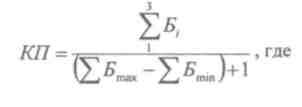


Depending on the value of the classification index, products shall be divided into 4 classes:
Class I - classification index - 0,38—0,55;
Class II - classification index - 0,56—0,70;
Class III - classification index - 0,71—0,92;
Class IV - classification index - 0,93—1,25
***) Climatic regions are determined based on the climatic zoning of Russia or similar regions of other states (depending on geographical latitude and local climatic conditions) in accordance with Table 3
CLIMATIC REGIONS (ZONES).
Table 3
Designation of the climatic region (zone) | Region | Representative cities |
IV (I) ( - 1,00*; 2,7 m/s**) | Russian Federation: Astrakhan Region, Kalmykia, Rostov Region, Stavropol Territory | Stavropol, Krasnodar, Novorossiysk, Rostov-on-Don, Sochi, Astrakhan |
III (II) (- 9,70C*; 5,6 m/s**) | Russian Federation: Bryansk Region, Vladimir Region, Voronezh Region, Ivanovo Region, Kaluga Region, Kursk Region, Leningrad Region, Lipetsk Region, Republic of Mari El, Republic of Mordovia, Moscow Region, Nizhny Novgorod Region, Novgorod Region, Oryol Region. Republic of Belarus: Minsk Region, Vitebsk Region, Mogilev Region, Grodno Region, Gomel Region, Brest Region. Republic of Kazakhstan: Aktobe Region, Atyrau Region, Almaty Region, Zhambyl Region, Kyzylorda Region, Mangystau Region, South Kazakhstan Region | Arkhangelsk, Saint Petersburg Moscow, Saratov, Murmansk, N. Novgorod, Tver, Smolensk, Tambov, Kazan, Volgograd, Samara. Minsk Almaty, |
II (III) (- 18,00C*; 3,6 m/s**) | Russian Federation: Altai Republic, Amur Region, Republic of Bashkortostan, Republic of Buryatia, Vologda Region, Irkutsk Region (except for the districts listed below) Republic of Karelia, Kemerovo Region, Kirov Region, Kostroma Region, Krasnoyarsk Territory (except for the districts listed below) Kurgan Region, Novosibirsk Region, Omsk Region, Orenburg Region, Perm Region, Sakhalin Region (except for the districts listed below) Sverdlovsk Region, Republic of Tatarstan, Tomsk Region (except for the districts listed below) Tyva Republic, Tyumen Region (except for the districts listed below) Udmurt Republic, Khabarovsk Territory (except for the districts listed below) Chelyabinsk Region, Chita Region. Republic of Kazakhstan: Akmola Region, East Kazakhstan Region, West Kazakhstan Region, Karaganda Region, Kostanay Region, Pavlodar Region, North Kazakhstan Region. | Novosibirsk, Omsk, Tomsk, Syktyvkar, Chelyabinsk, Chita, Tyumen, Tobolsk, Irkutsk, Khabarovsk, Perm, Orenburg. Astana |
IB (IV) ( - 410C*; 1,3 m/s**) | Arkhangelsk Region (except for the districts located beyond the Arctic Circle), Irkutsk Region (districts: Bodaybinsky, Katangsky, Kirensky, Mamsko-Chuysky), Kamchatka Territory, Republic of Karelia (north of 630 north latitude), Komi Republic (districts located south of the Arctic Circle), Krasnoyarsk Territory (territories of the Evenk Autonomous Okrug and of Turukhansky District located south of the Arctic Circle), Kuril Islands, Magadan Region (except for the districts listed below) Murmansk Region, Republic of Sakha (Yakutia) (except for Oymyakonsky District and the districts located north of the Arctic Circle), Sakhalin Region (districts: Noglikisky, Okhtinsky), Tomsk Region (districts: Bakcharsky, Verkhneketsky, Krivosheinsky, Molchanovsky, Parabelsky, Chainsky, and the territories of Aleksandrovsky and Kargasoksky Districts located south of 600 north latitude), Tyumen Region (districts of the Khanty-Mansi and Yamalo-Nenets Autonomous Okrugs, except for the districts located north of 600 north latitude), Khabarovsk Territory (districts: Ayano-Maysky, Nikolaevsky, Okhotsky, Polina Osipenko District, Tuguro-Chumikansky, Ulchsky | Yakutsk, Oymyakon, Verkhoyansk, Turukhansk, Urengoy, Nadym, Salekhard, Magadan, Olyokminsk |
IA ("special") (- 250C*; 6,8 m/s**) | Magadan Region (districts: Omsukchansky, Olsky, Severo-Evensky, Srednekansky, Susumansky, Tenkinsky, Khasynsky, Yagodninsky), Republic of Sakha (Yakutia) (Oymyakonsky District), Territory located north of the Arctic Circle (except for Murmansk Region), Tomsk Region (territories of Aleksandrovsky and Kargasoksky Districts located north of 600 north latitude), Tyumen Region (districts of the Khanty-Mansi and Yamalo-Nenets Autonomous Okrugs located north of 600 north latitude), Chukotka Autonomous Okrug | Norilsk, Surgut, Tiksi, Dikson |
Note. * - average air temperature of the winter months;
** - average wind speed from the most probable values.
ANNEX No. 4
to the Technical Regulation
of the Customs Union
"On Safety of Personal Protective Equipment"
(TR CU 019/2011)
IZPI note!
Annex 4 is to be amended by Decision of the Council of the Eurasian Economic Commission No. 40 of 13.03.2026 (enters into force upon expiry of 12 months from the date of its official publication).
F O R M S
of conformity confirmation for Personal Protective Equipment
Footnote. Annex No. 4 as amended by Decision of the Council of the Eurasian Economic Commission No. 55 of 28.05.2019 (enters into force upon expiry of 180 days from the date of its official publication).
Name of personal protective equipment | Form of conformity confirmation | Risk class | Certification or declaration scheme | Note | |||||||||||||||
I. Personal protective equipment against mechanical impacts | |||||||||||||||||||
1. Protective clothing against mechanical impacts, including against non-toxic dust and general industrial soiling | declaration of conformity | first | 1d, 2d | In accordance with the Standard Declaration Schemes | |||||||||||||||
11. Protective clothing for protection against water | declaration of conformity | first |
3d, | – " – | |||||||||||||||
2. Special clothing against possible entanglement in moving parts of mechanisms | declaration of conformity | first | 1d, 2d | -"- | |||||||||||||||
3. Foot protection PPE (footwear) against impacts | -"- | -"- | 3d, 4d | -"- | |||||||||||||||
4. Foot protection PPE (footwear) against vibration | declaration of conformity | first | 3d, 4d | In accordance with the Standard Declaration Schemes | |||||||||||||||
5. Foot protection PPE (footwear) against punctures and cuts | certification | second | 1s, 3s, 4s, 5s, 6s | In accordance with the Standard Certification Schemes | |||||||||||||||
51. Foot protection PPE (footwear) against general industrial soiling | declaration of conformity | first | 1d, 2d | In accordance with the Standard Declaration Schemes | |||||||||||||||
52. Foot protection PPE (footwear) against abrasion | declaration of conformity | first | 1d, 2d | – " – | |||||||||||||||
53. Foot protection PPE (footwear) against water and solutions of non-toxic substances | declaration of conformity | first | 1d, 2d | – " – | |||||||||||||||
6. Foot protection PPE (footwear) against slipping | declaration of conformity | first | 1d, 2d | In accordance with the Standard Declaration Schemes | |||||||||||||||
7. Head protection PPE (industrial safety helmets) | certification | second | 1s, 3s, 4s, 5s, 6s | In accordance with the Standard Certification Schemes | |||||||||||||||
8. Head protection PPE against impacts with stationary objects (lightweight industrial safety helmets and bump caps) | declaration of conformity | first | 3d, 4d | In accordance with the Standard Declaration Schemes | |||||||||||||||
9. Eye protection PPE (protective eyewear) | -"- | -"- | 3d, 4d | -"- | |||||||||||||||
10. Hearing protectors | certification | second | 1s, 3s, 4s | In accordance with the Standard Certification Schemes | |||||||||||||||
11. Face protection PPE (face shields) | declaration of conformity | first | 3d, 4d | In accordance with the Standard Declaration Schemes"; | |||||||||||||||
12. PPE against falls from a height and rescue equipment for escape from height (personal rescue devices) | certification | second | 1s, 3s, 4s, 5s, 6s | In accordance with the Standard Certification Schemes | |||||||||||||||
13. Hand protection against mechanical impacts, including against water and solutions of non-toxic substances | declaration of conformity | first | 3d, 4d | In accordance with the Standard Declaration Schemes | |||||||||||||||
14. Hand protection against vibration | declaration of conformity | first | 3d, 4d | -"- | |||||||||||||||
II. Personal protective equipment against chemical hazards | |||||||||||||||||||
15. Isolating protective suits against chemical hazards (including those used for protection against biological hazards) | certification | second | 1s, 3s, 4s, 5s, 6s | In accordance with the Standard Certification Schemes | |||||||||||||||
16. Isolating respiratory protective equipment | -"- | -"- | 1s, 3s, 4s, 5s, 6s | -"- | |||||||||||||||
17. Filtering respiratory protective equipment | certification | second | 1s, 3s, 4s, 5s, 6s | -"- | |||||||||||||||
18. Protective clothing, including filtering protective clothing, against chemical hazards | -"- | -"- | 1s, 3s, 4s, 5s, 6s | -"- | |||||||||||||||
19. Eye protection PPE (protective eyewear) against chemical hazards | -"- | -"- | 1s, 3s, 4s, 5s, 6s | -"- | |||||||||||||||
20. Hand protection against chemical hazards | -"- | -"- | 1s, 3s, 4s, 5s, 6s | -"- | |||||||||||||||
21. Foot protection PPE (footwear) against chemical hazards | -"- | -"- | 1s, 3s, 4s, 5s, 6s | -"- | |||||||||||||||
III. Personal protective equipment against radiation hazards | |||||||||||||||||||
22. Isolating protective suits for protection of the skin and respiratory organs against radioactive substances | certification | second | 1s, 3s, 4s, 5s, 6s | In accordance with the Standard Certification Schemes | |||||||||||||||
23. Respiratory protective equipment (including filtering equipment) against radioactive substances | -"- | -"- | 1s, 3s, 4s, 5s, 6s | -"- | |||||||||||||||
24. protective clothing against radioactive substances and ionising radiation; | -"- | -"- | 1s, 3s, 4s, 5s, 6s | -"- | |||||||||||||||
25. protective footwear against radioactive substances and ionising radiation; | -"- | -"- | 1s, 3s, 4s, 5s, 6s | -"- | |||||||||||||||
26. hand protection against radioactive substances and ionising radiation; | -"- | -"- | 1s, 3s, 4s, 5s, 6s | -"- | |||||||||||||||
27. eye and face protection PPE against ionising radiation. | -"- | -"- | 1s, 3s, 4s, 5s, 6s | -"- | |||||||||||||||
IV. Personal protective equipment against elevated and (or) reduced temperatures | |||||||||||||||||||
28. Protective clothing and hand protection against convective heat, thermal radiation, sparks and molten metal splash | certification | second | 1s, 3s, 4s, 5s, 6s | In accordance with the Standard Certification Schemes | |||||||||||||||
29. Protective clothing and hand protection against the effects of reduced temperature | certification | second | 1s, 3s, 4s, 5s, 6s | -"- | |||||||||||||||
30. Foot protection PPE (footwear) against elevated and (or) reduced temperatures, contact with heated surfaces, thermal radiation, sparks and molten metal splash | certification | second | 1s, 3s, 4s, 5s, 6s | -"- | |||||||||||||||
31. Head protection PPE against elevated (reduced) temperatures and thermal radiation | certification | second | 1s, 3s, 4s, 5s, 6s | -"- | |||||||||||||||
32. Eye protection PPE (protective eyewear) and face protection PPE (face shields) against molten metal splash and hot particles | certification | second | 1s, 3s, 4s, 5s, 6s | -"- | |||||||||||||||
V. Personal protective equipment against thermal hazards of an electric arc, non-ionising radiation and electric shock (including shielding PPE), and against the effects of static electricity | |||||||||||||||||||
33. Protective clothing against thermal hazards of an electric arc | certification | second | 1s, 3s, 4s, 5s, 6s | In accordance with the Standard Certification Schemes | |||||||||||||||
34. PPE for the face against thermal hazards of an electric arc (face shields) | certification | second | 1s, 3s, 4s, 5s, 6s | -"- | |||||||||||||||
35. Foot protection PPE (footwear) against thermal hazards of an electric arc | certification | second | 1s, 3s, 4s, 5s, 6s | -"- | |||||||||||||||
36. Flame-resistant underwear, flame-resistant gloves and flame-resistant balaclavas against thermal hazards of an electric arc | certification | second | 1s, 3s, 4s, 5s, 6s | -"- | |||||||||||||||
37. Special clothing and other PPE against electric shock (including shielding PPE) and against exposure to electrostatic, electric and electromagnetic fields | certification | second | 1s, 3s, 4s, 5s, 6s | -"- | |||||||||||||||
38. PPE for the eyes (protective eyewear) and the face (face shields) against exposure to electromagnetic fields | declaration of conformity | first | 3d, 4d | In accordance with the Standard Schemes of Declaration of Conformity | |||||||||||||||
39. PPE against exposure to static electricity | declaration of conformity | first | 3d, 4d | -"- | |||||||||||||||
40. Dielectric personal protective equipment against exposure to electric current | certification | second | 1s, 3s, 4s, 5s, 6s | In accordance with the Standard Schemes of Certification | |||||||||||||||
VI. High-visibility warning clothing | |||||||||||||||||||
41. High-visibility warning clothing | certification | second | 1s, 3s, 4s, 5s, 6s | In accordance with the Standard Schemes of Certification | |||||||||||||||
VII. Dermatological PPE (skin protection products) | |||||||||||||||||||
42. Dermatological PPE (skin protection products) | certification | second | 1s, 3s, 4s, 5s, 6s | In accordance with the Standard Schemes of Certification | |||||||||||||||
VIII. Integrated PPE | |||||||||||||||||||
43. Integrated PPE | for integrated PPE, conformity confirmation is carried out according to the forms and schemes of conformity confirmation of their constituent elements. The compatibility of PPE elements is declared by the manufacturer on the basis of its own evidence | ||||||||||||||||||
Annex No. 5
to the Technical Regulation
of the Customs Union
"On Safety of Personal Protective Equipment"
(TR CU 019/2011)
IZPI note!
Annex 5 is to be amended by Decision of the Council of the Eurasian Economic Commission No. 40 of 13.03.2026 (enters into force 12 months after the date of its official publication).
List of Personal Protective Equipment Subject to Mandatory Conformity Confirmation upon Placing on the Market in the Territory of the Member States
Footnote. Annex No. 5 as amended by Decision of the Council of the Eurasian Economic Commission No. 55 of 28.05.2019 (enters into force 180 days after the date of its official publication).
1. Personal protective equipment against mechanical hazards
Protective clothing against mechanical hazards, including against possible entanglement in moving parts of machinery
Men's and women's suits for protection against general industrial soiling and mechanical impacts (including as separate items: jacket, trousers, bib overalls)
Men's and women's suits for protection against non-toxic dust
Men's and women's coats, short coats and raincoats for protection against water
Men's and women's suits for protection against water
Men's miner suits for protection against mechanical impacts and general industrial soiling
Men's and women's coveralls for protection against non-toxic dust, mechanical impacts and general industrial soiling
Special aprons
Men's and women's work coats and special-purpose coats
Hand protection against mechanical hazards
Sewn protective mittens and gloves, except those intended for firefighters
Knitted glove products
Hand protection against water and non-toxic substances
Mittens and gloves for protection against water and solutions of non-toxic substances
Hand protection against vibration
Foot protection against vibration
Anti-vibration protective footwear
Foot protection against impacts
Protective footwear made of leather and other materials for protection against mechanical impacts (impacts, punctures, cuts)
Protective leather footwear for protection against general industrial soiling and mechanical impacts
Foot protection against slipping
Protective footwear for protection against slipping, including on greasy surfaces
Foot protection against water and solutions of non-toxic substances
Special moulded rubber boots or injection-moulded boots made of polymeric materials for protection against water and solutions of non-toxic substances
Head protection
Industrial safety helmets and bump caps
Eye protection
Protective eyewear
Face protection
Face shields
PPE against falls from a height
Safety belts, their constituent parts and replacement parts for them
Hearing protectors
Ear muffs and their replacement parts
Ear plugs
2. Personal protective equipment against chemical hazards
Isolating protective suits against chemical hazards (including those used for protection against biological hazards)
Isolating protective suits, including those with forced air supply
Isolating respiratory protective equipment, including self-rescuers, except those intended for firefighters
Respiratory protective equipment based on chemically bound oxygen, isolating apparatus based on chemically bound oxygen (self-rescuers)
Respiratory protective equipment with compressed air (breathing apparatus)
Respiratory protective equipment with compressed oxygen (breathing apparatus)
Rubber facepieces for personal protective equipment, except products for firefighters
Filtering respiratory protective equipment (including self-rescuers) and replacement elements for it
Particle filtering respiratory protective equipment with a filtering half mask
Particle filtering respiratory protective equipment with an isolating facepiece
Gas-filtering respiratory protective equipment with an isolating facepiece
Combined gas-and-particle filtering respiratory protective equipment with an isolating facepiece
Filtering self-rescuers
Rubber facepieces for personal protective equipment, except products for firefighters
Replacement filters (filter elements) for personal protective equipment
Protective clothing, including filtering protective clothing against chemical hazards
Special clothing for limited protection against toxic substances
Men's and women's suits for protection against mechanical impacts, water and alkalis
Men's suits for protection against oil and petroleum products
Women's suits for protection against oil and petroleum products
Men's suits for protection against acids
Women's suits for protection against acids
Eye protection against chemical hazards
Protective eyewear
Hand protection against chemical hazards
Gloves
Glove-box gloves
Foot protection PPE (footwear) against chemical hazards
Protective footwear made of leather and other materials for protection against oil, petroleum products, acids, alkalis, non-toxic and explosive dust
Moulded rubber boots protecting against oil, petroleum products and fats (except products for firefighters)
Special moulded rubber boots protecting against water, mineral oils and mechanical impacts (except products for firefighters)
3. Personal protective equipment against radiation hazards (external ionising radiation and radioactive substances):
Isolating protective suits for protection of the skin and respiratory organs against radioactive substances
Respiratory protective equipment (including filtering equipment) against radioactive substances
Protective clothing against radioactive substances and ionising radiation
Protective footwear against radioactive substances and ionising radiation
Hand protection against radioactive substances and ionising radiation
Eye and face protection against ionising radiation
Filtering respiratory protective equipment against radioactive substances
Filtering respiratory protective equipment against radioactive substances
4. Personal protective equipment against high and (or) low temperatures
Protective clothing and hand protection against convective heat, thermal radiation, sparks and molten metal splash, except products for firefighters
Men's suits for protection against elevated temperatures
Women's suits for protection against elevated temperatures
Men's suits for protection against sparks and molten metal splash
Gloves and mittens made of various materials for protection against elevated temperatures
Protective clothing and hand protection against low temperatures
Men's suits for protection against low temperatures (including as separate items: jacket, trousers, bib overalls)
Men's coveralls for protection against low temperatures
Women's suits for protection against low temperatures (including as separate items: jacket, trousers, bib overalls)
Women's coveralls for protection against low temperatures
Gloves and mittens made of various materials for protection against low temperatures
Foot protection PPE (footwear) against high and (or) low temperatures, thermal radiation, sparks and molten metal splash
Protective footwear made of leather and other materials for protection against elevated temperatures, except footwear for firefighters
Protective footwear made of leather and other materials for protection against low temperatures
Head protection against high and (or) low temperatures and thermal radiation
Industrial safety helmets and bump caps
Eye and face protection against molten metal splash and hot particles
Protective eyewear
Face shields
5. Personal protective equipment against thermal effects of an electric arc, non-ionising radiation, electric shock and static electricity
Protective clothing against thermal effects of an electric arc
Special clothing for protection against thermal effects of an electric arc
Face protection against thermal effects of an electric arc
Face shields
Foot protection PPE (footwear) against thermal effects of an electric arc
Protective leather footwear for protection against elevated temperatures, except footwear for firefighters
Flame-resistant underwear and flame-resistant balaclavas against thermal effects of an electric arc
Flame-resistant underwear against thermal effects of an electric arc
Flame-resistant balaclavas against thermal effects of an electric arc
Special clothing and other personal protective equipment against electrostatic, electric, magnetic and electromagnetic fields, including personal protective equipment against static electricity
Individual shielding kit for protection against power-frequency electric fields
Eye and face protection against electromagnetic fields
Protective eyewear
Face shields
Dielectric personal protective equipment against electric current
Dielectric protective footwear made of polymeric materials
Dielectric rubber protective footwear
Special dielectric aprons
Special dielectric gloves
6. High-visibility warning clothing
High-visibility warning clothing
7. Integrated PPE
Integrated PPE are determined by the protection codes of the personal protective equipment included in them
8. Dermatological PPE (skin protection products)
Protective products:
with hydrophilic, hydrophobic or combined action
against low temperatures and wind
against ultraviolet radiation of ranges A, B, C
against biological hazards: insects, microorganisms
Cleansing products: creams, pastes, gels
Regenerating and restorative products - creams, emulsions
IZPI note!The Technical Regulation is to be supplemented with Annexes 6 and 7 in accordance with Decision of the Council of the Eurasian Economic Commission No. 40 of 13.03.2026 (enters into force 12 months after the date of its official publication).
APPROVED
by Decision of the Commission
of the Customs Union
No. 878 of 9 December 2011
(as amended by Decision of the Board
of the Eurasian Economic
Commission
No. 37 of 6 March 2018)
LIST
of standards, the voluntary application of which ensures compliance with the requirements of the Technical Regulation of the Customs Union "On Safety of Personal Protective Equipment" (TR CU 019/2011)
Footnote. The List ceased to be in force by Decision of the Board of the Eurasian Economic Commission No. 30 of 03.03.2020 (enters into force upon expiry of 30 calendar days from the date of its official publication).
APPROVED
by Decision of the Commission
of the Customs Union
No. 878 of 9 December 2011
(as amended by Decision of the Board
of the Eurasian Economic
Commission
No. 37 of 6 March 2018)
LIST
of standardisation documents containing rules and methods of research (tests) and measurements, including sampling rules, necessary for the application and fulfilment of the requirements of the Technical Regulation of the Customs Union "On Safety of Personal Protective Equipment" (TR CU 019/2011) and for conformity assessment of objects of technical regulation
Footnote. The List ceased to be in force by Decision of the Board of the Eurasian Economic Commission No. 30 of 03.03.2020 (enters into force upon expiry of 30 calendar days from the date of its official publication).


