

In accordance with Article 3 of the Treaty on the Eurasian Economic Commission of 18 November 2011, the Council of the Eurasian Economic Commission has decided:
1. To adopt the Technical Regulation of the Customs Union "On Safety of Agricultural and Forestry Tractors and Trailers Thereto" (TR CU 031/2012) (attached).
2. To establish that the Technical Regulation of the Customs Union "On Safety of Agricultural and Forestry Tractors and Trailers Thereto" enters into force on 15 February 2015.
3. This Decision enters into force upon expiry of 30 calendar days from the date of its official publication.
Members of the Council of the Eurasian Economic Commission:
For the Republic |
For the Republic |
For the Russian |
S. Rumas | K. Kelimbetov | I. Shuvalov |
ADOPTED
by Decision of the Council of the Eurasian
Economic Commission
No. 60 of 20 July 2012
Footnote. Throughout the text, the words "this Technical Regulation of the Customs Union" in the relevant case shall be replaced by the words "this Technical Regulation" in the relevant case, the words "single customs territory of the Customs Union" in the relevant case have been replaced by the words "customs territory of the Union" in the relevant case, the words "Member State of the Customs Union" in the relevant number and case shall be replaced by the words "Member State" in the relevant number and case, and the words "UNECE Regulations" in the relevant case shall be replaced by the words "UN Regulations" in the relevant case by Decision of the Council of the Eurasian Economic Commission No. 127 of 29.10.2021 (enters into force upon expiry of 180 calendar days from the date of its official publication).
TECHNICAL REGULATION
OF THE CUSTOMS UNION
TR CU 031/2012
On Safety of Agricultural and Forestry
Tractors and Trailers Thereto
CONTENTS
Preface
Article 1 Scope
Article 2 Definitions
Article 3 Rules of circulation on the market
Article 4 Safety requirements
Article 5 Ensuring compliance with safety requirements
Article 6 Conformity confirmation
Article 7 Marking with the single mark of product circulation on the market
of the Member States of the Customs Union
Article 8 Safeguard clause
Annex 1 List of components of tractors or trailers subject
to the requirements of the Technical Regulation
of the Customs Union "On Safety of Agricultural and
Forestry Tractors and Trailers Thereto"
(TR CU 031/2012)
Annex 2 Forms of technical descriptions submitted
by the manufacturer (person authorised by the manufacturer) or importer
for the purpose of conformity confirmation of tractors and trailers
with the requirements of the Technical Regulation of the Customs Union
"On Safety of Agricultural and Forestry
Tractors and Trailers Thereto" (TR CU 031/2012)
Annex 3 Classification of tractors and trailers by categories
and types in accordance with the Technical Regulation of the Customs
Union "On Safety of Agricultural and Forestry
Tractors and Trailers Thereto" (TR CU 031/2012)
Annex 4 List of safety requirements applicable to
tractors and trailers in accordance with the Technical Regulation
of the Customs Union "On Safety of Agricultural and
Forestry Tractors and Trailers Thereto"
(TR CU 031/2012)
Annex 5 Safety requirements
applicable to tractors and trailers according to Annex 4 to
this Technical Regulation of the Customs Union, in
accordance with the Technical Regulation of the Customs Union
"On Safety of Agricultural and Forestry
Tractors and Trailers Thereto" (TR CU 031/2012)
Annex 6 Manufacturer's plate of the tractor and classification
of technically permissible towable masses in accordance with
the Technical Regulation of the Customs Union "On Safety
of Agricultural and Forestry Tractors and Trailers
Thereto" (TR CU 031/2012)
PREFACE
1. This Technical Regulation has been developed in accordance with the Agreement on Common Principles and Rules of Technical Regulation in the Republic of Belarus, the Republic of Kazakhstan and the Russian Federation of 18 November 2010.
2. This Technical Regulation has been developed to establish, in the customs territory of the Eurasian Economic Union (hereinafter – the Union), uniform requirements for wheeled and track-laying agricultural and forestry tractors and trailers thereto that are mandatory for application and compliance, and to ensure the free movement of wheeled and track-laying agricultural and forestry tractors and trailers placed on the market in the customs territory of the Union.
Footnote. Paragraph 2 as amended by Decision of the Council of the Eurasian Economic Commission No. 127 of 29.10.2021 (enters into force upon expiry of 180 calendar days from the date of its official publication).3. If other Technical Regulations of the Union establishing requirements for tractors and trailers have been adopted in respect of tractors and trailers, the tractors and trailers shall comply with the requirements of those Technical Regulations of the Union that apply to them.
Footnote. Paragraph 3 with amendments introduced by Decision of the Council of the Eurasian Economic Commission No. 127 of 29.10.2021 (enters into force upon expiry of 180 calendar days from the date of its official publication).Article 1.SCOPE
1. This Technical Regulation applies to newly manufactured and imported wheeled and track-laying agricultural and forestry tractors (hereinafter – tractors) and trailers thereto (hereinafter – trailers) placed on the market in the customs territory of the Union, irrespective of the country of origin.
This Technical Regulation applies to tractors and trailers with a maximum design speed of not less than 6 km/h.
The requirements of this Technical Regulation also apply to newly manufactured and imported components of tractors and trailers (hereinafter – components) that affect their safety and are placed on the market in the customs territory of the Union separately from tractors and trailers, irrespective of the country of origin. The list of components subject to the requirements of this Technical Regulation of the Customs Union is given in Annex 1 to this Technical Regulation of the Customs Union.
2. This Technical Regulation does not apply to:
compact tractors and trailers thereto;
special-purpose trailers;
trailer chassis;
tractors, trailers and components placed on the market in the customs territory of the Union before the entry into force of this Technical Regulation and used in the customs territory of the Union.
3. This Technical Regulation establishes requirements for tractors, trailers and their components in order to protect human life and health and property, protect the environment, and prevent actions that mislead consumers (users) regarding their intended use and safety.
Footnote. Article 1 with an amendment introduced by Decision of the Council of the Eurasian Economic Commission No. 127 of 29.10.2021 (enters into force upon expiry of 180 calendar days from the date of its official publication).Article 2. Definitions
For the purposes of applying this Technical Regulation, the following terms are used with the following meanings:
"ballast weights" means weights intended to be mounted on a tractor to add load to the front and (or) rear axle;
"towing device" means a structural element of a tractor located at the front of the tractor that allows attachments (a tow bar, a tow rope, etc.) to be connected for towing the tractor;
"putting into service" means a documented event that records the readiness of a tractor or trailer for use as intended;
"tractor height" means the distance measured vertically between the ground surface and the point of the tractor that is farthest from the ground surface, excluding the antenna. When the height is determined, the tractor shall be fitted with new tyres with the largest static radius specified by the manufacturer;
"dual-fuel engine" means an engine designed to run simultaneously on diesel fuel and gaseous fuel. The quantity of one fuel consumed in relation to the other may vary depending on the operating mode and the engine type;
"tractor length" means the distance measured horizontally between the vertical planes that are perpendicular to the longitudinal axis of the tractor and pass through its outermost points, excluding all mirrors, starting handles, and front or side position lamps;
"permissible towable mass" means the mass that a tractor can tow. The permissible towable mass may include the mass of one or more towed trailers and the mass of agricultural or forestry machines;
"manufacturer" means a legal entity or a natural person registered as an individual entrepreneur that, in its own name, produces and sells a tractor, trailer or component and is responsible for its conformity with the requirements of this Technical Regulation;
"tractor (trailer) category" means a characteristic of a tractor (trailer) used to establish the requirements applicable to it in this Technical Regulation;
"component" means a constituent part of a tractor or trailer that is supplied to assembly production and (or) as replacement (spare) parts for a tractor or trailer in service;
"forestry tractor" means a tractor for performing technological operations in reforestation and forest tending;
"maximum design speed of the tractor" means the speed calculated on the basis of the rated speed of the engine crankshaft, the lowest transmission gear ratio and the absence of wheel slip;
"compact tractor" means an agricultural or forestry tractor with a rated engine power of up to 19 kW, designed for work on small and irregularly shaped plots, allotments, terraces and farms, in orchards, and in park maintenance and municipal services;
"circulation of a tractor, trailer or component on the market" means the movement of a tractor, trailer or component from the manufacturer to the acquirer (consumer) after its supply or import (including after dispatch from the manufacturer's warehouse or shipment without warehousing) for the purpose of distribution in the territories of the Member States of the Union in the course of commercial activity, free of charge or for consideration;
"trailer" means a vehicle towed by a tractor and intended for the carriage of goods for various purposes, including agricultural or forestry goods.
Trailers also include trailers that transfer part of their vertical load to the towing tractor (semi-trailers);
"special-purpose trailer" means a trailer that meets one or more of the following conditions:
the trailer is not intended for use in road traffic without additional road safety measures specified by the manufacturer;
the trailer consists of a trailer chassis and non-removable special equipment that allows only certain types of goods to be carried (open platforms for carrying rolls and bales of hay and straw, trailers for carrying animals, poultry, silage and haylage, etc.);
the trailer is fitted with loading and unloading equipment and (or) special equipment intended for specific technological processes and operations (for example, self-contained chippers). In this case, the carriage of goods may be performed at the same time or in addition (fertilizer-spreading trailers, timber trailers, etc.).
Special-purpose trailers also include trailers that meet one or more of the above conditions and also:
transfer part of their vertical load to the towing tractor (special-purpose semi-trailers);
have overall dimensions that exceed the dimensions established by subparagraph 8.1.2 of Annex 5;
"tyre rolling radius" means the ratio of the longitudinal component of the translational speed of a wheel to its angular speed;
"tipping trailer" means a trailer equipped with a mechanism that raises and tilts the platform during unloading to one or both sides and to the rear, or to the rear only;
"agricultural tractor" means a tractor for performing technological operations in crop production and (or) livestock farming;
"certification tests" means tests of the representative sample (samples) of a tractor, trailer or component, on the basis of whose results a conclusion is drawn on the conformity of the tractor, trailer or component with the requirements of this Technical Regulation;
"unladen mass of the tractor" means the mass of the tractor in running order, without ballast, including the roll-over protective structure, with coolant, lubricants, fuel (tank filled to at least 90 % of its nominal capacity), tools and the operator;
"slinging diagram" means a diagram that shows how lifting equipment is attached during transportation;
"Technical Service" means an authorised organisation that conducts tests for the type approval of vehicles under the Agreement concerning the Adoption of Uniform Technical Prescriptions for Wheeled Vehicles, Equipment and Parts which can be Fitted and/or be Used on Wheeled Vehicles and the Conditions for Reciprocal Recognition of Approvals Granted on the Basis of these Prescriptions, done at Geneva on 20 March 1958 (hereinafter, the 1958 Agreement);
"technically permissible towable mass" means the maximum mass, specified by the tractor manufacturer, that the tractor can tow;
"technically permissible maximum mass of the tractor" means the maximum mass of the tractor specified by the manufacturer on the basis of the tyre load capacity, the design characteristics of the tractor elements and the ability to ensure the specified characteristics and safety performance. It includes the unladen (operating) mass of the tractor in its heaviest configuration, the nominal ballast mass and the nominal payload;
"technical description" means a document containing the technical and design characteristics and other information that allows a tractor or trailer to be identified, submitted by the manufacturer (person authorised by the manufacturer) or seller for the purposes of conformity confirmation;
"type of tractor, trailer or component" means tractors, trailers or components that have a set of identical design features recorded in the technical descriptions and are produced by one manufacturer. A type of tractor, trailer or component may have different variants and versions;
"tractor" means a wheeled or track-laying power-driven vehicle that has at least 2 axles and a maximum design speed of not less than 6 km/h, that uses mainly its tractive power, and that is designed mainly to tow, push, carry or actuate machines and working equipment;
"tractor-trailer combination" means rolling stock consisting of a tractor, a semi-trailer and (or) one or more trailers;
"coupling device (CD)" means a device whose connecting elements, mounted on the tractor and on the trailer, provide the mechanical connection between them;
"person authorised by the manufacturer" means a legal entity or a natural person registered as an individual entrepreneur in the territory of a Member State of the Union in accordance with the procedure established by the legislation of that Member State that, on the basis of a contract with the manufacturer, including a foreign manufacturer, acts on behalf of that manufacturer in the conformity assessment and placing on the market of a tractor, trailer or component in the customs territory of the Union, and is responsible for any nonconformity of the tractor, trailer or component with the requirements of this Technical Regulation;
"trailer chassis" means a constituent part of a trailer intended for mounting one or more of the following devices:
platforms, bodies and other similar devices;
technological equipment;
lifting (loading and unloading) equipment.
Trailer chassis also include chassis of trailers that transfer part of their vertical load to the towing tractor (semi-trailer chassis);
"tractor width" means the distance measured horizontally between the vertical planes that are parallel to the longitudinal axis of the tractor and pass through its outermost points, excluding all mirrors, direction indicators, front or rear side position lamps, any parking lamps, tyre deformation caused by the weight of the tractor, and retractable elements. Retractable elements may include, for example, folding steps;
"emission class" means a classification code that characterises the design of a tractor or of a compression-ignition internal combustion engine according to the level of pollutant emissions.
Footnote. Article 2 as amended by Decision of the Council of the Eurasian Economic Commission No. 127 of 29.10.2021 (enters into force upon expiry of 180 calendar days from the date of its official publication).Article 3. RULES OF CIRCULATION ON THE MARKET
1. Tractors, trailers and components are placed on the market if they conform to this Technical Regulation of the Customs Union and to other Technical Regulations of the Customs Union that apply to them, provided that they have undergone conformity confirmation in accordance with Article 6 of this Technical Regulation of the Customs Union and in accordance with other Technical Regulations of the Customs Union that apply to them.
2. Tractors, trailers and components whose conformity with the requirements of this Technical Regulation of the Customs Union has not been confirmed shall not bear the single mark of product circulation on the market of the Member States of the Union (hereinafter, the Member States) and shall not be placed on the market.
3. Tractors, trailers and components that do not bear the single mark of circulation on the market of the Member States shall not be placed on the market.
Footnote. Article 3 as amended by Decision of the Council of the Eurasian Economic Commission No. 127 of 29.10.2021 (enters into force upon expiry of 180 calendar days from the date of its official publication).Article 4. SAFETY REQUIREMENTS
1. The design of tractors and trailers shall ensure safety at all stages of the life cycle.
2. The classification of tractors and trailers by category and type is given in Annex 3 to this Technical Regulation of the Customs Union.
The classification of tractors and compression-ignition internal combustion engines according to the level of pollutant emissions contained in the exhaust gases of tractor engines is given in Annex 3 to this Technical Regulation.
3. The list of safety requirements for tractors of categories T1, T2, T3, T5, C (except C4) and trailers of category R, as well as of the standards and UN Regulations establishing the safety requirements and the methods for their verification, is given in Table 4.1 of Annex 4 to this Customs Union Technical Regulation.
4. The list of safety requirements for special-purpose tractors of categories T4, C4, as well as of the standards and UN Regulations establishing the safety requirements and the methods for their verification, is given in Table 4.2 of Annex 4 to this Customs Union Technical Regulation.
5. The safety requirements for tractors and trailers according to Annex 4 to this Customs Union Technical Regulation are given in Annex 5 to this Customs Union Technical Regulation.
6. Components placed on the market in the customs territory of the Union as replacement (spare) parts for tractors or trailers in service shall not, when installed on a tractor or trailer, reduce its level of safety relative to the level of safety at the time the tractor or trailer was placed on the market in the customs territory of the Union.
The safety requirements for components of tractors or trailers and the methods for their verification are given in Annex 1 to this Technical Regulation.
The requirements for tractor engines placed on the market as components for tractors that were placed on the market in the customs territory of the Union before the date of entry into force of this Technical Regulation, or whose production was discontinued in connection with the entry into force of this Technical Regulation, shall, with regard to pollutant emissions, remain at the level in effect at the time such tractors were placed on the market in the customs territory of the Union or at the time their production ended.
7. The safety requirements for tractors, trailers and components in accordance with UN Regulations shall apply in accordance with their scope and taking into account the transitional provisions established by the UN Regulations.
It is permitted to apply the requirements for tractors and engines of a higher emission class earlier than the dates established by this Technical Regulation, as well as to apply the requirements of later series of amendments to UN Regulations than those specified in this Technical Regulation.
Footnote. Article 4 as amended by Decision of the Council of the Eurasian Economic Commission No. 127 of 29.10.2021 (enters into force upon expiry of 180 calendar days from the date of its official publication).Article 5. ENSURING CONFORMITY WITH
SAFETY REQUIREMENTS
1. Conformity of tractors and trailers with this Customs Union Technical Regulation is ensured by fulfilling its requirements directly and by fulfilling the requirements of the standards and UN Regulations, as well as the requirements given in Annexes 4 and 5 to this Customs Union Technical Regulation.
Conformity of components with this Customs Union Technical Regulation is ensured by fulfilling its requirements directly and by fulfilling the requirements of the standards and UN Regulations given in Annex 1 to this Customs Union Technical Regulation.
2. The methods for verifying tractors and trailers that are necessary for conformity assessment (confirmation) are established in the standards and UN Regulations listed in Annex 4 to this Customs Union Technical Regulation.
The methods for verifying components that are necessary for conformity assessment (confirmation) are established in the standards and UN Regulations listed in Annex 1 to this Customs Union Technical Regulation.
Article 6. Conformity Confirmation
1. Before being placed on the market in the customs territory of the Union, tractors, trailers and components shall undergo conformity confirmation with the requirements of this Technical Regulation.
Conformity confirmation is carried out in accordance with this Article and on the basis of the standard conformity assessment schemes approved by the Eurasian Economic Commission, also taking into account paragraph 5 of the standard conformity assessment schemes approved by Decision of the Council of the Eurasian Economic Commission No. 44 of 18 April 2018.
The list of components of tractors or trailers that are subject to the requirements of this Technical Regulation and whose conformity confirmation is carried out separately from tractors and trailers is given in Annex 1 to this Technical Regulation.
For the components specified in Annex 1 to this Technical Regulation that are produced and supplied by manufacturers of tractors or trailers for their own assembly production, conformity confirmation need not be carried out. In this case, the manufacturer of tractors or trailers shall have available for these components test reports issued by an accredited testing laboratory (centre) included in the Unified Register of Conformity Assessment Bodies of the Union (hereinafter – accredited testing laboratory (centre)), or communications concerning type approval under UN Regulations issued in accordance with the 1958 Agreement (hereinafter – type-approval communications), or certificates of conformity with individual requirements of this Technical Regulation.
Certification tests of tractors and trailers are carried out only if test reports issued by an accredited testing laboratory (centre), or type-approval communications, or certificates of conformity are available for the components specified in Annex 1 to this Technical Regulation.
One certificate of conformity is issued for tractors and trailers of one type, covering the variants and versions (if any) included in the technical description. The forms of the technical description are given in Annex 2 to this Technical Regulation.
For components such as lighting and light-signalling devices, one certificate of conformity may be issued for different functional groups of lamps.
2. Tractors, trailers or components are subject to conformity confirmation in the form of certification (schemes 1c, 2c, 3c, 4c).
3. Certification of series-produced tractors, trailers or components is carried out under scheme 1s or 2s. Tractors, trailers or components are submitted for certification by the manufacturer (person authorised by the manufacturer).
Certification of a batch of tractors, trailers or components is carried out under scheme 3s, and of a single item under scheme 4s. A batch (single item) of tractors, trailers or components manufactured in the customs territory of the Union is submitted by the manufacturer (person authorised by the manufacturer); a batch (single item) of tractors, trailers or components imported into the customs territory of the Union is submitted by the seller or the manufacturer (person authorised by the manufacturer).
4. Certification of tractors, trailers or components is carried out by an accredited conformity assessment body (including a certification body) included in the Unified Register of Conformity Assessment Bodies of the Union (hereinafter – certification body).
Testing for certification purposes is carried out by an accredited testing laboratory (centre).
When certification is carried out with regard to the safety requirements for tractors, trailers or components in accordance with UN Regulations, type-approval communications may be used.
5. When certifying tractors, trailers or components (schemes 1s, 2s, 3s, 4s):
5.1. the manufacturer (person authorised by the manufacturer) or the seller submits to the certification body a set of documents for the tractors, trailers or components confirming their conformity with the requirements of this Technical Regulation, which includes:
the technical description of the tractor or trailer (for certification of a tractor or trailer);
the technical documentation for the component as a whole (design, process or operating documentation (if any)) (for certification of components);
the operating documentation for the tractor or trailer (for certification of a tractor or trailer);
a copy of the certificate of conformity of the quality management system (scheme 2s);
a copy of the report of the last audit of the quality management system (scheme 2s);
shipping documents (for a batch (single item) of tractors, trailers or components (schemes 3s, 4s), containing information that ensures identification of the batch (single item) of tractors, trailers or components (including quantity and identification (serial) numbers);
a copy of the contract with the manufacturer (including a foreign manufacturer) providing for ensuring the conformity of the products supplied to the customs territory of the Union with the requirements of this Technical Regulation and for liability for non-conformity of such products with these requirements (for a person authorised by the manufacturer);
information on the registration or record (individual, identification) number of the applicant assigned upon State Registration of a legal entity or of a natural person as an individual entrepreneur in accordance with the legislation of the Member States.
The said set of documents may also include:
a) test reports issued by an accredited testing laboratory (centre) with regard to individual requirements under Tables 4.1 and 4.2 of Annex 4 to this Technical Regulation (for tractors and trailers) and the requirements for components given in Annex 1 to this Technical Regulation. Such test reports, including reports on the basis of which other certificates of conformity were previously issued, may be submitted subject to the following conditions:
no more than 5 years have elapsed since the date of approval of the test report by the accredited testing laboratory (centre);
the submitted test report has not been declared invalid in accordance with the legislation of the Member States;
sampling for the tests on the basis of which the test report was issued was carried out by the certification body;
the tested sample is a representative sample of the products submitted for certification;
there are no changes in the design of the tractors, trailers or components affecting their safety;
since the date of approval of the test report by the accredited testing laboratory (centre), there have been no changes to the safety requirements and the methods for their verification (including those specified in standards or UN Regulations) that are established in this Technical Regulation and conformity with which was assessed during the tests;
there are no cases, established by the state control (supervision) body of a Member State responsible for compliance with the requirements of this Technical Regulation, of non-compliance by the manufacturer with the requirements of this Technical Regulation when placing on the market in the customs territory of the Union tractors, trailers or components whose representative samples were tested as confirmed by the test report;
b) type-approval communications. Paper copies of type-approval communications certified by the manufacturer (person authorised by the manufacturer) may be submitted. Type-approval communications in English or French do not require translation into Russian;
c) certificates of conformity with individual requirements of this Technical Regulation;
5.2. the manufacturer shall take all necessary measures to ensure that the production process is stable and ensures the conformity of the manufactured tractors, trailers or components with the requirements of this Technical Regulation;
5.3. with regard to requirements for which test reports issued by an accredited testing laboratory (centre) or type-approval communications have been submitted, no tests shall be carried out;
5.4. the certification body shall:
5.4.1. review the application for conformity confirmation and take a decision on whether certification can be carried out. The decision shall state:
the applicability and sufficiency of the submitted documents;
the need for tests to obtain missing supporting evidence;
the need for and time frame of the production assessment.
If, for components of tractors and trailers whose conformity confirmation is provided for by the UN Regulations listed in Annex 1 to this Technical Regulation, type-approval communications are submitted as supporting evidence, the certification body, after identifying the components, issues a certificate of conformity in accordance with subparagraph 5.4.6 of this paragraph on the basis of the submitted type-approval communication without performing the work specified in subparagraphs 5.4.2 – 5.4.5 of this paragraph. In the certificate of conformity, the letter "c" is indicated instead of the certification scheme;
5.4.2. in order to obtain missing supporting evidence:
selects a sample (samples) and identifies the tractors, trailers or components by establishing that their characteristics are identical to the features established in Article 1 of this Technical Regulation, the provisions established by Article 4 of this Technical Regulation and the documents specified in subparagraph 5.1 of this paragraph;
sends the sample (samples) of the tractor, trailer or component to an accredited testing laboratory (centre) for testing for conformity with the requirements of this Technical Regulation;
5.4.3. carries out a production assessment (scheme 1c). The objects of verification during the production assessment are:
technical documentation (design and (or) engineering and (or) process and (or) operating documentation) for the products;
competence of the personnel performing work that affects the conformity of products placed on the market in the customs territory of the Union with the requirements of this Technical Regulation;
production infrastructure (the set of facilities located at the manufacturer's premises and necessary for organising production (production premises, transport, etc.));
equipment (process equipment), as well as its maintenance and repair;
management of inspection, measuring and test equipment;
measuring instruments necessary to ensure the conformity of the products with the requirements of this Technical Regulation;
incoming inspection of purchased products affecting the safety indicators of the products being certified (raw materials, materials, component parts);
acceptance inspection and periodic testing of finished products related to the control of characteristics for which this Technical Regulation establishes mandatory requirements;
marking of finished products, and the conditions of their storage, packaging and preservation;
interaction with the consumer (including the handling of complaints and claims regarding the products of this manufacturer);
product identification and traceability;
corrective and preventive actions;
5.4.4. assesses the capability of the certified quality management system for the production, or the design and production, of tractors, trailers or components to ensure the consistent manufacture of the tractors, trailers or components being certified that conform to the requirements of this Technical Regulation (scheme 2c);
5.4.5. summarises the results of the certification work carried out in accordance with subparagraphs 5.4.1 – 5.4.4 of this paragraph and the selected certification scheme;
5.4.6. issues a certificate of conformity in the uniform form approved by Decision of the Board of the Eurasian Economic Commission No. 293 of 25 December 2012, with an annex to the certificate of conformity containing the information specified in Section IV of Annex 2 to this Technical Regulation.
The validity period of the certificate of conformity for series-produced tractors, trailers or components is 5 years. For a batch (single item) of tractors, trailers or components, no validity period is established, and the certificate is limited by a quantitative quota. In this case, the certificate of conformity indicates the distinguishing features of the product batch – identification numbers, information on the shipping documents or other features of the batch;
5.5. the manufacturer (person authorised by the manufacturer) or seller:
5.5.1. ensures marking with the single mark of product circulation on the market of the Member States in accordance with the procedure approved by Decision of the Customs Union Commission No. 711 of 15 July 2011, in the cases provided for by Article 7 of this Technical Regulation;
5.5.2. upon completion of conformity confirmation with the requirements of this Technical Regulation, compiles a set of documents for the tractors, trailers or components, which includes:
the documents specified in subparagraph 5.1 of this paragraph;
the test report (reports) in the cases provided for by subparagraph 5.4.2 of this paragraph;
the results of the production assessment in the cases provided for by the certification scheme;
the certificate of conformity;
5.6. the certification body carries out surveillance of certified tractors, trailers or components not more often than once a year, but not less often than once every two years, by means of:
testing of the sample (samples) in an accredited testing laboratory (centre) and (or) a production assessment (scheme 1c);
testing of the sample (samples) in an accredited testing laboratory (centre) and (or) analysis of the results of surveillance of the certified quality management system (scheme 2c).
Surveillance of components certified on the basis of type-approval communications is carried out by the certification body by analysing the results of the conformity assessment of production carried out by Technical Services authorised by the states that are Contracting Parties to the 1958 Agreement, and (or) by testing the components;
5.7. if it becomes necessary to make changes to the design of tractors, trailers and engines for which a certificate of conformity has been issued, or to their production (manufacturing) technology, or if the information specified in the technical description of the tractor or trailer changes, the manufacturer (person authorised by the manufacturer), before placing the tractors, trailers and engines on the market in the customs territory of the Union, notifies the certification body that issued the certificate of conformity thereof in writing. The notification is accompanied by documents confirming the scope and characteristics of the changes made (technical description, design documentation, drawings, specification, etc.).
Within 10 working days from the date of receipt of the notification from the manufacturer (person authorised by the manufacturer), on the basis of an analysis of the submitted documents, the certification body decides whether additional tests, with determination of their scope, and (or) a production assessment (if a production assessment is provided for by the certification scheme for such products) are necessary or not necessary. The certification body notifies the manufacturer (person authorised by the manufacturer) of the decision taken.
Placing on the market in the customs territory of the Union of tractors, trailers and engines whose design (composition) or production (manufacturing) technology has been changed is not permitted until the manufacturer (person authorised by the manufacturer) receives a notification from the certification body stating that additional tests and (or) a production assessment of the tractors, trailers and engines are not necessary.
If the product certification body decides that additional tests and (or) a production assessment are necessary, the product certification body sends this decision to the manufacturer (person authorised by the manufacturer) within the period specified in the second paragraph of this subparagraph, either directly or by registered mail with a list of contents and acknowledgement of receipt.
Within 5 working days from the date of completion of the additional tests and (or) production assessment of the tractors, trailers and engines, the certification body takes a decision on the conformity (non-conformity) of the tractors, trailers and engines with the requirements of this Technical Regulation.
On the basis of the decision on the conformity of the tractors, trailers and engines with the requirements of this Technical Regulation, the product certification body sends the manufacturer (person authorised by the manufacturer) a notification on the possibility of making amendments and (or) additions to the certificate of conformity by issuing it on a new form with a new registration number. The expiry date of the certificate of conformity being issued is set according to the expiry date of the certificate of conformity being replaced. This notification is sent within 5 working days from the date of the decision on the conformity (non-conformity) of the tractors, trailers and engines with the requirements of this Technical Regulation.
In the "additional information" field of the certificate of conformity, the entry "issued in replacement of" is indicated, followed by the registration number and date of issue of the previous certificate of conformity. Simultaneously with the issue of the certificate of conformity, the certification body takes a decision to terminate the certificate of conformity that is indicated in the certificate of conformity being issued.
In the event of negative results of the additional tests, the product certification body issues to the manufacturer (person authorised by the manufacturer) a decision refusing to make amendments and (or) additions to the certificate of conformity in accordance with the provisions of this subparagraph, stating the substantiated reasons for such refusal.
Documents issued by the certification body based on the results of additional conformity confirmation procedures for tractors and trailers are included in the set of supporting evidence and are submitted to the authorities of the Member State exercising state control (supervision) over compliance with the requirements of this Technical Regulation (if necessary);
5.8. a manufacturer (person authorised by the manufacturer) that acted as the applicant in the certification of tractors or trailers under schemes 1c or 2c and that holds a set of documents for the tractor or trailer compiled after completion of the conformity confirmation procedure in accordance with the requirements of subparagraph 5.5.2 of this paragraph is entitled to apply to the certification body that issued the certificate of conformity for the tractor or trailer in order to obtain a certificate of conformity for components manufactured by it from among those listed in Annex 1 to this Technical Regulation on the basis of the positive results of the certification of the tractor or trailer.
A certificate of conformity for components supplied as replacement (spare) parts for the after-sales service of tractors or trailers may be issued on the basis of the results of conformity confirmation of the tractor or trailer with the requirements of this Technical Regulation, subject to the following conditions:
identity of the components supplied to the assembly production of tractors or trailers and the components supplied for the after-sales service of tractors or trailers (the relevant information is contained in the technical description of the tractor or trailer);
submission by the manufacturer (person authorised by the manufacturer) of the tractor or trailer of supporting evidence confirming that the components supplied as replacement (spare) parts are identical to the components that are or were supplied for the assembly of the corresponding tractors or trailers.
If production of a tractor or trailer is discontinued and, accordingly, the validity period of the certificate of conformity for the tractor or trailer expires, the manufacturer (person authorised by the manufacturer) of the tractor or trailer may submit an application for a certificate of conformity for the components it manufactures that are supplied as replacement (spare) parts. For series-produced components, the validity period shall not exceed 5 years. For a batch (single item) of components, no validity period is established; in this case, the certificate of conformity shall state the distinguishing features of the product batch – identification numbers, information on shipping documents, etc. The certificate of conformity for these components may be issued in accordance with the requirements that were in force at the time the placing on the market of the tractor or trailer in the customs territory of the Union ceased, provided that the production assessment of the components carried out by the certification body has a positive result.
6. The set of documents for tractors, trailers or components compiled in accordance with subparagraph 5.5.2 of paragraph 5 of this Article shall be kept for the following period:
for series-produced tractors, trailers or components – by the manufacturer (person authorised by the manufacturer) for at least 10 years from the date on which production of these tractors, trailers or components was discontinued (ceased);
for a batch of tractors, trailers or components – by the manufacturer (person authorised by the manufacturer) or the seller for at least 10 years from the date of sale of the last item of the batch.
Footnote. Article 6 as amended by Decision of the Council of the Eurasian Economic Commission No. 127 of 29.10.2021 (enters into force upon expiry of 180 calendar days from the date of its official publication); with amendments introduced by Decision of the Council of the Eurasian Economic Commission No. 137 of 24.11.2023 (enters into force upon expiry of 360 calendar days from the date of its official publication).Article 7. MARKING WITH THE SINGLE MARK OF PRODUCT CIRCULATION ON THE MARKET OF THE MEMBER STATES
1. Tractors, trailers and components that comply with the safety requirements of this Technical Regulation of the Customs Union and have undergone conformity confirmation in accordance with Article 6 of this Technical Regulation of the Customs Union shall bear the single mark of product circulation on the market of the Member States.
2. Marking with the single mark of product circulation on the market of the Member States shall be carried out before the tractor, trailer or component is placed on the market.
3. The single mark of product circulation on the market of the Member States shall be applied to each tractor and trailer or to the manufacturer's plate (marking plate) by any method that ensures a clear and legible image throughout the entire service life of the tractor and trailer. The mark shall also be shown in the operating documentation supplied with the tractor or trailer.
4. When components are marked, the single mark of product circulation on the market of the Member States shall be applied directly to each component (if technically possible) and to the packaging. The mark shall also be shown in the operating documentation supplied with the component.
Marking of components with approval marks is equivalent to marking with the single mark of product circulation on the market of the Member States. If components bear an approval mark, marking of such components with the single mark of product circulation on the market of the Member States is not required.
5. Tractors, trailers or components shall be marked with the single mark of product circulation on the market of the Member States if they comply with the requirements of all Technical Regulations of the Customs Union that apply to them.
Article 8. SAFEGUARD CLAUSE
1. The Member States shall take all measures to restrict or prohibit the placing on the market of tractors, trailers and components in the single customs territory of the Customs Union, and to withdraw from the market tractors, trailers and components that do not comply with the safety requirements of this Technical Regulation of the Customs Union.
Annex 1
to the Technical Regulation
of the Customs Union
"On the Safety
of Agricultural
and Forestry Tractors
and Trailers Thereto"
(TR CU 031/2012)
LIST
of components of tractors or trailers subject to the requirements of the Technical Regulation of the Customs Union "On the Safety of Agricultural and Forestry Tractors and Trailers Thereto" (TR CU 031/2012)
Footnote. Annex 1 as amended by Decision of the Council of the Eurasian Economic Commission No. 93 of 29.08.2023 (enters into force upon expiry of 10 calendar days from the date of its official publication); as amended by Decision of the Council of the Eurasian Economic Commission No. 137 of 24.11.2023 (enters into force upon expiry of 360 calendar days from the date of its official publication).
Tractor or trailer component | Element of the Technical Regulation or designation of the standard or UN Regulations establishing requirements for the tractor or trailer component |
Designation of the standard or |
1 | 2 | 3 |
Mechanical coupling devices of tractors 1 | section 3 (except subclause 3.4), section 4 of GOST 32774-2014 |
Annex B, |
Audible warning devices | UN Regulation No. 28 (00) | UN Regulation No. 28 (00) |
Safety glazing |
UN Regulation No. 43 (00) |
UN Regulation No. 43 (00) |
UN Regulation No. 43 (01) |
UN Regulation No. 43 (01) | |
Retro-reflecting | UN Regulation No. 3 (02) 3 | UN Regulation No. 3 (02) 3 |
Position lamps and stop | UN Regulation No. 7 (02) 4 | UN Regulation No. 7 (02) 4 |
Direction indicators | UN Regulation No. 6 (01) 4 | UN Regulation No. 6 (01) 4 |
Rear registration plate illuminating devices |
UN Regulation No. 4 (00) 4 | UN Regulation No. 4 (00) 4 |
Driving-beam headlamps |
UN Regulation No. 1, |
UN Regulation No. 1, |
UN Regulation No. 112 (00) |
UN Regulation No. 112 (00) | |
UN Regulation No. 112 (01) 5 |
UN Regulation No. 112 (01) 5 | |
Passing-beam headlamps |
UN Regulation No. 1, |
UN Regulation No. 1, |
UN Regulation No. 112 (00) |
UN Regulation No. 112 (00) | |
UN Regulation No. 112 (01) 5 |
UN Regulation No. 112 (01) 5 | |
Front fog lamps |
UN Regulation No. 19 (03) |
UN Regulation No. 19 (03) |
UN Regulation No. 19 (04) 5 |
UN Regulation No. 19 (04) 5 | |
Rear fog lamps | UN Regulation No. 38 (00) 4 | UN Regulation No. 38 (00) 4 |
Reversing lamps | UN Regulation No. 23 (00) 4 | UN Regulation No. 23 (00) 4 |
Parking lamps | UN Regulation No. 77 (00) 4 | UN Regulation No. 77 (00) 4 |
Tyres | UN Regulation No. 106 (00) | UN Regulation No. 106 (00) |
Engine |
item 14 of Annex 5 to the Technical Regulation, |
UN Regulation No. 96 (02), |
Operator's seat |
section 4 (except subclause 4.3) | GOST 20062-96 |
Speed limitation devices |
UN Regulation No. 89 | UN Regulation No. 89 |
Speedometers | UN Regulation No. 39 (00) | UN Regulation No. 39 (00) |
Rear-view mirrors |
UN Regulation No. 46 (02) | UN Regulation No. 46 (02) |
Safety belts |
UN Regulation No. 16 (04) |
UN Regulation No. 16 (04) |
UN Regulation No. 16 (06) |
UN Regulation No. 16 (06) | |
Cab | item 3 of Annex 5 to the Technical Regulation |
GOST ISO 27850-2016, |
"Equipment for fuelling the engine with: | item 15 of Annex 5 to the Technical Regulation |
UN Regulation No. 67 (01) or UN Regulation No. 67 (02), |
1 For mechanical coupling devices whose types and sizes are not specified in GOST 32774-2014, conformity with the requirements of GOST 32774-2014 does not need to be confirmed.
2 Applies to components designed before 1 January 2022.
3 It is permitted to apply UN Regulation No. 150.
4 It is permitted to apply UN Regulation No. 148.
5 It is permitted to apply UN Regulation No. 149.
6 Applies only to engines not equipped with an electronic fuel injection system that ensures a level of pollutant emissions corresponding to emission class 3A.
7 From 1 January 2025, UN Regulation No. 110 (04) applies.
Annex 2
to the Technical Regulation
of the Customs Union
"On the Safety of Agricultural
and Forestry Tractors
and Trailers Thereto"
(TR CU 031/2012)
Forms of technical descriptions submitted by the manufacturer (person authorised by the manufacturer) or seller for the purpose of conformity confirmation of tractors and trailers with the requirements of the Technical Regulation of the Customs Union "On the Safety of Agricultural and Forestry Tractors and Trailers Thereto" (TR CU 031/2012)
Footnote. Heading as amended by Decision of the Council of the Eurasian Economic Commission No. 127 of 29.10.2021 (enters into force upon expiry of 180 calendar days from the date of its official publication).
Footnote. Annex 2 as amended by Decision of the Council of the Eurasian Economic Commission No. 127 of 29.10.2021 (enters into force upon expiry of 180 calendar days from the date of its official publication).
Section I Full list of main characteristics
The full list of main characteristics is completed if one or more certificates of conformity or communications concerning type approval under UN Regulations, issued in accordance with the Agreement concerning the Adoption of Uniform Technical Prescriptions for Wheeled Vehicles, Equipment and Parts which can be Fitted and/or be Used on Wheeled Vehicles and the Conditions for Reciprocal Recognition of Approvals Granted on the Basis of these Prescriptions, done at Geneva on 20 March 1958 (hereinafter – type-approval communications), for compliance with individual requirements are not yet available.
0 General information
0.1 Make (registered name of the manufacturer)
0.2 Type (specify variants and versions, if applicable)
0.2.1 Trade name (if applicable)
0.3 Means of identification of the tractor (trailer) type (if available)
0.3.1 Manufacturer's plate (location and method of attachment)
0.3.2 Chassis number (location)
0.4 Tractor (trailer) category
0.5 Name and address of the manufacturer
0.6 Location and method of affixing the markings and symbols (photographs or drawings) provided for in the legislation of the Member State (Member States) of the Eurasian Economic Union (hereinafter respectively – the Member States, the Union) or in the applied UN Regulations
0.7 For components:
location and method of affixing the single mark of product circulation on the market of the Member States (approval mark)
0.8 Address of the assembly plant
1 Main design characteristics of the tractor (trailer)
(Photographs of the tractor (trailer) in 3/4 front view and 3/4 rear view, as well as a drawing showing the overall dimensions of the tractor (trailer), must be attached
1.1 Number of axles and axles
1.1.1 Number and location of wheels with twin tyres (where
applicable)
1.1.2. Number and location of steered axles
1.1.3. Driven axles (number, location and drive)
1.1.4. Braked axles (number, location)................
1.2. Position and arrangement of the engine
1.3. Steering wheel position: right/left/centre
1.4. Reversible operator's position: yes/no
1.5. Chassis: unit frame/backbone frame/side-member frame/articulated frame/other design
2 Masses and dimensions (refer to the design documentation, where applicable)
2.1 Unladen mass(es)
2.1.1 Unladen mass in running order
(used as the reference value)
(including the roll-over protective structure, without
optional accessories, but with coolant,
lubricants, fuel, tools and operator):
maximum kg
minimum kg
2.1.1.1 Distribution of unladen mass among the axles kg
for semi-trailers or centre-axle trailers – static vertical load at the coupling point of the coupling device N
2.2 Maximum mass declared by the manufacturer kg
2.2.1 Technically permissible maximum mass of the tractor (trailer) depending on the type of tyres kg
2.2.2 Distribution of maximum mass among the axles kg
for semi-trailers or centre-axle trailers – static vertical load at the coupling point of the coupling device N
2.2.3 Limits of maximum mass distribution among the axles, in percent.
for semi-trailers or centre-axle trailers – static vertical load at the coupling point of the coupling device N
Mass and tyres
Axle number | Tyres (size) | Permissible load, N | Technically permissible maximum mass per axle, kg; technically permissible static vertical load at the coupling point of the coupling device, N | |
2.2.4 Payload
2.3. Ballast mass (total mass, material, number of components)
2.3.1 Distribution of ballast mass among the axles
2.4. Technically permissible towable mass(es) (depending on the type of coupling) kg
2.4.1. Mass of unbraked trailer kg
2.4.2. Mass of trailer with independent braking kg
5.4.3. Mass of trailer with inertia (overrun) braking kg
5.4.4. Mass of trailer with hydraulic or pneumatic brake transmission 2.4.5 Technically permissible maximum laden mass(es) of the tractor-trailer combination (depending on the design of the trailer braking system) kg
2.4.6 Position of the coupling point
2.4.6.1 Height of the coupling point above the ground surface:
2.4.6.1.1. maximum mm
2.4.6.1.2.minimum mm
2.4.6.2 Distance from the vertical median plane of the rear axle:
2.4.6.2.1. maximum mm
2.4.6.2.2. minimum mm
2.4.6.3 Technically permissible static vertical load at the coupling point of the coupling device:
2.4.6.3.1. of the tractor N
2.4.6.3.2.of the semi-trailer or centre-axle trailer N
2.5 Wheelbase
2.5.1 Of the semi-trailer:
2.5.1.1. distance between the coupling axis and the first rear axle mm
2.5.1.2. distance between the coupling point of the coupling device and the rearmost point of the semi-trailer
2.6 Maximum and minimum track width of each axle (measured
between the median planes of single or twin wheels) (as specified by the manufacturer) mm
2.7 Range of tractor (trailer) dimensions (overall dimensions and dimensions when equipped for road use)
2.7.1 Complete chassis
2.7.1.1 Length mm
2.7.1.1.1 maximum permissible length of the tractor (trailer) mm
2.7.1.1.2 minimum permissible length of the tractor (trailer) mm
2.7.1.2 Width mm
2.7.1.2.1 maximum permissible width of the tractor (trailer) mm
2.7.1.2.2 minimum permissible width of the tractor (trailer) mm
2.7.1.3 Height (in running order) (with height-adjustable running gear, in the normal travel position) mm
2.7.1.4 Front overhang mm
2.7.1.4.1 Approach angle: degrees
2.7.1.5 Rear overhang mm
2.7.1.5.1 Departure angle: degrees
2.7.1.5.2 Maximum and minimum permissible overhang of the coupling point mm
2.7.1.6 Ground clearance:
2.7.1.6.1 between the axles mm
2.7.1.6.2 under the front axles mm
2.7.1.6.3 under the rear axles mm
2.7.1.7 Limit positions of the centre of gravity of the bodywork and/or interior fittings and/or equipment and/or payload
2.7.2 Overall dimensions of the tractor, including the coupling device
2.7.2.1 Length for road use:
maximum mm
minimum mm
2.7.2.2 Width for road use:
maximum mm
minimum mm
2.7.2.3 Height for road use:
maximum mm
minimum mm
2.7.2.4 Front overhang:
maximum mm
minimum mm
2.7.2.5 Rear overhang:
maximum mm
minimum mm
2.7.2.6 Ground clearance:
maximum mm
minimum mm
3 Engine
3.1 General information
3.1.1 Parent engine/engine type (manufacturer's designation)
3.1.2 Type and trade name of the parent engine and (where applicable) of the engine family
3.1.3 Means of type identification (if marked on the engine), method of affixing
3.1.3.1 Location and method of attachment of the engine identification number
3.1.3.2 Location and method of affixing the certificate of conformity number
3.1.4 Name and address of the manufacturer
3.1.5 Address of the assembly plant
3.1.6 Operating principle:
positive ignition/compression ignition
direct injection/prechamber injection
two-stroke engine/four-stroke engine
3.1.7 Fuel:
diesel/petrol/liquefied petroleum gas/other fuel
Engine family type
3.2 Main characteristics of the parent engine of the family
3.2.1 Characteristics of the compression-ignition engine
3.2.1.1 Manufacturer
3.2.1.2 Manufacturer's model designation
3.2.1.3 Engine: two-stroke/four-stroke
3.2.1.4 Bore:
3.2.1.5 Stroke: mm
3.2.1.6 Number and arrangement of cylinders
3.2.1.7 Swept volume cm 3
3.2.1.8 Rated speed min –1
3.2.1.9 Speed at maximum torque min -1
3.2.1.10 Compression ratio
3.2.1.11 Description of the combustion system
3.2.1.12 Drawings of the combustion chamber and piston crown
3.2.1.13 Minimum cross-sectional area of inlet and outlet ports mm
3.2.1.14 Cooling system
3.2.1.14.1 Liquid cooling
3.2.1.14.1.1 Type of coolant
3.2.1.14.1.2 Coolant pump(s): yes/no
3.2.1.14.1.3 Specifications or make, or type (where
necessary)
3.2.1.14.1.4 Drive ratio (if necessary)
3.2.1.14.2 Air cooling
3.2.1.14.2.1 Fan: yes/no
3.2.1.14.2.2 Technical characteristics, or make, or type (if necessary)
3.2.1.14.2.3 Drive ratio (if necessary)
3.2.1.15 Temperature permitted by the manufacturer
3.2.1.15.1 Liquid cooling: maximum temperature at engine outlet K
3.2.1.15.2 Air cooling: reference point
Maximum temperature at reference point K
3.2.1.15.3 Maximum charge air temperature at intercooler outlet (if fitted). K
3.2.1.15.4 Maximum exhaust gas temperature at exhaust manifold outlet K
3.2.1.15.5 Engine oil temperature:
minimum K
maximum K
3.2.1.16 Pressure charger: yes/no
3.2.1.16.1 Make
3.2.1.16.2 Type
3.2.1.16.3 Description of the system (e.g. maximum boost pressure of the wastegate (if fitted)
3.2.1.16.4 Charge air cooler: yes/no
3.2.1.17 Intake system: maximum permissible intake depression at rated engine speed and full load: kPa
3.2.1.18 Exhaust system: maximum permissible exhaust back pressure at rated engine speed and full load kPa
3.2.2 Additional devices limiting pollutant emissions (if any and not covered under another item)
Description and/or drawing(s)
3.2.3 Fuel system
3.2.3.1 Fuel feed pump
Pressure: kPa or characteristic diagram
Injection system
3.2.3.2.1 Pump
3.2.3.2.1.1 Make(s)
3.2.3.2.1.2 Type(s)
3.2.3.2.1.3 Delivery: mm 3 per stroke at engine speed: min –1 (rated speed) min –1 (at full injection) or characteristic diagram
State the method used: on engine/on pump test bench
3.2.3.2.1.4 Injection timing
3.2.3.2.1.4.1 Injection timing curve
3.2.3.2.1.4.2 Injection timing angle
3.2.3.2.2 High-pressure fuel line
3.2.3.2.2.1 Length: mm
3.2.3.2.2.2 Internal diameter: mm
3.2.3.2.3 Injector(s)
3.2.3.2.3.1 Make(s)
3.2.3.2.3.2 Type(s)
3.2.3.2.3.3 Opening pressure kPa or pressure diagram
3.2.3.2.4 Governor
3.2.3.2.4.2 Make(s)
3.2.3.2.4.3 Type(s)
3.2.3.2.4.4 Speed at which fuel cut-off starts under full load: min –1
3.2.3.2.4.5 Maximum no-load speed: min –1
3.2.3.3 Idle speed: min –1
3.2.3.3 Cold start system
3.2.3.3.1 Make(s)
3.2.3.3.2 Type(s)
3.2.3.3.3 Description
3.2.4 Valve timing
3.2.4.1. Maximum valve lift, angles of opening and closing in relation to top dead centre, or equivalent data
3.2.4.2. Reference or setting clearances
3.2.4.3 Variable valve timing system (if applicable and where: intake and/or exhaust)
3.2.4.3.1 Type: continuous or on/off
3.2.4.3.2 Cam phase shift angle
3.2.5 Port configuration
3.2.5.1 Position, size, number
3.2.6 Electronic control functions (if the engine has electronic control functions, their technical characteristics shall be stated)
3.2.6.1 Make
3.2.6.2 Type
3.2.6.3. Part number
3.2.6.4 Location of the electronic control unit (ECU)
3.2.6.4.1 Sensed parameters
3.2.6.4.2 Controlled parameters
3.3 Compression-ignition engine family Main characteristics of the parent engine of the family
3.3.1 List of engine types within the family
3.3.1.1 Name of the engine family
3.3.1.2 Technical characteristics of the engine types within this family
Parent engine | |||||
Engine type | |||||
Number of cylinders | |||||
Rated speed, min–1 | |||||
Fuel delivery per stroke at | |||||
Net power, kW | |||||
Speed at maximum | |||||
Fuel delivery per stroke at | |||||
Maximum torque, N·m | |||||
Minimum stable idle | |||||
Cylinder swept volume (as a percentage of | 100 |
3.4 Engine type within the engine family
Main characteristics of the engine of the family
3.4.1 Characteristics of the compression-ignition engine
3.4.1.2 Manufacturer
3.4.1.2 Manufacturer's model designation
3.4.1.3 Engine: two-stroke/four-stroke
3.4.1.4 Cylinder bore: mm
3.4.1.5 Piston stroke: mm
3.4.1.6 Number and arrangement of cylinders
3.4.1.7 Swept volume cm 3
3.4.1.8 Rated speed min –1
3.4.1.9 Speed at maximum torque min –1
3.4.1.10 Compression ratio
3.4.1.11 Description of the combustion system
3.4.1.12 Drawings of the combustion chamber and piston crown
3.4.1.13 Minimum cross-sectional area of intake and exhaust ports
3.4.1.14 Cooling system
3.4.1.14.1 Liquid cooling
3.4.1.14.1.1 Type of coolant
3.4.1.14.1.2 Coolant pump(s): yes/no
3.4.1.14.1.3 Technical characteristics, or make, or type (if necessary)
3.4.1.14.1.4 Drive ratio (if necessary)
3.4.1.14.2 Air cooling
3.4.1.14.2.1 Fan: yes/no
3.4.1.14.2.2 Technical characteristics, or make, or type (if necessary)
3.4.1.14.2.3 Drive ratio (if necessary)
3.4.1.15 Temperature permitted by the manufacturer
3.4.1.15.1 Liquid cooling: maximum temperature at engine outlet: K
3.4.1.15.2 Air cooling: reference point
Maximum temperature at reference point K
3.4.1.15.3 Maximum charge air temperature at intercooler outlet (if fitted) K
3.4.1.15.4 Maximum exhaust gas temperature at exhaust manifold outlet K
3.4.1.15.5 Engine oil temperature:
minimum K
maximum K
3.4.1.16 Pressure charger: yes/no
3.4.1.16.1 Make
3.4.1.16.2 Type
3.4.1.16.3 Description of the system (e.g. maximum boost pressure of the wastegate (if fitted)
3.4.1.16.4 Charge air cooler: yes/no
3.4.1.17 Intake system: maximum permissible intake depression at rated speed and full load kPa
3.4.1.18 Exhaust system: maximum permissible exhaust back pressure at rated speed and full load: kPa
3.4.2 Additional devices limiting pollutant emissions (if any and not covered under another item)
Description and/or drawing(s)
3.4.3 Fuel system
3.4.3.1 Fuel feed pump
Pressure: kPa or characteristic diagram
3.4.3.2 Injection system
3.4.3.2.1.Pump
3.4.3.2.1.1 Make(s)
3.4.3.2.1.2 Type(s)
3.4.3.2.1.3 Delivery mm 3 per stroke at engine speed min –1 (rated speed) min -1 (at full injection) or characteristic diagram State the method used: on engine/on pump test bench
3.4.3.2.1.4 Injection timing
3.4.3.2.1.4.1 Injection timing curve
3.4.3.2.1.4.2 Injection timing angle
3.4.3.2.2 High-pressure fuel line
3.4.3.2.2.1 Length: mm
3.4.3.2.2 Internal diameter: mm
3.4.3.2.3 Injector(s)
3.4.3.2.3.1 Make(s)
3.4.3.2.3.2 Type(s)
3.4.3.2.3.3 Injection opening pressure kPa or
pressure diagram
3.4.3.2.4 Governor
3.4.3.2.4.1 Make(s)
3.4.3.2.4.2 Type(s)
3.4.3.2.4.3 Cut-off speed under full load min –1
3.4.3.2.4.4 Maximum no-load speed min -1
3.4.3.2.4.5 Idle speed min
3.4.4 Cold start system
3.4.4.1 Make(s)
3.4.4.2 Type(s)
3.4.4.3 Description
3.4.5 Valve timing
3.4.5.1 Maximum valve lift, angles of opening and closing in relation to top dead centre, or equivalent data
3.4.5.2 Reference or setting clearances
3.4.5.3 Variable valve timing system (if applicable, and where: intake and/or exhaust)
3.4.5.3.1. Type: continuous or on/off
3.4.5.3.2 Valve opening phase shift angle
3.4.6 Port design
3.4.6.1 Position, size, number
3.4.7 Electronic control functions (if the engine has electronic control functions, their technical characteristics shall be specified)
3.4.7.1 Make
3.4.7.2 Type
3.4.7.3 Unit number
3.4.7.4 Location of the electronic control unit (ECU)
3.4.7.4.1 Monitored parameters
3.4.7.4.2 Controlled parameters
3.5 Fuel tank(s)
3.5.1. Number, capacity, materials
3.5.2. Drawing, photograph or precise description showing the position of the tank(s)
3.5.3. Reserve fuel tank(s)
3.5.3.1 Number, capacity, materials
3.5.3.2 Drawing, photograph or precise description showing the position of the tank(s)
3.6 Rated engine power: kW, at min
with standard equipment
3.6.1 Optional: power at the power take-off shaft (PTO) (if fitted) at rated speed(s)
3.7 Maximum torque: N·m, at min
3.8. Other drive engines or engine combinations
3.9. Air filter
3.9.1 Model(s)
3.9.2 Type(s)
3.9.3 Mean depression at maximum power: kPa
3.10 Exhaust system
3.10.1 Description and diagrams
3.10.2 Model(s)
3.10.3 Type(s)
3.11 Electrical system
3.11.1 Rated voltage V, positive/negative
earth
3.11.2 Generator
3.11.2.1 Type
3.11.2.2 Rated power: W
4 Transmission
4.1 Transmission diagram
4.2 Transmission type (mechanical, hydraulic, electric, etc.)
4.2.1 Brief description of electrical/electronic devices (if any)
4.3. Moment of inertia of the engine flywheel
4.3.1 Additional moment of inertia if there is no engagement device
4.4. Clutch type (if any)
4.4.1 Maximum torque conversion
4.5 Gearbox (type, clutch control, control method), if any
4.6 Gear ratios (if any) with or without splitter
Gears | Gearbox ratio |
Transfer | Final drive ratio | Overall ratio |
Maximum | ||||
3 | ||||
Minimum | ||||
1) Continuously variable transmission. | ||||
4.6.1 Maximum tyre sizes on driven axles
4.7 Maximum design speed of the tractor (trailer) in the highest gear (submit the maximum speed calculation): km/h
4.7.1 Measured maximum speed: km/h
4.8. Distance travelled per revolution of the driving wheels mm
4.9 Engine speed governor: fitted/not fitted
4.9.1 Characteristics
4.10 Speedometer, tachometer and hour meter (if fitted)
4.10.1 Speedometer (if fitted)
4.10.1.1 Operating principle and description of the drive
4.10.1.2 Instrument constant
4.10.1.3 Tolerance of the measured value
4.10.1.4 Overall ratio
4.10.1.5 Drawing of the dial or other instrument panel devices.
4.10.1.6 Brief description of electrical/electronic devices
4.10.2 Tachometer and hour meter: fitted/not fitted
4.11 Differential lock: fitted/not fitted
4.12 Power take-off shaft(s) (speed and ratio to engine speed (number, type, location)
4.12.1 Main power take-off shaft(s)
4.12.2 Other power take-off shafts
4.12.3 Power take-off shaft guard (characteristics, dimensions, drawings, photographs)
4.13 Protection of drive elements, projecting parts and wheels (descriptions, drawings, diagrams, photographs)
4.13.1 Protection of one surface
4.13.2 Protection of several surfaces
4.13.3 Protection on all sides
4.14 Brief description of electrical/electronic components (if any):
5 Axles
5.1. Characteristics of each axle
5.2 Make (if applicable)
5.3 Type (if applicable)
6 Suspension (if fitted)
6.1 Possible tyre-wheel combinations (smallest and largest possible tyre and wheel sizes, characteristics, tyre pressure, maximum load, rim sizes and front wheel - rear wheel combinations)
6.2 Suspension design of each axle or each wheel (if fitted)
6.2.1 Level adjustment: fitted/not fitted/optional
6.2.2 Brief characteristics of electrical/electronic components (if, any):
6.3 Other devices (if any)
7 Steering equipment (diagrams)
7.1 Type of steering equipment: manual/power-assisted/full-power/ hydrostatic
7.1.1 Reversible driving position (description)
7.2 Transmission and control
7.2.1 Type of steering transmission (for front and rear wheels, if applicable)
7.2.2 Linkage to the wheels (including types other than mechanical linkage for the front or rear wheels)
7.2.2.1 Brief characteristics of electrical/electronic structural components (if any)
7.2.3. Power assistance method (if any)
7.2.3.1 Operating principle and functional diagram, make and type
7.2.4 Diagram of the steering equipment showing the position of the various tractor devices affecting the operation of the steering equipment
7.2.5 Diagram of the steering equipment
7.2.6 Adjustment range and method of actuating the adjustment of the steering control (if any)
7.3 Maximum steering angle of the wheels (if applicable):
7.3.1 To the right degrees Number of turns of the steering wheel
7.3.2 To the left degrees Number of turns of the steering wheel
7.4 Minimum turning circle diameter (without braking):
7.4.1. To the right
7.4.2 To the left
7.5. Type of adjustment of the steering control (if applicable)
7.6. Brief characteristics of electrical/electronic components (if any)
8 Braking system (drawings and control diagrams)
8.1 Service braking system
8.2. Secondary braking system (if fitted)
8.3. Parking braking system
8.4. Additional braking system(s) (in particular, retarder)
8.5 For tractors with an anti-lock braking system (ABS): description of system operation (including electronic parts, if any), electronic block diagram, hydraulic or pneumatic circuit diagrams
8.6. List of the parts of the braking system and their designations
8.7. Maximum permissible tyre sizes on braked axles
8.8. Braking system calculation (ratio of the total braking force to the force applied to the control)
8.9. Interlocking of the left and right brake controls
8.10 External energy sources (characteristics, capacity of the
energy reservoir, maximum and minimum pressure, pressure gauge and low-pressure warning device, vacuum booster and compressor, compliance with the requirements for pressure vessels)
8.11 Tractors equipped with a braking system for trailers
8.11.1 Actuation of the trailer braking system (description, characteristics)
8.11.2 Connection to the trailer: mechanical/hydraulic/pneumatic
8.11.3 Connections, protective devices (description, drawing, diagram)
8.11.4 Single-line/two-line brake transmission
8.11.4.1 Gauge pressure in the line (single-line transmission): kPa
8.11.4.2 Gauge pressure in the line (two-line transmission): kPa
9 Field of vision, safety glazing, windscreen wipers and rear-view mirrors
9.1 Field of vision
9.1.1 Drawings or photographs showing the position of the components located in the forward field of vision
9.2 Safety glazing
9.2.1 Position of the windscreen relative to the seat index point (SIP)
9.2.2 Windscreen(s)
9.2.2.1 Material(s)
9.2.2.2 Mounting method
9.2.2.3 Angle of inclination degrees
9.2.2.4 Single mark of product circulation on the market of the Member States (approval mark)
9.2.2.5 Additional windscreen equipment, its location and brief characteristics of any electrical/electronic components
9.2.3 Other glazing
9.2.3.1 Location
9.2.3.2 Material(s)
9.2.3.3 Single mark of product circulation on the market of the Member States (approval mark)
9.2.3.4 Brief description of the electrical/electronic components (if any) of the window regulator mechanism
9.3 Windscreen wipers: fitted/not fitted (description, number, wiping frequency)
9.4 Rear-view mirror(s)
9.4.1 Class(es)
9.4.2 Single mark of product circulation on the market of the Member States (approval mark)
9.4.3 Location on the tractor (drawings)
9.4.4 Method of mounting
9.4.5 Additional equipment that impairs rearward visibility
9.4.6 Brief description of the electrical/electronic components (if any) of the adjustment device
9.5 Defrosting and demisting devices
9.5.1 Technical description
10 Roll-over protective structure (ROPS), weather protection, seats, load platform, lateral static stability angle
10.1 ROPS (dimensioned drawing, photographs (if necessary) and description)
10.1.1 Protective frame
10.1.1.0 Fitted/not fitted
10.1.1.1 Make(s)
10.1.1.2 Single mark of product circulation on the market of the Member States (approval mark)
10.1.1.3 Internal and external dimensions
10.1.1.4 Materials and construction
10.1.2 Operator's cab
10.1.2.0 Fitted/not fitted
10.1.2.1 Make(s)
10.1.2.2 Single mark of product circulation on the market of the Member States (approval mark)
10.1.2.3 Doors (number, dimensions, direction of opening, locks and hinges)
10.1.2.4.Windows and emergency exits (number, dimensions, location)
10.1.2.5 Other weather protection devices (description):
10.1.2.6 Internal and external dimensions
10.1.3 Roll bar: front/rear, foldable/non-foldable
10.1.3.0. Fitted/not fitted
10.1.3.1 Description (location, mounting, etc.)
10.1.3.2 Make (or trade name)
10.1.3.3 Single mark of product circulation on the market of the Member States (approval mark)
10.1.3.4 Dimensions
10.1.3.5 Materials and construction
10.2 Working space and access to the operator's workstation (description, characteristics, drawings and dimensions)
10.3 Seats and footrests
10.3.1 Operator's seat(s) (drawings, photographs, description)
10.3.1.1 Make or trade mark
10.3.1.2 Single mark of product circulation on the market of the Member States (approval mark)
10.3.1.3 Seat type category
10.3.1.4 Location and main characteristics
10.3.1.5 Adjustment system
10.3.1.6 Adjustment and locking range
10.3.2 Passenger seats (number, dimensions, location and characteristics)
10.3.3 Footrests (number, dimensions, location)
10.4 Load platform
10.4.1 Dimensions мм
10.4.2 Location
10.4.3 Technically permissible load кг
10.4.4 Load distribution on the axles кг
10.5 Radio interference suppression
10.5.1 Description, drawings (or photographs) and material of the engine compartment housing and of the adjacent part of the cab interior
10.5.2 Drawings or photographs showing the location of metal components in the engine compartment (e.g. heating device, spare wheel, air filter, steering equipment, etc.)
10.5.3 Diagram and drawing of the radio interference suppression device
10.5.4 Nominal DC resistance value and, for high-voltage ignition leads, nominal resistance value per metre of length
10.6 Lateral static stability angle degrees
11 Lighting and light-signalling devices (external view of the tractor showing the location of all devices; number, electrical wiring, single mark of product circulation on the market of the Member States (approval mark) and colour of the emitted light)
11.1 Mandatory devices
11.1.1 Dipped-beam headlamps:
11.1.2 Front position lamps
11.1.3 Rear position lamps
11.1.4 Direction indicators:
front
rear
side:
11.1.5 Rear retro-reflectors
11.1.6 Rear registration plate lamp
11.1.7. Stop lamp
11.1.8 Hazard warning signal
11.1.9 End-outline marker lamps …………………………………………………...
11.2 Recommended devices
11.2.1 Main-beam headlamps
11.2.2 Front fog lamps
11.2.3 Rear fog lamps
11.2.4 Reversing lamps
11.2.5 Work lamp
11.2.6 Parking lamps
11.2.7 Tell-tales for the operation of the trailer light-signalling devices
11.2.8 Deleted by Decision of the Council of the Eurasian Economic Commission No. 127 of 29.10.2021 (enters into force upon expiry of 180 calendar days from the date of its official publication).11.3 Brief description of other electrical/electronic devices (other than lamps) (if any)
12 Other devices
12.1 Audible warning devices (location)
12.1.1 Single mark of product circulation on the market of the Member States (approval mark)
12.2 Mechanical couplings between the tractor and the trailer
12.2.1 Type of coupling
12.2.2 Make(s)
12.2.3 Single mark of product circulation on the market of the Member States (approval mark)
12.2.4 The device is designed:
for a maximum horizontal load of кг for a maximum vertical load (if any) of кг
12.3 Hydraulic lift – three-point linkage: fitted/not fitted
12.4 Electrical connectors for the trailer lighting and light-signalling devices (description)
12.5 Location, actuation and identification of controls (description, photographs or drawings)
12.6 Space for mounting the registration plate (shape and dimensions)
12.7 Front towing device (dimensioned drawing)
12.8 description of the electronics installed on the tractor (trailer) used for operation and control
Section II. Abridged list of characteristics for the certification of tractors and trailers
The abridged list is completed if one or more certificates of conformity, type-approval communications and test reports issued by an accredited testing laboratory (centre) included in the Unified Register of Certification Bodies and Testing Laboratories (Centres) of the Union (hereinafter – test reports) already exist for the components, confirming conformity with individual requirements of the Technical Regulation of the Customs Union "On the safety of agricultural and forestry tractors and trailers thereto" (TR CU 031/2012) (hereinafter – the Technical Regulation).
In this case, for the relevant technical characteristic of the tractor, trailer or component listed in items 1 – 12 of this section, the numbers of the relevant test reports, certificates of conformity and type-approval communications are stated for each type (variant, version) of tractor or trailer.
If no test reports, certificates of conformity or type-approval communications confirming conformity with individual requirements have been issued, the relevant items are supplemented with the necessary information given in the full list of main characteristics.
0 General
0.1 Make (name of the manufacturer)
0.2 Type (state variants and versions, if necessary)
0.2.1 Trade name (if necessary)
0.3 Means of identification of type, if marked on the tractor (trailer)
0.3.1 Manufacturer's plate (location and method of attachment)
0.3.2 Chassis number (location)
0.4 Tractor (trailer) category
0.5 Name and address of the manufacturer
0.7 For components and separate technical units: location and method of affixing the single mark of product circulation on the market of the Member States (approval mark)
0.8 Name and address of the place of manufacture
1 Main technical characteristics of the tractor (trailer)
(Photographs of the tractor (trailer) in ¾ front view and ¾ rear view, as well as a drawing showing the overall dimensions of the tractor (trailer), must be attached
2 Masses and dimensions
3 Engine
4 Transmission
5 Axles
6 Suspension
7 Steering equipment
8 Braking system
9 Field of vision, safety glazing, windscreen wipers and rear-view mirrors
10 Roll-over protective structure (ROPS), weather protection, seats, load platform, lateral static stability angle
11 Lighting and light-signalling devices
12 Other devices
Section III. Recommendations for Drawing Up the Technical Description
The technical description is drawn up for tractors and trailers of one type, which may combine several variants and versions (if any). A technical description may be drawn up for tractors and trailers of several types, including variants and versions (if any), provided that each of the listed configurations is unambiguously identified with respect to its technical and design characteristics.
Depending on the availability of certificates of conformity, type-approval communications and test reports on conformity with individual requirements of the Technical Regulation, the technical description includes characteristics from either the full list of main characteristics or the abridged list of characteristics. These lists are given in Section I or Section II of this document, respectively.
The form of presenting information in the technical description is optional.
A technical description completed on the basis of the abridged list of characteristics may be supplemented with a table. This table combines documented data for each type, variant or version of the specific tractor or trailer. Table 2.1 is given as an example.
Table 2.1
Item Rear-view mirror | Number of the test report, certificate of conformity or type-approval communication for the tractor, trailer or component | Date of issue of the test report, certificate of conformity or type-approval communication for the tractor, trailer or component | Type, variant or version |
Each type, variant or version must be designated by a numeric and (or) alphanumeric code. This code is also stated in the certificate of conformity and its annex for the relevant tractor or trailer.
Section IV. Information Stated in the Annex to the Certificate of Conformity
The annex to the certificate of conformity must contain the following information:
the main design characteristics of the tractor or trailer in accordance with item 1 of Section II of this document;
a list of the documents that served as the basis for issuing the certificate of conformity. Information on such documents may be presented in the form of Table 2.1 of Section III of this document, supplemented with information that identifies the organisation that issued the document used to assess the conformity of the tractor or trailer with the requirements of the Technical Regulation;
a description of the marking of the tractor or trailer. A description is given of the location of the single mark of product circulation on the market of the Union on the tractor or trailer, sufficient to locate it on the tractor or trailer;
a description of the location of the manufacturer's plate on the tractor or trailer, sufficient to locate it on the tractor or trailer. A description is given of all locations of the identification number on the tractor or trailer;
a general view of the tractor or trailer (photo and (or) graphic image).
The annex to the certificate of conformity may contain additional information about the tractor or trailer. For example, information on restrictions on the use of tractors fitted with dual tyres on public roads.
Annex 3
to the Technical Regulation
of the Customs Union
"On the Safety of Agricultural
and Forestry Tractors
and Trailers Thereto"
(TR CU 031/2012)
Classification of Tractors and Trailers by
Categories and Types in Accordance with the Technical
Regulation of the Customs Union "On Safety of
Agricultural and Forestry
Tractors and Trailers Thereto"
(TR CU 031/2012)
Footnote. Annex 3 as amended by Decision of the Council of the Eurasian Economic Commission No. 127 of 29.10.2021 (enters into force upon expiry of 180 calendar days from the date of its official publication).
1. Categories of tractors and trailers
1.1. Category T – wheeled tractors
Category T1: wheeled tractors with a maximum design speed of not more than 40 km/h, a minimum track width of the axle 1) , closest to the operator, of not less than 1150 mm, an unladen mass of more than 600 kg and a ground clearance of not more than 1000 mm.
Category T2: wheeled tractors with a maximum design speed of not more than 40 km/h, a minimum track width of less than 1150 mm, an unladen mass of more than 600 kg and a ground clearance of not more than 600 mm. If the ratio of the height of the tractor's centre of gravity to the average minimum track width of the axles exceeds 0,9, the maximum design speed shall not exceed 30 km/h.
Category T3: wheeled tractors with a maximum design speed of not more than 40 km/h and an unladen mass of not more than 600 kg.
Category T4: special-purpose wheeled tractors with a maximum design speed of not more than 40 km/h:
Т4.1 – high-clearance tractors designed for working with high-growing crops, for example vineyards.
They are characterised by a raised chassis or part of the chassis, which allows them to travel parallel to the rows of plants while straddling them.
They are designed to be fitted with working tools, which may be mounted at the front, between the axles, at the rear or on a platform. In working position, the ground clearance of the tractor exceeds 1000 mm. If the ratio of the height of the tractor's centre of gravity (with standard tyres) to the average minimum track width of the axles exceeds 0,9, the maximum design speed shall not exceed 30 km/h;
Т4.2 – extra-wide tractors. They are characterised by large dimensions and are designed specifically for working large agricultural areas;
Т4.3 – low-clearance four-wheel-drive forestry or agricultural tractors whose interchangeable equipment is intended for forestry or agricultural work, with a load-bearing frame, one or more power take-off shafts, a technically permissible maximum laden mass of not more than 10 t and a ratio of the technically permissible maximum laden mass to the maximum unladen mass of less than 2,5. The height of the centre of gravity of such tractors (with standard tyres) is less than 850 mm.
Category T5: wheeled tractors with a maximum design speed of more than 40 km/h.
1.2 Category C – track-laying tractors
The definitions of track-laying tractors of categories C1 – C5 are analogous to the definitions of wheeled tractors of categories T1 – T5;
С 4.1 - high-clearance track-laying tractors; the definition is analogous to the definition of wheeled tractors of category T4.1.
С4.2 – extra-wide track-laying tractors; the definition is analogous to the definition of wheeled tractors of category T4.2.
1.3 Category R – trailers
Category R1: trailers with a technically permissible maximum laden mass not exceeding 1500 kg.
Category R2: trailers with a technically permissible maximum laden mass of more than 1500 kg but not exceeding 3500 kg.
Category R3: trailers with a technically permissible maximum laden mass of more than 3500 kg but not exceeding 21000 kg.
Category R4: trailers with a technically permissible maximum laden mass exceeding 21000 kg.
Depending on the maximum design speed, the designation of each trailer category includes the letter a or b:
a – trailers with a maximum design speed of not more than 40 km/h;
b – trailers with a maximum design speed of more than 40 km/h.
For example, for a trailer of category Rb3, the sum of the technically permissible masses distributed over the axles is more than 3500 kg but does not exceed 21000 kg, and the trailer is intended to be towed by a tractor of category T5.
2. Types of tractors and trailers
2.1. Wheeled tractors
2.1.1. Type of tractor – tractors of the same category that are characterised by:
the same manufacturer;
the same type designation;
the same design characteristics:
chassis frame: side-member/articulated (obvious and fundamental differences);
engine (internal combustion engine/electric motor/hybrid drive);
number of axles.
2.1.2. Variant – tractors of the same type that do not differ in:
engine:
operating principle;
number and arrangement of cylinders;
power (by more than 30 %, i.e. the ratio of the maximum power to the minimum power is not more than 1,3);
swept volume (by more than 20 %, i.e. the ratio of the maximum swept volume to the minimum swept volume is not more than 1,2);
driven axles (number, arrangement and drive);
steered axles (number and arrangement);
maximum permissible laden mass (by more than 10 %);
type of transmission;
type of running gear (for track-laying tractors);
roll-over protective structure (ROPS);
braked axles (number).
2.1.3. Version – tractors with a combination of characteristics specified in the type-approval documents.
2.2. Track-laying tractors
The definitions of types of track-laying tractors are analogous to the definitions of types of wheeled tractors.
2.3. Trailers:
2.3.1. Type of trailer – trailers of the same category that are characterised by:
the same manufacturer;
the same type designation;
the same design characteristics:
chassis frame: side-member/articulated (obvious and fundamental differences);
number of axles.
2.3.2. Variant – trailers of the same type that do not differ in:
steered axles (number and arrangement);
maximum permissible laden mass (by more than 10 %);
braked axles (number).
1) For tractors with a reversible operator's seat, the axle closest to the operator is deemed to be the axle fitted with the tyres of the largest diameter.
3. Tractors and compression-ignition internal combustion engines are classified according to the level of pollutant emissions contained in the exhaust gases of tractor engines in accordance with the Table.
Table
Emission class | Technical requirements for tractors and compression-ignition engines |
01) | GOST 17.2.2.02-98, GOST 17.2.2.05-97 |
11) | UN Regulation No. 96 (00), GOST 17.2.2.02-98 |
22) | Table 5.1 and paragraph 14 of Annex 5 to the Technical Regulation of the Customs Union "On Safety of Agricultural and Forestry Tractors and Trailers Thereto" (TR CU 031/2012) (power bands D, E1, F, G), GOST 17.2.2.02-98 |
3А | Table 5.1 and paragraph 14 of Annex 5 to the Technical Regulation of the Customs Union "On Safety of Agricultural and Forestry Tractors and Trailers Thereto" (TR CU 031/2012) (power bands Е2, H, I, J, K) |
1) The requirements apply to tractors 2) From 1 January 2024, the requirements apply to tractors in service in order to enable conformity confirmation of compression-ignition engines supplied as spare parts with the requirements of the Technical Regulation of the Customs Union "On Safety of Agricultural and Forestry Tractors and Trailers Thereto" (TR CU 031/2012).". | |
Annex 4
to the Technical Regulation
of the Customs Union
"On Safety of Agricultural and
Forestry Tractors
and Trailers Thereto" (TR CU 031/2012)
(as amended by Decision of the Council
of the Eurasian Economic Commission
No. 127 of 29 October 2021)
LIST
of safety requirements applicable to tractors and trailers in accordance with the Technical Regulation of the Customs Union "On Safety of Agricultural and Forestry Tractors and Trailers Thereto" (TR CU 031/2012)
Footnote. Annex 4 as worded by Decision of the Council of the Eurasian Economic Commission No. 127 of 29.10.2021 (enters into force upon expiry of 180 calendar days from the date of its official publication); as amended by Decision of the Council of the Eurasian Economic Commission No. 137 of 24.11.2023 (enters into force upon expiry of 360 calendar days from the date of its official publication).
Table 4.1
List of safety requirements applicable to tractors and trailers
Characteristic or parameter of the tractor or trailer | Element of the Technical Regulation or designation of the standard or UN Regulation establishing requirements for the characteristic or parameter | Element of the Technical Regulation or designation of the standard or UN Regulation establishing verification methods | Categories of tractors and trailers | |||||
T1 | T2 | T3 | T5 |
C | R | |||
1 | 2 | 3 | 4 | 5 | 6 | 7 | 8 | 9 |
1. Technically permissible mass | item 1 of Annex 5 to the Technical Regulation | GOST 12.2.002-91 | X | X | X | X | (X) | – |
2. Space for mounting the registration plate | item 11 of Annex 5 to the Technical Regulation | item 11 of Annex 5 to the Technical Regulation | X | X | X | X | I | [X] |
3. Fuel tank | GOST 12.2.019-2015 | GOST 12.2.019-2015 | X | X | X | X | I | – |
4. Ballast weights1) | item 2 of Annex 5 to the Technical Regulation | item 2 of Annex 5 to the Technical Regulation | X | X | X | X | I | – |
5. Audible warning devices |
GOST 12.2.019-2015, | GOST 12.2.019-2015 | X | X | X | X | I | – |
6. External noise | GOST 33678-2015 | GOST 33678-2015 | X | X | X | X | (X) | – |
7. Maximum design speed |
GOST 30748-2001, |
GOST 30748-2001, | X | X | X | X | I | – |
8. Load platform1) | item 5 of Annex 5 to the Technical Regulation | GOST 12.2.002-91 | X | X | X | X | I | – |
9. Steering equipment |
GOST 33679-2015, | GOST ISO 789-11-2013 | X | X | X | X | (X) | – |
10. Electromagnetic Compatibility | UN Regulation No. 10 (03) | UN Regulation No. 10 (03) | X | X | X | X | I | – |
11. Braking systems |
item 12 of Annex 5 |
GOST 12.2.002.3-91, | X | X | X | X | X | – |
UN Regulation No. 13 (10) |
UN Regulation No. 13 (10) | – | – | – | (X) | – | (X) | |
UN Regulation No. 13 (11) |
UN Regulation No. 13 (11) | – | – | – | (X) | – | (X) | |
STB 2216-2011, | GOST 12.2.002.3-91 | – | – | – | – | – | X | |
12. Lighting and light-signalling devices | UN Regulation No. 86 (00) | UN Regulation No. 86 (00) | X | X | X | X | I | – |
GOST 32431-2013, | GOST 12.2.002-91 | – | – | – | – | – | X | |
13. Towing devices | item 7 of Annex 5 to the Technical Regulation | item 7 of Annex 5 to the Technical Regulation | X | X | X | X | I | – |
14. Dimensions of the tractor and trailer, and towable trailer mass | item 8 of Annex 5 to the Technical Regulation | GOST 26025-83 | X | X | X | X | I | X |
15. Load on the coupling device | STB 2216-2011 | GOST 28307-2013 | – | – | – | – | – | X |
16. Requirements for the design of tractors and trailers | item 13 of Annex 5 to the Technical Regulation |
GOST 12.2.002-91, | X | X | X | X | I | [X] |
17. Protection of parts | GOST 33241-2015 |
GOST 12.2.002-91, | X | X | X | X | I | – |
18. Mechanical coupling devices: | ||||||||
mechanical coupling device of the tractor2) |
section 3 (except subsection 3.4), section 4 |
Annex B, | X | X | X | X | I | – |
drawbar eye of the trailer | STB 2216-2011 | GOST 28307-2013 | – | – | – | – | – | X |
19. Manufacturer's plate | item 9 of Annex 5 to the Technical Regulation | GOST 26828-86 | X | X | X | X | I | [X] |
20. Operator's manual | GOST ISO 12100-2013 | Visual assessment | X | X | X | X | I | X |
GOST 27388-87 | Visual assessment | (X) | (X) | (X) | (X) | (X) | (X) | |
21. Connecting device of the trailer braking transmission | item 10 of Annex 5 to the Technical Regulation | GOST 22895-77 | X | X | X | (X) | I | X |
22. Pollutant emissions | item 14 of Annex 5 to the Technical Regulation | UN Regulation No. 96 (02) | X | X | X | X | X | – |
23. Speedometer1) | UN Regulation No. 39 (00) | UN Regulation No. 39 (00) | – | – | – | X | – | – |
24. Spray-suppression systems | GOST 33107-2014 | GOST 33107-2014 | – | – | – | (X) | – | – |
25. Tyres |
UN Regulation | UN Regulation No. 106 (00) | X | X | X | X | – | X |
26. Speed limitation devices | UN Regulation No. 89 | UN Regulation No. 89 | – | – | – | X | – | – |
27. Lateral protection |
UN Regulation No. 73 (00) | UN Regulation No. 73 (00) (until 1 January 2022) | – | – | – | (X) | – | (X) |
UN Regulation No. 73 (01) |
UN Regulation No. 73 (01) | – | – | – | (X) | – | (X) | |
28. Rear underrun protective device |
UN Regulation No. 58 |
UN Regulation No. 58 | – | – | – | – | – | [X] |
UN Regulation No. 58 (02) | UN Regulation No. 58 (02) (from 1 January 2022) | – | – | – | – | – | [X] | |
29. Trailer stability | GOST EN 1853-2012 |
GOST 12.2.002-91, | – | – | – | – | – | X |
30. Semi-trailer support device |
STB 2216-2011, | GOST 12.2.002-91 | – | – | – | – | – | X |
31. Requirements for the engine starting and stopping system |
GOST 12.2.019-2015, | GOST 12.2.002-91 | X | X | X | X | I | – |
32. Roll-over protective structure (ROPS) | item 3 of Annex 5 to the Technical Regulation |
GOST ISO 5700-2013 | X | X | X | X | I | – |
33. Falling-object protective structure (FOPS) of forestry tractors | item 3 of Annex 5 to the Technical Regulation | GOST ISO 27850-2016 | X | X | X | X | I | – |
34. Operator protective structure (OPS) of forestry tractors | item 3 of Annex 5 to the Technical Regulation | GOST ISO 8084-2011 | X | X | X | X | I | – |
35. Installation of equipment for supplying the engine with gaseous fuel (compressed natural gas (CNG), liquefied natural gas (LNG), liquefied petroleum gas (LPG)) |
item 15 of Annex 5 | GOST 34492-2018 | (X) | (X) | (X) | (X) | (Х) | – |
36. Operator's working space | GOST ISO 4253-2005 |
GOST 12.2.002-91, | X | – | X | X | I | – |
37. Access systems |
GOST ISO 4252-2015, GOST ISO |
GOST 12.2.002-91, | X | X | X | X | I | – |
STB 2216-2011, |
GOST 12.2.002-91, | – | – | – | – | – | X | |
38. Controls |
GOST ISO 15077-2014, |
GOST 12.2.002-91, | X | X | X | X | I | – |
39. Location of the locking devices of trailer platform sides | STB 2216-2011 | GOST 12.2.002-91 | – | – | – | – | – | X |
40. Safety glazing | GOST 12.2.120-2015 | GOST 32565-2013 | X | X | X | X | I | – |
UN Regulation No. 43 (00) |
UN Regulation No. 43 (00) | X | X | X | X | I | – | |
UN Regulation No. 43 (01) |
UN Regulation No. 43 (01) | X | X | X | X | I | – | |
41. Safety-belt anchorages |
UN Regulation No. 14 (06) |
UN Regulation No. 14 (06) | (X) | (X) | (X) | X | (X) | – |
UN Regulation No. 14 (07) |
UN Regulation No. 14 (07) | (X) | (X) | (X) | X | (X) | – | |
GOST ISO 3776-1-2012, GOST ISO 3776-2-2012, GOST ISO 3776-3-2013 | GOST ISO 3776-1-2012, GOST ISO 3776-2-2012, GOST ISO 3776-3-2013 | X | X | X | – | I | – | |
42. Safety belts |
UN Regulation No. 16 (04) |
UN Regulation No. 16 (04) | – | – | – | X | – | – |
UN Regulation No. 16 (06) |
UN Regulation No. 16 (06) | – | – | – | X | – | – | |
43. Field of vision | UN Regulation No. 71 (00) | UN Regulation No. 71 (00) | X | X | X | X | I | – |
44. Rear-view mirrors | item 6 of Annex 5 to the Technical Regulation | UN Regulation No. 46 (02) | X | X | (X) | X | I | – |
45. Operator's seat |
Section 4 (except subclause 4.3) | GOST 20062-96 | X | X | X | X | I | – |
46. Sound level at the operator's workstation | GOST 12.2.019-2015 |
GOST 12.2.002-91, | X | X | X | X | I | – |
47. Vibration safety | GOST 12.1.012-2004 | GOST 31193-2004 | X | X | X | X | I | – |
Legend: X – the requirement applies; (X) – the applicability of the requirements is determined by the manufacturer; [X] – the specified standards or UN Regulations apply to the extent of the requirements applicable to trailers; "–" – the requirement does not apply; I – as for wheeled tractors, depending on the category. | ||||||||
1) If provided for by the design. 2) For mechanical coupling devices whose types and sizes are not specified in GOST 32774-2014, conformity with the requirements of GOST 32774-2014 does not need to be confirmed. | ||||||||
Table 4.2
List of safety requirements applicable to special‑purpose tractors
Tractor characteristic or parameter | Element of the Technical Regulation or designation of the standard or UN Regulation establishing requirements for the characteristic or parameter | Element of the Technical Regulation or designation of the standard or UN Regulation establishing verification methods | Tractor categories | ||||
T4.1 | T4.2 | C4.2 | T4.3 | C4.1 | |||
1 | 2 | 3 | 4 | 5 | 6 | 7 | 8 |
1. Technically permissible mass | paragraph 1 of Annex 5 to the Technical Regulation | GOST 12.2.002-91 | X | X | X | X | X |
2. Space for mounting the registration plate | paragraph 11 of Annex 5 to the Technical Regulation | paragraph 11 of Annex 5 to the Technical Regulation | (X) | (X) | (X) | X | (X) |
3. Fuel tank | GOST 12.2.019-2015 | GOST 12.2.019-2015 | X | X | X | X | X |
4. Ballast weights1) | paragraph 2 of Annex 5 to the Technical Regulation | paragraph 2 of Annex 5 to the Technical Regulation | X | X | X | X | X |
5. Audible warning devices |
GOST 12.2.019-2015, | GOST 12.2.019-2015 | X | X | X | X | X |
6. External noise | GOST 33678-2015 | GOST 33678-2015 | (X) | (X) | (X) | (X) | (X) |
7. Maximum design speed |
GOST 30748-2001, |
GOST 30748-2001, | X | X | X | X | X |
8. Load platform | paragraph 5 of Annex 5 to the Technical Regulation | GOST 12.2.002-91 | (X) | (X) | (X) | (X) | (X) |
9. Electromagnetic Compatibility | UN Regulation No. 10 (03) | UN Regulation No. 10 (03) | X | X | X | X | X |
10. Steering equipment | GOST 12.2.019-2015 | GOST 12.2.002-91 | X | X | (X) | X | SD |
11. Braking systems | paragraph 12 of Annex 5 to the Technical Regulation |
GOST 12.2.002.3-91, | (X) | X | X | X | (X) |
12. Lighting and light-signalling devices | UN Regulation No. 86 (00) | UN Regulation No. 86 (00) | (X) | (X) | (X) | (X) | (X) |
13. Towing devices | paragraph 7 of Annex 5 to the Technical Regulation | paragraph 7 of Annex 5 to the Technical Regulation | (X) | X | X | X | (X) |
14. Tractor dimensions and towable trailer mass | paragraph 8 of Annex 5 to the Technical Regulation | GOST 26025-83 | (X) | X | (X) | X | (X) |
15. Protection of parts | GOST 33241-2015 |
GOST 12.2.002-91, | (X) | X | (X) | X | (X) |
16. Mechanical coupling devices2) |
Section 3 (except |
Annex B, | X | (X) | (X) | X | X |
17. Manufacturer's plate | paragraph 9 of Annex 5 to the Technical Regulation | GOST 26828-86 | X | X | X | X | X |
18. Operator's manual | GOST ISO 12100-2013 | Visual assessment | X | X | X | X | X |
GOST 27388-87 | Visual assessment | (X) | (X) | (X) | (X) | (X) | |
19. Connecting device of the trailer braking transmission |
paragraph 10 of Annex 5 |
GOST 22895-77 | (X) | (X) | (X) | (X) | (X) |
20. Pollutant emissions | paragraph 14 of Annex 5 to the Technical Regulation |
UN Regulation No. 96 (02) | X | X | X | X | X |
21. Tyres | UN Regulation No. 106 (00) | UN Regulation No. 106 (00) | X | X | – | X | – |
22. Requirements for the engine start and stop system |
GOST 12.2.019-2015, | GOST 12.2.002-91 | X | X | X | X | X |
23. Roll-over protective structure (ROPS) | paragraph 3 of Annex 5 to the Technical Regulation |
GOST ISO 5700-2013 | SD | X | (X) | X | SD |
24. Operator's workspace | GOST ISO 4253-2005 | GOST 12.2.002-91 | (X) | (X) | (X) | (X) | (X) |
25. Access systems |
GOST ISO 4252-2015, |
GOST 12.2.002-91, | X | X | X | X | X |
26. Controls |
GOST ISO 15077-2014, |
GOST 12.2.002-91, | X | X | (X) | X | X |
27. Safety glazing | GOST 12.2.120-2015 | GOST 32565-2013 | X | X | X | X | X |
UN Regulation No. 43 (00) |
UN Regulation No. 43 (00) | X | X | X | X | X | |
UN Regulation No. 43 (01) |
UN Regulation No. 43 (01) | X | X | X | X | X | |
28. Field of vision | UN Regulation No. 71 (00) | UN Regulation No. 71 (00) | (X) | (X) | (X) | X | (X) |
29. Rear-view mirrors | paragraph 6 of Annex 5 to the Technical Regulation | UN Regulation No. 46 (02) | (X) | X | X | X | (X) |
30. Operator's seat |
Section 4 (except | GOST 20062-96 | (X) | X | X | X | (X) |
31. Sound level at the operator's workstation | GOST 12.2.019-2015 |
GOST 12.2.002-91, | (X) | X | X | X | (X) |
32. Vibration safety | GOST 12.1.012-2004 | GOST 31193-2004 | X | X | X | X | X |
33. Tractor design requirements |
paragraph 13 of Annex 5 |
GOST 12.2.002-91, | X | X | X | X | X |
34. Installation of equipment for supplying the engine with gaseous fuel (compressed natural gas (CNG), liquefied natural gas (LNG), liquefied petroleum gas (LPG)) |
paragraph 15 of Annex 5 to the Technical Regulation, | GOST 34492-2018 | (X) | (X) | (X) | (X) | (X) |
Legend:
X – the requirement applies;
(X) – the applicability of the requirements is determined by the manufacturer;
SD – no requirement is established;
"–" – the requirement does not apply.
1) If provided for by the design.
2) For mechanical coupling devices whose types and sizes are not specified in GOST 32774-2014, conformity with the requirements of GOST 32774-2014 does not need to be confirmed.
Annex 5
to the Technical Regulation of the Customs Union
"On the Safety of Agricultural and Forestry
Tractors and Trailers Thereto" (TR CU 031/2012)
Safety requirements for tractors and trailers in accordance with the Technical Regulation of the Customs Union "On the safety of agricultural and forestry tractors and trailers thereto" (TR CU 031/2012)
Footnote. The heading as amended by Decision of the Council of the Eurasian Economic Commission No. 127 of 29.10.2021 (enters into force upon expiry of 180 calendar days from the date of its official publication).
Footnote. Annex 5 as amended by Decisions of the Council of the Eurasian Economic Commission No. 127 of 29.10.2021 (enters into force upon expiry of 180 calendar days from the date of its official publication) and No. 137 of 24.11.2023 (enters into force upon expiry of 360 calendar days from the date of its official publication).
1. Requirements for the technically permissible operating mass of wheeled tractors
1.1. The technically permissible operating mass of the tractor and the maximum permissible distribution of the operating mass between the axles, depending on the tractor category, shall not exceed the values specified by the manufacturer in the operator's manual.
The technically permissible operating mass specified by the manufacturer shall be confirmed by positive results of tests carried out in a testing laboratory (centre), in particular with regard to the performance of the braking system and the steering equipment.
1.2. Under any load of the tractor, the mass transmitted to the road by the wheels of the steered axle shall be not less than 20 % of the unladen mass of the tractor.
2. Requirements for ballast weights of wheeled tractors
2.1. If tractors must be fitted with ballast weights in order to comply with the requirements of the Technical Regulation of the Customs Union "On the safety of agricultural and forestry tractors and trailers thereto" (TR CU 031/2012), the ballast weights shall be supplied by the tractor manufacturer, shall be easy to fasten to the tractor and shall bear the manufacturer's marking stating their mass in kilograms with a tolerance of ± 5 %. The design of front ballast weights intended for frequent removal and fitting shall provide a safety clearance of not less than 25 mm for the grip handles. The method of fitting the ballast weights shall prevent their unintentional detachment (for example, if the tractor overturns).
3. Protective properties of the tractor cab
3.1. Agricultural tractors shall have roll-over protective structures (ROPS) or shall be equipped with a cab fitted with roll-over protective structures. The need to fit falling-object protective structures (FOPS) is determined by the manufacturer according to the intended field of application of the tractor (information on the permissible field of application shall be given in the operator's manual).
Forestry tractors shall be fitted with cabs and equipped with roll-over protective structures (ROPS), falling-object protective structures (FOPS) and operator protective structures (OPS).
3.2. Operator protective structures
Falling-object protective structures (FOPS) of agricultural and forestry tractors shall comply with GOST ISO 27850-2016.
Roll-over protective structures (ROPS) of agricultural and forestry tractors shall comply with GOST ISO 3463-2013 or GOST ISO 5700-2013. Roll-over protective structures (ROPS) are subjected to either static or dynamic tests (it is not required to carry out both).
Operator protective structures (OPS) of forestry tractors shall comply with GOST ISO 8084-2011.
3.3. Where there is a risk of contact between the operator and hazardous substances during the intended use of the tractor, it is recommended that tractors be equipped with cabs. The concentration of carbon monoxide in the cab with the engine running shall not exceed 20 mg/m3.
4. Requirements for the calculation and verification of the maximum design speed of wheeled tractors
4.1. To enable the testing laboratory (centre) to determine the maximum design speed of the tractor, the manufacturer shall state the transmission gear ratio, the actual travel of the drive wheels per full wheel revolution and the rated speed of the engine crankshaft.
4.2. When the tractor is tested, the travel speed shall be measured on a straight section of track, which the tractor shall cross in both the forward and the return direction in one run. The track surface shall be made of a hard material and shall be flat and even, with a length of not less than 100 m. Gradients of not more than 1,5 % are permitted.
4.3. During the test, the tractor shall be in working order, unladen, without ballast weights and special equipment, and the tyre pressure shall correspond to the value specified by the manufacturer for transport operations.
4.4. During the test, the tractor shall be fitted with new pneumatic tyres having the largest rolling radius specified by the manufacturer for the tractor.
4.5. The gearbox gear used in the test shall provide the maximum speed of the tractor, and the position of the engine speed governor controls shall correspond to full fuel delivery.
4.6. In the tests, the measured values may exceed the permissible values for the given type of tractor by 3 km/h to allow for measurement inaccuracies and for the increase in engine crankshaft speed under partial load.
5. Requirements for the load platform of wheeled tractors
5.1. The centre of gravity of the load platform shall be located between the axles.
5.2. The dimensions of the load platform shall meet the following requirements:
the length shall not exceed 1,4 times the track width of the front or rear wheels of the tractor (whichever is greater);
the width shall not exceed the maximum overall width of the tractor without working equipment.
5.3. The platform shall be positioned symmetrically in relation to the longitudinal plane of the tractor.
5.4 The height of the load platform above the ground surface shall be not more than 1500 mm.
5.5. Under normal load, the design and the method of fastening of the platform shall not impair the operator's field of vision and shall not prevent the normal functioning of the lighting and light-signalling devices.
5.6. The load platform shall be removable and shall be attached to the tractor in such a way as to prevent accidental detachment.
6. Requirements for the installation of rear-view mirrors on wheeled tractors
6.1.Tractors shall be equipped with rear-view mirrors of classes I and II according to UN Regulation No. 46 (02).
6.2. Rear-view mirrors shall be installed in such a way that their position is maintained under normal driving conditions.
6.3. All tractors shall be equipped with at least one exterior rear-view mirror mounted on the left side of the tractor.
6.4. The rear-view mirror shall be positioned in such a way that the operator, seated on the seat in its normal operating position, has a clear view of the part of the road defined in subparagraph 6.11 of paragraph 6 of this Annex.
6.5. The rear-view mirror shall be visible through the part of the windscreen cleaned by the windscreen wiper or through the side windows, if the tractor is fitted with them.
6.6. The rear-view mirror shall not project beyond the external dimensions of the tractor or of the tractor-trailer combination more than is necessary to obtain the fields of vision defined in subparagraph 6.11 of paragraph 6 of this Annex.
6.7. If the lower edge of the rear-view mirror is located at a height of less than 2 m above the ground surface when the tractor is laden, this rear-view mirror shall not project more than 0,2 m beyond the overall width of the tractor or of the tractor-trailer combination, measured without rear-view mirrors.
6.8. Any interior rear-view mirror shall be adjustable by the operator from the operator's workstation.
6.9. The operator shall be able to adjust the position of the exterior rear-view mirror from the operator's workstation. The mirror may be locked in the required position from the outside. Adjustment of the exterior rear-view mirror from the outside is permitted, provided that the operator has at least three points of support.
6.10. The requirement given in subparagraph 6.9 of paragraph 6 of this Annex does not apply to exterior rear-view mirrors that, after being moved, return automatically to their original position without the use of a tool.
6.11. The field of vision of the left rear-view mirror shall be such that the operator can see, to the rear, a part of a level and horizontal road located to the left of a plane parallel to the vertical longitudinal median plane and passing through the leftmost point of the overall width of the tractor or of the tractor-trailer combination.
7. Requirements for towing devices of wheeled tractors
7.1. Each tractor shall have a special device for attaching an implement (for example, a tow bar or a towing rope) for towing the tractor.
7.2. The device fitted with a coupling pin shall be located at the front of the tractor.
7.3. The device shall be a clevis. The distance between the inner faces of the clevis at the centre of the coupling pin shall be 60+0,5-1,5 mm, and the depth of the clevis jaw, measured from the centre of the pin, shall be (62 ± 0,5) mm.
The coupling pin shall have a diameter of 30+1,5 mm and shall be fitted with a device that prevents it from falling out of its seat during use. The locking device shall be non-removable.
7.4. The tractor manufacturer may change the dimensions given in subparagraph 7.3 of this paragraph according to the intended operating conditions of the tractor and its mass and overall dimensions. In this case, the specific dimensions of the towing device shall be stated in the operator's manual.
7.5. The method of using the towing device is specified by the manufacturer in the operator's manual.
8. Requirements for the dimensions of wheeled tractors and trailers and for the permissible towable mass of the trailer
8.1. Dimensions
8.1.1. The overall dimensions of the tractor shall not exceed:
length: 12 m;
width: 2,55 m (excluding the bulging of the tyres close to their point of contact with the ground surface). For tractors of category T4.2, no maximum overall width is set;
height: 4 m.
8.1.2. The overall dimensions of the trailer shall not exceed:
width: 2,55 m (excluding the bulging of the tyres close to their point of contact with the ground surface). For trailers (semi-trailers) of category Ra4, the overall width may be increased to 3,1 m, provided that road safety is ensured;
height: 4 m.
8.2. Permissible towable mass of the trailer
8.2.1. The permissible towable mass of the trailer shall not exceed:
the technically permissible towable mass recommended by the tractor manufacturer;
the towable mass established for the coupling device.
9. Requirements for the location, fastening and content of manufacturer's plates on wheeled tractors and trailers
9.1. All agricultural and forestry tractors and trailers shall be fitted with plates bearing the marking set out below. The plates are fitted by the manufacturer.
9.2. Manufacturer's plate
9.2.1. The manufacturer's plate shall be fitted in a clearly visible and easily accessible location on a part of the tractor or trailer that is not intended to be replaced during the entire service life. The text on the plate shall be clearly legible and shall remain so for the entire service life of the tractor and trailer.
The manufacturer's plate on the tractor shall contain the following information:
name of the manufacturer;
type of tractor;
number of the certificate of conformity (added after the certificate of conformity has been obtained);
tractor identification number;
minimum and maximum permissible total laden mass of the tractor, depending on the permissible types of tyres that may be fitted;
maximum permissible load on each axle of the tractor, according to the possible types of tyres that may be fitted (the information shall be listed in order from the front axle to the rear axle);
technically permissible towable mass(es) of the trailer.
The manufacturer's plate on the trailer shall contain the following information:
name of the manufacturer;
type of trailer;
number of the certificate of conformity (added after the certificate of conformity has been obtained);
permissible total laden mass of the trailer, depending on the permissible types of tyres that may be fitted;
maximum permissible load on each axle of the trailer (the information shall be listed in order from the front axle to the rear axle);
load on the tractor coupling device (for semi-trailers).
9.2.2. The manufacturer may provide additional information below or beside the main marking, outside the clearly marked rectangles that contain only the information specified in subparagraph 9.2.1 of paragraph 9 of this Annex. An example of a manufacturer's plate is given in Annex 6 to the Technical Regulation of the Customs Union "On safety of agricultural and forestry tractors and trailers thereto" (TR CU 031/2012).
9.3. Tractor identification number
9.3.1. The tractor identification number is a fixed combination of characters assigned to each tractor by the manufacturer. Its purpose is to ensure that each tractor can be clearly identified by the manufacturer over a period of 30 years.
9.3.2. The identification number shall be shown on the manufacturer's plate and also on the frame or on another structural element on the front right-hand side of the tractor.
9.3.3. The identification number shall, where possible, be placed in a single line.
9.3.4. The identification number shall be placed in a clearly visible and accessible location. It shall be applied by impact marking or stamping that makes it impossible to erase or damage.
9.4. Characters
9.4.1. The marking specified in subparagraph 9.2 of paragraph 9 of this Annex shall be made in Russian and in the state language (state languages) of the Member State of the Eurasian Economic Union (hereinafter, the Member State), where the legislation of the Member State (Member States) contains corresponding requirements. Arabic numerals shall be used for the marking specified in subparagraphs 9.2 and 9.3 of paragraph 9 of this Annex.
9.4.2. Capital Latin letters shall be used for the tractor identification number. The letters "I", "O" and "Q", dashes, asterisks and other special characters shall not be used.
The minimum height of letters and numerals is as follows:
7 mm for characters applied directly to the frame or another similar structure of the tractor;
4 mm for characters applied to the manufacturer's plate.
10. Requirements for the trailer braking system control and the trailer brake transmission connecting device of wheeled tractors
10.1. The tractor shall be equipped with a trailer brake control. This control may be hand-operated or foot-operated. It shall be operated from the operator's workstation and shall be independent of other controls.
The tractor shall be equipped with a pneumatic and/or hydraulic trailer braking transmission. For tractors of category T3, a mechanical trailer braking transmission is also permitted.
The design of tractors and trailers equipped with a pneumatic and/or hydraulic braking transmission shall provide a single control for these braking systems of the tractors and trailers in a tractor-trailer combination, operated from the tractor operator's workstation.
10.2. The braking systems used may have characteristics corresponding to those given in UN Regulation No. 13 (10) (until 1 January 2022) or UN Regulation No. 13 (11) (from 1 January 2022) with regard to the braking devices of wheeled agricultural and forestry tractors and trailers.
The braking systems shall be designed to ensure the safe stopping of the tractor and trailer in the event of a failure of the trailer brakes and in the event of a break in the connection.
10.3. If a pneumatic, hydraulic or combined transmission of the tractor and trailer is provided, it shall meet the following conditions.
10.3.1. Hydraulic transmission
A two-line hydraulic transmission is permitted.
The hydraulic connecting device shall comply with STB ISO 5676-2010. The male half-coupling shall be fitted on the tractor.
The trailer brake control shall ensure that there is no pressure in the coupling head in the non-operating position. The operating pressure shall be not less than 10 MPa and not more than 15 MPa.
It shall not be possible to disconnect the energy source from the engine.
10.3.2. Pneumatic transmission
A single-line pneumatic transmission of the trailer may be fitted for connection to a single-line pneumatic transmission of the tractor.
The pneumatic trailer braking transmission shall be of the two-line type. Braking shall be initiated by an increase in pressure in the control line.
The coupling head shall comply with STB ISO 1728-2010.
The trailer brake control shall ensure that a maximum pressure of not less than 0,65 MPa and not more than 0,8 MPa is supplied to the coupling head
10.3.3. The design of the pneumatic, hydraulic and combined trailer braking transmissions shall ensure that the trailer is braked in the event of an accidental separation of the trailer from the tractor.
11. Requirements for the space for mounting the rear registration plate
11.1. Shape and dimensions of the space for mounting the rear registration plate.
The space for mounting the rear registration plate shall be a flat vertical surface. Its dimensions shall allow the rear registration plate to be mounted in accordance with the requirements established in the Member States.
11.2. Location of the space for mounting the rear registration plate and fixing of the rear registration plate.
The space for mounting the rear registration plate shall be such that, when the registration plate is correctly fixed, the following conditions are met.
11.2.1. Position of the registration plate relative to the width of the tractor (trailer).
The centre of the registration plate shall not be located to the right of the plane of symmetry of the tractor (trailer).
The left edge of the registration plate shall not be located to the left of the vertical plane that is parallel to the plane of symmetry of the tractor (trailer) and passes through the widest point of the tractor (trailer).
11.2.2. Position of the registration plate relative to the longitudinal plane of symmetry of the tractor (trailer).
The registration plate shall be perpendicular or almost perpendicular to the longitudinal plane of symmetry of the tractor (trailer).
11.2.3. Position of the registration plate relative to the vertical plane.
The registration plate shall be vertical, with a tolerance of 5о. However, the registration plate may be inclined to the vertical if the shape of the tractor (trailer) so requires:
at an angle of not more than 30 о , when the upper part of the registration plate is inclined forward, provided that the upper edge of the registration plate is not higher than 1,20 m above the ground surface;
at an angle of not more than 15 о , when the upper part of the registration plate is inclined backward, provided that the upper edge of the registration plate is higher than 1,20 m above the ground surface.
11.2.4. Height of the registration plate above the ground surface.
The lower edge of the registration plate shall be at a height of not less than 0,3 m above the ground surface, and the upper edge at a height of not more than 4 m.
11.2.5. Determination of the height of the registration plate above the ground surface.
The height specified in subparagraphs 11.2.3 and 11.2.4 of paragraph 11 of this Annex shall be measured on the tractor under the following conditions: basic equipment fitted (including roll-over protective structures and excluding additional attachments); a load on the seat corresponding to the operator's mass of (75 ± 10) kg; tanks completely filled with fuels, lubricants and coolants; tool kit on board.
12. Requirements for the braking systems of tractors
12.1. The braking systems of agricultural wheeled tractors shall ensure:
a stopping distance (for tractors with cold brakes) calculated by the formula:
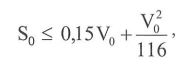
where S0 is the stopping distance, m;
V0 is the speed at the start of braking, km/h;
deviation from a straight path during braking of not more than 0,5 m;
stopping and holding of the tractor on a gradient of 18 %.
12.2. The braking systems of forestry wheeled tractors shall comply with the requirements of GOST ISO 11169-2011.
12.3. The braking systems of tractor-trailer combinations based on wheeled tractors shall ensure stopping and holding of the tractor-trailer combination on a gradient of 12 %.
12.4. The braking systems of forestry track-laying tractors shall comply with the requirements of GOST ISO 11512-2011.
The braking systems of agricultural track-laying tractors shall comply with the requirements of GOST 12.2.002.3-91 when tested according to the tractor documentation.
13. Additional requirements for the design of tractors and trailers
13.1. Deleted by Decision of the Council of the Eurasian Economic Commission No. 127 of 29.10.2021 (enters into force upon expiry of 180 calendar days from the date of its official publication).13.2. Requirements for the fire protection of tractors
The fire protection of the tractor shall comply with GOST EN 13478-2012 and GOST 30879-2003 (with regard to materials used for the interior trim of the cab).
Tractors shall be provided with mounting points for a fire extinguisher.
13.3. Requirements for the hydraulic drives of tractors and trailers
The hydraulic drives of tractors and trailers shall comply with the requirements of GOST ISO 4413-2016.
13.4. Requirements for ensuring safety during operation Structural elements of the tractor and trailer that may present a hazard during operation, maintenance or transport shall have safety colouring. Safety colours and safety signs shall comply with GOST 12.4.026-2015.
Slinging diagrams and diagrams for attaching safety chains shall be shown on the tractor and the trailer and given in the operator's manual. Jacking points shall be marked on the tractor and the trailer with symbols in accordance with GOST 26336-97.
Tractors and trailers and their components whose design makes slinging difficult shall have devices or points for slinging during lifting, for attaching safety chains and for placing jacks. Slinging diagrams and diagrams for attaching safety chains shall be shown on the tractor and the trailer and also given in the operator's manual. For track-laying tractors, slinging diagrams and safety chain attachment points may be given in the operator's manual only. Jacking points and safety chain attachment points shall be marked on the tractor and the trailer with symbols in accordance with GOST 26336-97 (symbol 2.30 "lifting point" and symbol 2.31 "jacking point or support point").
13.5. Additional requirements for the tractor cab
The tractor cab shall have space for a first-aid kit, the operator's outer clothing and technical documentation.
The tractor cab shall be equipped with windscreen washers.
The tractor cab shall be equipped with a device that protects the operator's face from direct sunlight.
Opening windows of the tractor cab shall open from the inside and shall have a device for locking them in the open and closed positions.
Doors of the tractor cab shall have key-operated locks and a retainer for holding them in the fully open position.
13.6. Additional requirements for tipping trailers
Tipping trailers and semi-trailers shall be designed so that the highest permissible raised position of the platform cannot be exceeded.
Tipping trailers and semi-trailers shall be equipped with a device (stop) for locking the unloaded platform in the raised position (to one of the sides and to the rear, or only to the rear if there is no side unloading).
13.7. Requirements for the stability of tractors and trailers
The lateral static stability angle of tractors and trailers, depending on their categories and conditions of use, is established:
for tractors – in accordance with GOST 12.2.019-2015;
for trailers – in accordance with GOST 10000-2017.
The form of technical descriptions is given in Annex 2 to the Technical Regulation of the Customs Union "On safety of agricultural and forestry tractors and trailers thereto" (TR CU 031/2012).
Tractors intended by the manufacturer for operation in mountainous terrain or in conditions equivalent to mountainous terrain (hilly terrain, complex landscape with differences in elevation, etc.) shall be equipped with maximum permissible tilt warning devices (warning devices for maximum permissible tilts).
Information on the maximum permissible tilt (maximum permissible tilts) is given in the tractor operator's manual.
14. Requirements for pollutant emissions contained in the exhaust gases of tractor engines
14.1. Compression-ignition engines running on diesel fuel
Pollutant emissions contained in the exhaust gases of tractor engines shall not exceed the values given in Table 5.1:
for engines of power band E2 – until 31 January 2024;
for engines of power bands D, G – until 1 January 2025;
for engines of power bands E1, F – until 1 October 2025;
for engines of power bands K, J – from 1 January 2025;
for engines of power bands I, H – from 1 October 2025.
Table 5.1
Power | Net engine power of the tractor (P), kW | Specific emission of carbon monoxide (CO), g/kW·h | Specific emission of hydrocarbons (HC), g/kW·h | Specific emission of nitrogen oxides (NOx), g/kW·h | Specific emission of particulate matter (PT), g/kW·h |
E1 | 130 ≤ P ≤ 156 | 3,5 | 1,0 | 6,0 | 0,2 |
E2 | 156 < P ≤ 560 | 3,5 |
(HC + NOx) | 0,2 | |
F | 75 ≤ P < 130 | 5,0 | 1,0 | 6,0 | 0,3 |
G | 37 ≤ P < 75 | 5,0 | 1,3 | 7,0 | 0,4 |
D | 19 ≤ P < 37 | 5,5 | 1,5 | 8,0 | 0,8 |
H | 130 ≤ P ≤ 560 | 3,5 |
(HC + NOx) | 0,2 | |
I | 75 ≤ P < 130 | 5,0 |
(HC + NOx) | 0,3 | |
J | 37 ≤ P < 75 | 5,0 |
(HC + NOx) | 0,4 | |
K | 19 ≤ P < 37 | 5,5 |
(HC + NOx) | 0,6 | |
Early application of the requirements provided for in the sixth and seventh paragraphs of this subparagraph is permitted.
Footnote. Subparagraph 14.1. as amended by Decision of the Council of the Eurasian Economic Commission of 12.04.2024 No. 32 (enters into force upon expiry of 10 calendar days from the date of its official publication).14.2. Positive-ignition engines running on compressed natural gas (CNG), liquefied natural gas (LNG) or liquefied petroleum gas (LPG)
Until 31 January 2024, the emission values of carbon monoxide, hydrocarbons and nitrogen oxides contained in the exhaust gases of tractor engines shall not exceed the values specified in the engine and tractor documentation (in the operator's manual) obtained in tests under UN Regulations No. 96 (02).
From 31 January 2024, the emission values of carbon monoxide, hydrocarbons and nitrogen oxides contained in the exhaust gases of tractor engines, obtained in tests under UN Regulations No. 96 (02), shall not exceed the values given in Table 5.2.
Table 5.2
Net engine power of the tractor, |
Specific emission of carbon |
Specific emission of non-methane hydrocarbons and |
Specific emission of particulate matter |
130 P 560 | 3,5 | 4,0 | Not regulated |
75 P < 130 | 5,0 | 4,0 | Not regulated |
37 P < 75 | 5,0 | 4,7 | Not regulated |
19 P < 37 | 5,0 | 7,5 | Not regulated |
The values given in Table 5.2 (5.3) may be applied before 31 January 2024.
14.3. Dual-fuel compression-ignition engines running on diesel fuel and compressed natural gas (CNG), liquefied natural gas (LNG) or liquefied petroleum gas (LPG)
Until 31 January 2024, the values of pollutant emissions contained in the exhaust gases of tractor engines shall not exceed the values specified in the engine and tractor documentation (operator's manual) and obtained in tests under UN Regulations No. 96 (02).
From 31 January 2024, the values of pollutant emissions contained in the exhaust gases of tractor engines, obtained in tests under UN Regulations No. 96 (02), shall not exceed the values given in Table 5.3.
Table 5.3
Power of the tractor dual-fuel diesel engine, (P) | Specific emission of carbon monoxide (CO), g/kW·h | Specific emission of non-methane hydrocarbons (NMHC), g/kW·h | Specific emission of nitrogen oxides (NOx), g/kW·h | Specific emission of particulate matter (PT), g/kW·h |
130 ≤ P ≤ 560 | 3,5 | 1,0 | 6,0 | 0,2 |
75 ≤ P < 130 | 5,0 | 1,0 | 6,0 | 0,3 |
37 ≤ P < 75 | 5,0 | 1,3 | 7,0 | 0,4 |
19 ≤ P < 37 | 5,5 | 1,5 | 8,0 | 0,8 |
The values given in Table 5.3 may be applied before 31 January 2024.
Footnote. Paragraph 14 as amended by Decisions of the Council of the Eurasian Economic Commission of 15.04.2022 No. 89 (enters into force upon expiry of 10 calendar days from the date of its official publication); of 17.10.2022 No. 167 (enters into force upon expiry of 10 calendar days from the date of its official publication); of 24.11.2023 No. 137 (enters into force upon expiry of 360 calendar days from the date of its official publication).15. Requirements for equipment supplying the engine with gaseous fuel (compressed natural gas (CNG), liquefied natural gas (LNG), liquefied petroleum gas (LPG)) and for its installation
Footnote. Paragraph 15 as worded by Decision of the Council of the Eurasian Economic Commission of 24.11.2023 No. 137 (enters into force upon expiry of 360 calendar days from the date of its official publication).15.1. Only gas-fuel equipment that has a certificate of conformity issued on the basis of a communication concerning type approval under UN Regulations No. 67 (01) or UN Regulations No. 67 (02), or UN Regulations No. 110 (03) (from 1 January 2025 – UN Regulations No. 110 (04)), or UN Regulations No. 115 (00), issued in accordance with the Agreement concerning the Adoption of Uniform Technical Prescriptions for Wheeled Vehicles, Equipment and Parts which can be Fitted and/or be Used on Wheeled Vehicles and the Conditions for Reciprocal Recognition of Approvals Granted on the Basis of these Prescriptions, concluded in Geneva on 20 March 1958, may be installed on tractors.
Footnote. Subparagraph 15.1 as amended by Decision of the Council of the Eurasian Economic Commission of 24.11.2023 No. 137 (enters into force upon expiry of 360 calendar days from the date of its official publication).15.1.1. Each gas cylinder shall have a passport drawn up by the gas cylinder manufacturer in the uniform form approved by Decision of the Board of the Eurasian Economic Commission of 18 November 2014 No. 211.
15.1.2. Each gas cylinder installed on a tractor shall bear clearly applied indelible markings: the serial number and the designation "СУГ" (LPG), "КПГ" (CNG) or "СПГ" (LNG).
Footnote. Subparagraph 15.1.2 as worded by Decision of the Council of the Eurasian Economic Commission of 24.11.2023 No. 137 (enters into force upon expiry of 360 calendar days from the date of its official publication).15.2. Requirements for the engine gaseous fuel supply system (compressed natural gas (CNG), liquefied natural gas (LNG), liquefied petroleum gas (LPG)) (hereinafter, the fuel supply system), its location and installation
Footnote. Subparagraph 15.2 as worded by Decision of the Council of the Eurasian Economic Commission of 24.11.2023 No. 137 (enters into force upon expiry of 360 calendar days from the date of its official publication).15.2.1. All elements of the fuel supply system shall be properly (rigidly) secured.
15.2.2. The fuel supply system shall be installed so as to ensure its maximum possible protection against damage.
15.2.3. No devices shall be connected to the fuel supply system (except those strictly necessary for the proper operation of the tractor engine and the cab heating system).
15.2.4. Tractors may be equipped with a cab heating system connected to the fuel supply system. A cab heating system is permitted only if it is fire-safe and does not affect the normal operation of the fuel supply system.
15.2.5. No element of the fuel supply system, including any protective device (material) forming part of the fuel supply system equipment, shall project beyond the outer dimensions of the tractor.
15.2.6. No elements of the fuel supply system shall be located at a distance of less than 100 mm from the engine exhaust system or a similar heat source, unless such elements of the fuel supply system equipment are fitted with an adequate heat shield.
15.2.7. The fuel supply system shall include the following equipment elements:
a) when supplied with liquefied petroleum gas (LPG):
gas cylinder;
80 percent stop valve;
level indicator;
pressure relief valve;
remotely controlled service valve with excess flow valve;
pressure regulator and vaporizer;
remotely controlled shut-off valve;
filling unit;
gas tubes and hoses;
injector, gas injection device or gas mixer;
electronic control unit (ECU);
pressure limiter;
non-return valve;
gas line safety valve;
gas dosing unit;
filter;
pressure and temperature sensor;
fuel pump;
power supply bushing;
connection pipe for back-up fuel supply;
fuel selection system;
fuel lines;
b) when supplied with compressed natural gas (CNG):
automatic valve;
fittings;
gas cylinder;
gas-air mixer (the standard gas-air mixer of the machine may be used);
flexible and rigid fuel lines;
filling unit;
manually operated valve;
pressure gauge or fuel level indicator;
safety device (triggered at a specified temperature);
electronic control unit (ECU) (for electronic systems) (except in the case of machine conversion involving the installation of a gas engine);
c) when supplied with liquefied natural gas (LNG):
(manual) valve;
cryogenic tank;
receiver;
pressure and (or) temperature sensor;
filling unit;
check valve or non-return valve;
pressure gauge or fuel level indicator;
excess flow valve;
pressure relief valve;
pressure regulator;
natural gas detector;
venting system;
couplings;
heat exchanger/vaporizer;
fuel line;
electronic control unit (ECU) (except in the case of machine conversion involving the installation of a gas engine).
Footnote. Paragraph 15.2.7 as amended by Decision of the Council of the Eurasian Economic Commission No. 137 of 24.11.2023 (enters into force upon expiry of 360 calendar days from the date of its official publication).15.2.8. An additional automatic valve may be combined in one unit with the pressure regulator.
An additional automatic valve may be installed in the fuel line as close as possible to the pressure regulator.
15.2.9. The cylinder shall be installed so that there is no contact between metal surfaces, except contact with the cylinder (cylinders) mounting points.
15.2.10. On a tractor in running order, the distance between the gas cylinder and the ground surface shall be at least 200 mm.
15.2.11. An automatic valve shall be installed directly on each cylinder.
The automatic cylinder valve shall operate so that the fuel supply is shut off when the engine is switched off, regardless of the ignition key position, and shall remain closed while the engine is not running. A delay of 2 seconds is permitted for diagnostic purposes.
15.2.12. The excess flow device shall be installed in the fuel cylinder (fuel cylinders) on the automatic cylinder valve.
15.2.13. The manual valve shall be rigidly fixed to the cylinder and may be integrated into the automatic valve.
15.2.14. Rigid fuel lines shall be made of seamless material in the form of seamless drawn tubes of stainless steel or of steel with an anti-corrosion coating.
15.2.15. Rigid and flexible fuel lines shall be secured so that they are not subjected to vibration or external loads.
At the mounting point, flexible or rigid fuel lines shall be installed so that there is no contact between metal parts.
Rigid and flexible fuel lines shall not be located at jacking points.
In exposed sections, fuel lines shall be covered with protective material.
15.2.16. Soldered or welded joints, as well as bite-type compression joints, are not permitted.
The number of connections shall be kept to a minimum.
All connections shall be located in places accessible for inspection.
15.2.17. The filling unit shall be located on the outside of the tractor or in the engine compartment.
The filling unit shall be secured so as to prevent its rotation and to protect it against dirt and moisture.
15.2.18. The electrical equipment of the fuel supply system shall be protected against overloads.
The design of electrical connections and electrical equipment elements shall prevent the formation of electric sparks.
15.2.19. The diesel fuel operating mode shall be used when determining exhaust gas opacity.
Footnote. The Technical Regulation is supplemented with paragraph 15.2.19 in accordance with Decision of the Council of the Eurasian Economic Commission No. 137 of 24.11.2023 (enters into force upon expiry of 360 calendar days from the date of its official publication).16. Additional requirements for lighting and light-signalling devices
16.1. On trailers for which the installation of permanently exposed lamps is incompatible with their intended use, any lamps may be of the concealable type, including manually operated ones.
The procedure for using such lamps shall be specified in the operator's manual.
16.2. The use of amber side retro-reflectors is permitted.
16.3. The "Slow-Moving Vehicle" sign need not be installed if this requirement is absent from the legislation of the Member State (Member States).
ANNEX 51
to the Technical Regulation
of the Customs Union
"On Safety of Agricultural
and Forestry Tractors
and Trailers Thereto" (TR CU 031/2012)
REQUIREMENTS
for the safety of tractors and engines in accordance with the Technical Regulation of the Customs Union "On Safety of Agricultural and Forestry Tractors and Trailers Thereto" (TR CU 031/2012)
Footnote. The Technical Regulation is supplemented with Annex 51 in accordance with Decisions of the Council of the Eurasian Economic Commission No. 89 of 15.04.2022 (enters into force upon expiry of 10 calendar days from the date of its official publication) and No. 167 of 17.10.2022 (enters into force upon expiry of 10 calendar days from the date of its official publication).
Pollutant emissions contained in the exhaust gases of engines, as well as of tractors fitted with such engines, manufactured up to and including 31 January 2024 in the territories of the Member States of the Eurasian Economic Union, shall not exceed the values specified in:
GOST 17.2.2.02-98, GOST 17.2.2.05-97 – for emission class 0;
UN Regulation No. 96 (00), GOST 17.2.2.02-98 – for emission class 1;
UN Regulation No. 96 (02) (paragraph 5.2.1) for engines of power bands D, E1, F, G – for emission class 2.
Methods for monitoring pollutant emissions contained in engine exhaust gases:
for emission class 0 – according to GOST 17.2.2.02-98, GOST 17.2.2.05-97;
for emission class 1 – according to GOST 17.2.2.02-98, UN Regulation No. 96 (00);
for emission class 2 – according to UN Regulation No. 96 (02).
Annex 6
to the Technical Regulation of the Customs Union
"On Safety of Agricultural and
Forestry Tractors and Trailers Thereto"
(TR CU 031/2012)
Tractor manufacturer's plate and
classification of technically permissible towable masses
in accordance with the Technical Regulation of the Customs
Union "On Safety of Agricultural and
Forestry Tractors and Trailers Thereto"
(TR CU 031/2012)
1. Example of a tractor manufacturer's plate
MINSK TRACTOR WORKS | |
Type: 846Е | |
Certificate of conformity number ХХХХ | |
Identification number: GBS18041947 | |
Permissible total mass *: Permissible front axle load*: Permissible rear axle load*:
* Depending on the tyres. | 4 820 – 6 300 кг 2 390 – 3 200 кг 3 130 – 4 260 кг |
Permissible towable mass of the trailer: -without brakes: -with independent braking: -with inertia (overrun) braking: -with hydraulic or pneumatic brake transmission: | 3 000 кг 6 000 кг 3 000 кг 12 000 кг |
2. Classification of technically permissible towable masses
The following technically permissible towable masses of trailers are considered:
2.1. Mass of a trailer without brakes.
2.2. Mass of a trailer with independent braking, i.e. the tractor-and-trailer unit is braked by means of devices with the following characteristics:
the trailer brake control is independent of the tractor brake control. In all cases, it is mounted on the tractor so that the operator can easily actuate it from the operator's workstation;
the operator's muscular effort is the energy used to brake the towed trailer.
2.3. Mass of a trailer with inertia (overrun) braking, i.e. the trailer is braked by the force generated when the trailer moves towards the tractor.
2.4. Mass of a trailer equipped with hydraulic, pneumatic or combined brake transmission, i.e. braking of the tractor-and-trailer unit may be continuous, semi-continuous or independent power braking.
Continuous braking of the tractor-and-trailer unit is performed by means of a device with the following characteristics:
a single control, which the operator actuates from the operator's workstation by a single progressive movement;
the energy used to brake the tractor-and-trailer unit comes from one and the same source (this may be the operator's muscular effort);
the braking system provides simultaneous or phased braking of both the tractor and the trailer, irrespective of their relative position.
Semi-continuous braking of the tractor-and-trailer unit is performed by means of a device with the following characteristics:
a single control, which the operator actuates from the operator's workstation by a single progressive movement;
the energy used to brake the tractor-and-trailer unit comes from several different sources (one of them may be the operator's muscular effort);
the braking system provides simultaneous or phased braking of both the tractor and the trailer, irrespective of their relative position.
Independent power braking of the tractor-and-trailer unit is performed by means of a device with the following characteristics:
the trailer brake control is independent of the tractor brake control. In all cases, it is mounted on the tractor so that the operator can easily actuate it from the operator's workstation;
the operator's muscular effort is not the energy used to brake the towed trailer.
3. The difference between the technically permissible towable mass set by the manufacturer and the authorised towable mass is specified in paragraph 8.2 of Annex 5 to this Technical Regulation of the Customs Union.


