

In accordance with Article 52 of the Treaty on the Eurasian Economic Union dated 29 May 2014 and paragraph 29 of Annex No. 1 to the Rules of Procedure of the Eurasian Economic Commission, approved by Decision of the Supreme Eurasian Economic Council No. 98 dated 23 December 2014, the Council of the Eurasian Economic Commission decided:
1. To adopt the attached Technical Regulation of the Eurasian Economic Union “On the safety of amusement rides” (TR EAEU 038/2016).
2. To establish that the Technical Regulation of the Eurasian Economic Union “On the safety of amusement rides” (TR EAEU 038/2016) shall enter into force upon the expiry of 18 months from the date of adoption of the said Technical Regulation.
3. This Decision shall enter into force upon the expiry of 30 calendar days from the date of its official publication.
Members of the Council of the Eurasian Economic Commission:
| From the Republic of Armenia |
From the Republic of Belarus |
From the Republic of Kazakhstan |
From the Kyrgyz Republic |
From the Russian Federation |
|---|---|---|---|---|
| V. Gabrielyan | V. Matsyushevsky | A. Mamin | O. Pankratov | I. Shuvalov |
ADOPTED
by Decision of the Council
of the Eurasian Economic Commission
dated 18 October 2016 No. 114
Technical Regulation
of the Eurasian Economic Union “On the safety of amusement rides”
(TR EAEU 038/2016)
I. Scope of application
1. This Technical Regulation applies to amusement rides placed on the market in the territory of the Eurasian Economic Union (hereinafter referred to as the Union) for the first time.
2. This Technical Regulation establishes the minimum necessary safety requirements for amusement rides and the related processes of design, manufacture, installation (assembly, setup), adjustment, operation, storage, transportation and Disposal, in order to protect human life and (or) health, property and the environment, and to prevent actions that mislead consumers.
3. This Technical Regulation applies to temporary installations (transportable amusement rides) and fixed amusement rides (assembled on foundations or without foundations), during the use of which passengers are exposed to a biomechanical effect corresponding to high potential biomechanical risk level RB-1, or medium potential biomechanical risk level RB-2, or low potential biomechanical risk level RB-3, and which are divided into the following types:
а) mechanised amusement rides with translational motion (including those using water);
б) mechanised amusement rides with rotary motion;
в) mechanised amusement rides with complex motion;
г) bumper-car rides and go-kart rides;
д) inflatable amusement rides;
е) Non-Mechanical Water Amusement Rides;
ж) non-mechanical amusement rides;
з) Amusement Rides Intended for Children.
4. The types and categories of amusement rides are specified in Annex No. 1.
5. The types of biomechanical effects on passengers, potential biomechanical risk levels and types of Passenger Seat inclination are determined in accordance with the list set out in Annex No. 2.
6. This Technical Regulation does not apply to playground equipment or amusement rides with a negligible potential biomechanical risk level (RB-4), or to amusement rides manufactured and commissioned before this Technical Regulation enters into force.
The possibility and conditions for operating amusement rides manufactured and commissioned before this Technical Regulation enters into force shall be determined by the legislation of the Member States of the Union (hereinafter referred to as the Member States).
7. If other Technical Regulations of the Union (Customs Union) have been adopted and entered into force with respect to parts of amusement rides and establish requirements for such parts of amusement rides, such parts of amusement rides shall comply with the requirements of this Technical Regulation and of the other Technical Regulations of the Union (Customs Union) that have entered into force and whose scope applies to them.
II. Main Concepts
8. For the purposes of applying this Technical Regulation, the following concepts are used:
“accident” means the destruction of an amusement ride or its critical component, creating an immediate threat to human life or health or causing harm to human life or health;
“bumper-car ride and go-kart ride” means amusement rides in which passenger modules can move freely outside the movement guides within an enclosed (restricted) space;
“amusement ride” means equipment intended to entertain passengers during movement, including biomechanical effects;
“Non-Mechanical Water Amusement Ride” means an amusement ride using water for water parks, swimming pools and bodies of water;
“children’s amusement ride” means an amusement ride specifically designed to entertain children (90 to 160 cm tall);
“mechanized amusement ride” means an amusement ride that moves passengers along a specified path or within a restricted space using energy of various types, except for human muscular energy;
“mechanized rotational-motion amusement ride” means an amusement ride that moves passenger modules mainly rotationally (by rotation and/or swinging), including with complex motion;
“mechanized translational-motion amusement ride” means an amusement ride that moves passenger modules mainly in translation along guides;
“mechanized complex-motion amusement ride” means an amusement ride that moves passenger modules along a complex path or in combination with imagery displayed to passengers;
“inflatable amusement ride” means an amusement ride whose structure consists of one or more shells interconnected and supported by the excess pressure of forced air;
“biomechanical effect” means the effect on passengers of forces associated with their movement;
“commissioning of the amusement ride” means the start of operation of the amusement ride with passengers after the necessary conformity assessment procedures for compliance with the requirements of this Technical Regulation have been completed;
“type of amusement rides” means a set of several types of amusement rides having a uniform operating principle or a set of uniform functions;
“auxiliary devices of amusement rides” means decorations and design elements, fences, lighting, tents, canopies, protective screens and pavilions used together with amusement rides;
“placing amusement rides on the market” means the supply or import of amusement rides (including dispatch from the manufacturer’s warehouse or shipment without warehousing) for the purpose of their distribution within the territory of the Union in the course of commercial activity, whether free of charge or for consideration;
“high potential biomechanical risk level (RB-1)” means the probability of causing harm to a passenger (passengers) that threatens his (their) life (lives) as a result of biomechanical effects;
“children” means visitors, including passengers, 90 to 160 cm tall (aged from 2 to 14 years);
“risk zones during movement” means zones around the bodies of moving passengers, entry into which by structures or foreign objects may cause harm of varying severity to passengers;
“safety envelope” means the restriction of the part of the space in which a passenger moves, ensuring the minimization or absence of the risk of injury as a result of contact with moving and stationary structural elements;
“critical component” means a part of the structure, assembly or component of an amusement ride, the failure of which may cause death or serious harm to human health;
“critical parameter” means an essential characteristic of an amusement ride or its critical component, the violation of which may cause death or serious harm to human health;
“modification” means any change to the structure of a critical component or change to a critical parameter compared with the designed values;
“specified service life in operating hours” means the total operating time upon reaching which operation of the amusement ride must be discontinued irrespective of its technical condition;
“specified service life” means the calendar duration of operation of the amusement ride upon reaching which operation of the amusement ride must be discontinued irrespective of its technical condition;
“reasonably foreseeable misuse” means use of the amusement ride for a purpose other than intended or in violation of the requirements of operating documents;
“low potential biomechanical risk level (RB-3)” means the probability of causing harm resulting in temporary loss of the passenger’s (passengers’) ability to work as a result of biomechanical effects;
“negligible potential biomechanical risk level (RB-4)” means the probability of causing harm without any form of incapacity of the passenger (passengers) as a result of biomechanical effects;
“playground equipment” means equipment with or on which children may play indoors or in open areas, individually or in groups, at their discretion and according to their own rules;
“safety justification for the amusement ride design” means a set of documents on the safety of the amusement ride confirming its compliance with the requirements of this Technical Regulation and other effective Technical Regulations of the Union (Customs Union) applicable to it;
“restriction on use” means restriction of use of an amusement ride by passengers with health impairments or due to height or weight restrictions, or in case of feeling unwell;
“technical condition assessment (technical inspection) of an amusement ride” means a set of activities for checking the technical condition of an amusement ride using visual, measurement, non-destructive testing and other control methods for compliance with the requirements of operating documentation, in order to determine the possibility of further safe operation of the amusement ride for a specified period;
“amusement ride passport” means a document containing information certifying the manufacturer’s warranties, the values of the main parameters and characteristics of the amusement ride, as well as information on conformity confirmation and disposal of the amusement ride;
“Passenger” means a person moved by an amusement ride;
“passenger module” means a part of an amusement ride intended to carry passengers (trolley, cabin, seat);
“Visitor” means a person located in the area of amusement rides or auxiliary devices of amusement rides;
“rules for use of the amusement ride” means requirements for passengers and visitors developed by the designer (developer) or operator;
“test run” means a test launch of an amusement ride without passengers, simulating the full passenger load, where the operating documentation contains such a requirement;
“annual inspection” means a complete inspection by the operator of the amusement ride, its critical components and critical parameters after annual maintenance has been performed;
“daily inspection” means an inspection by the operator of the operability and technical condition of the critical components, critical parameters and other parts of the amusement ride specified in the operating documents, including test runs;
“regulatory inspection” means an inspection by the control (supervisory) body of a Member State, conducted in accordance with this Technical Regulation, of the conformity assessment documents and operating documents for an amusement ride, including a test run;
“complete inspection” means an assessment by the operator of the condition of all critical components and critical parameters of an amusement ride in accordance with the requirements of the operating documents (including disassembly and inspection of components, where necessary, testing and a test run), as well as the technical condition of other parts of the amusement ride;
“designer (developer)” means a specialist or organization that developed the design of an amusement ride;
“medium potential biomechanical risk level (RB-2)” means the probability of causing serious harm to the passenger’s (passengers’) health as a result of biomechanical effects;
“potential biomechanical risk level” means the probability of causing harm of varying severity to a passenger (passengers) as a result of biomechanical effects, taking into account the possible severity of the consequences;
“type of amusement rides” means amusement rides similar in operation and in the creation of biomechanical effects;
“restraint devices” means elements of an amusement ride (for example, seats, footwells, handrails and restraining devices) intended to prevent passengers from moving beyond the safety envelope as a result of biomechanical effects, forces arising during use of the amusement ride, or passenger behaviour;
“restraining device” means a device intended to restrain and limit movement and/or maintain the specified posture of the passenger’s body for the passenger’s safe perception of acceleration on the amusement ride;
“amusement ride record book” means a document containing information certifying the manufacturer’s warranties, the values of the main parameters and characteristics of the amusement ride, information reflecting the technical condition of the amusement ride, information on conformity confirmation and disposal of the amusement ride, as well as information entered during its operation (duration and operating conditions, maintenance, repair and other data);
“operator” means a legal entity or individual lawfully operating an amusement ride and using the amusement ride to provide entertainment services to passengers;
“operating document” means a design document that, either separately or together with other documents, establishes the rules for operation of an amusement ride and/or contains information certifying the manufacturer-guaranteed values of the main parameters and characteristics of the amusement ride, as well as warranties and information on its operation during the specified service life.
III. Rules for Identification of Amusement Rides
9. Amusement rides are identified to establish whether they fall within the scope of this Technical Regulation.
10. The identification characteristics of amusement rides are their types, categories, potential biomechanical risk levels, as well as the types and magnitudes of biomechanical effects on passengers.
11. Amusement rides are identified by:
a) the manufacturer, person authorised by the manufacturer, seller (supplier) placing amusement rides on the market in the territories of the Member States;
b) an accredited certification body included in the Unified Register of Certification Bodies and Testing Laboratories (Centres) of the Customs Union (hereinafter, the certification body);
c) an authorised body of a Member State when exercising State Control (Supervision) over compliance with the requirements of this Technical Regulation.
12. Amusement rides are identified using one of the following methods or a combination thereof:
a) identification by documentation (comparison of the type and category of the amusement ride and its Technical Specifications specified in the operating documents with the data provided in Annexes No. 1 and 2 to this Technical Regulation);
b) visual method (comparison of the external appearance of the amusement ride with the description provided in the operating documents);
c) instrumental method (comparison of data obtained by measuring dimensions or conducting tests of amusement rides with the Technical Specifications specified in the operating documents). The instrumental method is used if the amusement rides cannot be identified using the methods specified in subparagraphs “a” and “b” of this clause.
IV. Rules for the Circulation of Amusement Rides on the Union Market
13. Amusement rides shall be placed on the Union market if they comply with the requirements of this Technical Regulation and other effective Technical Regulations of the Union (Customs Union) applicable to them, and provided that they have undergone conformity assessment in accordance with Section XI of this Technical Regulation.
14. Amusement rides complying with the requirements of this Technical Regulation and other effective Technical Regulations of the Union (Customs Union) applicable to them shall bear the single mark of product circulation on the Union market.
15. Amusement rides placed on the market shall meet the safety requirements throughout the specified service life (specified service life in operating hours), provided that they are used for their intended purpose.
16. Amusement rides for which conformity with the requirements of this Technical Regulation has not been confirmed shall not bear the single mark of product circulation on the Union market
and shall not be permitted to be placed on the Union market.
V. Safety Requirements for Amusement Rides
when Designing
17. When designing amusement rides, all possible risks at all stages of the life cycle shall be identified, including during normal operation, in the event of emergencies (resulting from failures and external effects), in the event of foreseeable personnel errors and reasonably foreseeable misuse.
18. When passengers are moved on an amusement ride, biomechanical risks of various levels may be present depending on the lifting (lowering) height, speed, seat angle of deviation or overturning. Therefore, measures to minimize or eliminate biomechanical risks shall be applied with account taken of the types and magnitudes of biomechanical impacts on passengers. For Risk Analysis and analysis of the possible consequences of failures during the design of amusement rides, it is important to consider how and how frequently passengers are exposed to biomechanical impacts.
19. Biomechanical impacts exerted on passengers when using an amusement ride are not always acceptable for people with impaired health or poor well-being. Therefore, information on the extremity of the amusement ride and any restrictions on its use shall be provided in the amusement ride operating manual and in the information for Visitors.
20. Amusement rides shall be designed so that the raw materials, materials and substances used in their manufacture and operation do not threaten human life and (or) health, property or the environment. When liquids and gases are used, the associated hazards shall be eliminated.
21. Amusement ride control systems shall ensure the safety of their operation in all specified operating modes and under all external effects specified by the operating conditions.
22. Amusement ride control systems shall prevent dangerous situations in the event of possible logical errors and if the Operator violates control actions.
23. Amusement ride control systems shall include warning signalling means and other means of warning of amusement ride malfunctions that may lead to dangerous situations.
24. Means of warning of amusement ride malfunctions shall ensure that the Operator perceives the information accurately, reliably and rapidly.
25. Starting an amusement ride, as well as restarting it after a stop (regardless of the reason for the stop), shall be performed only by using the start control. The amusement ride shall be equipped with a warning sound signal, which shall be activated by the Operator before the amusement ride starts moving if required for safety reasons.
26. The emergency-stop control:
a) shall be easily identifiable and readily accessible;
b) shall stop the amusement ride rapidly without creating a hazard;
c) after being actuated, shall remain in the position corresponding to the stopped condition until it is forcibly returned to its initial position;
d) shall not cause the amusement ride to start after being returned to its initial position;
e) shall be red and differ in shape and dimensions from other controls.
27. The selected control mode shall have priority over other control modes, except for emergency stop.
28. Complete or partial interruption of the power supply and its subsequent restoration, as well as damage to the power-supply control circuit, shall not lead to dangerous situations, including:
a) spontaneous starting of the amusement ride when the power supply is restored;
b) failure to execute an already issued stop command;
c) reduction in the effectiveness of protective devices.
29. Accessible parts of amusement rides, passenger modules and guards shall not have sharp edges or rough surfaces capable of causing injury.
30. Moving parts of amusement rides shall be equipped with guards preventing people from entering areas where they may be injured by moving parts.
31. All guards of an amusement ride shall be securely fastened so that access to the guarded area is possible only with the use of tools. Guard doors (access doors) shall be equipped with locking devices.
32. Measures shall be taken to eliminate hazards caused by contact with, or proximity to, parts of the amusement ride or its equipment having high or low temperatures.
33. Amusement rides shall be designed so as to eliminate the risk of fire or overheating caused by the operation of amusement ride equipment, in accordance with the fire safety requirements established by the legislation of the Member States.
34. When designing amusement rides, provision shall be made for compliance with hygienic parameters (indicators) of noise (sound), infrasound, ultrasound, general and (or) local vibration, electric, magnetic, electromagnetic and electrostatic fields, as well as radiation in the infrared (thermal), ultraviolet and visible ranges, including laser radiation, that ensure safety during operation. The types of exposure shall be determined for each specific amusement ride on the basis of analysis of potential risks.
35. When laser equipment is used in an amusement ride, such equipment shall be designed and manufactured so as to prevent accidental radiation and ensure protection against direct, reflected, scattered and secondary radiation.
36. When designing amusement rides, measures shall be taken to protect personnel and passengers against the adverse effects of non-ionizing radiation, static electric fields, constant magnetic fields, industrial-frequency electromagnetic fields, and radio-frequency and optical-range electromagnetic radiation.
37. When designing amusement rides, risks shall be completely eliminated or minimized by applying the following measures:
a) ensuring the performance of a set of research and development activities;
b) performing the necessary set of calculations and tests based on methods verified in accordance with the established procedure;
c) determining the materials and substances used for specific types of amusement rides depending on the operating parameters and conditions;
d) establishing justified limit-state criteria by the designer (developer);
e) establishing specified service lives, specified service life in operating hours, and periods for Maintenance, repair and Disposal by the designer (developer);
f) establishing requirements preventing reasonably foreseeable misuse;
g) taking into account the need to provide Visitors with accessible and comprehensible information on the extremity and biomechanical impact of the amusement ride;
h) restricting use of the amusement ride by certain categories of people;
i) properly selecting standard loads and impacts on passengers and structures;
j) properly designing amusement ride devices for restraining passengers;
k) properly designing and manufacturing structures and control systems, including identifying critical parameters, critical components and redundancy of critical components;
l) equipping amusement rides with emergency-stop devices (where necessary) and means of evacuation;
m) ensuring access to amusement ride assemblies and parts for inspection, repair and Maintenance;
n) creating appropriate working conditions for Operators to ensure safe control of the amusement ride and sufficient visibility from the Operator's workplace;
o) developing and using Operating Documentation to eliminate risks to the Operator resulting from incorrect mounting (assembly, installation), adjustment, Maintenance and operation of amusement rides;
p) arranging possible evacuation methods and routes for passengers and personnel.
38. When designing amusement rides, it is necessary to:
a) take into account the design features of mechanized amusement rides that may cause harm as a result of being actuated by an external energy source;
b) take into account the nature of the translational and rotary movement of passengers by mechanized amusement rides, considering the effects of acceleration and inertial forces;
c) take into account the potential biomechanical risks of inflatable amusement rides, consisting in the risk of overturning under the effect of wind, the risk of electric shock in rain, and the risk of children being injured by entering holes, gaps, slots and tunnels;
d) eliminate the effect of inadmissible acceleration on passengers;
e) ensure the creation of safety envelopes of sufficient size for passenger movement, as well as a reliable control system and braking system for the amusement ride;
f) ensure the reliability of fastening and connections of amusement ride components;
g) take into account risk zones during movement and sudden braking of passenger modules. The dimensions of such zones, considering the severity of injuries, depend on passengers' anthropometric data, restraint systems and relative movement speed. To reduce these risks, measures shall be provided to increase the guard zones of the relevant area or remove obstacles by the relevant distance on the basis of Risk Analysis.
39. When designing amusement rides, an analysis of the types, consequences and criticality of failures shall be carried out and, in accordance with the identified risks, they shall be classified depending on the consequences of failure:
a) catastrophic risk, which may cause the death of passengers or an amusement ride accident;
b) critical risk, which may cause serious injuries to passengers or major damage to the amusement ride;
c) minor risk, which may cause minor injuries to passengers or property damage;
d) insignificant risk, which is not sufficiently serious to cause injuries to passengers or property damage.
40. Measures shall be taken to eliminate or minimize risks, with successive verification of their effect on interconnected structural parts.
41. When designing amusement rides, the following critical components shall be analysed in the sequence “from the Passenger Seat to the base of the amusement ride”:
a) restraining devices, seats, locking devices, fastenings, armrests, backrests and safety belts (considering the directions and magnitudes of acting accelerations), including those preventing passengers from falling out or being injured in the event of deliberate violation of the rules for use;
b) passenger modules (considering passenger weight and the resultant forces generated by all dynamic loads) and their reliable attachment to movement guides and (or) other passenger modules;
c) blocking, braking and protective devices (considering all factors acting on them);
d) guide devices and their fastenings;
e) main load-bearing structures of the amusement ride;
f) displaceable mechanical parts that may enter the safety envelope.
42. When designing amusement rides, critical components and components having a limited service life in operating hours shall be identified and included in the list of critical components and the list of components with a limited service life in operating hours attached to the Operating Documentation. These lists shall also be provided to the manufacturer together with the design documentation.
43. Critical components shall be redundant. The redundant element shall have reliability no lower than that of the primary element, taking into account the nature and conditions of its loading.
44. If redundancy by substitution is impossible, it shall be ensured by sufficiently reducing the calculated stresses in all elements of the critical component (amusement ride assembly). The method and frequency of non-destructive testing of the critical component shall be specified. The highest reliability coefficients in calculations shall apply to elements that are inaccessible for direct inspection during operation.
45. If electrical energy is used in amusement rides, they shall be designed so as to eliminate the risk of electric shock.
46. If non-electrical energy (hydraulic or pneumatic) is used in amusement rides, they shall be designed so as to avoid any hazard associated with these types of energy. Pipelines shall withstand the specified loads, be securely fixed and protected against external mechanical effects. Measures shall be taken to protect against dangerous consequences in the event of pipeline rupture, sudden movement of pipelines and high-pressure jets in the event of possible rupture.
47. Amusement Rides Intended for Children shall comply with the safety requirements in accordance with Annex No. 3, and Non-Mechanical Water Amusement Rides shall comply with the safety requirements in accordance with Annex No. 4.
48. The designer (developer) shall develop the safety justification for the amusement ride design to confirm its compliance with the requirements of this Technical Regulation.
49. The original safety justification for the amusement ride design shall be kept by the designer, and a copy shall be kept by the certification body of the Member State until the end of the specified service life. If the specified service life is extended or after modification, the safety justification for the amusement ride design shall be revised.
50. The safety justification for the amusement ride design shall include:
a) a description of the amusement ride, its main structural parts and operating principles, information on the main Technical Specifications of the amusement ride, the characteristics of its mechanical, pneumatic, hydraulic, electrical and electronic equipment (including control systems) and other equipment used, as well as information on the specific features of the amusement ride and its mounting (assembly, installation) methods, overall dimensions and movement beyond those dimensions, restrictions, design features and materials used, movement systems, drive types, speeds, accelerations, electrical equipment, operating cycle, control procedure and restrictions for individual Visitors;
b) an analysis of the potential biomechanical risks of the amusement ride and a list of its critical components and critical parameters for which measures to reduce risks shall be applied at the life-cycle stage;
c) drawings indicating the dimensions of devices relevant to ensuring safety requirements. The drawings shall specify all dimensions and cross-sectional values required for checking and approving the drawings, the characteristics of materials, assemblies and parts, fastenings and connections, as well as the values of the main speeds and accelerations. The set of drawings for the amusement ride shall include:
drawings of passenger modules (in the required views and cross-sections), indicating overall dimensions, internal dimensions (seats, side and rear stops, space for arms and legs), the presence of arm and leg stops, locking and safety devices, and handrails;
drawings of lifting and turning mechanisms, indicating their supports, drives and control systems, and the lifting and turning amplitudes;
drawings of running mechanisms, indicating loads, detailed representations of transmission wheels and safety devices, bearings, axles and shafts, their connections and possible displacement relative to the passenger module, control and monitoring devices, anti-rollback devices, devices preventing derailment and overturning, bumpers, safety devices, drives and brakes, and foundation fastenings;
diagrams of electrical (electronic), pneumatic and hydraulic equipment;
d) drawings and calculations of critical components, indicating dimensions, materials and critical parameters, as well as the results of limit-state analysis. Loads and impacts shall comply with the requirements of this Technical Regulation and ensure safety. The calculation of welded-joint seams shall take into account fatigue strength, using stress-concentration factors at points of abrupt changes in cross-section;
e) the main results and conclusions of Strength Calculation and reliability calculations for load-bearing structures, indicating information on the main acting forces, masses, wind speed, supports under foundations, and all stressed sections required for Technical Inspection and Control;
f) plans showing emergency exits and their dimensions, with verification calculations for enclosed premises intended for 400 Visitors or more, and special instructions in the event of fire;
g) a list of standards applied in whole or in part and included in the list of standards whose application on a voluntary basis ensures compliance with the requirements of this Technical Regulation and, if the specified standards were not applied, a description of solutions aimed at implementing the requirements of the Technical Regulation;
h) the test programme and test methods for the assembled amusement ride;
i) instructions for evacuating passengers from the amusement ride in the event of abnormal situations.
51. When designing amusement rides, Operating Documentation shall be developed, including:
a) the amusement ride record book or amusement ride passport;
b) the amusement ride operating manual;
c) the maintenance and repair manual for the amusement ride;
d) a statement of spare parts and accessories;
e) Assembly, Installation, Start-Up, Adjustment and Running-In Instructions for the amusement ride;
f) instructions for transporting and storing the amusement ride;
g) instructions for decommissioning and Disposal of the amusement ride;
h) logs for recording operation and Maintenance of the amusement ride in accordance with the documents specified in subparagraphs “b” and “c” of this paragraph (indicating information ensuring the recording of compliance with operation
and Maintenance requirements).
52. For conformity assessment and Technical Inspection and Control of the technical condition of amusement rides with potential biomechanical risk levels RB-1 and RB-2, an amusement ride record book shall be prepared as a separate document; its content is specified in Annex No. 5.
53. For amusement rides with potential biomechanical risk level RB-3, an amusement ride passport shall be prepared; its content is specified in Annex No. 6.
54. The operating manual shall include:
a) a description of the operation of the amusement ride, including a detailed description of the main systems, mechanisms, control systems and their operation;
b) the maximum number and weight of passengers in one passenger module and (or) in the amusement ride as a whole;
c) requirements for procedures for commissioning, suspension of operation, downtime for technical reasons and the procedure for recommissioning;
d) the operating procedure for Operators operating the amusement ride with passengers, including requirements for actions in emergencies;
e) rules for use of the amusement ride by Visitors, as well as rules for servicing passengers with disabilities if the biomechanical impacts of the amusement ride are acceptable for them;
f) information on restrictions on passengers' use of the amusement ride based on health condition, age, height and weight (where necessary);
g) methods of emergency evacuation of passengers from a considerable height or from seats with a significant inclination relative to the ground;
h) a description of weather conditions in which operation of the amusement ride is not permitted;
i) rules for the safe operation of the amusement ride with passengers and schemes for loading passengers onto the amusement ride (where necessary);
j) the procedure for daily inspections of critical components and critical parameters.
55 The maintenance and repair manual shall include:
a) a list of critical components and critical parameters, a list of parts with a limited service life in operating hours and their replacement schedule, assembly drawings and figures showing the main dimensions required for Maintenance and repair, and schematic electrical, hydraulic and pneumatic diagrams;
b) a description of the procedure for checking the daily technical condition of the amusement ride before opening and after the amusement ride ceases operation;
c) the procedure for assembling, disassembling, adjusting and lubricating individual amusement ride assemblies, their frequency and the consumables used;
d) a list of types of Maintenance and repair with a detailed description of their content and Technical requirements;
e) recommendations for Maintenance and repair of electrical equipment;
f) a prohibition on modification by the Operator or a third party without the designer's approval;
g) the procedure and conditions for modifying components (only as instructed and (or) agreed with the designer).
56. Instructions for decommissioning and Disposal shall include:
a) the procedure for decommissioning the amusement ride;
b) the procedure for safe Disposal of individual parts, taking into account the specific features of Disposal of electronic components and individual assemblies containing Hazardous Substances.
57. The Operating Documentation of the amusement ride shall be prepared in Russian and, where required by the legislation of the Member States, in the official language(s) of the Member State in whose territory the amusement ride is operated. The Operating Documentation shall be provided in hard copy (where necessary, a set of Operating Documentation on electronic media may be attached).
VI. Safety Requirements for the Manufacture of Amusement Rides
58. During the manufacture of amusement rides, their compliance with the requirements of the design documentation shall be ensured.
59. Only structural materials specified in the design documentation shall be used for the manufacture of components and parts of amusement rides. Replacement of structural materials without the designer's approval is not permitted.
60. Particular attention shall be paid to welded joints and the weldability of the selected materials for critical components.
61. Fasteners shall comply with the reliability requirements established by the designer.
62. Materials, parts, devices and assemblies on which the safety of the amusement ride depends shall comply with the technical requirements, design specifications and safety requirements of this Technical Regulation and other effective Technical Regulations of the Union (Customs Union) applicable to them.
63. Critical components shall bear the marking of the manufacturer or contractor. The marking shall be clear and legible and located in an accessible place for inspection to ensure their subsequent identification.
64. All supplied materials and components for critical components shall undergo incoming inspection (verification), with the necessary documents issued.
65. During manufacture, control shall be exercised over materials (including consumables) and components (elements) produced both by the manufacturer itself and by its suppliers.
66. If the design documentation specifies that tests of critical components are required during their manufacture, the manufacturer shall ensure that such tests are conducted.
67. Where, during the examination of the design documentation or in the technical requirements, it is established that the relevant parts or assemblies are important for ensuring safety and require testing, the manufacturer shall ensure that such tests are conducted.
68. Non-destructive testing shall be applied to critical components and element joints specified in the list of critical components prepared during the design of the amusement ride and transferred to the manufacturer together with the design documentation.
69. The manufacturer shall ensure that the main safety characteristics and quality indicators of each material and each component comply with the requirements specified in the design documentation and shall provide for the relevant manufacturing procedures.
70. Chains, steel ropes, textile ropes and belts used in the structure of an amusement ride shall have a certificate containing the following information:
а) name and location (address) of the manufacturer;
б) designation of the chain, steel rope, textile rope or belt, including the nominal size, design and material data;
в) test method used;
г) minimum breaking (or failure) load.
71. The form of the certificate specified in Clause 70 of this Technical Regulation shall be approved by the Eurasian Economic Commission.
72. Each part of a chain, rope or belt that is not an assembly unit shall bear a marking. Where this is not possible, it shall have a plate or a non-removable ring indicating the name and location (address) of the manufacturer.
73. The manufacturer shall ensure the protection method specified by the designer for all metal parts of the amusement ride against corrosion, for wooden parts against decay, and for amusement ride parts made of fiberglass and polymer materials against ageing. The frequency of inspections of such parts during operation shall be specified in the operating documents. When hollow sections made of structural steel are used, the need to prevent internal corrosion shall be taken into account.
74. Welded joints of critical components of the metal structures of amusement rides, including those subjected to variable loads, shall ensure their safety.
75. Each amusement ride shall be fitted with a manufacturer's information plate containing the following information:
а) name and location (address) of the manufacturer and/or seller (supplier);
б) name and/or designation of the amusement ride (model type (number));
в) factory serial number;
г) month and year of manufacture.
76. The information on the information plate specified in Clause 75 of this Technical Regulation may be applied by any method that ensures a clear and easily discernible image throughout the entire service life of the amusement ride. The plate shall be in Russian and, where required by the legislation of the Member States, in the official language(s) of the Member State in whose territory the amusement ride is sold.
VII. Ensuring the Safe Assembly (Installation)
and Adjustment of Amusement Rides
77. To ensure safety during the assembly (installation) of an amusement ride, the following requirements shall be met before commissioning:
а) the amusement ride shall be assembled (installed) in accordance with the assembly, installation, start-up, adjustment and running-in instructions or other operating documents containing instructions for assembly (installation), adjustment and setting;
б) the operator or a person authorised by the operator shall ensure that the amusement ride is located on a site suitable for this purpose, in accordance with the instructions contained in the operating documents. It shall be ensured that:
the ground can safely withstand the load from the amusement ride;
the site is sufficiently flat, level and stable for the safe assembly (installation) and operation of the amusement ride in accordance with the amusement ride record book and the assembly, installation, start-up, adjustment and running-in instructions.
After the assembly (installation) of the amusement ride, the ground shall be inspected regularly to ensure that its load-bearing capacity has not deteriorated, particularly under adverse weather conditions. The site beneath the amusement ride shall be equipped with drainage where there is a risk of groundwater affecting the amusement ride;
в) the operator shall determine the location of underground utilities or overhead lines that may pose a hazard during the assembly (installation) or operation of the amusement ride, taking into account, where necessary, the recommendation of the relevant authority. If utilities may be a source of danger to personnel or visitors, all reasonable and practicable precautions shall be taken to prevent such danger, either by using suitable and properly positioned barriers or by other means.
Damage to underground utilities shall be prevented when installing posts or stakes in the ground or carrying out trenching or excavation works. Before such work begins, special methods for detecting utilities shall be used unless the absence of underground utilities has been established in advance;
г) when installing amusement rides, the operator shall be guided by the following principles:
the possibility of the amusement ride being dangerously lifted from the ground by wind shall be taken into account;
amusement rides shall be positioned so that visitors have safe access to each amusement ride and safe exit from it at the designated locations, and so that there are no narrow passages that could cause a dangerous congestion in an emergency;
sufficient clearance shall be provided on access routes between and above amusement rides and their auxiliary devices to ensure access for emergency vehicles and access to fixed fire hydrants (including during the evacuation of visitors);
there shall be sufficient distance between adjacent amusement rides, structures or other occupied areas to minimise the risk of fire spreading in the event of a fire;
if amusement rides intersect or pass through one another, safety envelopes shall be applied at a minimum for each amusement ride. The operator shall ensure compliance with the safety envelopes for both passengers and other visitors;
for token-operated amusement rides intended for children, the distance between them may vary provided that the safety envelopes are maintained;
д) if an amusement ride is assembled (installed) on a foundation, the safety of the foundation shall be confirmed before the assembly (installation) of the amusement ride begins. Foundations shall comply with the construction legislation of the Member State;
е) when installing amusement rides without foundations, dynamic loads shall be taken into account. During operation of the amusement ride, such loads shall not cause the amusement ride to move or overturn;
ж) after completion of the assembly (installation) of the amusement ride, its adjustment and setting shall be performed in accordance with the manufacturer's recommendations.
78. Commissioning of amusement rides shall be carried out in accordance with the procedure established by the legislation of the Member States.
VIII. Safety Requirements for the Operation of Amusement Rides
79. During the operation of amusement rides, it is necessary to:
а) comply with the requirements of the operating documents and maintain the relevant logs;
б) place rules for use of the amusement ride by Visitors, as well as rules for servicing passengers with disabilities, before the entrance to the amusement ride, if the biomechanical effects of the amusement ride are permissible for them;
в) place information on restrictions on the use of the amusement ride based on health status, age, height and weight (if provided for by the operating documents) before the entrance to the amusement ride. The information shall be drawn up in Russian and, where the legislation of the Member States contains relevant requirements, in the official language(s) of the Member State in whose territory the amusement ride is operated;
г) have means for measuring the height and weight of Passengers (if provided for by the operating documents);
д) place an information plate containing details of the date of the last annual inspection, indicating the organisation that conducted the inspection, and the date of the next annual inspection, before the entrance to each amusement ride in operation. The plate shall be legible and protected against weather effects and intentional damage;
е) place plates containing information on the main Technical Specifications of the amusement ride next to the amusement ride control panel;
ж) have first-aid kits;
з) place the necessary evacuation signs, plan and measures for evacuating Passengers from a great height or from seats with a significant inclination relative to the ground;
и) have means available for evacuating Passengers from passenger modules (if provided for by the operating documents);
к) place the main rules for servicing the amusement ride at the workplace of the servicing personnel;
л) place diagrams showing the loading of the amusement ride with Passengers (if provided for by the operating documents);
м) place plates at the workplace of the servicing personnel specifying the personnel requirements regarding the procedure for daily inspections of critical components and critical parameters;
н) conduct daily inspections of the amusement ride, with entries in the log concerning the daily authorization of the amusement ride for operation;
о) prevent Visitors from having free access to hazardous areas (areas where passenger modules and mechanisms move, cabinets containing electrical equipment, platforms and ladders for servicing personnel) while the amusement ride is operating and when it is not operating;
п) prevent reasonably foreseeable misuse of the amusement ride;
р) arrange safe workplaces for personnel;
с) install instruments for measuring wind speed and ambient air temperature at the amusement ride site (if provided for by the operating documents).
80. The Operator conducts daily and annual inspections of amusement rides, as well as other types of inspections provided for by the operating documents.
81. For amusement rides that have been in operation, following a prolonged suspension of operation (over 12 months), downtime for technical reasons, or partial or complete dismantling of the amusement ride, the Operator shall conduct a complete inspection of the amusement ride.
82. Maintenance and repair of amusement rides shall be performed in accordance with the operating documents.
83. If the specified service life of the main load-bearing structure and non-replaceable parts of the amusement ride has expired, the Operator shall suspend operation of the amusement ride.
84. Following expiry of the specified service life of the amusement ride, its intended use is not permitted without conducting a remaining service life assessment.
85. The remaining service life assessment of an amusement ride that has reached the end of its specified service life shall be conducted in the form of an inspection by an organisation accredited (authorised) in accordance with the procedure established by the legislation of the Member States.
86. During the inspection of the amusement ride, the following shall be determined:
а) whether the amusement ride that has reached the end of its specified service life complies with the requirements of this Technical Regulation and other effective Union (Customs Union) Technical Regulations applicable to it;
б) the measures necessary to ensure that the amusement ride complies with the requirements of this Technical Regulation and other effective Union (Customs Union) Technical Regulations applicable to it, and the time limits for implementing such measures.
87. During the inspection of the amusement ride, the following shall be carried out:
а) determination of the condition of the amusement ride equipment, identifying defects, malfunctions, and the degree of wear and corrosion;
б) inspection of the condition of metal structures, passenger modules and restraining devices, and the reliability of fastening of Passenger Seats, chassis, braking devices and control systems;
в) testing of the insulation of electrical circuits and electrical equipment, and visual and measurement inspection of the earthing (protective neutralisation) of the amusement ride equipment.
88. Information on the inspection conducted shall be entered in the amusement ride record book.
89. Based on the results of the inspection, a conclusion shall be drawn up specifying the conditions and possible period for extending the operation of the amusement ride.
90. The remaining service life assessment may be conducted as part of a technical condition assessment (technical inspection) (if provided for by the legislation of the Member States).
91. Modifications to the amusement ride may not be made without the prior approval of the designer.
IX. Ensuring the Safety of Amusement Rides During Transportation,
Storage and Disposal
92. Amusement rides shall be transported and stored with due regard for the safety requirements provided for by the operating documents.
93. The operating documents shall establish recommendations for the safe disposal of the amusement ride.
X. Ensuring the Conformity of Amusement Rides with
Safety Requirements
94. Conformity of amusement rides with this Technical Regulation shall be ensured by directly complying with its requirements and the requirements of other effective Union (Customs Union) Technical Regulations applicable to amusement rides, or by complying with the requirements of international and regional (interstate) standards, and, in their absence, national (state) standards, the application of which on a voluntary basis ensures compliance with the requirements of this Technical Regulation.
95. Methods for the examination (testing) and measurement of amusement rides shall be established in the standards included in the list of standards containing rules and methods for examination (testing) and measurement, including sampling rules, necessary for the application and implementation of the requirements of this Technical Regulation and for conformity assessment of amusement rides.
XI. Conformity Assessment of Amusement Rides
96. Amusement rides placed on the market in the territory of the Union shall undergo conformity assessment for compliance with the requirements of this Technical Regulation, as well as the requirements of other effective Union (Customs Union) Technical Regulations applicable to them.
97. Conformity assessment for compliance with the requirements of this Technical Regulation shall be performed in the forms of conformity confirmation, Registration (Record-Keeping Registration) and technical condition assessment (technical inspection).
XII. Conformity Confirmation
98. Conformity confirmation of amusement rides with the requirements of this Technical Regulation shall be performed in the form of mandatory certification or the conformity declaration procedure.
99. Conformity confirmation of amusement rides with the requirements of this Technical Regulation shall be performed:
a) in the form of mandatory certification for amusement rides with potential biomechanical risk level RB-1 by a certification body;
b) in the form of the conformity declaration procedure for amusement rides with potential biomechanical risk levels RB-2 and RB-3, based on the applicant's own evidence and evidence obtained with the participation of a certification body or an accredited testing laboratory (centre) included in the Unified Register of Certification Bodies and Testing Laboratories (Centres) of the Customs Union (hereinafter, the testing laboratory (centre)).
100. Information on the declaration of conformity or certificate of conformity, including their validity period, shall be specified in the amusement ride record book or amusement ride passport.
101. To confirm the conformity of an amusement ride, the applicant shall compile a set of documents confirming compliance with the safety requirements of this Technical Regulation, which shall include:
a) the safety justification;
b) operating documents;
c) the contract (supply agreement) and shipping documentation (for a batch of amusement rides or a Single Product);
d) the manufacturer's Certificate for the Quality Management System (if available);
e) Test Reports for the amusement ride performed by the manufacturer, the person authorised by the manufacturer or the seller, (if available) and/or testing laboratories (centres);
f) documents confirming the conformity of materials and component products (certificate of conformity or declaration of conformity), or their Test Reports (if available);
g) documents confirming the conformity of component parts and components (elements) of the amusement ride with other effective Union (Customs Union) Technical Regulations applicable to them.
h) documents confirming the conformity of the amusement ride obtained from foreign certification bodies (if available);
i) the list of standards specified in paragraph 94 of this Technical Regulation, with whose requirements the amusement ride complies (where applied by the manufacturer);
j) other documents confirming the conformity of the amusement ride with the safety requirements of this Technical Regulation (if available).
XIII. Conformity Declaration Procedure for Amusement Rides
102. Conformity declaration for amusement rides is carried out under the following schemes:
1) scheme 1d – applies to Series-Produced Amusement Rides with potential biomechanical risk levels RB-2 and RB-3 and includes the following actions performed by the applicant:
compilation of the set of documents specified in Clause 101 of this Technical Regulation;
implementation of production control;
taking all necessary measures to ensure that the production process ensures the compliance of amusement rides with the requirements of this Technical Regulation;
testing of samples at the applicant's testing laboratory and (or) at a testing laboratory (centre);
adoption and registration of the conformity declaration;
б) scheme 2d – applies to a batch of amusement rides (Single Product) with potential biomechanical risk levels RB-2 and RB-3 and includes the following actions performed by the applicant:
compilation of the set of documents specified in Clause 101 of this Technical Regulation;
testing of samples at the applicant's testing laboratory and (or) at a testing laboratory (centre);
adoption and registration of the conformity declaration;
в) scheme 5d – applies to Series-Produced Amusement Rides with potential biomechanical risk level RB-2 where it is impossible to conduct testing in full before their assembly (installation, setup) at the place of operation and includes the following actions performed by the applicant:
compilation of the set of documents specified in Clause 101 of this Technical Regulation;
implementation of production control;
taking all necessary measures to ensure that the production process ensures the compliance of amusement rides with the requirements of this Technical Regulation;
submission to the certification body (testing laboratory (centre)) of an application for amusement ride type examination by one of the following methods:
examination of an amusement ride sample intended for scheduled production as a typical representative of all future products;
analysis of the technical documentation, testing of a sample or critical components of the amusement ride.
The results of the amusement ride type examination are documented in a conclusion (certificate of conformity) and (or) a report in which the testing laboratory (centre) assesses the conformity of the amusement ride type with the requirements of this Technical Regulation.
On the basis of the conclusion (certificate of conformity) and (or) report, the applicant adopts and registers the conformity declaration;
г) scheme 6d – applies to Series-Produced Amusement Rides with potential biomechanical risk level RB-2 where the manufacturer has a certified Management System and includes the applicant's compilation of the set of documents specified in Clause 101 of this Technical Regulation, which includes a Management System Certificate (copy of the Management System Certificate) issued by a Management System Certification Body accredited by the accreditation body of a Member State and registered as a legal entity in accordance with the legislation of the Member States.
103. The manufacturer performs production control and takes all necessary measures to ensure that the production process ensures the compliance of amusement rides with the requirements of this Technical Regulation, tests samples at a testing laboratory (centre), and adopts and registers the conformity declaration.
104. For conformity declaration under schemes 1d, 5d and 6d, the applicant may be a legal entity registered in the territory of a Member State in accordance with its legislation, or an individual registered as an individual entrepreneur, who is the manufacturer or the person authorised by the manufacturer.
105. For conformity declaration under scheme 2d, the applicant may be a legal entity registered in the territory of a Member State in accordance with its legislation, or an individual registered as an individual entrepreneur, who is the manufacturer, seller or the person authorised by the manufacturer.
106. The conformity declaration is issued using the unified form approved by a decision of the Board of the Eurasian Economic Commission. The conformity declaration specifies the potential biomechanical risk level to which the declared amusement rides belong.
107. The conformity declaration is subject to registration in the procedure established by the Eurasian Economic Commission. The validity of the conformity declaration begins on the date of its registration in the Unified Register of Issued Certificates of Conformity and Registered Declarations of Conformity. The validity period of the conformity declaration corresponds to the specified service life or assigned operating life of the amusement ride.
108. The applicant shall retain the conformity declaration and the set of documents specified in Clause 101 of this Technical Regulation for 10 years from the date of expiry of the conformity declaration.
109. The set of documents specified in Clause 101 of this Technical Regulation shall be provided to State Control (Supervision) Bodies upon their request.
XIV. Procedure for the Certification of Amusement Rides
110. Certification of amusement rides with a potential biomechanical risk level of RB-1 is carried out under the following schemes:
a) scheme 1c – applies to Series-Produced Amusement Rides and includes the following actions:
the applicant compiles the set of documents specified in Clause 101 of this Technical Regulation and submits an application for certification to the certification body;
the certification body analyses the submitted documents and identifies the declared products, including by potential biomechanical risk level, takes Product Samples from the applicant for testing at the testing laboratory (centre), and determines the Test Programme;
the testing laboratory (centre) tests the amusement ride samples;
the certification body conducts a Production Condition Analysis at the manufacturer’s premises and analyses the results of the tests of the amusement ride samples and, if the results are positive, issues a certificate of conformity to the applicant;
the certification body conducts Surveillance Inspection of the certified amusement rides by testing amusement ride samples at the testing laboratory (centre) and (or) conducting a Production Condition Analysis;
b) scheme 2c – applies to Series-Produced Amusement Rides where the manufacturer has a certified Management System and includes the following actions:
the applicant compiles the set of documents specified in Clause 101 of this Technical Regulation, which must include a Management System Certificate (a copy of the Management System Certificate) issued by the Management System Certification Body, and submits an application for certification to the certification body;
the certification body analyses the submitted documents and identifies the declared products, including by potential biomechanical risk level, takes Product Samples from the applicant for testing at the testing laboratory (centre), and determines the Test Programme;
the testing laboratory (centre) tests the amusement ride samples;
the certification body analyses the set of documents submitted by the applicant and the results of the amusement ride tests and, if the results are positive, issues a certificate of conformity to the applicant;
the certification body conducts Surveillance Inspection of the certified amusement rides by testing amusement ride samples at the testing laboratory (centre) and analysing the results of the Surveillance Inspection conducted by the Management System Certification Body for the manufacturer’s certified Management System;
c) scheme 3c – applies to a batch of amusement rides (Single Product) and includes the following actions:
the applicant compiles the set of documents specified in Clause 101of this Technical Regulation and submits an application for certification to the certification body;
the certification body analyses the submitted documents and identifies the declared products, including
by potential biomechanical risk level, takes Product Samples from the applicant for testing at the testing laboratory (centre), and determines the Test Programme;
the testing laboratory (centre) tests the amusement ride samples. If the amusement ride is transported to the installation (assembly, installation) site not as a whole but in separate parts, testing is carried out after its assembly (installation, setup) and adjustment at the place of operation;
the certification body analyses the results of the amusement ride tests and, if the results are positive, issues a certificate of conformity to the applicant;
d) scheme 9c – applies to a batch of amusement rides of limited volume supplied by a foreign manufacturer and includes the following actions:
the applicant compiles the set of documents specified in Clause 101of this Technical Regulation and submits an application for certification to the certification body. In this case, submission of the documents specified in Subparagraph «з» Clause 101 of this Technical Regulation is mandatory;
the certification body analyses the set of documents submitted by the applicant and identifies the declared amusement rides, including by potential biomechanical risk levels, and, if the results are positive, issues a certificate of conformity to the applicant.
111. For certification under schemes 1c, 2c and 9c, the applicant may be a legal entity or an individual registered in the territory of a Member State in accordance with its legislation as an individual entrepreneur, being the manufacturer or a person authorised by the manufacturer.
112. For certification under scheme 3c, the applicant may be a legal entity or an individual registered in the territory of a Member State in accordance with its legislation as an individual entrepreneur, being the manufacturer or seller, or a person authorised by the manufacturer.
113. The applicant selects the Certification Scheme, taking into account the provisions of this Technical Regulation.
114. The applicant may submit an application for certification to any certification body included in the Unified Register of Certification Bodies and Testing Laboratories (Centres) of the Customs Union and having the relevant Scope of Accreditation. The application for certification shall be prepared by the applicant and shall contain:
a) the name and location of the applicant;
b) the name and location of the manufacturer;
c) information about the amusement ride (its composition) and its identifying features (the name, type and kind of amusement ride), the Technical Specifications specified in the Operating Documentation, the Customs Tariff Number of the Eurasian Economic Union, the document according to which the amusement ride is manufactured, the form of manufacture (serial production or batch), and details of the agreement (contract);
d) a list of the standards used (if any);
e) the Certification Scheme;
f) the applicant’s obligations to comply with the certification rules and conditions.
115. The certification body reviews the application and the set of documents specified in Clause 101 of this Technical Regulation submitted together with the application, and decides whether certification may be carried out.
116. The certification body performs the work in accordance with the Certification Scheme, prepares a decision and, if the results are positive, issues a certificate of conformity to the applicant.
117. If the certification result is negative, the certification body sends the applicant a reasoned Decision to Refuse to Issue a Certificate of Conformity.
118. Testing of an amusement ride sample (samples) from a batch or of a Single Product is carried out by the testing laboratory (centre) on the instructions of the certification body in accordance with the Test Programme determined by the certification body, to which the Test Report is issued.
119. Production Condition Analysis is conducted by the certification body at the manufacturer’s premises (if provided for by the Certification Scheme). The results of the analysis are documented in an act.
120. If the results of the inspections provided for by the Certification Scheme are positive, the certification body prepares the certificate of conformity and issues it to the applicant.
121. The certificate of conformity shall be prepared using a unified form approved by a Decision of the Board of the Eurasian Economic Commission. The certificate of conformity shall contain information on the potential biomechanical risk level to which the certified amusement rides belong.
122. The certification body enters information about the issued certificate of conformity in the Unified Register of Issued Certificates of Conformity and Registered Declarations of Conformity.
123. The validity period of the certificate of conformity for serially manufactured amusement rides shall be established and shall not exceed 5 years; no validity period shall be established for a batch of amusement rides.
124. Surveillance Inspection of certified products is conducted by the certification body that issued the certificate of conformity, in the cases provided for by the selected Certification Scheme, at least 1 time per year during the validity period of the certificate of conformity. Based on the results of the Surveillance Inspection, the certification body:
a) confirms the validity of the certificate of conformity within the validity period established therein;
b) suspends the Certificate of Conformity for a period not exceeding 2 months from the date of adoption of the relevant decision;
c) terminates the Certificate of Conformity.
125. If the identified non-conformities can be eliminated through Corrective Actions and the results of their elimination can be verified, the certification body decides to suspend the Certificate of Conformity. After the Corrective Actions have been completed and the identified non-conformities eliminated, the certification body decides to resume the Certificate of Conformity. If, based on the results of verifying the elimination of the identified non-conformities, it is impossible to conclude that the certified products fully comply with the requirements of this Technical Regulation, the certification body decides to terminate the Certificate of Conformity.
126. A decision to terminate the Certificate of Conformity shall be adopted if the non-conformities with the requirements of this Technical Regulation identified during the Surveillance Inspection cannot be eliminated through Corrective Actions agreed with the certification body.
127. The set of documents specified in Clause 101 of this Technical Regulation, Test Reports from the testing laboratory (centre), and the certificate of conformity shall be kept by the applicant and the certification body for the following period:
a) for serially manufactured amusement rides – at least 10 years from the date of termination of the Certificate of Conformity;
b) for a batch of amusement rides (Single Product) – at least 10 years from the date of sale of the last product from the batch.
128. The documents specified in Clause 127 of this Technical Regulation shall be submitted to State Control (Supervision) Bodies at their request.
XV. Registration (Record‑Keeping Registration), Technical Condition Assessment
of an Amusement Ride (Technical Inspection)
129. Registration (Record-Keeping Registration) of an amusement ride before Commissioning is carried out in accordance with the procedure established by the legislation of the Member States.
130. During the specified service life (specified service life in operating hours), conformity assessment of the amusement ride in the form of a technical condition assessment (technical inspection) is carried out at least 1 time every 12 months by an organisation accredited (authorised) in accordance with the procedure established by the legislation of the Member States.
131. Upon recommissioning of an amusement ride, including after modification (major repair), suspension of operation due to an accident, or suspension of operation due to expiry of the specified service life of the amusement ride, a regulatory inspection shall be conducted in accordance with the requirements of this Technical Regulation.
XVI. Marking of Amusement Rides with the Single Mark of Product Circulation
on the Union Market
132. Amusement rides that comply with the requirements of this Technical Regulation, as well as the requirements of other effective Technical Regulations of the Union (Customs Union) applicable to them, and that have undergone the conformity confirmation procedure for the requirements of this Technical Regulation and other effective Technical Regulations of the Union (Customs Union) applicable to them, shall be marked with the single mark of product circulation on the Union market.
133. Marking with the single mark of product circulation on the Union market shall be carried out before the amusement rides are placed on the Union market.
134. The single mark of product circulation on the Union market shall be affixed by any method ensuring a clear and distinct image throughout the entire service life of the amusement rides.
135. The single mark of product circulation on the Union market shall be affixed to the product itself and to the operating documents.
XVII. State Control (Supervision) over Compliance with
the Requirements of this Technical Regulation
136. State control (supervision) over compliance with the requirements of this Technical Regulation in respect of amusement rides shall be carried out in accordance with the procedure established by the legislation of the Member States.
ANNEX No. 1
to the Technical Regulation
of the Eurasian Economic Union
“On the Safety of Amusement Rides”
(TR EAEU 038/2016)
LIST
of types and categories of amusement rides
Category of amusement rides |
Type of amusement rides |
1. Mechanized rides with reciprocating motion (including those using water) |
roller coasters free-fall towers water roller coasters with boats or rafts catapults railway park trains monorail and cable parkways |
2. Mechanized rides with rotary motion |
Ferris wheels swings carousels |
3. Mechanized rides with complex motion |
with reciprocating and rotary motion mechanized cinema seats simulators amusement rides based on industrial robots |
4. Bumper-car rides and go-kart rides |
bumper cars park cars or recreational road trains go-karts (including on elevated tracks) speedways with mini-cars |
5. Inflatable |
inflatable trampolines slides mazes |
6. Non-mechanical water |
straight and curved water slides springboards floating platforms partially submerged in water with water poured onto visitors |
7. Non-mechanical |
slides swings carousels “Tarzan ropes” trampolines |
8. For children |
slides, descents swings carousels electric cars or pedal cars |
ANNEX No. 2
to the Technical Regulation
of the Eurasian Economic Union
“On the Safety of Amusement Rides”
(TR EAEU 038/2016)
LIST
of types of biomechanical effects on passengers
of amusement rides, potential biomechanical risk levels
and types of passenger seat inclination
I. Types and magnitudes of biomechanical effects on passengers
of amusement rides and potential biomechanical risk levels
Type of Biomechanical Impact | Designation | Potential biomechanical risk level | ||
RB-1 | RB-2 | RB-3 | ||
magnitude of biomechanical effect | ||||
high | medium | low | ||
Raising or lowering from a height* | H (m) | H>8 | 2<H<8 | 0,4<H<2 |
Movement at a speed | V (m/s) | V>20 | 10<V<20 | 3<V<10 |
Raising or lowering forward (Fig. 1) backward (Fig. 2) sideways (Fig. 3) | H (m) α( 0 ) β( 0 ) γ( 0 ) | Н>3 135<α<180 135<β<180 120<γ<180 | 2<Н<3 45<α<135 105<β<135 60<γ<120 | 0,4<Н<2 10<α<45 95<β<105 30<γ<60 |
*The biomechanical risk levels are substantiated by statistical data on the consequences of injuries caused by people falling from a height.
Note. When determining the potential biomechanical risk level of an amusement ride, the indicators with the maximum values shall be selected.
II. Types of Passenger Seat Inclination
Types of forward passenger seat inclination are shown in Figure 1.
RB-1 |
RB-2 |
RB-3 |
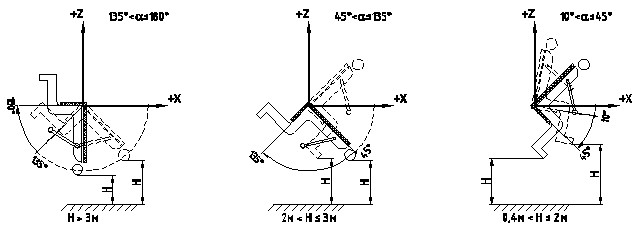
Fig. 1. Forward passenger seat inclination
Types of backward passenger seat inclination are shown in Figure 2.
RB-1 |
RB-2 |
RB-3 |
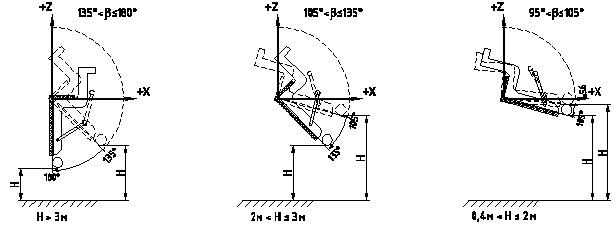
Fig. 2. Backward passenger seat inclination
Types of sideways passenger seat inclination are shown in Figure 3.
RB-1 |
RB-2 |
RB-3 |
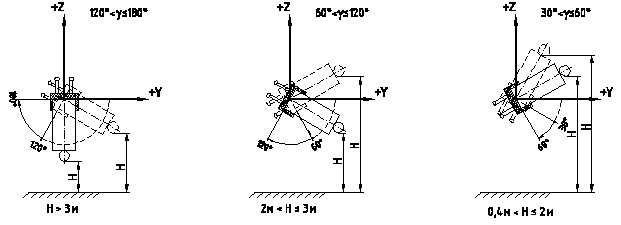
Fig. 3. Sideways passenger seat inclination
ANNEX No. 3
to the Technical Regulation
of the Eurasian Economic Union
“On the Safety of Amusement Rides”
(TR EAEU 038/2016)
SAFETY REQUIREMENTS
for Amusement Rides Intended for Children
1. The design and manufacture of Amusement Rides Intended for Children shall take into account additional risks associated with physiological, psychological and anthropometric factors characteristic of children in different age groups, as well as the following requirements:
a) taking into account the specific features of operation of Amusement Rides Intended for Children in different age groups;
b) the need to manufacture all moving equipment assemblies, as well as fixed elements (parts with which children may come into contact), from trauma-safe materials or coatings;
c) prevention of entrapment of children's hands, feet, heads, fingers or clothing in various gaps, slots and openings;
d) prevention of the presence (formation) of gaps, clearances or openings in equipment parts (between parts) into which foreign objects may enter, in places (zones) where the amusement ride operating manual prescribes sliding, swinging or jumping by children;
e) ensuring a safe free-fall height;
f) ensuring safe distances between moving
and fixed elements of amusement rides;
g) prevention of water accumulation on the equipment surface
and ensuring free drainage and drying;
h) ensuring protection of protruding ends of fastener joints;
i) eliminating the possibility of clothing catching on protruding parts;
j) manufacturing wooden elements of amusement rides from wood of the “durable” and “moderately durable” classes, and preventing processing defects on the surface;
k) securing equipment elements so as to prevent their removal without the use of tools;
l) ensuring the width of equipment elements intended for children to grip (hold) them in accordance with the established standards;
m) providing Amusement Rides Intended for Children with handrails and guardrails where required, taking into account the children's age groups. The design of handrails and guardrails shall not encourage children to stand or sit on them and shall not contain elements allowing children to climb on or remain on them.
2. The following requirements apply to materials used in Amusement Rides Intended for Children:
a) the materials used shall not have a harmful effect on the child's health or the environment, or cause thermal burns on contact with the child's skin in climatic zones with very high or very low temperatures;
b) the following materials shall not be used in Amusement Rides Intended for Children:
polymeric Flammable Materials;
combustion products that are extremely hazardous in terms of toxicity;
new materials whose properties have not been sufficiently studied;
c) polymeric materials and Composite Materials with various matrix bases shall be resistant to ultraviolet radiation;
d) if polymeric materials and Composite Materials
with various matrix bases become brittle during operation, the manufacturer shall specify the period of their safe operation;
e) the wear resistance and surface hardness of polymeric
and Composite Materials shall ensure children's safety throughout the specified service life;
f) metallic materials forming flaking or peeling oxides shall be protected with a non-toxic coating;
g) Plywood shall be resistant to atmospheric effects.
3. The following requirements apply to the assembly and installation of Amusement Rides Intended for Children:
the assembly and installation of amusement rides shall be performed in accordance
with the design documentation and the Assembly, Installation, Start-Up, Adjustment and Running-In Instructions;
amusement rides shall be securely fastened to their bases or their load-bearing structure shall be designed to prevent overturning.
It is prohibited to use an amusement ride that does not ensure children's safety (if safe installation of the amusement ride has not been completed, Impact-Absorbing Surfacing has not been installed, or Maintenance cannot ensure safety).
4. During the operation of Amusement Rides Intended for Children, the operator shall:
a) install information plates or stands containing the necessary information;
b) carry out a set of measures to maintain the safety and functioning of amusement rides;
c) prevent operation of equipment if it is damaged and may cause harm to children's health, including preventing the use in Amusement Rides Intended for Children of preschool age (from 2 to 6 years) of all types of laser products, and for school-age children (from 7 years), the use of laser products above Class 1 whose output collimated radiation presents a hazard when irradiating the eyes and skin;
d) ensure that there are no obstacles that may cause injuries in the installation (assembly, installation) zone of amusement rides;
e) ensure that there are no obstacles (structural elements, tree branches, benches or stands with notices) in the Safety Zone. When determining the Safety Zone, possible movements of the child and moving elements of amusement rides shall be taken into account;
f) equip the Landing Zone with a soft, resilient or shock-absorbing surface to prevent injuries to children when falling from the amusement ride;
g) ensure that there are no obstacles in the Landing Zone.
APPENDIX No. 4
to the Technical Regulation
of the Eurasian Economic Union
“On the Safety of Amusement Rides”
(TR EAEU 038/2016)
SAFETY REQUIREMENTS
for Non‑Mechanical Water Amusement Rides
1. The design and manufacture of Non-Mechanical Water Amusement Rides shall take into account the following additional risks associated with the use of water in amusement rides:
a) specific features of the aquatic environment, risks of Visitors falling on slippery surfaces, prevention of water accumulation (unless provided for creating entertainment effects), risks of drowning, risks of electric shock in a wet environment, and risks of bruising when falling from a height onto a water surface;
b) prevention of mechanical injuries caused by sharp edges, protrusions or irregularities of amusement rides;
c) prevention of entrapment of hands, feet, heads or fingers in gaps, slots and openings;
d) risks of falling from unguarded surfaces more than 0,4 metres high, from inclined surfaces, or from insufficiently secured supporting surfaces (unless provided for creating entertainment effects);
e) sufficient passage width and the possibility of access for emergency medical assistance;
f) sufficient number and convenience of restraint devices (handrails, handles and similar structural elements of amusement rides). Their design shall not allow users to slide down them or completely overcome them with a risk of falling;
g) the need to provide smooth surfaces in contact with the bodies of amusement ride Passengers, with no joints with surface level differences capable of injuring Passengers when sliding over them;
h) the need to provide sufficient water lubrication of surfaces or water flow to prevent skin injuries, including friction burns;
i) the need to calculate a safe shape for the amusement rides, particularly the shape of the surface on which Passengers slide at significant speeds, ensuring permissible accelerations acting on Passengers, as well as accelerations at which there is no risk of their heads striking the sliding surfaces;
j) sufficient size and convenience of the braking area after descent for the rapid evacuation of Visitors independently or with the assistance of personnel, and prevention of collisions between people during descents and rides;
k) prevention of a greater number of users being present on amusement ride elements than provided for by the amusement ride design and operating manual (including through organisational and technical measures).
2. The Operating Documentation for Non-Mechanical Water Amusement Rides shall be developed taking into account paragraph 1 of these Requirements, as well as the requirements established by the Technical Regulation of the Eurasian Economic Union “On the Safety of Amusement Rides” (TR EAEU 038/2016).
3. Materials used for Non-Mechanical Water Amusement Rides and entertainment devices shall take into account the specific features of accelerated corrosion of metal, wooden and non-metallic structures and fasteners. Measures shall be provided to ensure regular monitoring of connecting elements that are most important from a safety perspective.
4. Sliding and supporting surfaces of Non-Mechanical Water Amusement Rides shall be manufactured from materials preventing delamination or deformation.
5. The materials and coatings used in Non-Mechanical Water Amusement Rides shall comply with environmental requirements. Materials and coatings that come directly into contact with human skin shall comply with hygienic safety requirements.
6. At the necessary locations of Non-Mechanical Water Amusement Rides and/or water parks, information plates, signs and rules for safe use of amusement rides for Visitors shall be placed.
APPENDIX No. 5
to the Technical Regulation
of the Eurasian Economic Union
“On the Safety of Amusement Rides”
(TR EAEU 038/2016)
Contents of the amusement ride record book
1. Manufacturer's name
2. Name of the amusement ride
3. Factory serial number of the amusement ride, Date of Manufacture
4. Potential biomechanical risk level
5. Technical Specifications of the amusement ride
6. Acceptance Certificate
7. Information on conformity confirmation of the amusement ride with the Technical Regulation of the Eurasian Economic Union “On Safety of Amusement Rides” (TR EAEU 038/2016) and other effective Technical Regulations of the Eurasian Economic Union (Customs Union) applicable to it
8. Specified service life (specified service life in operating hours) of the amusement ride
9. Description of the main structural parts and operation of the amusement ride
10. Maximum permissible and actual main biomechanical effects on Passengers provided for by Annex No. 2 to the Technical Regulation of the Eurasian Economic Union “On Safety of Amusement Rides” (TR EAEU 038/2016)
11. Restrictions on the speed of movement of passenger modules
12. Lists of critical components and components with a limited service life, and their main Technical Specifications
13. Operating loads and parameters
14. Restrictions for Visitors when using the amusement ride based on health hazard indications
15. Restrictions for Visitors by age, height and weight
16. Maximum operating and maximum design wind speeds for this amusement ride
17. Requirements for the foundation or base site of the amusement ride
18. Possible restrictions on snow load
19. Seismic resistance requirements
20. Other existing restrictions
21. Information on non-destructive testing of amusement ride components
22. Information on repairs, modifications and unscheduled Maintenance operations
23. Information on inspections, tests and Technical Inspection and Control conducted by testing laboratories (centres), and their results
24. Information on inspections conducted by State Control (Supervision) Bodies
25. Information on incidents, accidents and occupational injuries
26. List of amusement ride owners
27. Permit for operation or Commissioning of the amusement ride (if provided for by the legislation of the Member State of the Eurasian Economic Union)
28. Information on the extension of the permit for operation or Commissioning of the amusement ride (if provided for by the legislation of the Member State of the Eurasian Economic Union)
29. Information on Registration (Record-Keeping Registration) of the amusement ride
30. Information on Disposal of the amusement ride
ANNEX No. 6
to the Technical Regulation
of the Eurasian Economic Union
“On Safety of Amusement Rides”
(TR EAEU 038/2016)
Contents of the amusement ride passport
1. General information about the amusement ride and its Technical Specifications
2. Completeness
3. Specified service life (specified service life and shelf life), manufacturer's (supplier's) warranties
4. Preservation
5. Packaging Certificate
6. Acceptance Certificate
7. Product operation history (if necessary)
8. Repair and recording of work performed in accordance with bulletins and instructions (if necessary)
9. Notes on operation and storage (if necessary)
10. Information on conformity confirmation of the amusement ride with the Technical Regulation of the Eurasian Economic Union
“On Safety of Amusement Rides” (TR EAEU 038/2016) and other effective Technical Regulations of the Eurasian Economic Union (Customs Union) applicable to it
11. Information on Disposal
12. Special notes, including information on Registration (Record-Keeping Registration) of the amusement ride


