

In accordance with Article 52 of the Treaty on the Eurasian Economic Union dated 29 May 2014 and Paragraph 29 of Annex No. 1 to the Rules of Procedure of the Eurasian Economic Commission, approved by Decision No. 98 of the Supreme Council of the Eurasian Economic Union dated 23 December 2014, the Council of the Eurasian Economic Commission decided:
1. To adopt the attached Technical Regulation of the Eurasian Economic Union "On Requirements for the Energy Efficiency of Energy-Consuming Devices" (TR EAEU 048/2019).
2. The Board of the Eurasian Economic Commission, jointly with the governments of the Member States of the Eurasian Economic Union, shall ensure the development of a draft Decision of the Council of the Eurasian Economic Commission establishing the forms of labels for different types of energy-consuming devices and the rules for their design, taking into account the need for the said Decision to enter into force no later than 1 March 2028.
Note. Paragraph 2 as amended by Decisions of the Council of the Eurasian Economic Commission dated 15.04.2022 No. 50 (enters into force upon the expiry of 10 calendar days from the date of its official publication); dated 08.07.2025 No. 54 (enters into force upon the expiry of 10 calendar days from the date of its official publication).3. To establish that the Technical Regulation of the Eurasian Economic Union "On Requirements for the Energy Efficiency of Energy-Consuming Devices" (TR EAEU 048/2019) shall enter into force on the date of entry into force of the Decision of the Council of the Eurasian Economic Commission specified in Paragraph 2 of this Decision, but not earlier than 1 September 2028.
Note. Paragraph 3 as amended by Decisions of the Council of the Eurasian Economic Commission dated 15.04.2022 No. 50 (enters into force upon the expiry of 10 calendar days from the date of its official publication); dated 08.07.2025 No. 54 (enters into force upon the expiry of 10 calendar days from the date of its official publication).4. This Decision shall enter into force upon the expiry of 30 calendar days from the date of its official publication.
Members of the Council of the Eurasian Economic Commission: | ||||
From the Republic of |
From the Republic of |
From the Republic of |
From the Kyrgyz |
From the Russian |
M. Grigoryan | I. Petrishenko | A. Smailov | Zh. Razakov | A. Siluanov |
ADOPTED
by Decision of the Council of
the Eurasian Economic Commission
dated 8 August 2019 No. 114
Technical Regulation of the
Eurasian Economic Union "On Requirements for the Energy Efficiency of Energy‑Consuming Devices" (TR EAEU 048/2019)
I. Scope of Application
1. This Technical Regulation has been developed to ensure energy efficiency and resource conservation within the Eurasian Economic Union (hereinafter referred to as the Union), as well as to prevent actions that mislead consumers regarding the energy efficiency of energy-consuming devices.
2. This Technical Regulation applies to energy-consuming devices placed on the market in the territory of the Union, according to the list set out in Annex No. 1 (hereinafter referred to as devices).
3. This Technical Regulation establishes mandatory requirements for devices to be applied and complied with in the territory of the Union insofar as they concern their energy efficiency and marking.
4. If other Technical Regulations of the Union (Technical Regulations of the Customs Union) establishing requirements for devices have been adopted, the devices shall comply with the requirements of all Technical Regulations of the Union (Technical Regulations of the Customs Union) applicable to them.
II. Terms and Definitions
5. For the purposes of this Technical Regulation, the following terms are used:
"nominal value" − the value specified by the manufacturer of the device in the operating documents for the device (for example, volume, supply voltage, etc.);
"batch of devices" – a collection of devices of the same name and (or) designation, manufactured during a specified time interval under the same production conditions and accompanied by one shipping document;
"energy efficiency indicator" − an absolute, specific or relative value of the consumption or losses of energy resources by a device;
"intended use of the device" − use of the device in accordance with the purpose specified by the manufacturer of the device on the device and (or) in the operating documents;
"manufacturer's in-house testing laboratory" – a legal entity registered in accordance with the procedure established by the legislation of a Member State of the Union in the territory of that Member State, which conducts research (testing) and measurements and is owned by the manufacturer, or a structural subdivision of that legal entity acting on its behalf;
"technical sheet" − a document containing information on the functional characteristics and features of a device relating to its energy efficiency;
"fuel and energy resources" − a set of natural and produced energy carriers whose stored energy, given the existing level of development of engineering and technology, is available for use in economic activities;
"label" − a document containing information on the class, key energy efficiency indicators and consumer characteristics of a device.
Other terms used in this Technical Regulation shall have the meanings established by the Protocol on Technical Regulation within the Eurasian Economic Union (Annex No. 9 to the Treaty on the Eurasian Economic Union dated 29 May 2014) and the standard conformity assessment schemes approved by Decision No. 44 of the Council of the Eurasian Economic Commission dated 18 April 2018.
III. Rules for Device Identification
6. For the purpose of classifying a device as an object of technical regulation to which this Technical Regulation applies, device identification shall be carried out by the applicant, state control (supervision) bodies of the Member States of the Union (hereinafter referred to as the Member States), conformity assessment bodies of the Member States, and interested persons by determining whether the name and characteristics of the device correspond to the parameters established in the requirements set out in Annexes No. 2–19 and specified in the operating documents accompanying the device and intended for the consumer (user) (hereinafter referred to as the operating documents).
IV. Rules for the Circulation of Devices in the Territory of the Union
7. A device shall be placed on the market in the territory of the Union if it complies with the requirements of this Technical Regulation and the requirements of other Technical Regulations of the Union (Technical Regulations of the Customs Union) applicable to it, and provided that it has undergone the conformity assessment procedure in accordance with Section VII of this Technical Regulation and with other Technical Regulations of the Union (Technical Regulations of the Customs Union) applicable to it.
8. Devices whose compliance with the requirements of this Technical Regulation and other Technical Regulations of the Union (Technical Regulations of the Customs Union) applicable to them has not been confirmed shall not bear the single mark of product circulation on the market of the Union and shall not be permitted to be placed on the market in the territory of the Union.
V. Requirements for the energy efficiency of devices, as well as for their marking and operating documents
9. The device shall be designed and manufactured in such a way that, when used for its intended purpose, the device complies with the energy efficiency requirements established in the relevant annex to this Technical Regulation.
10. The marking of the device shall contain the name and (or) designation of the device (type, trademark, model), its main parameters, the name and (or) trademark (if available) of the manufacturer, and the name of the country in whose territory the device was manufactured. The specified information shall be applied to the device and indicated in the operating documents accompanying it.
The name and (or) trademark (if available) of the manufacturer, and the name and (or) designation of the device (type, trademark, model) shall be applied to the packaging of the device.
11. If the information provided for in Clause 10 of this Technical Regulation cannot be applied to the device, it shall be indicated only in the operating documents accompanying the device.
12. The marking of the device shall be clear, easily legible, and applied to the device in a location accessible for inspection without disassembly using a tool, in Russian and, where relevant requirements are established by the legislation of the Member States, in the official language (official languages) of the Member State in whose territory the device is sold. Units of measurement, letter trademarks (if available), proper names, and names of populated areas may be provided in other languages.
13. The operating documents shall contain:
а) the information provided for in Clause 10 of this Technical Regulation;
б) information on the intended use of the device;
в) the rules and conditions for installing the device, connecting it to the network and other fuel and energy resources sources necessary for the intended use of the device, starting, adjustment, and commissioning (if compliance with the specified rules and conditions is necessary to ensure that the device complies with the requirements of this Technical Regulation);
г) characteristics and parameters, including those established in the relevant annex to this Technical Regulation;
д) the names and addresses of the manufacturer (person authorised by the manufacturer) and importer, and their contact information;
е) the month and year of manufacture of the device and (or) information on where these details are applied or how they are determined;
ж) the label and technical sheet (if the requirement for their presence is established in the relevant annex to this Technical Regulation).
14. The content of technical sheets and labels, as well as the energy efficiency classes of devices, shall be established in the annexes to this Technical Regulation.
The forms of labels and the rules for their preparation shall comply with the requirements (hereinafter in this Section, the “requirements”) approved by the Council of the Eurasian Economic Commission (hereinafter, the “Commission”).
The manufacturer (person authorised by the manufacturer) or importer shall determine the energy efficiency class of the device and its energy efficiency in accordance with the requirements.
Information on the energy efficiency class and the energy efficiency of the device shall be placed by the manufacturer (person authorised by the manufacturer) or importer on the label intended for marking display samples of devices offered for sale.
The manufacturer (person authorised by the manufacturer) and importer shall ensure the availability of the label, including for marking display samples of devices offered for sale, and of the operating documents in accordance with the requirements.
The seller shall apply the label to the device sample at the place of sale. The labels shall be placed in a visible location, be easily legible, and be prepared in accordance with the requirements.
In the case of distance selling of the device, the seller shall provide the consumer with information on the energy efficiency indicators before concluding the sale contract.
The technical sheet and label (if the requirement for their presence with respect to the device is established in the relevant annex to this Technical Regulation) shall include the following information:
the name and trademark (if available) of the manufacturer, and the model designation;
information on the energy efficiency class of the device;
energy efficiency indicators and their nominal values;
other information established by the requirements for specific types of devices.
The availability of the technical sheet and label (if the requirement for their presence with respect to the device is established in the relevant annex to this Technical Regulation) is a mandatory condition for the circulation of the device in the territory of the Union. The technical sheet and label shall be prepared by the manufacturer (person authorised by the manufacturer) or importer.
The technical sheet shall be completed in Russian and, where a relevant requirement is established by the legislation of the Member State, in the official language (official languages) of the Member State in whose territory the device is sold. The name and trademark (if available) of the manufacturer, as well as other information relating to a registered trademark (if available) or industrial design, and the model designation may be indicated using letters of the Latin alphabet.
15. The operating documents shall be drawn up in Russian and, where relevant requirements are established by the legislation of the Member States, in the official language (official languages) of the Member State in whose territory the device is sold. Units of measurement, letter trademarks (if available), proper names, and names of populated areas in the operating documents may be provided in other languages.
The operating documents shall be drawn up as paper documents. Operating documents on electronic media may be attached to them. Operating documents for a device intended for non-domestic purposes, except for the technical sheet and label, may be provided only on electronic media.
If the amount of information specified in Clause 13 of this Technical Regulation permits, the operating documents need not be prepared, and the relevant information may be placed on the device or its packaging.
VI. Ensuring compliance of devices with the requirements of the Technical Regulation
16. Compliance of the device with the requirements of this Technical Regulation shall be ensured by fulfilling its requirements.
The methods of research (testing) and measurements of the device shall be established in the standards included in the list of international and regional (interstate) standards or, in their absence, national (state) standards containing rules and methods of research (testing) and measurements, including sampling rules, necessary for the application and fulfilment of the requirements of this Technical Regulation and for conformity assessment of the device.
VII. Conformity Assessment
17. Before placing on the market in the territory of the Union, the device shall undergo conformity assessment for compliance with the requirements of this Technical Regulation, as well as with the requirements of other Technical Regulations of the Union (Technical Regulations of the Customs Union) applicable to it.
18. Conformity assessment of the device for compliance with the requirements of this Technical Regulation shall be carried out in accordance with this section and the standard conformity assessment schemes approved by Decision of the Council of the Eurasian Economic Commission No. 44 dated 18 April 2018, in the form of conformity confirmation.
19. For conformity confirmation of the device, the applicants shall be a legal entity or an individual registered in the territory of a Member State in accordance with its legislation as an individual entrepreneur, acting as the manufacturer, person authorised by the manufacturer, or seller (importer).
20. Conformity confirmation of devices in the form of certification shall be carried out under schemes 1c, 3c and 4c; in the form of the declaration of conformity procedure, under schemes 1d, 2d, 3d, 4d and 6d. Conformity confirmation of certain types of devices shall be carried out in the forms provided for in Annex No. 1 to this Technical Regulation.
The applicant shall select the declaration of conformity procedure scheme for devices for which conformity confirmation is carried out in the form of the declaration of conformity procedure.
At the applicant's decision, instead of the declaration of conformity procedure for devices for which conformity confirmation is carried out in the form of the declaration of conformity procedure, certification may be carried out under the schemes provided for in this Technical Regulation.
21. Certification of a serially manufactured device shall be carried out under scheme 1c, certification of a batch of devices under scheme 3c, and certification of a single device under scheme 4c.
When certifying a device, the applicant shall be:
for scheme 1c − the manufacturer (person authorised by the manufacturer);
for schemes 3c and 4c − the manufacturer (person authorised by the manufacturer) or the seller (importer).
22. Certification of the device shall be carried out by an accredited certification body for devices of a Member State included in the Union unified register of conformity assessment bodies (hereinafter referred to as the certification body).
Research (testing) and measurements of samples (representative samples) of the device for certification purposes shall be carried out in an accredited testing laboratory (centre) (including the manufacturer's in-house testing laboratory) included in the Union unified register of conformity assessment bodies (hereinafter referred to as the testing laboratory (centre)).
The manufacturer shall take the necessary measures to ensure the stability of the production process and the compliance of manufactured devices with the requirements of this Technical Regulation, and shall also carry out production control (for scheme 1c).
23. When certifying the device, the applicant shall:
a) submit to the certification body an application for certification work and a set of documents, including:
a copy of the document in accordance with which the device was manufactured (standard, organization standard, technical specifications or other document) (if available);
copies of the operating documents;
copies of the contract (supply agreement) and shipping documents identifying the batch of devices, including its size, or the single device (for schemes 3c and 4c);
a copy of the agreement with the manufacturer (including a foreign manufacturer) on the basis of which actions are carried out on behalf of that manufacturer during conformity assessment and placing the products on the market in the territory of the Union (for a person authorised by the manufacturer) (for scheme 1c);
a copy of the certificate of conformity of the management system issued by a management system certification body, whose validity extends to the production of the device and which confirms that the management system implemented by the manufacturer complies with the requirements of the relevant standard (if available);
a copy of the report on a previously conducted production condition analysis of devices (the production condition analysis report issued by certification bodies as part of certification or periodic assessment of certified devices for compliance with the requirements of the Technical Regulations of the Customs Union “On the Safety of Low Voltage Equipment” (TR CU 004/2011) and/or “Electromagnetic Compatibility of Technical Equipment” (TR CU 020/2011)), if no more than 3 years have elapsed since the analysis was conducted;
a copy of the test report for research (testing) of a sample (representative sample) of the device carried out to confirm that its characteristics and parameters correspond to the values established in the relevant annex to this Technical Regulation, if no more than 5 years have elapsed since the research (testing) was conducted and no changes have been made to the design of the device that could affect the energy efficiency indicators (if available);
information on the registration or record (individual, identification) number of the applicant assigned upon State Registration of a legal entity or an individual as an individual entrepreneur in accordance with the legislation of the Member States;
other documents specified in the relevant annex to this Technical Regulation (if the requirement for their availability is established by the annex to this Technical Regulation);
other documents selected by the applicant and submitted as evidence of the device's compliance with the requirements of this Technical Regulation (if available);
b) enter into an agreement with the certification body for certification or for certification, research (testing) and measurements (if no agreement has been concluded previously);
c) ensure the marking of the device with the single mark of product circulation on the market of the Union after completion of the certification procedure;
d) compile and retain, after completion of the certification procedure, a set of the following documents:
the documents provided for in subparagraph “a” of this clause;
the test report(s) for research (testing) and measurements of samples (representative samples) of the device at the testing laboratory (centre), confirming the device's compliance with the requirements of this Technical Regulation;
the production condition analysis report (for scheme 1c);
the certificate of conformity of the device with the requirements of this Technical Regulation (hereinafter referred to as the certificate of conformity).
24. When certifying the device, the certification body shall:
a) review and analyse the application and the documents provided for in subparagraph “a” of clause 23 of this Technical Regulation, decide whether to conduct certification, and inform the applicant of its decision;
b) identify the device in accordance with Section III of this Technical Regulation by establishing the conformity of its characteristics with the parameters established in the relevant annex to this Technical Regulation and specified in the operating documents;
c) select samples (representative samples) of the device from the applicant for research (testing) and measurements;
d) organize research (testing) and measurements of samples (representative samples) of the device at the testing laboratory (centre);
e) conduct a production condition analysis at the manufacturer's premises (for scheme 1c);
f) compile the results of the documents submitted by the applicant, the research (testing) and measurements of samples (representative samples) of the device, and the results of the production condition analysis (for scheme 1c);
g) in the event of positive results of the analysis of the documents submitted by the applicant, the research (testing) and measurements of samples (representative samples) of the device, and the production condition analysis at the manufacturer's premises (for scheme 1c), decide to issue the certificate of conformity, prepare the certificate of conformity in accordance with the unified form and rules approved by the Commission, and issue the certificate of conformity to the applicant;
h) enter information on the issued certificate of conformity in the unified register of issued certificates of conformity and registered declarations of conformity;
i) compile and retain a set of evidence materials confirming the device's compliance with the requirements of this Technical Regulation;
k) conduct periodic assessment (inspection control) of the certified device 1 time every 12 months throughout the entire validity period of the certificate of conformity by means of identification, research (testing) and measurements of samples (representative samples) of the device at the testing laboratory (centre) and/or production condition analysis (for scheme 1c).
25. The validity period of the certificate of conformity for serially manufactured devices shall be established with due regard to the dates on which the energy efficiency requirements established in the relevant annex to this Technical Regulation enter into force, but shall not exceed 5 years.
No validity period shall be established for the certificate of conformity for a batch of devices (single device).
26. The declaration of conformity procedure for a serially manufactured device shall be carried out under schemes 1d, 3d and 6d; for a batch of devices (single device), under schemes 2d and 4d.
In the declaration of conformity procedure for the device, the applicant shall be:
for schemes 1d, 3d and 6d − the manufacturer (person authorised by the manufacturer);
for schemes 2d and 4d − the manufacturer (person authorised by the manufacturer) or the seller (importer).
27. The declaration of conformity procedure for the device under schemes 1d and 2d shall be carried out by the applicant on the basis of its own evidence.
Research (testing) and measurements of samples (representative samples) of the device shall, at the applicant's discretion, be carried out in the manufacturer's in-house testing laboratory or at the testing laboratory (centre).
The declaration of conformity procedure for the device under schemes 3d, 4d and 6d shall be carried out by the applicant on the basis of its own evidence and evidence obtained from the results of research (testing) and measurements conducted at the testing laboratory (centre).
The manufacturer shall:
carry out production control (for schemes 1d, 3d and 6d);
take the necessary measures to ensure that the production process ensures the device's compliance with the requirements of this Technical Regulation (for schemes 1d and 3d);
take the necessary measures to ensure the stable functioning of the implemented and certified management system and production conditions for manufacturing devices that comply with the requirements of this Technical Regulation (for scheme 6d).
28. For the declaration of conformity procedure for the device under schemes 1d and 2d, the applicant shall:
a) compile a set of documents that served as the basis for adopting the declaration of conformity, including:
a copy of the document in accordance with which the device was manufactured (standard, organization standard, technical specifications or other document) (if available);
copies of the operating documents;
the test report(s) for research (testing) and measurements of a sample (representative sample) of the device conducted in the manufacturer's in-house testing laboratory or at the testing laboratory (centre), if no more than 5 years have elapsed since the research (testing) and measurements were conducted and no changes have been made to the design of the device that could affect the energy efficiency indicators;
copies of the contract (supply agreement) and shipping documents identifying the batch of devices, including its size, or the single device (for Scheme 2d);
a copy of the agreement with the manufacturer (including a foreign manufacturer), on the basis of which actions are performed on behalf of that manufacturer during conformity assessment and placing the products on the market in the territory of the Union (for the person authorised by the manufacturer) (for Scheme 1d);
other documents specified in the relevant annex to this Technical Regulation (if the requirement for their availability is established by the annex to this Technical Regulation);
other documents selected by the applicant that served as the basis for adopting the declaration of conformity (if available);
b) identifies the device in accordance with Section III of this Technical Regulation and selects samples (representative samples) of the device. At the applicant's instruction, identification and selection of samples (representative samples) of the device may be carried out by the certification body, or by the testing laboratory (centre), or by the manufacturer's in-house testing laboratory;
c) ensures that research (testing) and measurements of the selected samples (representative samples) of the device are carried out by the testing laboratory (centre) or by the manufacturer's in-house testing laboratory;
d) adopts the declaration of conformity of the device with the requirements of this Technical Regulation in accordance with the unified form and rules approved by the Commission, and registers it in the unified register of issued certificates of conformity and registered declarations of conformity;
e) ensures the marking of the device with the single mark of product circulation on the market of the Union;
f) compiles and stores the evidence materials that served as the basis for adopting the declaration of conformity and confirm the conformity of the products with the requirements of this Technical Regulation, including the documents specified in subparagraph "a" of this paragraph, the reports on the research (testing) and measurements performed, and the declaration of conformity.
29. When carrying out the declaration of conformity procedure for a device under Schemes 3d, 4d and 6d, the applicant:
a) compiles a set of documents, including:
a copy of the document in accordance with which the device was manufactured (standard, organization standard, technical specifications or another document) (if available);
copies of the operating documents;
copies of the contract (supply agreement) and shipping documents identifying the batch of devices, including its size, or the single device (for Scheme 4d);
a certificate of conformity of the management system issued by the certification body for management systems, the validity of which covers the manufacture of the device and which confirms that the management system implemented by the manufacturer conforms to the requirements of the relevant standard (a copy of the certificate) (for Scheme 6d);
a copy of the research (testing) report for a sample (representative sample) of the device, carried out to confirm that its characteristics and parameters correspond to the values established in the relevant annex to this Technical Regulation, if no more than 5 years have elapsed since the research (testing) was carried out and no changes that could affect the energy efficiency indicators have been made to the design of the device;
information on the registration or record (individual, identification) number of the applicant assigned upon State Registration of a legal entity or an individual as an individual entrepreneur in accordance with the legislation of the Member State;
other documents specified in the relevant annex to this Technical Regulation (if the requirement for their availability is established by the annex to this Technical Regulation);
other documents selected by the applicant that served as the basis for adopting the declaration of conformity (if available);
b) identifies the device in accordance with Section III of this Technical Regulation and selects samples (representative samples) of the device. At the applicant's instruction, identification and selection of samples (representative samples) of the device may be carried out by the certification body, or by the testing laboratory (centre), or by the manufacturer's in-house testing laboratory;
c) ensures that research (testing) and measurements of the selected samples (representative samples) of the device are carried out by the testing laboratory (centre);
d) performs production control and takes the necessary measures to ensure that the manufacturing process ensures the device's conformity with the requirements of this Technical Regulation (for Schemes 3d and 6d), and also to ensure the stable functioning of the management system (for Scheme 6d);
e) adopts the declaration of conformity of the device with the requirements of this Technical Regulation in accordance with the unified form and rules approved by the Commission, and registers it in the unified register of issued certificates of conformity and registered declarations of conformity;
f) ensures the marking of the device with the single mark of product circulation on the market of the Union;
g) compiles and stores the evidence materials that served as the basis for adopting the declaration of conformity and confirm the conformity of the products with the requirements of this Technical Regulation, including the documents specified in subparagraph "a" of this paragraph, the report (reports) on the research (testing) and measurements performed, and the declaration of conformity.
30. The declaration of conformity is subject to registration in accordance with the procedure approved by the Commission.
31. The validity period of the declaration of conformity for serially manufactured devices is established taking into account the dates on which the energy efficiency requirements established in the relevant annex to this Technical Regulation enter into force, but must not exceed 5 years.
For a batch of devices (single device), no validity period is established for the declaration of conformity.
32. The set of documents compiled after conformity confirmation of the device with the requirements of this Technical Regulation shall be stored by the applicant for the following periods:
a) for serially manufactured devices – at least 10 years from the date on which the declaration of conformity or certificate of conformity ceases to be valid;
b) for a batch of devices – at least 10 years from the date on which the last device in the batch is sold;
c) for a single device – for at least 10 years from the date on which that device is sold.
33. State control (supervision) over compliance with the requirements of this Technical Regulation in respect of devices shall be carried out in accordance with the legislation of the Member States.
The permissible deviations of the energy efficiency parameters of devices during research (testing) and measurements after their placing on the market in the territory of the Union, provided for in Annexes No. 2 – 19 to this Technical Regulation, must not be used by applicants and certification bodies as criteria for confirming the conformity of devices with the requirements of this Technical Regulation.
VIII. Marking of Devices with the Single Mark of Product Circulation on the Market of the Union
34. A device that conforms to the requirements of this Technical Regulation and to the requirements of other Technical Regulations of the Union (Technical Regulations of the Customs Union) applicable to it, and that has undergone the conformity confirmation procedure, shall be marked with the single mark of product circulation on the market of the Union.
35. Marking with the single mark of product circulation on the market of the Union shall be carried out before the device is placed on that market.
36. The single mark of product circulation on the market of the Union shall be affixed to each device by any method that ensures a clear and distinct image throughout the entire service life of the device, and shall also be provided in the accompanying operating documents.
The single mark of product circulation on the market of the Union may be affixed to the packaging of the device if it cannot be affixed directly to the device.
ANNEX No. 1
to the Technical Regulation
of the Eurasian Economic Union
"On Requirements for the Energy
Efficiency of Energy‑Consuming
Devices" (TR EAEU 048/2019)
LIST
of energy‑consuming devices covered by the Technical Regulation of the Eurasian Economic Union "On Requirements for the Energy Efficiency of Energy‑Consuming Devices" (TR EAEU 048/2019)
Energy-consuming devices | Form of conformity confirmation |
1. Refrigerating appliances specified in paragraph 1 of Annex No. 2 to the Technical Regulation of the Eurasian Economic Union "On Requirements for the Energy Efficiency of Energy-Consuming Devices" (TR EAEU 048/2019) (hereinafter referred to as the Technical Regulation) | declaration of conformity procedure |
2. Electric induction motors specified in paragraph 1 of Annex No. 3 to the Technical Regulation | declaration of conformity procedure |
3. Television sets specified in paragraph 1 of Annex No. 4 to the Technical Regulation | declaration of conformity procedure |
4. Household and office electrical equipment in standby mode and off mode specified in paragraph 1 of Annex No. 5 to the Technical Regulation | declaration of conformity procedure |
5. Household washing machines specified in paragraph 1 of Annex No. 6 to the Technical Regulation | declaration of conformity procedure |
6. Household dishwashers specified in paragraph 1 of Annex No. 7 to the Technical Regulation | declaration of conformity procedure |
7. Set-top boxes specified in paragraph 1 of Annex No. 8 to the Technical Regulation | declaration of conformity procedure |
8. Electric lamps specified in paragraph 1 of Annex No. 9 to the Technical Regulation | certification |
9. External power supplies specified in paragraph 1 of Annex No. 10 to the Technical Regulation | declaration of conformity procedure |
10. Circulation pumps specified in paragraph 1 of Annex No. 11 to the Technical Regulation | declaration of conformity procedure |
11. Motor-driven fans specified in paragraph 1 of Annex No. 12 to the Technical Regulation | declaration of conformity procedure |
12. Fluorescent lamps without integrated control gear, high-pressure gas-discharge lamps, control gear and luminaires for such lamps specified in paragraph 1 of Annex No. 13 to the Technical Regulation | certification |
13. Directional lamps, LED lamps and associated equipment specified in paragraph 1 of Annex No. 14 to the Technical Regulation | certification |
14. Tumble dryers specified in paragraph 1 of Annex No. 15 to the Technical Regulation | declaration of conformity procedure |
15. Vacuum cleaners specified in paragraph 1 of Annex No. 16 to the Technical Regulation | declaration of conformity procedure |
16. Computers and servers specified in paragraph 1 of Annex No. 17 to the Technical Regulation | certification |
17. Water pumps specified in paragraph 1 of Annex No. 18 to the Technical Regulation | declaration of conformity procedure |
18. Air conditioners and room fans specified in paragraph 1 of Annex No. 19 to the Technical Regulation | declaration of conformity procedure |
ANNEX No. 2
to the Technical Regulation
of the Eurasian Economic Union
"On Requirements for the Energy
Efficiency of Energy‑Consuming
Devices" (TR EAEU 048/2019)
REQUIREMENTS
for the Energy Efficiency of Refrigerating Appliances
I. Scope of Application
1. These Requirements apply to household refrigerating appliances placed on the market in the customs territory of the Eurasian Economic Union (hereinafter referred to as the Union) (refrigerators, freezers and their combinations) that may be used for commercial purposes (in manufacturing, trade and services), are powered from an AC mains supply with a nominal voltage of up to 250 V (inclusive), and have a storage volume of chilled and/or frozen food and/or other products of not more than 1500 l, except for refrigerating appliances:
that operate from electric batteries and/or accumulators and can be connected to a mains supply with a nominal voltage of up to 250 V (inclusive) using an external (not built into these appliances) power supply (DC (AC) converter);
that do not require electrical energy for their operation;
manufactured to order and unavailable on the market to consumers (users) other than the customers;
used in trade and services and equipped with an electronic device that responds to the removal of chilled food and/or other products and has a function for automatically transmitting information for record-keeping via a network connection using a remote control system;
whose function is not to store chilled and/or frozen food and/or other products, but only to cool beverages (chilled beverage dispensers) or produce and store ice (ice-making machines).
II. Terms and Definitions
2. For the purposes of applying these Requirements, the following terms are used with the meanings set out below:
"fast-freezing function" means a reversible (switchable) function whereby the user, in accordance with the manufacturer's instructions, lowers the temperature of the freezer or freezer compartment to ensure faster freezing of unfrozen food;
"built-in refrigerating appliance" means a stationary refrigerating appliance intended for installation in furniture, a wall recess or another specially adapted location;
"other compartment" means a compartment other than a wine storage compartment and intended for storing specific food products at a temperature above plus 14 °C;
"frozen-food storage chamber" means a chamber having one or more compartments for storing frozen food;
"frost-free frozen-food storage chamber" means a frozen-food storage chamber whose compartments are all automatically defrosted with automatic removal of meltwater and which is cooled by a frost-free system;
"freezer" means a refrigerating appliance having one or more compartments for freezing food from ambient temperature to a temperature of minus 18 °С and for storing frozen food under conditions corresponding to the "***" mode;
"frost-free freezer" means a freezer whose compartments are all automatically defrosted with automatic removal of meltwater and at least one of whose compartments is cooled by a frost-free system;
"freezer compartment", "compartment marked "****"" means a compartment for freezing food to a temperature not higher than minus 18 °С and storing frozen food under conditions corresponding to the "***" mode (zones and (or) compartments marked "**" may be provided inside the compartment);
"gross volume" means the volume bounded by the internal partitions of the refrigerating appliance or compartment with an external door, without internal fittings, when the doors or covers of the appliance are closed;
"chilled-food compartment" means a compartment for storing perishable food;
"ice-making compartment" means a low-temperature compartment for making and storing ice;
"wine storage compartment" means a compartment specifically created for storing wine and having a constant storage temperature in the range from plus 5 °C to plus 20 °C, varying over time by less than 0,5 K for each declared ambient temperature value of the corresponding climatic class for household refrigerating appliances, active or passive humidity control of the compartment in the range from 50 % to 80 %, and a design reducing the transmission of vibration from the refrigerator compressor or any other external source;
"frozen-food storage compartment" means a low-temperature compartment for storing frozen food;
"fresh-food storage compartment" means a compartment for storing unfrozen food, which may be divided into several sections;
"star-marked compartment "*"" means a compartment for storing frozen food in which the temperature is not higher than minus 6 °С;
"star-marked compartment "**"" means a compartment for storing frozen food in which the temperature is not higher than minus 12 °С;
"star-marked compartment "***"" means a compartment for storing frozen food in which the temperature is not higher than minus 18 °С;
"moderate-temperature compartment" means a compartment for storing food or beverages at a higher temperature than that in the fresh-food storage compartment;
"usable storage area" means the sum of the areas of horizontal surfaces for storing food within the storage volume, including door shelves and the bottom of each compartment;
"storage volume" means the difference between the gross volume of each compartment and the volume of elements and spaces not used for storing food;
"shelf" means a horizontal surface (grid, partition, etc.) on which food may be placed and which consists of one or more fixed or removable elements arranged next to one another;
"energy consumption" means a parameter characterizing the amount of energy consumed by a refrigerating appliance over 24 hours;
"section marked "**"" means a section of a freezer compartment or chamber marked "***" that has no separate door or cover and in which the temperature is not higher than minus 12 °С;
"frost-free system" means an automatic-start system that prevents the continuous formation of frost and provides cooling through forced air circulation, with automatic defrosting of the evaporator and removal of meltwater;
"refrigerator" means a refrigerating appliance intended for storing food, one or more compartments of which are intended for storing fresh food;
"frost-free refrigerator" means a refrigerating appliance with automatic defrosting and removal of meltwater from all compartments, having at least 2 compartments, at least one of which is cooled by a frost-free system and at least one of which is intended for storing frozen food (even if a frost-free system is present, a refrigerator having one compartment does not meet this definition);
"refrigerator-freezer" means a refrigerator having at least 2 compartments, at least one of which is intended for storing fresh food (fresh-food storage compartment) and at least one (freezer compartment) for freezing fresh food and storing frozen food under conditions corresponding to the "***" mode;
"frost-free refrigerator-freezer" means a refrigerator in which at least 1 compartment is cooled by a frost-free system with automatic defrosting and removal of meltwater from that compartment;
"refrigerator-chiller" means a refrigerator having at least 1 fresh-food storage compartment and a chilling compartment, but no frozen-food storage compartments;
"refrigerating appliance" means a factory-produced thermally insulated chamber with 1 or more compartments, the cooling of which is provided by 1 or more refrigerating units, natural convection and (or) a frost-free system;
"absorption-type refrigerating appliance" means a refrigerating appliance in which refrigeration is produced by absorption using heat as the energy source;
"wine storage appliance", "wine storage appliance", "wine cellar" means a refrigerating appliance consisting of one or more wine storage compartments and having no other compartments;
"compression-type refrigerating appliance" means a refrigerating appliance in which refrigeration is produced by a compression-type refrigerating unit;
"chest-type refrigerating appliance" means a refrigerating appliance whose compartment(s) are accessed from above;
"upright-type refrigerating appliance" means a refrigerating appliance whose compartment(s) are accessed from the front;
"equivalent refrigerating appliance" means a model of a refrigerating appliance having the same gross volume and storage volume, and the same technical, performance and operating characteristics and compartment types as another refrigerating appliance of the same manufacturer placed on the market in the customs territory of the Union under a different trade designation.
III. Energy Efficiency Requirements for Refrigerating Appliances and Specific Features of Determining Energy Efficiency Indicators
3. The relevant tests are performed on refrigerating appliances and the values of the Energy Efficiency Index (EEI) are determined.
The EEI of a refrigerating appliance is calculated using the following formula:
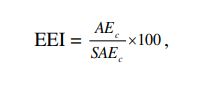
where:
AEC – annual energy consumption (rounded to 2 decimal places);
SAEC – standard annual energy consumption.
AEC is calculated in kW∙h/year using the following formula:
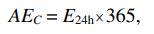
where E24h – energy consumption calculated in kW∙h over 24 h (rounded to 3 decimal places).
SAEC is calculated in kW∙h using the following formula (rounded to 2 decimal places):

where:
Veq – equivalent volume of the refrigerating appliance (in litres);
CH – a value equal to 50 kW∙h/year for refrigerating appliances having a usable volume of the chilled-food compartment of at least 15 l;
M and N – correction factors, the values of which for refrigerating appliances of various types are given in Table 1 (regardless of the number of doors or drawers).
Table 1
Classification of refrigerating appliances and corresponding compartment design
Description of the refrigerating appliance | Presence and combination of compartments in the refrigerating appliance 1 |
Classification of refrigerating appliances | |||||||||
Rated storage temperature | + 14 and higher (design T) | + 12 | + 12 | + 5 | 0 | 0 | – 6 | – 12 | – 18 | – 18 | |
Compartment type | Other | wine storage 2 | cellar 3 | fresh-food storage 4 | chill 5 | ice-making 6 | "" 7 | ""8 | ""9 | ""10 | |
Equipment category | Compartment design | ||||||||||
Refrigerator | – | – | – | + | – | – | – | – | – | – |
type 1 |
Refrigerating appliance for wine storage (wine storage appliance, cellar) | + | – | – | – | – | – | – |
type 2 | |||
+ | – | – | – | – | – | – | – | ||||
– | + | – | – | – | – | – | – | – | – | ||
Refrigerator-chiller | + | + | – | – | – | – |
type 3 | ||||
+ | + | – | – | – | – | ||||||
Refrigerator | + | + | – | – | – |
type 4 | |||||
Refrigerator | + | + | – | – |
type 5 | ||||||
Refrigerator | + | + | – |
type 6 | |||||||
Refrigerator-freezer | + | + |
type 7 | ||||||||
Upright-type | – | – | – | – | – | – | – | +11 | + |
type 8 | |
Chest-type | – | – | – | – | – | – | – | – | + |
type 9 | |
Multi-use and other refrigerating appliances | type 10 12 | ||||||||||
The refrigerating appliance shall simultaneously maintain the required storage temperature in the various compartments within the permissible deviations (during the defrost cycle) specified in Table 2 for the various types of refrigerating appliances and for the corresponding climatic classes.
Multi-use appliances and (or) compartments shall be capable of maintaining the storage temperatures of the various types of compartments where these temperatures can be set by the user in accordance with the manufacturer's instructions.
Table 2
Storage temperature (°C)
Other compartment | tom | >+14 |
Wine storage compartment | twma | +5 ≤ twma ≤ +20 |
Moderate-temperature compartment | tcm | +8 ≤ tcm ≤ +14 |
Fresh-food storage compartment |
t1m, t2m, t3m, |
0 ≤ t1m, t2m, |
Chill compartment | tcc | −2 ≤ tcc ≤ +3 |
Compartment marked "one star" | t* | ≤−6 |
Compartment marked "two stars" | t** | ≤−12 а) |
Freezer | t*** | ≤−18 а) |
Note: | ||
Veq is calculated by the formula:
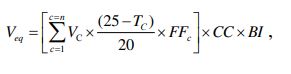
where:
n is the number of compartments;
VC is the storage volume of the compartment (in litres);
TC is the rated temperature of the compartment (in °C);

FFc, CC and BI are correction factors whose values are given in Table 4.
Table 3
Thermodynamic correction coefficients for refrigerating appliance compartments
Compartment type |
Rated | (25 – Tc) / 20 |
Other compartment | Design temperature |
|
Moderate-temperature compartment / Wine storage compartment | + 12 | 0,65 |
Fresh-food storage compartment | + 5 | 1,00 |
Chill compartment | 0 | 1,25 |
Ice-making compartment and compartment marked "0 stars" | 0 | 1,25 |
Compartment marked "one star" | – 6 | 1,55 |
Compartment marked "two stars" | – 12 | 1,85 |
Compartment marked "three stars" | – 18 | 2,15 |
Freezer compartment (Compartment marked "four stars") | – 18 | 2,15 |
Note 1 | ||
Note 2 | ||
Note 3 | ||

Table 4
Values of Correction Factors for Different Refrigerating Appliances and Different Compartments of Refrigerating Appliances
Correction factor | Value | Application of the factor |
FF | 1,2 | compartments for storing frozen food of a frost-free refrigerating appliance |
1 | other refrigerating appliances and compartments of refrigerating appliances | |
CC | 1,2 | refrigerating appliances intended for operation in a tropical climate at an average ambient temperature from +16 °C to +43 °C (T rating) |
1,1 | refrigerating appliances intended for operation in a subtropical climate at an average ambient temperature from +16 °C to +38 °C (ST rating) | |
1 | refrigerating appliances intended for operation in a moderately cold and temperate climate with an average ambient temperature from +10 °C to +32 °C (SN rating) and from +16 °C to +32 °C (N rating), respectively | |
BI | 1,2 | built-in refrigerating appliances with a width of no more than 580 mm |
1 | other refrigerating appliances |
4. Refrigerating appliances (except wine storage appliances and refrigerating appliances with a storage volume of less than 10 l) shall have an Energy Efficiency Index (EEI) of less than 42 for compression-type refrigerating appliances and less than 110 for absorption-type refrigerating appliances.
5. A refrigerating appliance with a fast-freezing function or a similar function implemented by modifying the control settings in freezers and freezer compartments, which the user has activated once in accordance with the operating documents, shall automatically return to the previous normal storage temperature conditions no later than 72 hours thereafter.
This requirement does not apply to refrigerator-freezers with one thermostat and one compressor that are equipped with an electromechanical control system.
Refrigerator-freezers with one thermostat and one compressor that are equipped with an electronic control panel and, according to the operating documents, may be used at an ambient temperature below +16 °C shall have a special switch setting for the "winter mode" function or a similar function that automatically sets the correct storage temperature for frozen food in accordance with the ambient temperature.
Refrigerating appliances with a storage volume of less than 10 l shall automatically switch to on mode with a power consumption of 0,00 W no later than 1 hour after operating in an empty state. The presence of a switch that disconnects the appliance from the power supply is not sufficient to meet this requirement.
6. Tests (measurements) of refrigerating appliances shall be carried out taking into account the following specific features:
а) if the refrigerating appliance includes anti-condensation heaters that can be switched on and off by the end user, they shall be switched on during tests (measurements) of energy consumption and, where adjustment is provided, set to maximum heating;
б) if the refrigerating appliance includes devices accessed through a special door (for example, an ice or chilled beverage dispenser) that can be switched on and off by the end user, they shall be switched on during tests (measurements) of energy consumption but shall not operate;
в) for multi-purpose refrigerating appliances and compartments, the storage temperature during the test (measurement) of energy consumption shall correspond to the rated temperature of the coldest type of compartment included in the refrigerating appliance;
г) energy consumption shall be determined in the coldest configuration in accordance with the operating documents for continuous normal use;
д) the following parameters shall be determined during tests (measurements):
overall dimensions (to the nearest mm);
gross volume (rounded to the nearest whole number in cu. dm or l);
storage volume (volumes) and total net storage volume (volumes) (rounded to the nearest whole number in cu. dm or l);
defrosting type;
storage temperature;
energy consumption (kW∙h/24 h) (rounded to 3 decimal places);
freezing capacity (in kg per 24 hours);
power consumption (W) (rounded to 2 decimal places);
humidity of the wine storage compartment (%) (rounded to the nearest whole number).
7. The operating documents accompanying refrigerating appliances, as provided for in Clause 13 of the Technical Regulation of the Eurasian Economic Union "On Requirements for the Energy Efficiency of Energy-Consuming Devices" (TR EAEU 048/2019) (hereinafter referred to as the Technical Regulation), shall contain the following information on their characteristics and parameters:
а) information on the combination of sections, drawers and shelves that ensures the most efficient energy consumption;
б) information on methods for ensuring minimum energy consumption;
в) for a wine storage appliance — information that it is intended exclusively for storing wine.
IV. Permissible deviations of the energy efficiency parameters of refrigerating appliances during tests (measurements) after their placing on the market
8. If tests (measurements) of refrigerating appliances are carried out after their placing on the market in the customs territory of the Union, tests (measurements) shall be carried out on one sample of each model of refrigerating appliance.
A sample of a refrigerating appliance shall be considered compliant with these Requirements if the obtained values of the parameters and characteristics of the refrigerating appliance comply with Section III of these Requirements and the nominal values declared by the manufacturer within the permissible deviations specified in Table 5.
Table 5
Permissible deviations
Measured parameter | Permissible deviation |
Gross volume |
the value must not be lower than the nominal value by more than 3 % or 1 l, whichever of |
Storage volume |
the value must not be lower than the nominal value by more than 3 % or 1 l, whichever of |
Freezing capacity | the value must not be lower than the nominal value by more than 10 % |
Energy consumption (E24h) | the value must not exceed the nominal value E24h by more than 10 % |
Energy consumption of refrigerating appliances with a storage volume of less than 10 l | the value must not exceed the limit values specified in the fourth paragraph of Clause 5 of these Requirements by more than 0,10 W with a confidence level of 95 % |
Relative humidity in the wine storage appliance | the value must not exceed the nominal value by more than 10 % in either direction, i.e. ± 10 %. |
Adjusted sound power level | the measured value must not be greater than the declared value |
If the values obtained for the parameters and characteristics of the sample (representative sample) of the refrigerating appliance do not correspond to the values taking into account the permissible deviations specified in Table 5, the tests should be conducted on 3 additional samples of the refrigerating appliance.
The average values of the parameters and characteristics of the 3 additional samples of the refrigerating appliance must correspond to the values specified in Table 3.
In other cases, this model and other equivalent refrigerating appliances should be considered non-compliant with the requirements of the Technical Regulation.
V. Contents of the Label and Technical Sheet of Refrigerating Appliances
9. The label of refrigerating appliances shall contain the following information:
I. name or trademark (if available) of the manufacturer;
II. model designation;
III. energy efficiency class;
IV. annual energy consumption (kW∙h/year) (rounded to the nearest whole number);
V. total net volume of the compartment for chilled food products at a temperature above –6 °C (rounded to the nearest whole number);
VI. total net volume of the compartment for storing frozen food at a temperature not exceeding –6 °C (rounded to the nearest whole number). If the household refrigerating appliance has no freezer compartment, this field shall be left blank.
If the refrigerating appliance is used for wine storage, items V and VI shall be modified, and the number of standard bottles that can be placed in the appliance in accordance with the manufacturer's instructions shall be indicated.
VII. adjusted sound power level, expressed in dB (A) relative to 1 pW (rounded to the nearest whole number) (specified in dB).
10. The technical sheet included in the operating documents of refrigerating appliances shall contain the following information:
a) name or trademark (if available) of the manufacturer;
b) model designation;
c) model category in accordance with the classification in Table 1;
d) energy efficiency class;
e) annual energy consumption (kW∙h/year) (rounded to the nearest whole number) in the following form: “Energy consumption, based on the results of a standard test conducted over 24 hours, is “XYZ” kW·h/year. Actual energy consumption depends on how the refrigerating appliance is used and where it is installed”;
f) storage volume of each compartment and the number of “stars” in the marking (if available);
g) design temperature of “other compartments”. For wine storage compartments, the lowest storage temperature preset in the compartment or set by the user in accordance with the operating manual shall be indicated;
h) the wording “frost-free” for the relevant compartment(s);
i) nominal temperature-rise time for food products in the freezer compartment (in hours);
j) freezing capacity (in kg per 24 hours);
k) climatic class in the following form: “Climatic class: W [climatic class]. This appliance is intended for use at an ambient temperature from “X” [lower temperature] °C to “X” [upper temperature] °C”;
l) adjusted sound power level, expressed in dB (A) relative to 1 pW (rounded to the nearest whole number) (specified in dB).
m) for a built-in refrigerating appliance, the relevant wording shall be provided;
n) for a wine storage appliance, the following wording: “This appliance is intended exclusively for wine storage”. This wording shall not be provided for refrigerating appliances that are not specifically intended for wine storage but may be used for this purpose, or for refrigerating appliances having a wine storage compartment combined with another compartment.
11. One technical sheet may contain information on several refrigerating appliances from the same manufacturer.
12. The information contained in the technical sheet of refrigerating appliances may be provided as a colour or black-and-white copy of the label. In this case, the information specified in Clause 10 that is not displayed on the label shall also be provided.
VI. Energy Efficiency Class of Refrigerating Appliances
13. 7 classes have been established to designate the energy efficiency of refrigerating appliances depending on the Energy Efficiency Index, listed in descending order in Table 6.
Table 6
Energy efficiency class | Energy Efficiency Index |
A +++ | EEI < 22 |
A ++ | 22 ≤ EEI < 33 |
A + | 33 ≤ EEI < 42 |
A | 42 ≤ EEI < 55 |
B | 55 ≤ EEI < 75 |
C | 75 ≤ EEI < 95 |
D (least efficient) | 95 ≤ EEI < 110 |
APPENDIX No. 3
to the Technical Regulation
of the Eurasian Economic Union
"On Requirements for the Energy
Efficiency of Energy‑Consuming
Devices" (TR EAEU 048/2019)
REQUIREMENTS
for the Energy Efficiency of Electric Induction Motors
Note. Appendix 3 as amended by Decision No. 50 of the Council of the Eurasian Economic Commission dated 15.04.2022 (enters into force upon the expiry of 10 calendar days from the date of its official publication).
I. Scope of Application
1. These Requirements apply to single-speed three-phase electric induction motors (including those built into other products) with a squirrel-cage rotor, from 2 to 6 poles, a rated voltage of up to 1000 V, a rated frequency of 50 or 50/60 Hz, and a rated output power from 0,75 to 375 kW, intended for continuous-duty operation and placed on the market in the customs territory of the Eurasian Economic Union (hereinafter referred to as motors), except for motors:
intended for operation when fully immersed in liquid;
fully integrated into other products (for example, gearboxes, pumps, fans or compressors) so that their energy consumption cannot be tested separately from that product;
intended for operation in various braking modes (for example, motors with a regenerative braking function);
designed exclusively for use:
at an altitude exceeding 4000 m above sea level;
at an ambient temperature above 60 ºС;
at a maximum operating temperature above 400 ºС;
at an ambient temperature below minus 30 ºС for any motor or below 0 ºС for a water-cooled motor;
at a coolant inlet temperature below 0 ºС or above 32 ºС;
in potentially explosive atmospheres.
II. Terms and Definitions
2. For the purposes of applying these Requirements, the following terms are used:
"squirrel-cage motor" means a motor without moving contacts, commutators, slip rings or electrical contacts connected to the rotor;
"permissible deviation" means the maximum permissible deviation of motor parameter values obtained from tests compared with the values specified on the rating plate or in the operating documents;
"rated efficiency ( ηN)" means the efficiency value established by the manufacturer that is equal to or greater than the normalized efficiency value (hn);
"normalized efficiency ( ηn)" means the efficiency value that ensures the motor's compliance with a specified energy efficiency class;
"continuous-duty operation" means the ability of a motor with an integrated cooling system to operate at rated load without interruption, without reaching the rated maximum temperature;
"average efficiency" means the efficiency having an average value for a set of motors of identical design and with identical technical characteristics;
"brake motor" means a motor with an electromechanical braking device acting directly on the motor shaft (without coupling connections);
"variable speed drive" means an electrical energy converter that continuously controls the electrical energy supplied to the motor in order to convert it into mechanical energy in accordance with the specified speed–load torque characteristic by changing the frequency of the alternating current of the power supply network.
III. Energy Efficiency Requirements for Motors and Specific Features of Determining Energy Efficiency Indicators
3. From 1 September 2028, the normalized efficiency value (hn) shall not be lower than the values established for energy efficiency class IE2 in Table 1.
Note. Clause 3 as amended by Decision No. 54 of the Council of the Eurasian Economic Commission dated 08.07.2025 (enters into force upon the expiry of 10 calendar days from the date of its official publication).Table 1
Values of the normalized efficiency (
ηn) for energy efficiency class IE2 when motors are supplied from an AC power supply with a frequency of 50 HzRated output power, kW | Number of poles | ||
2 | 4 | 6 | |
0,75 | 77,4 | 79,6 | 75,9 |
1,1 | 79,6 | 81,4 | 78,1 |
1,5 | 81,3 | 82,8 | 79,8 |
2,2 | 83,2 | 84,3 | 81,8 |
3 | 84,6 | 85,5 | 83,3 |
4 | 85,8 | 86,6 | 84,6 |
5,5 | 87,0 | 87,7 | 86,0 |
7,5 | 88,1 | 88,7 | 87,2 |
11 | 89,4 | 89,8 | 88,7 |
15 | 90,3 | 90,6 | 89,7 |
18,5 | 90,9 | 91,2 | 90,4 |
22 | 91,3 | 91,6 | 90,9 |
30 | 92,0 | 92,3 | 91,7 |
37 | 92,5 | 92,7 | 92,2 |
45 | 92,9 | 93,1 | 92,7 |
55 | 93,2 | 93,5 | 93,1 |
75 | 93,8 | 94,0 | 93,7 |
90 | 94,1 | 94,2 | 94,0 |
110 | 94,3 | 94,5 | 94,3 |
132 | 94,6 | 94,7 | 94,6 |
160 | 94,8 | 94,9 | 94,8 |
201 – 375 | 95,0 | 95,1 | 95,0 |
4. From 1 September 2030, the normalized efficiency (hn) for motors with a rated output power from 7,5 to 375 kW must not be lower than the values established for energy efficiency class IE3 in Table 2, or must correspond to energy efficiency class IE2 for motors equipped with variable speed drives.
Footnote. Clause 4 as amended by Decision No. 54 of the Council of the Eurasian Economic Commission dated 08.07.2025 (enters into force upon the expiry of 10 calendar days from the date of its official publication).Table 2
Values of the normalized efficiency (
ηn) for energy efficiency class IE3 when motors are supplied from an AC power supply with a frequency of 50 HzRated output power, kW | Number of poles | ||
2 | 4 | 6 | |
0,75 | 80,7 | 82,5 | 78,9 |
1,1 | 82,7 | 84,1 | 81,0 |
1,5 | 84,2 | 85,3 | 82,5 |
2,2 | 85,9 | 86,7 | 84,3 |
3 | 87,1 | 87,7 | 85,6 |
4 | 88,1 | 88,6 | 86,8 |
5,5 | 89,2 | 89,6 | 88,0 |
7,5 | 90,1 | 90,4 | 89,1 |
11 | 91,2 | 91,4 | 90,3 |
15 | 91,9 | 92,1 | 91,2 |
18,5 | 92,4 | 92,6 | 91,7 |
22 | 92,7 | 93,0 | 92,2 |
30 | 93,3 | 93,6 | 92,9 |
37 | 93,7 | 93,9 | 93,3 |
45 | 94,0 | 94,2 | 93,7 |
55 | 94,3 | 94,6 | 94,1 |
75 | 94,7 | 95,0 | 94,6 |
90 | 95,0 | 95,2 | 94,9 |
110 | 95,2 | 95,4 | 95,1 |
132 | 95,4 | 95,6 | 95,4 |
160 | 95,6 | 95,8 | 95,6 |
201 – 375 | 95,8 | 96,0 | 95,8 |
5. From 1 September 2032, the normalized efficiency (hn) for motors with a rated output power from 0,75 to 375 kW must not be lower than the values established for energy efficiency class IE3, or must correspond to energy efficiency class IE2 for motors equipped with variable speed drives.
Footnote. Clause 5 as amended by Decision No. 54 of the Council of the Eurasian Economic Commission dated 08.07.2025 (enters into force upon the expiry of 10 calendar days from the date of its official publication).
6. The normalized efficiency ( ηn) is determined at the rated output power (PN), rated voltage (UN) and rated frequency (fN) established by the manufacturer.
7. The operating documents accompanying the motors, as provided for in Clause 13 of the Technical Regulation of the Eurasian Economic Union “On Requirements for the Energy Efficiency of Energy-Consuming Devices” (TR EAEU 048/2019) (hereinafter referred to as the Technical Regulation), must contain the following information on their characteristics and parameters:
а) rated efficiency (hN) at full power, 75 % and 50 % of the rated load and voltage (UN);
б) energy efficiency class (IE2 or IE3);
в) number of poles;
г) rated output power or range of rated output power values (kW);
д) rated frequency (Hz);
е) rated voltage or range of rated voltage values of the motor (V);
ж) rated speed or range of rated rotational speed values (rpm);
з) information on the disassembly, recycling and disposal of motors;
и) information on the operating conditions for which the motor was designed:
altitude above sea level, ambient temperature (including for water-cooled motors);
temperature of the coolant at the motor inlet;
maximum operating temperature of the motor;
potentially explosive atmosphere.
8. The information specified in subparagraphs “а” and “б” of Clause 7 of these Requirements, as well as the year of manufacture of the motor, shall be affixed to or adjacent to the motor rating plate.
If the size of the motor rating plate does not allow the specified information to be affixed, only the information on the rated efficiency (hN) at full rated load and rated voltage (UN) shall be affixed to the rating plate.
Information on the mandatory use of a variable speed drive for speed control together with an electric motor of a lower energy efficiency class in accordance with Clauses 4 and 5 of these Requirements must be specified in the technical documentation and/or on the rating plate. The technical documentation must provide information on any specific safety measures to be taken if the motor is supplied with or used together with a variable speed drive for speed control.
IV. Permissible deviations in the energy efficiency parameters of motors during tests (measurements) after their placing on the market
9. If tests (measurements) of motors are conducted after their placing on the market in the customs territory of the Eurasian Economic Union, tests (measurements) shall be conducted on one sample of each motor model.
A motor sample shall be deemed to comply with these Requirements if the obtained loss values (1- ηN) do not exceed the loss values (1-ηn) corresponding to the normalized efficiency values (ηn) established in Tables 1 and 2 of these Requirements by more than 15 % (for motors with a rated power from 0,75 to 150 kW) and by more than 10 % (for motors with a rated power from 150 to 375 kW).
If the obtained values do not correspond to the specified values, tests (measurements) shall be conducted on 3 additional samples of the motor of this model. A motor model shall be deemed to comply with these Requirements if the average loss values (1- ηN) for the 3 tested motors do not exceed the values specified in the second paragraph of this clause.
In other cases, this motor model shall be considered not to comply with the requirements of the Technical Regulation.
ANNEX No. 4
to the Technical Regulation
of the Eurasian Economic Union
"On Requirements for the Energy
Efficiency of Energy‑Consuming
Devices" (TR EAEU 048/2019)
REQUIREMENTS
for the energy efficiency of televisions
I. Scope of Application
1. These Requirements apply to televisions placed on the market in the customs territory of the Eurasian Economic Union (hereinafter referred to as the Union), powered from an electrical network with a rated voltage of up to 250 V (inclusive) and intended for operation in residential and office premises.
II. Terms and Definitions
2. For the purposes of applying these Requirements, the following terms are used:
"home mode" means the state of a television recommended by the manufacturer for home use;
"menu of preset picture mode settings" means a set of television settings preset by the manufacturer, from which the user may select a picture mode setting after switching on the television;
"Full HD resolution" means screen resolution with a total number of physical pixels of at least 1920 × 1080;
"on mode" means the state of a television in which it is connected to a power source and reproduces sound and images;
"off mode" means the state of a television in which it is connected to a power source, is not in on mode or standby mode, and ensures compliance with Electromagnetic Compatibility requirements (regardless of whether an off-mode indication function is present);
"standby mode" means the state of a television in which it is connected to a power source and performs the reactivation function for an unlimited period of time (including indication of the ability (readiness) to reactivate) and/or the information or status display function;
"television monitor" means a television with a built-in screen intended to reproduce audiovisual signals transmitted from one or more external devices connected via a wired (RCA, SCART, HDMI, etc.) and/or wireless standard interface (except non-standard DVI and SDI video signals) for transmitting audiovisual signals, and without built-in means for receiving and reproducing television and radio broadcasting signals;
"television receiver" means a television intended to receive and reproduce audiovisual signals, placed on the market in the customs territory of the Union as an apparatus or system and consisting of a display and one or more tuners (receivers), and, where necessary, additional devices with recording and playback functions (DVD player, hard magnetic disk drive, video recorder, etc.) in the form of an apparatus (single combined device) or a system consisting of several apparatuses;
"television" means a television receiver or television monitor;
"information or status display function" means a function that provides information or displays the status of the television on its screen, including time indication;
"reactivation function" means a function that enables, by means of remote-control devices and timers, transition from standby mode to on mode, in which additional functions are activated.
III. Requirements for the energy efficiency of televisions and specific features of determining energy efficiency indicators
3. A television shall have a power mode control device (devices) of at least one of the following types:
a) an automatic control device that switches a television connected to the mains, within no more than 4 hours following the user's last actions (for example, channel switching, etc.), to standby mode or off mode, or to any other mode in which the permissible power consumption does not exceed the values established for standby mode or off mode;
b) a mechanical control device located on the front panel of a television connected to the mains or in another visually observable and easily accessible location on the television, which manually switches the television to a mode with power consumption of not more than 0,01 W.
4. Before a television is switched by means of an automatic control device from on mode to another mode, a warning message to this effect shall be displayed on its screen.
5. The power consumption of a television in on mode at screen luminance of at least 65 % of the maximum possible value shall not exceed the values specified in Table 1.
Table 1
Power consumption of a television in on mode
Type of television | Power consumption |
Television receiver |
16 W + A ×3,4579 W/dm2 |
Television monitor |
12 W + A ×3,4579 W/dm2 |
Note. A is the area of the visible image area on the screen (in sq. dm). | |
6. The power consumption of a television in standby mode shall not exceed the values specified in Table 2.
Table 2
Power consumption of a television in standby mode
Functions performed in standby mode Reactivation function (including indication of the ability (readiness) to reactivate) Reactivation function and information or status display function | Power consumption (W), not more than 0,50 1,00 |
7. The power consumption of a television in off mode shall not exceed the values specified in Table 3.
Table 3
Television Power Consumption in Off Mode
Type of power mode control device Automatic control device Mechanical control device (located on the front panel of a television connected to the mains or in another visually observable and easily accessible location on the television, manually switching the television to a mode with power consumption not exceeding 0,01 W) | Power consumption (W), not exceeding 0,30 0,50 |
8. Television monitors and separately supplied additional television receiver devices shall comply with the power consumption requirements specified in Clauses 6 and 7 of these Requirements.
9. Upon initial activation, televisions having a menu of preset picture mode settings shall operate in home mode, which shall be set by default.
If the user selects a mode other than home mode, the possibility of confirming the mode shall be provided.
10. Measurement of the power consumption of televisions in on mode shall be carried out under the following conditions:
a) for televisions without a menu of preset picture mode settings, the luminance and contrast controls shall be set in accordance with Subclause "c" of Clause 11 of these Requirements;
b) for televisions having a menu of preset picture mode settings, the measurement mode shall be set in accordance with Subclause "b" of Clause 11 of these Requirements;
c) the television monitor shall be connected to an appropriate tuner, whose power consumption shall not be taken into account when measuring the power consumption of the television monitor;
d) a 1000 Hz audio-frequency signal with a voltage of 0,5 V shall be applied to the audio input of the television monitor. The volume control of the television monitor shall be used to set a voltage at the loudspeaker terminals corresponding to a power of 50 mW;
e) when measuring power consumption, the volume control of the television shall be in the set position;
f) measurements shall be carried out:
at an ambient temperature of 23 ± 5 °C;
with a dynamic broadcast television signal applied to the television input;
with the luminance, contrast and volume controls of the television positioned in accordance with Subclauses "a", "b", "d"–"f" of this Clause;
g) the average power consumption shall be measured for 10 minutes:
after the television has been in standby mode for at least 1 hour and then in on mode for at least 1 hour. The measurements shall be carried out before the television has been in on mode for more than 3 hours. During the time the television is in on mode
the supplied television signal shall be displayed on the screen. For televisions whose stabilisation time is less than 1 hour, the duration of power consumption measurement may be reduced if the measured results do not differ from the results obtained in accordance with the specified procedure by more than 2 %;
without activation of the automatic brightness control function, if available. If this function is provided and cannot be switched off, measurements shall be carried out with an external light source switched on, directly creating an illuminance of at least 300 lx at the ambient light sensor. The average power consumption shall not exceed the values established by Clause 5 of these Requirements, taking into account the permissible deviation.
11. Measurement of maximum luminance shall be carried out under the following conditions:
a) to determine the maximum luminance in User mode, a "white field" video signal shall be applied to the television input. The contrast and luminance controls of the television shall be set to the maximum position. The luminance at the centre of the television screen shall be measured with a luminance meter. The value measured in this manner shall be the maximum luminance of the television;
b) for televisions having a menu of preset picture mode settings, a mode shall be selected in which the luminance at the centre of the television screen is at least 65 % of the maximum luminance. This mode shall be set when measuring power consumption;
c) for televisions without a menu of preset picture mode settings, the luminance and contrast controls shall be used to set the luminance at the centre of their screens to at least 65 % of the maximum luminance.
12. The Energy Efficiency Index (EEI) of televisions shall be calculated using the following formula:
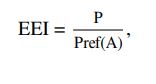
where:
Pref(A) = Рbasic + A × 4,3224 W/dm2;
Рbasic = 20 W for televisions with one tuner/receiver and without a hard disk;
Pbasic = 24 W for televisions with a hard disk(s);
Рbasic = 24 W for televisions with two or more tuners/receivers;
Рbasic = 28 W for televisions with a hard disk(s) and two or more tuners/receivers;
Рbasic = 15 W for television monitors;
Р – power consumption of the television in on mode, in W (rounded to 1 decimal place);
A = visible screen area, dm2.
13. Annual energy consumption in on mode (E), kWh, shall be calculated as E = 1,46 × P.
14. Televisions with automatic brightness control.
For the purposes of calculating the Energy Efficiency Index and annual energy consumption in on mode specified in Clauses 12 and 13 of these Requirements, the power consumption in on mode established in accordance with the procedure set out in Clause 17 of these Requirements shall be reduced by 5 % if the following conditions are met when the television is placed on the market:
– the luminance of the television in home mode or in the on-mode conditions set by the manufacturer automatically decreases between an ambient light intensity of at least 20 lx and 0 lx;
– automatic brightness control is activated in the home conditions or in the on mode of the television set by the manufacturer.
15. The operating documents accompanying televisions, as provided for in Clause 13 of the Technical Regulation of the Eurasian Economic Union "On Requirements for the Energy Efficiency of Energy-Consuming Devices" (TR EAEU 048/2019) (hereinafter referred to as the Technical Regulation), shall also contain information on their characteristics and parameters:
a) the value of power consumption in on mode (in W) (rounded to 1 decimal place for power not exceeding 100 W or to a whole number for power exceeding 100 W);
b) the value of power consumption in standby mode and off mode (in W) (rounded to 2 decimal places).
16. The set of documents for televisions specified, taking into account the conformity assessment scheme selected by the applicant, in Subclause "a" of Clause 28 or Subclause "a" of Clause 29 of the Technical Regulation, shall additionally include the following information for televisions:
a) on the following parameters monitored during tests (measurements):
ambient temperature (in °C);
test voltage (in V) and frequency (in Hz);
voltage waveform sinusoidal distortion factor;
conditions for connecting sources of test audio and video signals;
information (Documentation) on the equipment used during tests (measurements), information on the performance of tests (measurements) and on the connection diagram used during measurements;
b) information on the parameters in standby mode and off mode:
the power consumption value in standby mode and off mode, the power consumption (in W) (rounded to 2 decimal places);
a description of the method for selecting or programming the operating mode of the television;
the sequence of actions required to reach the mode in which the television automatically changes mode.
c) on the following parameters of the television in on mode:
the power consumption value (in W) (rounded to 1 decimal place for power consumption not exceeding 100 W or to a whole number for power consumption exceeding 100 W);
characteristics of the dynamic broadcast television signal;
the sequence of actions required to ensure a stable state with respect to power consumption;
for televisions having a menu of preset picture mode settings, the ratio of screen luminance in home mode to its maximum luminance (in %);
for television monitors, a description of the relevant characteristics of the tuner used during tests (measurements);
d) on the following parameters of the television in standby mode and off mode:
the measurement method used;
the duration of on mode after the user's last action before the television automatically switches to standby mode, off mode or another mode in which the limit value of power consumption is not exceeded.
IV. Permissible deviations of television energy efficiency parameters during tests (measurements) after placing them on the market
17. If televisions are tested (measured) after being placed on the market in the customs territory of the Union, tests (measurements) shall be carried out on one sample of each television model.
A television sample shall be considered compliant with these Requirements if the following results are obtained:
the power consumption of the television in on mode shall not exceed the value specified in Table 1 of these Requirements by more than 7 %;
the power consumption of the television in standby mode and off mode shall not exceed the values specified in Tables 2 and 3 of these Requirements, respectively, by more than 0,10 W;
the luminance shall not be less than 60 % of the maximum luminance of the television.
If the values obtained do not comply with the specified values, tests (measurements) shall be carried out on 3 additional television samples.
A television model shall be considered compliant with the requirements of these Requirements if the average parameter values for 3 additional samples of this television model comply with these Requirements.
In other cases, the model shall be considered non-compliant with the requirements of the Technical Regulation.
V. Contents of the Energy Efficiency Label and Technical Sheet for Television Sets
18. The energy efficiency label for television sets shall contain the following information:
I. name or trademark (if available) of the manufacturer;
II. model designation;
III. energy efficiency class. The energy efficiency pictogram shall be positioned at the same level as the arrow of the corresponding energy efficiency class;
IV. power consumption of the television set in on mode, W, rounded to the nearest whole number;
V. annual energy consumption in on mode, kWh/year, rounded to the nearest whole number;
VI. visible screen diagonal in inches and centimetres;
VII. the pictogram shall be displayed for television sets with a visible standby switch.
19. The technical sheet included in the operating documents of television sets shall contain the following information:
а) name or trademark (if available) of the manufacturer;
б) manufacturer's model identifier, where the model identifier means a code, generally alphanumeric, that distinguishes a specific television model from other models of the same trademark or manufacturer bearing the same name;
в) energy efficiency class;
г) visible screen diagonal in inches and centimetres;
д) power consumption of the television set in on mode, W, rounded to the nearest whole number;
е) annual energy consumption in on mode, kWh/year, rounded to the nearest whole number;
ж) standby mode and energy consumption in off mode, or both;
з) screen resolution in the physical horizontal and vertical pixel count.
20. One technical sheet for a television set may cover a range of television models supplied by the same manufacturer.
21. The information contained in the technical sheet for television sets may be provided as a colour or black-and-white copy of the label. In this case, the information specified in Clause 19 and not shown on the label shall also be provided.
VI. Determination of the Energy Efficiency Classes of Television Sets
22. The energy efficiency class of television sets is determined in accordance with their annual energy consumption as specified in Table 4.
Table 4
Energy Efficiency Classes of Television Sets
Energy efficiency class | Energy Efficiency Index (EEI) |
A +++ | EEI <0,10 |
A ++ | 0,10 ≤ EEI < 0,16 |
A + | 0,16 ≤ EEI < 0,23 |
A | 0,23 ≤ EEI < 0,30 |
B | 0,30 ≤ EEI < 0,42 |
C | 0,42 ≤ EEI < 0,60 |
D | 0,60 ≤ EEI < 0,80 |
E | 0,80 ≤ EEI < 0,90 |
F | 0,90 ≤ EEI < 1,00 |
G | 1,00≤EEI |
ANNEX No. 5
to the Technical Regulation
of the Eurasian Economic Union
"On Requirements for the Energy
Efficiency of Energy‑Consuming
Devices" (TR EAEU 048/2019)
REQUIREMENTS
for the Energy Efficiency of Household and Office Electrical Equipment in Standby and Off Modes
Note. Annex 5 as amended by Decisions of the Council of the Eurasian Economic Commission dated 15.04.2022 No. 50 (enters into force upon expiry of 10 calendar days from the date of its official publication); dated 08.07.2025 No. 54 (enters into force upon expiry of 10 calendar days from the date of its official publication).
I. Scope of Application
1. These Requirements apply to the following equipment placed on the market in the customs territory of the Eurasian Economic Union (hereinafter, the Union), intended for use in households or offices (including outdoors) by users without special training
and operating directly from the mains with a rated voltage of up to 250 V (inclusive) (hereinafter, equipment):
а) washing machines, tumble dryers and other equipment for processing (washing, ironing, drying, cleaning) laundry, Clothing and Footwear;
б) dishwashers;
в) electric ovens, electric hotplates;
г) microwave ovens;
д) toasters, deep fryers, electric knives, coffee grinders, coffee machines and other appliances for preparing and processing food;
е) hair clippers, hairdryers, shavers, toothbrushes, massage equipment and other equipment for body care;
ж) equipment for opening and closing containers and packages;
з) scales;
и) terminal telecommunications equipment;
к) printers;
л) scanners;
м) monitors;
н) active loudspeaker systems powered from an AC mains supply;
о) multimedia projectors;
п) radio receivers;
р) video recorders;
с) video cameras;
т) sound-recording equipment;
у) audio amplifiers;
ф) home theatres;
х) electromusical instruments;
ц) other equipment for recording and reproducing images and sound, including equipment for transmitting images and sound by means other than telecommunications channels, by means of signals or otherwise (excluding television sets);
ч) Toys, leisure and sports equipment, including electric miniature railways and racetracks, handheld video game consoles, sports equipment with electrical and electronic components, other toys and exercise equipment.
II. Terms and Definitions
2. For the purposes of applying these Requirements, the following terms are used:
"on mode" means a state in which the equipment is connected to a power source and, in accordance with its intended use, performs at least 1 of its main functions;
"off mode" means a state in which the equipment is connected to a power source, is not in on mode or standby mode, and can perform only functions ensuring compliance with Electromagnetic Compatibility requirements and/or indicating off mode;
"standby mode" means a state in which the equipment is connected to a power source and, for an unlimited period, performs a reactivation function (including indication of the ability (readiness) to reactivate) and/or an information or status display function;
"information or status display function" means a function providing information or displaying the status of the equipment on an indicator, including time indication;
"reactivation function" means a function enabling, by means of remote-control devices, internal sensors or time-delay controls, transition from standby mode to on mode, in which the main and/or additional functions of the equipment are activated.
III. Requirements for the Energy Efficiency of Equipment in Standby and Off Modes and Specific Features of Determining Energy Efficiency Indicators
3. The equipment shall have at least one of the following types of power mode control device:
а) an automatic control device that, within the shortest possible time, switches equipment connected to the mains but not performing its main operating functions and not connected to other equipment to standby mode or off mode, provided that this function does not interfere with the intended use;
б) a mechanical control device located on the front panel of equipment connected to the mains and installed in the operating position, or in another visually observable and easily accessible place on the equipment, which manually switches the equipment to standby mode or off mode.
4. The equipment shall have off mode and/or standby mode (except where this is impracticable in view of the intended use of the equipment).
The power consumption of equipment in standby mode shall not exceed the values specified in Table 1.
Table 1
Power Consumption of Equipment in Standby Mode
Type of power mode control device | Functions performed | Power consumption (W), not more than |
1 September 2028 | ||
Automatic control device | reactivation function (including indication of the ability (readiness) to reactivate) | 0,50 |
information or status display function (regardless of whether the reactivation function is available) | 1,00 | |
Mechanical control device | reactivation function | 0,10 |
reactivation function with indication of the ability (readiness) to reactivate | 0,30 | |
5. The power consumption of equipment in off mode shall not exceed the values specified in Table 2.
Table 2
Power consumption of equipment in off mode
Type of power mode control device | Power consumption (W), not more than |
1 September 2028 | |
Mechanical control device | 0,30 |
Automatic control device | 1,00 |
1 September 2029 | |
Automatic control device | 0,50 |
6. The operating documents accompanying the equipment, as provided for in Clause 13 of the Technical Regulation of the Union "On Requirements for the Energy Efficiency of Energy-Consuming Devices" (TR EAEU 048/2019) (hereinafter referred to as the Technical Regulation), shall contain information on its characteristics and parameters in standby mode and off mode:
a) power consumption (in W), rounded to 1 decimal place;
b) the time required for the equipment to automatically switch to standby mode and/or off mode.
7. The set of documents for the equipment specified, taking into account the declaration of conformity procedure selected by the applicant in subparagraph "a" of Clause 28 or subparagraph "a" of Clause 29 of the Technical Regulation, shall additionally include the following information for the equipment:
a) on the following parameters monitored during tests (measurements):
ambient temperature (in С);
test voltage (in V) and frequency (in Hz);
total harmonic distortion in the power supply system;
availability of information (Documentation) on the equipment used for tests (measurements), information on the performance of tests (measurements) and the connection diagram;
b) on the following equipment parameters in standby mode and off mode:
measurement method used;
characteristics of the instruments by means of which the sample is checked for compliance with the provisions of Clauses 4 and/or 5 of these Requirements, and the time required for the sample to automatically switch to standby mode, off mode or another mode in which the maximum power consumption value is not exceeded,
power consumption (in W), rounded to 2 decimal places;
description of the method for selecting or programming the equipment operating mode;
sequence of actions required to achieve the mode in which the equipment automatically changes its operating mode;
information on the operation of the equipment.
IV. Permissible deviations of equipment energy efficiency parameters during tests (measurements) after its placing on the market
8. If tests (measurements) of equipment are carried out after its placing on the customs territory of the Union, tests (measurements) shall be carried out on 1 sample of each equipment model for compliance with the provisions of Clauses 4 and 5 of these Requirements.
An equipment sample shall be considered compliant with these Requirements if the values obtained do not exceed the maximum values by more than 10 % or 0,10 W for monitoring power consumption whose value respectively exceeds or does not exceed 1,00 W.
If the values obtained do not comply with the specified values, tests (measurements) shall be carried out on 3 additional samples of each equipment model.
An equipment model shall be considered compliant with these Requirements if the mean values of the parameters for 3 samples of that model comply with the requirements specified in the second paragraph of this Clause.
In other cases, the equipment model shall be regarded as non-compliant with the requirements of the Technical Regulation.
APPENDIX No. 6
to the Technical Regulation
of the Eurasian Economic Union
"On Requirements for the Energy
Efficiency of Energy‑Consuming
Devices" (TR EAEU 048/2019)
REQUIREMENTS
for the energy efficiency of household automatic washing machines
Note. Appendix 6 was amended by Decision of the Council of the Eurasian Economic Commission No. 50 dated 15.04.2022 (enters into force upon the expiry of 10 calendar days from the date of its official publication).
I. Scope of Application
1. These Requirements apply to household automatic washing machines (hereinafter referred to as washing machines) placed on the market in the customs territory of the Eurasian Economic Union (hereinafter referred to as the Union), which may also be used for commercial purposes (in manufacturing, trade and the service sector), powered by an AC mains supply with a rated voltage of up to and including 250 V, washing machines that, in addition to mains power, can operate from electric batteries (accumulators), and built-in washing machines, excluding washer-dryers.
II. Terms and Definitions
2. For the purposes of applying these Requirements, the following terms are used:
"automatic washing machine" means a washing machine in which all operations and their control during the washing of textile products are fully performed by the machine, and user intervention at any stage of the programme before its completion is not required;
"household washing machine" means an automatic washing machine intended for washing and rinsing textile products using water, which also includes a spin-drying function and is intended primarily for non-professional use;
"programme duration" means the time from the start of the programme (excluding a delay set by the user) until its completion;
"built-in washing machine" means a household automatic washing machine intended for installation in a prepared recess in a wall or another similar location, in a cabinet or other furniture;
"washer-dryer" means a household washing machine that includes spin-drying and drying functions for textile products by means of heat treatment and drum rotation;
"rated capacity" means the maximum mass, in kilograms, of dry textile products established by the manufacturer that can be processed using the selected programme;
"programme" means a series of operations predefined in the washing machine and used for washing specified types of textile products;
"off mode" means the state in which the washing machine is switched off by the user by means of controls on the display or a switch to achieve the mode of lowest power consumption, which may persist for an unlimited period when connected to the main power source and is used in accordance with the operating instructions. The absence of controls accessible to the user means the state in which the washing machine itself switches to a steady-state energy consumption mode;
"left-on mode" means the mode of lowest power consumption lasting for an unlimited period after completion of the programme set by the user, without any further user intervention;
"residual moisture content" means an indicator determining the amount of residual moisture contained in the standard load after completion of the spin-drying function;
"cycle" means the complete operating process of the washing machine in accordance with the selected programme, consisting of a series of different operations (washing, rinsing, spin-drying, etc.);
"partial load" means half of the rated capacity of the washing machine for the specified programme;
"equivalent washing machine" means a washing machine model with indicators (rated capacity, technical and operating characteristics, electricity consumption, water consumption and acoustic noise value) during washing and spin-drying that are similar to those of another washing machine model of the same manufacturer placed on the market under a different trademark.
III. Requirements for the energy efficiency of washing machines and specific features of determining energy efficiency indicators
3. The relevant tests (measurements) shall be performed and the following indicators shall be determined for the washing machine:
Energy Efficiency Index (EEI);
Washing Performance Index (Iw);
water consumption (Wt);
residual moisture content (D).
Calculations involving the necessary tests (measurements) shall be performed in accordance with Clauses 5–7 of these Requirements.
To calculate electricity consumption and determine other characteristics of washing machines, measurements shall be performed for complete cycles during which normally soiled cotton textile products are processed at the rated washing temperature of 60 °С and 40 °С (hereinafter respectively referred to as the standard cotton 60 °С programme and the standard cotton 40 °С programme). These standard programmes shall be designated on the programme selection device and/or on the washing machine display (if available) as the standard cotton 60 °С programme and the standard cotton 40 °С programme.
"The standard cotton 60 °С programme and the standard cotton 40 °С programme may also be designated by arrows on the programme selection device or on the display:
for the "Cotton 60 °C" programme:
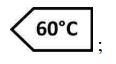
for the "Cotton 40 °C" programme:
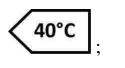
for the standard Cotton programme in a household washing machine in which programme selection is separate from temperature selection:
4. The Energy Efficiency Index is calculated using the following formula (rounded to 1 decimal place):
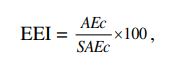
where:
AEC – annual electricity consumption of the washing machine;
SAEC – standard annual electricity consumption of the washing machine.
SAEC is calculated (in kWh/year) using the following formula (rounded to 2 decimal places):
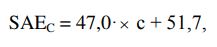
where с − rated capacity (in kg) for the standard cotton 60 °С programme at full load or for the standard cotton 40 °С programme at full load, whichever is the lower of the two values.
The annual electricity consumption of the washing machine (AEC) (in kWh/year) is calculated using the following formula (rounded to 2 decimal places):

where:
Et − average energy consumption (in kWh) (rounded to 3 decimal places);
Ро – average power consumption in off mode (in W) (rounded to 2 decimal places);
Рl − average power consumption in left-on mode (in W) (rounded to 2 decimal places);
Tt − average programme duration in minutes (rounded to the nearest whole number);
220 − assumed number of standard washing cycles per year.
If the washing machine is equipped with a control system that automatically switches the washing machine to off mode at the end of the programme, AEC shall be calculated taking into account the duration of left-on mode using the following formula:

where Tl − time during which the washing machine remains in left-on mode (in minutes) (rounded to the nearest whole number).
Average energy consumption per washing cycle (Et) (in kWh) is calculated using the following formula (rounded to 3 decimal places):
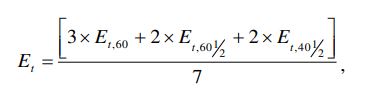
where:
Et,60 − energy consumption (in kW) for the standard cotton 60 °С programme at full load (rounded to 3 decimal places);


Average power consumption in off mode (Ро) in W is calculated using the following formula (rounded to 2 decimal places):
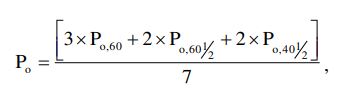
where:
PО,60 − power consumption in off mode (in W) for the standard cotton 60 °С programme at full load (rounded to 2 decimal places);


Average power consumption in left-on mode (Р1) (in W) is calculated using the following formula (rounded to 2 decimal places):
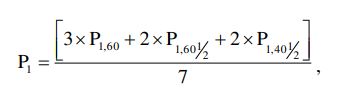
where:
P1,60 − power consumption in left-on mode (in W) for the standard cotton 60 °С programme at full load;


Average programme duration (Tt) in minutes is calculated using the following formula (rounded to the nearest whole number):
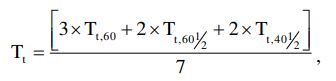
where:
Tt,60 − duration of the standard cotton 60 °С programme in minutes at full load;


The time during which the washing machine remains in left-on mode (Т1) in minutes is calculated using the following formula (rounded to the nearest whole number):
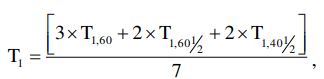
where:
T1,60 − time in left-on mode (in minutes) for the standard cotton 60 °С programme at rated load;


5. To calculate the Washing Performance Index (Iw), the washing performance of the washing machine under test is compared with the washing performance of the reference washing machine operating under the standard cotton 60 °С programme at full and partial load and under the standard cotton 40 °С programme at partial load.
The Washing Performance Index (Iw) is calculated using the following formula (rounded to 3 decimal places):
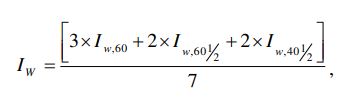
where:
Iw,60 − Washing Performance Index for the standard cotton 60 °С programme at full load;
Iw,60 ½ − Washing Performance Index for the standard cotton 60 °С programme at partial load;
Iw,40 ½ − Washing Performance Index for the standard cotton 40 °С programme at partial load.
The Washing Performance Index for each standard programme for washing cotton textile products (Iw,p) is calculated using the following formula:
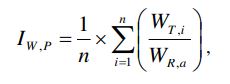
where:
WT,i − washing performance during testing of the washing machine for one cycle (cycle i) (rounded to 3 decimal places);
WR,а − average washing performance of the reference washing machine;
n − number of test cycles, which shall be:
at least 3 for the standard cotton 60 °С programme at full load;
at least 2 for the standard cotton 60 °С programme at partial load;
at least 2 for the standard cotton 40 °С programme at partial load.
Washing performance (W) is the average value determined using the test strip after completion of the relevant test cycle.
6. Annual water consumption (AWс) is calculated using the following formula (rounded to the nearest whole number):
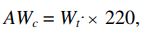
where:
Wt – average water consumption;
220 – total number of standard washing cycles per year.
Average water consumption (Wt) is calculated (in litres) (rounded to the nearest whole number) using the following formula:

where:
Wt,60 – water consumption for the standard cotton 60 °C programme at full load;


7. Residual moisture content (D) for each programme is calculated (in %) (rounded to the nearest whole number) using the following formula:

where:
D60 – residual moisture content for the standard cotton 60 °C programme at full load;


8. From 1 September 2028, washing machines shall comply with the following requirements:
the Energy Efficiency Index (EEI) of washing machines with a rated capacity of 4 kg or more shall be less than 59, and that of washing machines with a rated capacity of less than 4 kg shall be less than 68;
the Washing Performance Index (Iw) of washing machines with a rated capacity of more than 3 kg shall be greater than 1,03, and that of washing machines with a rated capacity of not more than 3 kg shall be greater than 1,00;
washing machines shall provide the possibility of washing at a temperature of 20 °C, with the corresponding programme designation indicated on the programme selector and/or on the washing machine display (if available);
the water consumption (Wt) of the washing machine (in litres) shall comply with the following inequality:
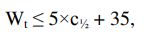
where

Water consumption (Wt) is taken as equal to the water consumption for washing using the standard cotton 60 °C programme at full load (Wt,60) and is calculated using the following formula (rounded to 1 decimal place): Wt=Wt,60.
Footnote. Clause 8 as amended by Decision of the Council of the Eurasian Economic Commission No. 54 dated 08.07.2025 (shall enter into force after the expiry of 10 calendar days from the date of its official publication).9. The operating documents accompanying washing machines, as provided for in Clause 13 of the Technical Regulation of the Eurasian Economic Union “On Requirements for the Energy Efficiency of Energy-Consuming Devices” (TR EAEU 048/2019), (hereinafter referred to as the Technical Regulation), shall contain the following information:
а) information on the standard programmes for washing cotton items at temperatures of 60 °C and 40 °C, referred to as the standard cotton 60 °C programme and the standard cotton 40 °C programme (it shall be specified that they are suitable for washing normally soiled cotton items and are the most efficient programmes in terms of electricity consumption and water consumption for washing cotton fabrics, and it shall also be specified that the actual water temperature may differ from the declared temperature for the relevant cycle);
б) information on the energy consumption value in off mode and left-on mode;
в) information on the duration of the washing machine operating cycle, residual moisture content, energy consumption and water consumption when using the main washing programmes at full or partial load or at both load levels;
г) recommendations concerning the selection of the type of detergent for washing at different temperatures.
IV. Permissible deviations of the energy efficiency parameters of washing machines during tests (measurements) after their placing on the market
10. If tests (measurements) of washing machines are carried out after their placing on the market in the customs territory of the Union, tests (measurements) shall be carried out on one representative sample of each washing machine model.
A washing machine model is considered to comply with these Requirements if the parameter values obtained as a result of the tests (measurements) and the characteristics of the washing machine comply with Section III of these Requirements and with the nominal values declared by the manufacturer, within the permissible deviations specified in Table 1.
Table 1
Permissible deviations
Measured parameter | Permissible deviations |
Annual electricity consumption | The measured value shall not exceed the nominal value AEC by more than 10 % |
Washing Performance Index | The measured value shall not be less than the nominal value lw by more than 4 % |
Electricity consumption | The measured value shall not exceed the nominal value Еt by more than 10 % |
Programme operating time | The measured value shall not exceed the specified value Тt by more than 10 % |
Water consumption | The measured value shall not exceed the nominal value Wt by more than 10 % |
Electricity consumption in off mode and left-on mode |
If the values РО and Рl exceed 1,00 W, they |
Duration in left-on mode | The measured value shall not exceed the nominal value Tl by more than 10 % |
The nominal value means the value declared by the manufacturer. | |
In other cases, tests (measurements) shall be carried out on 3 additional specimens of each washing machine model. A washing machine model is considered to comply with these Requirements if the mean values of the measurement results of these
3 additional washing machine specimens comply with the requirements specified in Section III of these Requirements and with the declared nominal values within the permissible deviations specified in Table 1, except for the electricity consumption value (Еt), which shall not exceed the value declared by the manufacturer by more than 6%.
In other cases, the model concerned and all other equivalent washing machines shall be considered not to comply with the requirements of the Technical Regulation.
V. Contents of the Label and Technical Sheet of the Washing Machine
11. The label of the washing machine shall contain the following information:
I. name or trademark (if available) of the manufacturer;
II. model designation;
III. energy efficiency class. The energy efficiency pictogram and the arrow for the corresponding energy efficiency class shall be positioned at the same level;
IV. annual electricity consumption (AEC) (kWh/year) (rounded to the nearest whole number);
V. annual water consumption (AWC) (in l/year) (rounded to the nearest whole number);
VI. rated capacity (in kg) for the standard cotton 60 °C programme at full load or the standard cotton 40 °C programme at full load;
VII. spin-drying efficiency class;
VIII. adjusted sound power level with the corresponding pictograms for the washing and spin-drying modes for the standard cotton 60 °C programme (in dB (A) relative to 1 pW) (rounded to the nearest whole number).
12. The technical sheet included in the operating documentation of washing machines shall contain the following information:
a) name or trademark (if available) of the manufacturer;
b) model identifier of the washing machine (as a rule, an alphanumeric code that distinguishes a specific washing machine model from other models of the same trademark or manufacturer with the same name);
c) rated capacity (in kg) for the standard Cotton 60 °C programme at full load or the standard Cotton 40 °C programme at full load (the lower of the two values is the determining value);
d) energy efficiency class;
e) annual electricity consumption (AEC) (in kWh/year). It shall be stated as follows: "Energy consumption "X", kWh/year, calculated for 220 standard washing cycles of the Cotton 60 °C and Cotton 40 °C programmes at full and partial load, and in off mode and left-on mode. Actual electricity consumption depends on the intensity and operating modes of the washing machine", where X is the annual electricity consumption value (rounded to a whole number);
f) electricity consumption Et,60,


g) power consumption in off mode Po (in W) and in left-on mode Pl (in W);
h) annual water consumption (AWC) (in l/year). It shall be stated as follows: "Water consumption "X", l/year, calculated for 220 standard operating washing cycles of the Cotton 60 °C and Cotton 40 °C programmes at full and partial load. Actual water consumption depends on the operating conditions", where X is the annual water consumption value (rounded to a whole number);
i) spin-drying efficiency class. It shall be stated as follows: "Spin-drying efficiency class "X" on a scale from G (lowest efficiency) to A (highest efficiency)". If the information in the technical sheet is presented in the form of a table, the spin-drying efficiency class may be indicated in another form, specifying the class scale from G (lowest efficiency) to A (highest efficiency);
j) maximum drum rotational speed during operation of the washing machine under the standard Cotton 60 °C washing programme at full load and the standard Cotton 40 °C washing programme at partial load, where the lower of the two values is the determining value, as well as residual moisture content during operation of the washing machine under the standard Cotton 60 °C washing programme at full load and the standard Cotton 40 °C washing programme at partial load, where the higher value is the determining value;
k) an indication that the standard Cotton 60 °C and Cotton 40 °C washing programmes, to which the information on the label and in the technical sheet relates, are intended for washing normally soiled cotton laundry and are the most efficient in terms of both energy consumption and water consumption;
l) average programme duration of the standard Cotton 60 °C washing programmes at full and partial load and the Cotton 40 °C programme at partial load (in minutes) (rounded to a whole number);
m) duration of left-on mode TL, if the household washing machine is equipped with a power management system, in minutes;
n) adjusted sound power level with the corresponding pictograms for the washing and spin-drying modes for the standard Cotton 60 °C programme (in dB (A) relative to 1 pW) (rounded to a whole number).
o) where necessary, an indication that the household washing machine is built-in.
13. One technical sheet of a washing machine may contain information on a number of washing machines supplied by the same manufacturer.
14. The information contained in the technical sheet of a washing machine may be provided as a colour or monochrome copy of the label. In this case, the information specified in clause 12 but not indicated on the label shall also be provided.
VI. Determination of the Energy Efficiency and Spin‑Drying Efficiency Classes of Washing Machines
15. The energy efficiency class of a washing machine is determined according to its Energy Efficiency Index (EEI) in accordance with Table 2.
Table 2
Energy Efficiency Class of the Washing Machine
Energy efficiency class | Energy Efficiency Index |
A +++ (most efficient) | EEI ≤ 46 |
A ++ | 46 ≤ EEI < 52 |
A + | 52 ≤ EEI < 59 |
A | 59 ≤ EEI <68 |
B | 68 ≤ EEI <77 |
C | 77 ≤ EEI <87 |
D (least efficient) | EEI ≥87 |
16. The spin-drying efficiency class of a washing machine is determined according to its residual moisture content (D) in accordance with Table 3.
Table 3
Spin‑Drying Efficiency Classes of the Washing Machine
Spin-drying efficiency class | Residual moisture content (D) |
A (most efficient) | D < 45 |
B | 45 ≤ D < 54 |
C | 54 ≤ D < 63 |
D | 63 ≤ D < 72 |
E | 72 ≤ D < 81 |
F | 81 ≤ D < 90 |
G (least efficient) | D ≥ 90 |
APPENDIX No. 7
to the Technical Regulation
of the Eurasian Economic Union
"On Requirements for the Energy
Efficiency of Energy‑Consuming
Devices" (TR EAEU 048/2019)
REQUIREMENTS
for the energy efficiency of household dishwashers
I. Scope of Application
1. These Requirements apply to household dishwashers (hereinafter referred to as dishwashers) placed on the market in the customs territory of the Eurasian Economic Union (hereinafter referred to as the Union), powered from an AC mains supply with a nominal voltage of up to 230 V, including:
a) those used for non-domestic purposes;
b) those also capable of operating from electric batteries (rechargeable batteries);
c) built-in appliances.
II. Terms and Definitions
2. For the purposes of applying these Requirements, the following terms are used:
"built-in dishwasher" means a dishwasher intended for installation in furniture, specially prepared openings, recesses, niches, cells in walls, panels, display cases, racks, etc.;
"place setting" means a set of tableware and cutlery intended for one person;
"rated capacity" means the maximum number of place settings specified by the manufacturer that can be processed in the dishwasher in accordance with the selected programme;
"dishwasher" means a dishwasher intended primarily for non-professional use that cleans, washes, rinses and dries ceramic, glass, metal, plastic and other tableware, cutlery and kitchen utensils by mechanical, thermal, electrical and chemical action;
"programme" means a series of operations preset and declared by the manufacturer for processing tableware with a specified degree and/or type of soiling, which together form a complete cycle;
"programme duration" means the period from the start of the programme until its completion, excluding delays set (programmed) by the user;
"off mode" means the condition of a dishwasher connected to a power source and used in accordance with the operating documentation, in which it is switched off by means of a user-accessible control device or switch for the purpose of achieving minimum energy consumption, which may continue for an unlimited period, or the condition in which the dishwasher itself switches to minimum energy consumption in the absence of user-accessible controls;
"left-on mode" means the minimum electricity consumption mode that, without any additional intervention by the user (except for unloading the dishwasher), may continue for an unlimited period after completion of the cycle;
"cycle" means the complete operating process of the dishwasher in accordance with the selected programme, consisting of a series of different operations (cleaning, washing, rinsing, drying, etc.);
"equivalent dishwasher" means a dishwasher model with indicators (rated capacity, technical and operating characteristics, electricity consumption, water consumption, adjusted sound power level) similar to those of another dishwasher model of the same manufacturer placed on the market in the customs territory of the Union under another trademark designation (name).
III. Requirements for the energy efficiency of dishwashers and specific features of determining energy efficiency indicators
3. The relevant tests (measurements) shall be performed and the following parameters shall be determined for the dishwasher:
Energy Efficiency Index (EEI);
cleaning efficiency index (IC);
drying efficiency index (ID).
The relevant calculations, together with the required tests (measurements), shall be performed in accordance with Clauses 4–6 of these Requirements.
To calculate electricity consumption and determine other characteristics of dishwashers, measurements shall be performed for the complete cycle during which the maximum rated capacity is processed with standard soiling (hereinafter, the standard washing programme). This cycle shall be set on the dishwasher and/or on the dishwasher display, if available, in the standard programme. For dishwashers with automatic programme selection or an automatic selection or maintenance function for the selected programme, this cycle shall be set as the standard programme used.
4. The Energy Efficiency Index (EEI) shall be calculated using the following formula (rounded to 1 decimal place):

where:
AEC – annual electricity consumption of the dishwasher;
SAEC – standard annual electricity consumption of the dishwasher.
AEC shall be calculated (in kWh/year) using the following formula (rounded to 2 decimal places):

where:
Et – electricity consumption per standard cycle (in kWh) (rounded to 3 decimal places);
Pо – power consumption in off mode (in W) (rounded to 2 decimal places);
Pl – power consumption in left-on mode (in W) (rounded to 2 decimal places);
Tt – operating time of the standard washing cycle programme (in minutes) (rounded to the nearest whole number).
If the dishwasher is equipped with a power management system that automatically switches the dishwasher to off mode after time Тl has elapsed after the end of the programme, AEC shall be calculated (in kWh/year) using the following formula (rounded to 2 decimal places):

where:
Tl – time in the on state (in left-on mode) for the standard washing cycle (in minutes) (rounded to the nearest whole minute);
280 – total number of standard washing cycles per 1 year.
Standard annual electricity consumption shall be calculated (in kWh/year) (rounded to 2 decimal places) using the following formulas:
for dishwashers with a rated capacity (ps) of at least 10 place settings and a width of not more than 50 cm:

for dishwashers with a rated capacity (ps) of not more than 9 place settings and a width of not more than 50 cm:

where:
ps – rated capacity.
5. To calculate the Washing Performance Index IC, the washing performance of the tested dishwasher shall be compared with the washing performance of the reference dishwasher.
The Washing Performance Index (IC) shall be calculated using the following formula (rounded to 2 decimal places):
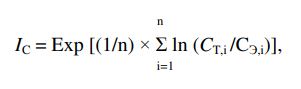
where:
CT,i – washing performance of the tested dishwasher during a test lasting 1 cycle (cycle i);
СЭ,i – washing performance of the reference dishwasher during a test lasting 1 cycle (cycle i);
n – number of cycles (not less than 5).
Washing performance (С) is the average degree of soiling for each item of the place setting loaded into the dishwasher after completion of the standard washing cycle, determined in points in accordance with Table 1.
Table 1
Soiling Assessment
Number of soiling spots (n) | Total soiled area (As) (mm2) | Soiling assessment |
n = 0 | As = 0 | 5 (maximum efficiency) |
0 < n 4 | 0 < As 4 | 4 |
4 < n 10 | 0 < As 4 | 3 |
10 < n | 4 < As 50 | 2 |
not considered | 50 < As 200 | 1 |
not considered | 200 < As | 0 (minimum efficiency) |
6. To calculate the drying efficiency index (ID), the drying performance of the tested dishwasher shall be compared with the drying performance of the reference dishwasher.
ID shall be calculated using the following formula (rounded to 2 decimal places):

where:
DT,i – drying performance of the tested dishwasher during a test lasting 1 cycle (cycle i);
DЭ,i – drying performance of the reference dishwasher during a test lasting 1 cycle (cycle i);
n – number of cycles (not less than 5).
Washing performance (D) is the average value characterising the presence of moisture on each item of tableware loaded into the dishwasher after completion of the standard washing cycle, determined in points in accordance with Table 2.
Table 2
Moisture Level Assessment
Number of moisture spots (Wт) and streaks (Ws) |
Total area of wet | Moisture level assessment |
Wт = 0 and Ws = 0 | not considered | 2 (maximum efficiency) |
1 < Wт ≤ 2 or Ws = 1 | Aw < 50 | 1 |
2 < Wт and/or Ws = 2 or Ws = 1 and Wт = 1 | Aw > 50 | 0 (minimum efficiency) |
7. Annual water consumption (AWС) shall be calculated (in l) using the following formula (rounded to the nearest whole number):
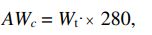
where:
Wt – water consumption for the standard washing cycle.
8. Dishwashers shall meet the following requirements:
a) EEI of dishwashers with a rated capacity of 11 or more place settings, as well as dishwashers with a rated capacity of not more than 10 place settings and a width of more than 45 cm, shall be less than 63;
b) EEI of dishwashers with a rated capacity of 8 and 9 place settings, as well as dishwashers with a rated capacity of 10 place settings and a width of not more than 45 cm, shall be less than 63;
c) IC shall be greater than 1,12;
d) ID of dishwashers with a rated capacity of more than 7 place settings shall be greater than 1,08;
e) ID of dishwashers with a rated capacity of not more than 7 place settings shall be greater than 0,86.
9. The operating documents specified in Clause 13 of the Technical Regulation of the Eurasian Economic Union "On Requirements for the Energy Efficiency of Energy-Consuming Devices" (TR EAEU 048/2019) (hereinafter, the Technical Regulation) shall contain the following information on the characteristics and parameters of dishwashers:
a) information on the standard washing programme (it shall be stated that the dishwasher is suitable for washing normally soiled tableware and cutlery and is the most efficient programme in terms of electricity consumption and water consumption);
b) power consumption in the on state (in left-on mode) and in off mode;
c) information on the duration of the dishwasher cycle and water consumption when using the main washing programme.
IV. Permissible deviations of dishwasher energy efficiency parameters during tests (measurements) after their placing on the market
10. When tests (measurements) of dishwashers are performed after their placing on the market in the customs territory of the Union, one representative sample of each dishwasher model shall be tested (measured).
A dishwasher model shall be considered to comply with these Requirements if the values of the dishwasher parameters and characteristics comply with the requirements of Section III of these Requirements and the nominal values declared by the manufacturer, within the permissible deviations specified in Table 3.
Table 3
Permissible deviations
Measured parameter | Permissible deviations |
Annual electricity consumption | the measured value must not exceed the nominal value AEC by more than 10 % |
Cleaning efficiency index (IC) | the measured value must not be lower than the nominal value IC by more than 10 % |
Drying efficiency index (ID) | the measured value must not be lower than the nominal value ID by more than 19 % |
Electricity consumption | the measured value must not exceed the nominal value Еt by more than 10 % |
Programme duration | the measured value must not exceed the nominal value Тt by more than 10 % |
Water consumption | the measured value must not exceed the nominal value Wt by more than 10 % |
Power consumption | if the values Р0 and Рl exceed 1,00 W, they must not exceed the nominal value by more than 10 %. If the values Р0 and Рl do not exceed 1,00 W, they must not exceed the nominal value by more than 0,10 W |
Duration in left-on mode | the measured value must not exceed the nominal value Tl by more than 10 % |
The nominal value means the value declared by the manufacturer. | |
In other cases, tests (measurements) should be performed on 3 additional specimens of each dishwasher model. A dishwasher model is considered to comply with these Requirements if the average values of the measured parameters of these 3 additional dishwasher specimens comply with the requirements specified in Table 3 of these Requirements, except for electricity consumption, the measured value of which does not exceed the nominal value Et by more than 6 %.
In other cases, this dishwasher model and all other equivalent dishwashers should be considered non-compliant with the requirements of the Technical Regulation.
V. Content of the dishwasher label and technical sheet
11. The dishwasher label must contain the following information:
I. the name or trademark (if available) of the manufacturer;
II. model designation;
III. energy efficiency class;
IV. annual electricity consumption (AEC) (in kWh/year) (rounded to the nearest whole number);
V. annual water consumption (AWC) (in l/year) (rounded to the nearest whole number);
VI. drying efficiency class;
VII. rated capacity for standard place settings for the standard washing cycle;
VIII. adjusted sound power level (in dB (A) relative to 1 pW) (rounded to the nearest whole number).
12. The technical sheet included in the operating documentation of dishwashers must contain the following information:
a) the name or trademark (if available) of the manufacturer;
b) the manufacturer's model identifier for the dishwasher (generally alphanumeric, distinguishing a specific dishwasher model from other models of the same trademark or manufacturer with the same name);
c) rated capacity for the standard washing cycle in place settings;
d) energy efficiency class;
e) annual electricity consumption (AEC) (in kWh/year). It shall be stated as follows: "Energy consumption X, kWh/year, determined for 280 standard operating cycles using cold water in low-power modes. Actual energy consumption depends on the intensity and modes of use of the device", where X is the annual energy consumption value (rounded to the nearest whole number);
f) energy consumption (Et) (in kWh) for the standard operating cycle;
g) power consumption in off mode (Po) (in W) and in energy-saving mode (Pl) (in W);
h) annual water consumption (AWC) (in l/year). It shall be stated as follows: "Water consumption X, l/year, determined for 280 standard operating cycles. Actual water consumption depends on the intensity and modes of use of the device", where X is the annual water consumption value (rounded to the nearest whole number);
i) drying efficiency class. It shall be stated as follows: "Drying efficiency class X on a scale from G (lowest efficiency) to A (highest efficiency)". If the information in the technical sheet is presented in the form of a table, the drying efficiency class may be indicated in another form, specifying the class scale from G (lowest efficiency) to A (highest efficiency);
j) an indication of the programme that is the standard operating cycle suitable for removing ordinary soiling from tableware with the best combination of energy consumption and water consumption;
k) programme duration of the standard operating cycle (in minutes) (rounded to the nearest whole number);
l) duration of the energy-saving mode (Tl) (in minutes), if the household dishwasher is equipped with a power control system;
m) adjusted sound power level (in dB (A) relative to 1 pW) (rounded to the nearest whole number);
n) an indication that the dishwasher is built-in (if applicable).
13. One dishwasher technical sheet may contain information on a range of dishwashers supplied by the same manufacturer.
14. The information contained in the dishwasher technical sheet may be presented as a colour or black-and-white copy of the label of that dishwasher. In this case, the information specified in Clause 12 that is absent from the label must also be provided.
VI. Determination of the energy efficiency classes of dishwashers
15. The energy efficiency class of dishwashers is determined according to the Energy Efficiency Index (EEI) in accordance with Table 4.
Table 4
Energy efficiency classes of dishwashers
Energy efficiency class | Energy Efficiency Index |
A +++ (most efficient) | EEI < 50 |
A ++ | 50 ≤ EEI < 56 |
A + | 56 ≤ EEI < 63 |
A | 63 ≤ EEI < 71 |
B | 71 ≤ EEI < 80 |
C | 80 ≤ EEI < 90 |
D (least efficient) | EEI ≥ 90 |
16. The drying efficiency class of dishwashers is determined on the basis of residual moisture content in accordance with Table 5.
Table 5
Drying efficiency classes of dishwashers
Energy efficiency class | Residual moisture content (%) |
A (most efficient) | ID > 1,08 |
B | 1,08 ≥ ID > 0,86 |
C | 0,86 ≥ ID > 0,69 |
D | 0,69 ≥ ID > 0,55 |
E | 0,55 ≥ ID > 0,44 |
F | 0,44 ≥ ID > 0,33 |
G (least efficient) | 0,33 ≥ ID |
ANNEX No. 8
to the Technical Regulation
of the Eurasian Economic Union
"On Requirements for the
Energy Efficiency of Energy‑Consuming
Devices" (TR EAEU 048/2019)
REQUIREMENTS
for the energy efficiency of set‑top boxes
I. Scope of Application
1. These Requirements apply to stand-alone subscriber set-top boxes (hereinafter referred to as set-top boxes) placed on the market in the customs territory of the Eurasian Economic Union (hereinafter referred to as the Union), which are not built into television and/or radio broadcast receivers and are intended to convert free-to-air, uncoded standard- and/or high-definition digital television and/or radio broadcasts into signals corresponding to analogue television and/or radio, and which do not have a conditional access function or a function for recording onto removable information media in a standard format, but may have:
a) a function for background recording of a broadcast programme onto a built-in information storage device (hard disk), with the possibility of subsequently viewing it with a time shift;
b) a function for converting received high-definition television broadcast signals into high- or standard-definition video signals;
c) a second tuner.
II. Terms and Definitions
2. For the purposes of applying these Requirements, the following terms are used:
"automatic power-down" means a function that switches a set-top box from active mode to standby mode after a specified period of operation in active mode has elapsed since the user's last intervention and (or) channel change;
"active (operating) mode" means a state in which the equipment is connected to a power supply and, in accordance with its intended use, performs at least 1 of its main operating functions;
"second tuner" means a component (assembly) of a set-top box that may be used to record a television and (or) radio broadcast programme while another broadcast programme is being viewed;
"off mode" means a state in which the equipment is connected to a power supply but is not in active (operating) mode or standby mode and may perform only functions ensuring Electromagnetic Compatibility and (or) indicating off mode;
"standby mode" means a state in which electrical equipment is connected to a power supply and, for an unlimited period, performs a reactivation function (including indication of its ability (readiness) to reactivate) and (or) an information or status display function;
"conditional access" means a provider-controlled system for restricting access to paid television and (or) radio broadcasting programmes;
"information or status display function" means a function that provides information or displays the status of the equipment on an indicator, including time indication;
"reactivation function" means a function that, by means of remote-control devices, internal sensors or time-delay controls, enables transition from standby mode to active (operating) mode, in which the performance of the main or main and additional functions of the equipment is activated.
III. Requirements for the Energy Efficiency of Set‑Top Boxes and Specific Features of Determining Energy Efficiency Indicators
3. The energy consumption of set-top boxes must not exceed the limit values specified in the table.
Table
Energy Consumption Limit Values
Product, additional components or functions | Limit values of power consumption (W), not more than | |
in standby mode |
in active | |
Set-top box providing only the main functions | 0,50 | 5,00 |
Increase in energy consumption when an information or status display function is available | + 0,50 | – |
Increase in energy consumption when an internal information storage device (hard disk) is available | – | + 6,00 |
Increase in energy consumption when a second tuner is available | – | + 1,00 |
Increase in energy consumption when a high-definition signal decoding function is available | – | + 1,00 |
4. Set-top boxes must implement standby mode.
5. Set-top boxes must implement automatic power-down or an equivalent function subject to the following requirements:
a) the set-top box must automatically switch from active (operating) mode to standby mode after no more than 3 hours of operation in active (operating) mode from the user's last interaction and (or) channel change, with a warning signal during the 2 minutes preceding the transition to standby mode;
b) the automatic power-down function must be enabled by default.
6. The operating documents supplied with set-top boxes, as provided for in paragraph 13 of the Technical Regulation of the Eurasian Economic Union "On Requirements for the Energy Efficiency of Energy-Consuming Devices" (TR EAEU 048/2019) (hereinafter, the Technical Regulation), must contain the following information:
a) energy consumption in active mode and standby mode (in W) (rounded to 2 decimal places), including energy consumption for various additional functions and (or) components;
b) a description of the selection or programming of the product's operating mode;
c) the sequence of actions (events) required to achieve the state in which the product automatically changes its operating mode;
d) radio-frequency input signals (for digital terrestrial broadcasting) and intermediate-frequency input signals (for satellite broadcasting);
e) other information describing the operation of the product.
7. The set of documents for set-top boxes specified, taking into account the declaration of conformity scheme selected by the applicant, in subparagraph "a" of paragraph 28 or subparagraph "a" of paragraph 29 of the Technical Regulation, must additionally include the following information:
The testing (measurement) methods used for energy consumption;
The dates of the tests (measurements);
The parameters monitored during the tests (measurements):
ambient temperature;
test voltage (in V) and frequency (in Hz);
total harmonic distortion of the power supply network;
fluctuation of the power supply voltage during the tests (measurements);
information on the measuring instruments, settings and circuits used during the tests (measurements);
test audio and video signals corresponding to the MPEG-2 transport stream;
the location of the controls.
It is not required to include in the specified set of documents documents concerning the power requirements for peripheral devices connected to the set-top box for receiving television and (or) radio broadcasts, such as an active antenna for terrestrial broadcasting reception, a satellite low-noise block converter, any cable or telecommunications modem.
IV. Permissible Deviations of the Energy Efficiency Parameters of Set‑Top Boxes During Tests (Measurements) After Their Placing on the Market
8. Where tests (measurements) of set-top boxes are conducted after their placing on the market in the customs territory of the Union, tests (measurements) are conducted on 1 representative sample of each set-top box model.
A set-top box model is considered to comply with these Requirements if the test (measurement) results do not exceed the limit values by more than 10 % or 0,10 W for monitoring power consumption, the value of which respectively exceeds or does not exceed 1,00 W.
Otherwise, 3 more representative samples of the set-top box model are tested. A set-top box model is considered to comply with these Requirements if the average value of the measurement results for these 3 representative samples of the set-top box does not exceed the limit values by more than the amount specified in the second paragraph of this clause.
In all other cases, the set-top box model shall be considered non-compliant with the requirements of the Technical Regulation.
ANNEX No. 9
to the Technical Regulation
of the Eurasian Economic Union
"On Requirements for the Energy
Efficiency of Energy‑Consuming
Devices" (TR EAEU 048/2019)
REQUIREMENTS
for the Energy Efficiency of Electric Lamps
Note. Annex 9 as amended by Decisions of the Council of the Eurasian Economic Commission dated 15.04.2022 No. 50 (enters into force upon expiry of 10 calendar days from the date of its official publication); dated 08.07.2025 No. 54 (enters into force upon expiry of 10 calendar days from the date of its official publication).
I. Scope of Application
1. These Requirements apply to non-directional electric lamps for household and similar purposes placed on the market in the customs territory of the Eurasian Economic Union (hereinafter, the Union), which may also be used for purposes other than lighting or incorporated into other electric energy-consuming devices (hereinafter, electric lamps), except for lamps:
a) with the following chromaticity coordinates x and y:
x< 0,200 or x> 0,600;
y< – 2,3172 x2 + 2,3653 x – 0,2800 or y> – 2,3172 x2 + 2,3653 x – 0,1000;
b) with directional light emission;
c) with a luminous flux of less than 60 lumens or more than 12 000 lumens;
d) for which:
at least 6 % of the total radiation in the 250 – 780 nm range is between 250 and 400 nm;
the radiation peak is between 315 and 400 nm (UVA) or 280 and 315 nm (UVB);
e) fluorescent lamps without integrated control gear;
f) high-pressure gas-discharge lamps;
g) incandescent lamps with an E14/E27/B22/B15 lamp cap for an operating voltage of 60 V or less, without an integrated transformer;
h) special-purpose lamps (capless lamps, festoon lamps, mechanically robust lamps, lamps with a focusing lamp cap, series-connected lamps, decorative lamps, directional lamps, subminiature lamps, miniature lamps, small lamps, medium-sized lamps, large lamps, double-cap miniature lamps, projector lamps with a reflector, flash lamps, mixed-light lamps, daylight lamps, Moore lamps, germicidal lamps, spot lamps, ultraviolet lamps, strip lamps, electroluminescent lamps, infrared lamps, spectral lamps, lamps for household appliances (refrigerators, ovens, etc.).
II. Terms and Definitions
2. For the purposes of applying these Requirements, the following terms are used with the meanings set out below:
"power supply unit" – a device intended to convert mains AC supply voltage into DC voltage or another AC voltage;
"household lamp" – a lamp intended for lighting spaces in domestic applications and not being a special-purpose lamp;
"external lamp envelope" – the second (external) envelope of a lamp, which is not required for generating light (for example, an external bulb intended to ensure optimum operating conditions for the burner, prevent the emission of ultraviolet radiation and/or diffuse light, and prevent mercury and glass from entering the environment if the burner breaks);
"tungsten halogen incandescent lamp" – an incandescent lamp whose filament consists of tungsten and is surrounded by an envelope filled with halogens or halogen compounds;
"start-up time" – the time required for a lamp to reach full light output and continue operating after being connected to the mains;
"warm-up time" – the time during which 60 % of the rated luminous flux is reached after the lamp is connected to the mains;
"gas-discharge lamp" – a discharge lamp in which optical radiation is generated as a result of an electrical discharge in a gas;
"high-pressure gas-discharge lamp" – a gas-discharge lamp in which the light-emitting electrical arc is stabilised by the temperature of the burner walls and the thermal load on the bulb walls exceeds 3 W/cm2;
"colour rendering index (Ra)" – a measure of the correspondence between the visual perceptions of a coloured object illuminated by the test and standard light sources under specified observation conditions;
"compact fluorescent lamp" – a fluorescent lamp in which ignition and stable operation are ensured by control gear integrated into the lamp cap and by other additional components;
"correlated colour temperature (Tc [K])" – the temperature of a Planckian radiator (black body) whose perceived colour most closely resembles that of the given stimulus at the same luminance and under specified viewing conditions;
"power factor" – the ratio of active (useful) power to total power when operating on AC;
"lamp lumen maintenance factor (LLMF)" – the ratio of the luminous flux of a lamp at a specified point in its service life (life cycle) to the initial luminous flux of that lamp (measured after 100 hours of operation);
"lamp survival factor (LSF)" – the proportion of lamps still operating at a given time under specified conditions and at a specified switching frequency, relative to the total number of lamps;
"lamp" – a source of optical radiation generated by converting electrical energy;
"incandescent lamp" – a lamp with a sealed bulb in which light is emitted by an incandescent body (filament) when an electric current passes through it in a vacuum or inert-gas atmosphere;
"directional lamp" – a lamp that emits at least 80 % of its luminous flux within a solid angle of 3,14 steradians (corresponding to a cone with a vertex angle of 120º);
"non-directional lamp" – a lamp that is not a directional lamp;
"lamp with an opaque bulb" – a lamp that does not meet the criteria for lamps with a transparent bulb, including compact fluorescent lamps";
"lamp with a transparent bulb" – a lamp (excluding compact fluorescent lamps) whose luminance at a luminous flux below 2 000 lm exceeds 25 000 cd/m2, and at a higher luminous flux exceeds 100 000 cd/m2, whose bulb is transparent and whose filament, light-emitting diode or discharge tube is visible;
"fluorescent lamp" – a low-pressure mercury lamp in which light is emitted by one or more phosphor layers excited by ultraviolet radiation from an electrical discharge. Fluorescent lamps are supplied with or without integrated control gear;
"model" – products of the same type and the same manufacturer;
"nominal value" – the quantitative value of a parameter under specified operating conditions, used to designate or identify a product and specified by the manufacturer
in the operating documents;
"lampholder" – a device into which, depending on its intended purpose, a lamp cap or starter is inserted for securing them and connecting them to the electrical network;
"premature failure" – failure of a lamp before expiry of the service life specified in the operating documents for the lamp;
"control gear" – a device connected between the mains and one or more discharge lamps which, by means of inductance, capacitance or a combination thereof, primarily limits the lamp current to the required value. Control gear (hereinafter referred to as control gear) may consist of one or more units. Control gear may also contain means for transforming the mains voltage and devices that help provide the voltage required for lamp ignition, prevent cold ignition, reduce the stroboscopic effect, correct the power factor and/or suppress mains radio interference. Control gear may be integrated into the lamp or separate from it;
"discharge lamp" – a lamp in which optical radiation is generated as a result of an electrical discharge in gases, metal vapours, halides or a mixture thereof;
"calculated value" – the quantitative value of a parameter under specified conditions. The values and conditions are given in the relevant standards or communicated by the manufacturer (supplier). Unless otherwise specified, all requirements are expressed as calculated values. A calculated value is obtained by calculation, that is, not experimentally;
"luminous efficacy (
ηл
)" – the ratio of the luminous flux emitted by a light source to its power consumption, expressed in lumens per watt (lm/W). Luminous efficacy is an indicator of the efficiency and economy of light sources and is calculated using the formula: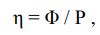
where:
F – luminous flux emitted by the light source;
Р – its power consumption.
Additional devices, such as control gear, transformers and power supply units, are not taken into account in the lamp power consumption (Р);
"luminous flux (F)" – the energy of visible radiation carried by the radiation flux per unit time (in lm), measured after 100 hours of lamp operation;
"light-emitting diode (LED)" – a semiconductor device with a p-n junction that emits incoherent visible radiation when an electrical voltage is applied to it;
"LED lamp (LED lamp)" – a lamp containing 1 or more LED packages. An LED lamp may be fitted with a lamp cap;
"special-purpose lamp" – a lamp which, based on its technical characteristics or according to the operating documentation supplied with it, is unsuitable for lighting spaces in domestic applications;
"lamp life" – the operating time after which the proportion of operating lamps relative to the total number of lamps under specified conditions and at a specified switching frequency corresponds to the lamp survival factor;
"chromaticity" – a characteristic of the colour quality of a lamp, determined by its chromaticity coordinates;
"colour rendering" – the effect of the spectral composition of lamp radiation on the visual perception of objects illuminated by it, characterised by the colour rendering index;
"switching cycle" – a sequence of switching a lamp on and off at specified time intervals;
"lamp cap" – a component of an electric lamp used to secure it in a lampholder and ensure connection to the power supply network;
"luminance" – the amount of light reflected or emitted from a surface per unit of apparent area within a solid angle (cd/m2).
III. Requirements for the Energy Efficiency and Operating Documents of Electric Lamps
3. The relevant tests (measurements) shall be carried out for electric lamps, and the following values shall be determined:
а) luminous efficacy (
ηл
);б) power consumption (Pл);
в) lamp lumen maintenance factor (LLMF);
г) lamp survival factor (LSF);
д) lamp life;
е) chromaticity;
ж) luminous flux (F);
з) correlated colour temperature (Tc [K]);
и) colour rendering index (Ra);
к) ultraviolet radiation efficiency;
л) start-up time;
м) warm-up time;
н) power factor;
о) luminance.
4. The nominal value of power consumption shall not exceed the maximum permissible value (Pmax) determined depending on the luminous flux (F) in accordance with Table 1.
Table 1
Maximum Permissible Energy Consumption Values
Date of entry | Maximum permissible power consumption value (Pmax) (in W), depending on luminous flux (F) (in lm), for lamps | |
with a transparent bulb | with an opaque bulb | |
From 1 September 2028 |
0,8 × (0,88 √F +0,049 F) |
0,24 √F + 0,0103 F |
From 1 September 2030а |
0,6 × (0,88 √F +0,049 F) |
0,24 √F + 0,0103 F |
Exceptions to the maximum permissible values specified in Table 1 are given in Table 2.
Table 2
Exceptions to the Maximum Permissible Energy Consumption Values*
Date of entry into force of the requirements of this document | Lamps covered by the exception |
Maximum permissible power consumption value (Pmax) (in W) |
From 1 September 2028 |
with a transparent bulb |
1,1 × (0,88 √F +0,049 F) |
From 1 September 2029 |
with a transparent bulb |
1,1 × (0,88 √F +0,049 F) |
From 1 September 2031 |
with a transparent bulb |
0,8 × (0,88 √F +0,049 F) |
* The specific aspects of the circulation of incandescent lamps in the customs territory of the Eurasian Economic Union, depending on the maximum permissible energy consumption values, are established by the legislation of the Member States of the Eurasian Economic Union. | ||
The values of the correction factors (К) for the calculated value of maximum power consumption are given in Table 3.
Table 3
Correction Factors
Lamp type | Factor (K) |
Incandescent lamp with external power supply | Pmax /1,06 |
Discharge lamp with GX53 lamp cap | Pmax /0,75 |
Lamp with opaque envelope, colour rendering index ≥ 90 and P ≤ 0,5 × (0,88 √Ф + 0,049 Ф) | Pmax /0,85 |
Gas-discharge lamp with colour rendering index ≥ 90 and colour temperature Tc ≥ 5 000K | Pmax /0,76 |
Lamp with opaque envelope, second envelope and P ≤ 0,5 × (0,88√Ф+0,049Ф) | Pmax /0,95 |
LED lamp with external power supply | Pmax /1,1 |
5. Requirements for the performance characteristics of compact fluorescent lamps are given in Table 4. For lamps other than compact fluorescent lamps and LED lamps, the requirements are given in Table 5.
Table 4
Requirements for the performance characteristics of compact fluorescent lamps
Characteristic | Effective from 1 September 2029 | Effective from 1 September 2031 |
Lamp survival factor after 6 000 h of operation | ≥ 0,50 | ≥ 0,70 |
Lamp lumen maintenance | at 2 000 h ≥ 85 % (≥ 80 % for lamps with a second envelope) |
at 2 000 h ≥ 88 % |
Number of switching cycles before failure |
≥ half the lamp life in hours |
≥ the lamp life |
Start-up time | < 2,0 s |
< 1,5 s, if P < 10 W |
Warm-up time |
< 60 s; | < 40 s or < 100 s for lamps containing mercury amalgam |
Premature failure rate | ≤ 2,0 % after 200 h | ≤ 2,0 % after 400 h |
UVA + UVB radiation | ≤ 2,0 mW/klm | ≤ 2,0 mW/klm |
UVC radiation | ≤ 0,01 mW/klm | ≤ 0,01 mW/klm |
Lamp power factor |
≥ 0,50, if P < 25 W |
≥ 0,55, if P < 25 W |
Colour rendering index (Ra) | ≥ 80 | ≥ 80 |
Table 5
Requirements for the performance characteristics of lamps other than compact fluorescent lamps and LED lamps
Characteristic |
Effective from |
Effective from |
Rated lamp life | ≥ 1 000 h | ≥ 2 000 h |
Lamp lumen maintenance | ≥ 85 % at 75% of the declared average lamp life | ≥ 85 % at 75% of the declared average lamp life |
Number of switching cycles | 4 times the rated lamp life in hours | 4 times the rated lamp life in hours |
Start-up time | < 2,0 s | < 2,0 s |
Warm-up time to reach 60 % of the luminous flux (F) | ≤ 1,0 s | ≤ 1,0 s |
Premature failure rate | ≤ 5,0 % after 100 h | ≤ 5,0 % after 200 h |
Lamp power factor | ≥ 0,95 | ≥ 0,95 |
6. The Energy Efficiency Index (EEI) of the electric lamp model is calculated by comparing its power consumption, adjusted for possible control gear losses, with its rated input power. Rated input power is derived from the useful luminous flux (Fuse), which is the total luminous flux for lamps with non-directional light emission and the luminous flux within a cone with an angle of 90° or 120° for lamps with directional light emission.
EEI is calculated as follows (rounded to two decimal places):
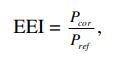
where:
Pcor – measured power consumption (Prated) for lamp models without external control gear and measured power consumption (Prated), adjusted for possible losses in accordance with Table 6, for lamp models with external control gear. Prated is measured at the rated input voltage of the lamp;
Pref – calculated power consumption, calculated on the basis of the following formulas:

Table 6
Lamp type | Power consumption adjusted for possible control gear losses (Pcor) |
Lamps operated with external control gear |
Prated ×1,06 |
Lamps operated with external control gear for LED lamps |
Prated ×1,10 |
Fluorescent lamps with a diameter of 16 mm (T5 lamps) and single-cap fluorescent lamps with four pins, operated with external control gear for fluorescent lamps |
Prated ×1,10 |
Other lamps operated with external control gear for fluorescent lamps |
|
Lamps operated with external control gear for high-pressure gas-discharge lamps |
Prated ×1,10 |
Lamps operated with external control gear for low-pressure sodium gas-discharge lamps |
Prated ×1,15 |
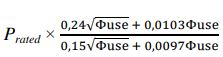
The useful luminous flux is determined in accordance with Table 7.
Table 7
Model | Useful luminous flux (Fuse) |
Lamps with non-directional light | Total rated luminous flux (Ф) |
Lamps with directional light emission and a beam angle ≥90°, except incandescent lamps whose packaging bears a warning in text or graphic form stating that they are not suitable for directional lighting/illumination | Measured luminous flux in a cone with an angle of 120° (Ф120°) |
Other lamps with directional light emission | Measured luminous flux in a cone with an angle of 90° (Ф90°) |
Weighted energy consumption (EC) is calculated in kWh/1000 h as follows (rounded to two decimal places):
EC = P cor1000 h1000.
7. In addition to the requirements specified in Section V of the Technical Regulation of the Eurasian Economic Union "On Requirements for the Energy Efficiency of Energy-Consuming Devices" (TR EAEU 048/2019) (hereinafter referred to as the Technical Regulation), the packaging or operating documents shall contain the following information for household non-directional lamps:
number of switching cycles before premature failure;
warm-up time to reach 60 % of the total luminous flux (if this time is less than 1 s, "instantaneous start-up" may be indicated);
an appropriate indication if the lamp's luminous flux cannot be adjusted or can be adjusted only by means of a specific type of control;
an appropriate indication if the lamp is intended for operation under special, non-standard conditions (for example, ambient temperature Ta ≠25 °C);
rated input power (if the rated input power of the lamp is indicated separately from the energy label, the rated luminous flux shall also be indicated separately, in a font at least 2 times larger than the font used to indicate the rated input power);
colour temperature (as a numerical value in degrees Kelvin);
lamp life in hours (not exceeding the rated lamp life);
dimensions (length and diameter) in millimetres;
if equivalence to a conventional incandescent lamp is indicated on the packaging, the equivalent power (rounded to a whole number) corresponding, according to Table 8, to the luminous flux of the lamp contained in the packaging shall be indicated.
Table 8
Calculated luminous flux and power consumption of an equivalent incandescent lamp
Calculated luminous flux (F) for various types of lamps, lm | Power consumption of an equivalent incandescent lamp (in W) | ||
compact fluorescent | Tungsten halogen incandescent | LED and other | |
125 | 119 | 136 | 15 |
229 | 217 | 249 | 25 |
432 | 410 | 470 | 40 |
741 | 702 | 806 | 60 |
970 | 920 | 1 055 | 75 |
1 398 | 1 326 | 1 521 | 100 |
2253 | 2 137 | 2 452 | 150 |
3 172 | 3 009 | 3 452 | 200 |
Intermediate values for the luminous flux and power consumption of an equivalent incandescent lamp (rounded to the nearest whole number) shall be determined by linear interpolation between adjacent values.
The designation "energy-saving lamp" or a similar advertising designation relating to the energy efficiency of a lamp is permitted only if the lamp complies with the energy efficiency requirements applicable to lamps with an opaque glass envelope of stage 1, set out in Table 1.
If the lamp contains mercury, the following additional information shall be specified:
instructions for cleaning the room in the event of damage (destruction) of the lamp;
recommendations for lamp disposal.
8. In addition to the information specified in Clause 7 of these Requirements, the set of documents shall include the following information, which shall also be provided in any form convenient for the manufacturer (including via the Internet):
power consumption (to an accuracy of 0,1 W);
luminous flux;
service life;
power factor;
lamp luminous flux stability at the end of the rated service life;
start-up time (in sec);
colour rendering index.
IV. Permissible deviations of the energy efficiency parameters of electric lamps during tests (measurements) after their placing on the market
9. If tests (measurements) of electric lamps are performed after their placing on the market in the customs territory of the Union, a batch consisting of at least 20 samples of one model and one manufacturer shall be tested. The measured power consumption shall not exceed the nominal (declared) value by more than 10%, and the measured luminous flux shall not be less than the nominal (declared) value by more than 10%.
In other cases, the electric lamp model shall be considered non-compliant with the requirements of the Technical Regulation.
V. Content of the energy efficiency label and technical sheet for electric lamps
10. The energy efficiency label for electric lamps shall contain the following information:
I. name or trademark (if available) of the manufacturer;
II. model designation;
III. energy efficiency class;
The energy efficiency pictogram shall be positioned at the same level as the arrow for the corresponding energy efficiency class;
IV. Eс – calculated electricity consumption in kWh per 1000 hours of lamp operation (rounded to the nearest whole number);
11. The technical sheet included in the operating documentation for electric lamps shall contain a list of the characteristics specified in Clause 10 of these Requirements.
VI. Determination of the energy efficiency classes of electric lamps
12. The energy efficiency class of electric lamps shall be determined in accordance with the Energy Efficiency Index (EEI) pursuant to Table 9.
Table 9
Energy efficiency classes of electric lamps
Energy efficiency class | Energy Efficiency Index |
For non-directional lamps (light sources) | |
A ++ | EEI ≤ 0,11 |
A + | 0,11 < EEI ≤ 0,17 |
A | 0,17 < EEI ≤ 0,24 |
В | 0,24 < EEI ≤ 0,60 |
С | 0,60 < EEI ≤ 0,80 |
D | 0,80 < EEI ≤ 0,95 |
Е (least efficient) | EEI > 0,95 |
ANNEX No. 10
to the Technical Regulation
of the Eurasian Economic Union
"On Requirements for the
Energy Efficiency of Energy‑Consuming
Devices" (TR EAEU 048/2019)
REQUIREMENTS
for the energy efficiency of external power supplies
I. Scope of Application
1. These Requirements apply to external power supplies placed on the market in the customs territory of the Eurasian Economic Union (hereinafter, the Union), except for:
а) voltage converters;
б) uninterruptible power supplies;
в) battery chargers;
г) converters for halogen lamps;
д) external power supplies for medical equipment;
е) external power supplies having more than one output with independent voltage conversion for each output;
ж) external power supplies placed on the market in the customs territory of the Union within 2 years from the date of entry into force of the Union Technical Regulation "On Requirements for the Energy Efficiency of Energy-Consuming Devices" (TR EAEU 048/2019) (hereinafter, the Technical Regulation) as spare parts for equipment placed on the market in the territory of the Union before the Technical Regulation entered into force, provided that the operating documents for the external power supply identify the equipment with which the specified power supplies are intended to be used.
II. Terms and Definitions
2. For the purposes of applying these Requirements, the following terms are used:
"active mode" – a mode in which the input of the external power supply is connected to the mains power source and the output is connected to a load;
"external power supply" – a device that meets all of the following conditions:
intended to convert the input alternating-current voltage from the mains power source into a lower output voltage;
capable of converting the input voltage into a direct-current or alternating-current output voltage (external direct-current or alternating-current power supplies);
intended for use with separate powered electrical equipment serving as the main load;
enclosed in a physical enclosure (housing) separate from the powered main-load equipment;
connected to the powered equipment by a detachable or permanently fixed plug-and-socket electrical connection, cable, cord, wire or other connecting device;
has a rated output power of not more than 250 W;
intended for use with household and office electrical equipment falling within the scope of Applications No. 5 and 17 to the Technical Regulation;
"battery charger" – a device that is directly connected at its output interface to the terminals of a removable battery;
"uninterruptible power supply" – a device that automatically provides backup power if the mains voltage falls to a critically low level;
"efficiency of an external power supply in active mode (efficiency)" – the ratio of the power supplied by the external power supply in active mode to the input power consumed by the external power supply in active mode;
"low-voltage external power supply" – an external power supply with a rated output voltage of less than 6 V and a rated output current of not less than 550 mA;
"rated output power (Р0)" – the output power established by the manufacturer;
"converter for halogen lamps" – an external power supply used with extra-low-voltage tungsten halogen lamps;
"voltage converter" – a device that converts mains output voltage with nominal values from 220 V to 240 V AC into output voltage with nominal values from 110 V to 127 V AC, with characteristics similar to the output characteristics of the mains;
"no-load mode" – a mode in which the input of the external power supply is connected to the mains power source and no load is connected to the output;
"average efficiency of an external power supply" – the average efficiency of an external power supply at 25%, 50%, 75%, and 100% of rated output power.
III. Energy efficiency requirements for external power supplies and specific features of determining energy efficiency indicators
3. The energy consumption of an external power supply in no-load mode shall not exceed the limit values specified in Table 1.
Table 1
Maximum permissible energy consumption values in no‑load mode
Rated output power of the external power supply | Energy consumption in no-load mode | ||
external power supplies, except for low-voltage power supplies | low-voltage external power supplies | ||
AC | DC | ||
P0 ≤ 51,0 W | 0,50 W | 0,30 W | 0,30 W |
P0 >51,0 W | 0,50 W | 0,50 W | no requirements |
4. The average efficiency of an external power supply shall not be below the limit values specified in Table 2.
Table 2
Minimum permissible average efficiency values
Rated output power | Average efficiency | |
external power supplies, except low-voltage external power supplies |
low-voltage | |
Po ≤ 1,0 W |
0,480 × Ро+ 0,140 |
0,497 × Ро+ 0,067 |
1,0 W < Po ≤ 51,0 W |
0,063 × ln (Po) + 0,622 |
0,075 × ln (Po) + 0,561 |
Po > 51,0 W | 0,870 | 0,860 |
5. Measurements of power equal to or greater than 0,50 W shall be performed with a measurement uncertainty of no more than 2 % at a confidence level of 95 %.
6. Measurements of power less than 0,50 W shall be performed with a measurement uncertainty of no more than 0,01 W at a confidence level of 95 %.
7. The operating documents accompanying external power supplies, as provided for in Clause 13 of the Technical Regulation, shall contain the following information on their characteristics and parameters:
а) rated output voltage (in V);
б) the symbol indicating the output voltage (AC or DC);
в) rated output current (in A for currents ≥ 1 A and in mA for currents < 1 A);
г) rated output power (in W) as an alternative to marking the rated output current.
8. The set of documents accompanying external power supplies, specified in subparagraph "а" of paragraph 28 or subparagraph "а" of paragraph 29 of the Technical Regulation (taking into account the declaration of conformity procedure scheme selected by the applicant), shall additionally include the following information:
а) the testing (measurement) methods used for energy consumption;
б) the root-mean-square values of output current (in mA) and output voltage (in V) at (25 ± 2) %, (50 ± 2) %, (75 ± 2) % and (100 ± 2) % of the rated output current;
в) the output power and input power values in active mode at (25 ± 2) %, (50 ± 2) %, (75 ± 2) % and (100 ± 2) % of the rated output current;
г) the root-mean-square values of input voltage (in V) and input power (in W) at 0 % (no load), (25 ± 2) %, (50 ± 2) %, (75 ± 2) %, and (100 ± 2) % of the rated output current;
д) the total harmonic distortion of the power supply network and the true power factor at 0 % (no load), (25 ± 2) %, (50 ± 2) %, (75 ± 2) % and (100 ± 2) % of the rated output current.
IV. Permissible deviations of the energy efficiency parameters of external power supplies during tests (measurements) after their placing on the market
9. Where tests (measurements) of external power supplies are conducted after their placing on the market in the customs territory of the Union, tests (measurements) shall be conducted on 1 representative sample (specimen) of each model of external power supply.
A model of an external power supply shall be considered compliant with these Requirements if the power consumption in no-load mode does not exceed by more than 0,10 W the permissible limit value established in Clause 3 of these Requirements, and the average efficiency is not lower by more than 5 % than the permissible limit value established in Clause 4 of these Requirements.
If the values obtained do not comply with the specified values, tests (measurements) shall be conducted on 3 additional samples of the external power supply of this model. The model of the external power supply shall be considered compliant with these Requirements if the average value of the measurement results for these 3 samples does not exceed the limit values specified in the second paragraph of this Clause.
In all other cases, this model of external power supply shall be considered non-compliant with the requirements of the Technical Regulation.
ANNEX No. 11
to the Technical Regulation
of the Eurasian Economic Union
"On Requirements for the Energy Efficiency
of Energy‑Consuming
Devices" (TR EAEU 048/2019)
REQUIREMENTS
for the energy efficiency of circulation pumps
I. Scope of Application
1. These Requirements apply to glandless circulation pumps, stand-alone and integrated (built into other equipment), placed on the market in the customs territory of the Eurasian Economic Union (hereinafter, the Union), with the exception of the following circulation pumps:
а) drinking-water circulator pumps that have an indication on their packaging and in their operating documents that the circulation pump is intended only for drinking water;
б) placed on the market in the customs territory of the Eurasian Economic Union within 5 years from the date of entry into force of the Union Technical Regulation "On Requirements for the Energy Efficiency of Energy-Consuming Devices" (TR EAEU 048/2019) (hereinafter, the Technical Regulation) as spare parts for replacing circulation pumps built into other equipment placed on the market in the customs territory of the Eurasian Economic Union before the entry into force of the Technical Regulation, provided that the operating documents for such an integrated circulation pump specify the equipment into which these pumps are intended to be built.
II. Terms and Definitions
2. For the purposes of applying these Requirements, the following terms are used:
"stand-alone circulator pump" means a circulation pump operating independently of equipment;
"integrated circulator pump" means a circulation pump intended to operate as part of equipment and having at least one of the following design features:
the pump housing is adapted for installation and use as part of equipment;
the circulation pump is intended for use as part of equipment that controls its speed;
the circulation pump has safety characteristics unsuitable for stand-alone operation (IP protection class);
the circulation pump is considered part of equipment subject to conformity confirmation;
"glandless circulator pump" means a circulation pump whose impeller is directly connected to the shaft of a motor immersed in the pumped medium;
"pump housing" means the part of a bladed pump intended for connection to a pipe of a heating system or a secondary circuit of a cooling distribution system;
"equipment" means a device that generates and (or) transfers heat;
"circulation pump" means a bladed pump with or without a housing, designed for a rated hydraulic power from 1 W to 2 500 W and intended for use in heating systems or in secondary circuits of cooling distribution systems;
"drinking-water circulator pump" means a circulation pump specially designed for use in a water recirculation system intended for human consumption.
III. Requirements for the Energy Efficiency of Circulation Pumps and Specific Features of Determining Energy Efficiency Indicators
3. The manufacturer shall calculate the Energy Efficiency Index (EEI) of the circulation pump, with the necessary tests (measurements).
4. The Energy Efficiency Index (EEI) of circulation pumps (except for circulation pumps integrated into equipment intended for use in the primary circuits of solar heating systems and in heat pumps) shall be calculated as follows.
If a circulation pump can operate at 2 or more operating characteristics representing the relationship between head (Н) and flow rate (Q), the measurement shall be performed at the characteristic that ensures the maximum value of the product Q × H is achieved.
Head (Н) is the height, in metres, of the water column generated by the circulation pump at the specified operating point. Flow rate (Q) means the volumetric flow rate of water passing through the circulation pump in m3/h.
The point at which the product Q × H has its maximum value is found, and the flow rate and head at this point are determined as:
Q100 % and Н100 %.
The hydraulic power (Phyd) at this point is calculated.
Hydraulic power (Phyd) is the arithmetic product of the flow rate (Q), head (Н) and a constant.
"Рhyd" means the hydraulic power (in W) transferred by the circulation pump to the liquid pumped at a specified operating point.
The reference power (Рref) is calculated for the hydraulic power range of 1 W ≤ Phyd ≤ 2500 W using the following formula:

where Рref is the reference power (in W) of the circulation pump.
Reference power is the ratio between the hydraulic power and the power consumption of the circulation pump, taking into account the dependence of the circulation pump's efficiency on its size.
The reference control line is defined as a straight line between the points (Q100 %, H100 %) and
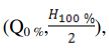
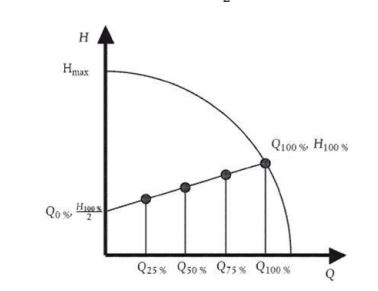
Fig. 1. Reference control line of a circulation pump.
The circulation pump setting that ensures that the product Q × H reaches its maximum on the selected line is selected. For a circulation pump integrated into equipment, the reference control line shall be followed by adjusting the system curve and the circulation pump speed.
The system curve is a graphical representation of the relationship between head and flow rate (Н = f (Q)) resulting from friction in the heating system or cooling distribution system, as shown in Figure 2.
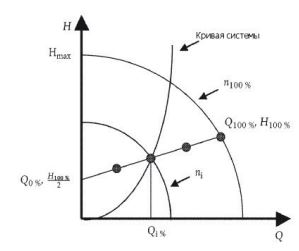
Fig. 2. System curve of an integrated circulation pump.
P1 and Н are measured at flow rates Q100%, 0,75 × Q100%, 0,5 × Q100% and 0,25 × Q100%, where Р1 is the electrical power (in W) consumed by the circulation pump at a specified operating point.
The input compensating power (PL) is calculated as follows:
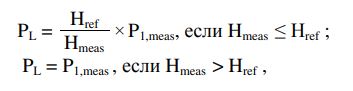
where:
Href is the head on the reference control line at various flow rates;
P1,meas is the measured electrical power;
Hmeas is the measured head.
The measured values of PL and the load profile graph shown in Figure 3 are used to calculate the average compensating power (РLavg):
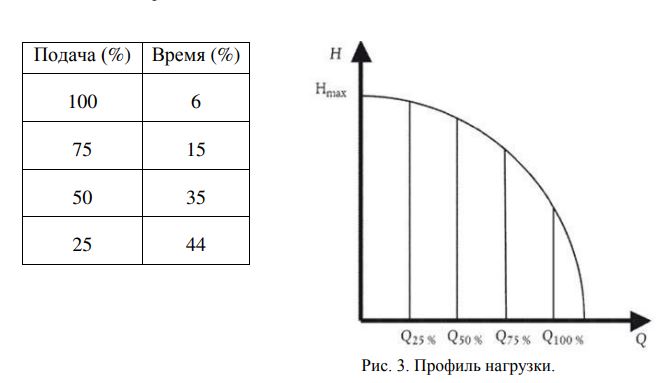
The average compensating power (РLavg) is calculated using the following formula:

The Energy Efficiency Index (EEI) is calculated using the following formula:
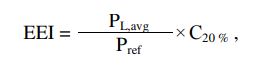
where:
С20 % = 0,49.
СХХ % means the correction factor ensuring that, at the time the correction factor is determined, only ХХ % of circulation pumps of a specified type have an EEI ≤ 0,20.
5. The Energy Efficiency Index (EEI) of circulation pumps integrated into equipment intended for use in the primary circuits of a solar energy heating system and in heat pumps shall be calculated using the following formula:
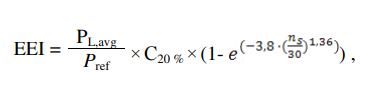
where:
ns is the specific speed of the circulation pump in revolutions per minute (rpm), calculated using the following formula:
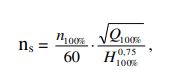
where n100 % is the rotational speed of the circulation pump in rpm, determined at Q100% and H100 %.
6. Tests (measurements) of the indicators shall be performed under the following conditions:
а) a stand-alone circulation pump in a housing shall be tested as a single unit;
б) a stand-alone circulation pump without a housing shall be tested with a housing identical to the pump housing intended for use with the pump;
в) an integrated circulation pump shall be removed from the product, and its Energy Efficiency Index (EEI) shall be measured with a standard pump housing;
г) a circulation pump without a housing intended for installation in a product shall be tested with a standard pump housing.
7. The Energy Efficiency Index (EEI) of stand-alone and integrated circulation pumps shall not exceed 0,23.
8. The operating documents accompanying circulation pumps, as provided for in paragraph 13 of the Technical Regulation, shall contain the following information on their characteristics and parameters:
а) the Energy Efficiency Index (ЕЕI) of circulation pumps, specified in the pump marking, on its packaging and in the operating documents in the form "ЕЕI ≤ 0,[ХХ]";
б) for stand-alone circulation pumps, the statement: "Compliance criterion for the most efficient circulation pumps ЕЕI ≤ 0,20;
в) for circulation pumps intended for drinking water, information on the intended use: "This circulation pump is intended for drinking water only." This information shall also be indicated on the circulation pump packaging;
г) information concerning the disassembly, reuse and disposal of the pump.
IV. Permissible Deviations of the Energy Efficiency Parameters of Circulation Pumps During Tests (Measurements) After Their Placing on the Market
9. If tests (measurements) of circulation pumps are performed after their placing on the market in the customs territory of the Union, tests (measurements) shall be performed on 1 representative sample of each circulation pump model.
A circulation pump model shall be considered compliant with these Requirements if the Energy Efficiency Index (EEI) of the representative sample of the circulation pump model does not exceed the values established for this circulation pump model in accordance with paragraph 7 of these Requirements by more than 7 %.
In other cases, 3 randomly selected circulation pumps of this model shall be subjected to tests (measurements). The circulation pump model shall be considered compliant with these Requirements if the average value of the Energy Efficiency Index (EEI) of these 3 representative samples of the circulation pump does not exceed the value specified in the second paragraph of this clause.
In other cases, this circulation pump model shall be considered non-compliant with the requirements of the Technical Regulation.
ANNEX No. 12
to the Technical Regulation
of the Eurasian Economic Union
"On Requirements for the Energy Efficiency
of Energy‑Consuming
Devices" (TR EAEU 048/2019)
REQUIREMENTS
for the Energy Efficiency of Motor‑Driven Fans
Note. Annex 12 as amended by Decisions of the Council of the Eurasian Economic Commission dated 15.04.2022 No. 50 (enters into force upon the expiry of 10 calendar days from the date of its official publication); dated 08.07.2025 No. 54 (enters into force upon the expiry of 10 calendar days from the date of its official publication).
I. Scope of Application
1. These Requirements apply to motor-driven fans placed on the market in the customs territory of the Eurasian Economic Union (hereinafter referred to as the Union), both stand-alone and integrated into other equipment, with a power from 125 W (inclusive) to 500 kW (inclusive) and a supply voltage of up to 1000 V (inclusive) AC and up to 1500 V (inclusive) DC, except for room fans and fans intended for:
а) operation in explosive, toxic, corrosive and abrasive-dust-containing atmospheres;
б) operation at a temperature of moving gases exceeding 100 С;
в) operation at an operating temperature of the medium surrounding the fan motor exceeding 65 С;
г) operation at an average annual temperature of moving gases and (or) an average annual temperature surrounding the fan motor below minus 40 С;
д) short-term operation only in extraordinary, emergency and urgent cases;
е) installation:
in equipment with a single motor rated at no more than 3 kW, driving the fan and serving to perform other functions that are primary for that equipment;
in clothes dryers and washer-dryers with a rated input power of no more than 3 kW;
in kitchen extractor hoods and air purifiers with a rated input power of less than 280 W.
II. Terms and Definitions
2. For the purposes of applying these Requirements, the following terms are used:
"fan" – a machine with rotating blades used to maintain a continuous flow of gas (usually air) passing through it, whose work per unit mass does not exceed 25 kJ/kg and which:
is designed for use with an integrated electric motor or has an integrated electric motor for rotating the impeller at its best energy efficiency;
is an axial fan, centrifugal fan, cross-flow fan or mixed-flow fan
may be with or without a motor when placed on the market or put into operation;
"inlet guide device" – a guide device located upstream of the impeller and intended to direct the gas flow into the impeller, with or without adjustment capability;
"inlet volume flow rate (q)" – the volume of gas passing through the fan per unit time (m3/s), calculated by dividing the mass of gas moved by the fan (kg/s) by the density of that gas at the fan inlet (kg/m3);
"high-efficiency drive" – a drive mechanism using a belt whose width is more than three times its thickness, a toothed belt or a wheel;
"exhaust fan" – a fan not used in the following energy-consuming products:
tumble dryers and washer-dryers with a maximum electrical input power exceeding 3 kW;
air conditioners with a maximum output power of not more than 12 kW;
computers and other information technology equipment;
"outlet guide device" – a guide device located downstream of the impeller and intended to direct the gas flow from the impeller, with or without adjustment capability;
"ready for operation" – a fan that is ready or prepared at the place of operation and contains all structural elements necessary to convert electrical energy into gas-flow energy, requiring no other structural elements or components;
"stagnation pressure" – the pressure measured at a point in the gas flow as if it were at rest in an isentropic process;
"mixed-flow fan" – a fan in which the gas passes through the impeller along a path located between the gas paths in centrifugal and axial fans;
"cross-flow fan" – a fan in which the direction of gas movement through the impeller is mainly perpendicular to the impeller axis along its circumference at the inlet and outlet;
"dynamic pressure" – the pressure calculated on the basis of the mass flow rate, the average gas density at the outlet and in the area around the fan outlet;
"measurement category" – a test, measurement or operating procedure that determines the flow parameters at the inlet and outlet of the fan under test;
"measurement category A" – a procedure in which measurements are taken on the fan under free-inlet and free-outlet conditions;
"measurement category B" – a procedure in which measurements are taken on the fan under free-inlet conditions and with a duct at the outlet;
"measurement category C" – a procedure in which measurements are taken on the fan with a duct at the inlet and a free outlet;
"measurement category D" – a procedure in which measurements are taken on the fan with ducts at the inlet and outlet;
"efficiency category" – the gas energy generated at the fan outlet, used to determine the energy efficiency of the fan and also to determine static efficiency or total efficiency;
"ring mounting" – a ring-shaped component in which the fan is located, enabling it to be mounted in supply and exhaust structures;
"casing" – an enclosure around the impeller that directs gas to the impeller, conveys it through the impeller and discharges it from the fan;
"compressibility coefficient" – a dimensionless quantity defining the degree of compression to which the gas flow is subjected during tests (measurements), calculated as the ratio of the mechanical work performed by the fan on the gas to the work that would be performed on an incompressible liquid with the same mass flow rate, inlet density and fan pressure ratio (where fan pressure is total pressure (kp) or static pressure (kps));
"short-time operating mode" – the operating mode of a fan motor at constant load for a period insufficient to reach thermal equilibrium;
"impeller (fan wheel)" – the part of the fan that transfers energy to the gas flow;
"not ready for operation" – a fan assembled from several components, containing at least an impeller, but requiring one or more additional components to enable the conversion of electrical energy into gas-flow energy;
"low-efficiency drive" – a drive mechanism using a belt whose width is less than three times its thickness, or using another type of drive mechanism that is not a high-efficiency drive;
"total efficiency ( ηe)" – static efficiency or total efficiency, as applicable in the particular case;
"axial fan" – a fan that moves gas in the direction of the impeller (impellers) axis of rotation, with the impeller (impellers) generating a tangentially rotating flow (an axial fan may have or lack a cylindrical casing, an inlet or outlet guide device, and a plate or ring mounting);
"plate mounting" – a plate with an opening in which the fan is mounted, enabling the fan to be mounted in supply and exhaust structures;
"total pressure (kp)" – the compressibility coefficient used to calculate the total power of the fan gas flow;
"total pressure generated by the fan (pf)" – the difference between the stagnation pressure at the fan outlet and the stagnation pressure at the fan inlet;
"drive mechanism" – a type of drive for a fan (for example, with a belt, gear or friction transmission) that is not a direct drive;
"direct drive" – a drive configuration for a fan in which the impeller is mounted directly on the electric motor shaft or by means of a flexible shaft, and the impeller speed is equal to the motor speed;
"reference energy efficiency ( ηр.э)" – the minimum energy efficiency that a fan must provide to comply with the requirements of the Technical Regulation of the Eurasian Economic Union "On Requirements for the Energy Efficiency of Energy-Consuming Devices" (TR EEU 048/2019) (hereinafter referred to as the Technical Regulation), determined on the basis of its electrical power consumption under conditions of best energy efficiency;
"static efficiency (psf)" – the energy efficiency of fans based on the measured static pressure generated by the fan;
"static pressure (kps)" – the compressibility coefficient used to calculate the static power of the fan gas flow;
"static pressure generated by the fan (psf)" – the total pressure generated by the fan (pf) less the dynamic pressure generated by the fan multiplied by the Mach number;
"pressure ratio" – the ratio of the static pressure measured at the fan outlet to the static pressure measured at the fan inlet when the fan operates under conditions of best energy efficiency;
"total efficiency (pf)" – the energy efficiency of the fan based on the measured total pressure generated by the fan;
"Mach number" – a correction factor applied to the dynamic pressure at a point, defined as the stagnation pressure less the pressure value exerted at a point relatively stationary with respect to the surrounding gas compared with absolute zero pressure, divided by the dynamic pressure value;
"efficiency level (N)" – a parameter used to calculate the reference energy efficiency of a fan with a specified electrical power consumption under conditions of best energy efficiency;
"speed control device" – a converter integrated into the electric motor, or an electric motor–fan operating as a single system, that continuously converts the electrical energy supplying the electric motor in order to control the amount of mechanical power delivered by the electric motor in accordance with a function measuring torque as a function of motor speed, excluding voltage control devices that only change the motor supply voltage.
III. Energy Efficiency Requirements and Specific Features of Determining Fan Energy Efficiency Indicators
3. The total energy efficiency of a fan, defined as the total efficiency of the fan ( ηe), calculated in accordance with the calculation rules set out in paragraphs 4 – 8 of this section, shall be equal to or exceed the reference energy efficiency (ηр.э.) specified in Table 1.
The energy efficiency requirements for fans do not apply to fans intended for operation:
with optimum energy efficiency provided at a rotational speed of at least 8 000 revolutions per minute;
under conditions in which the pressure ratio exceeds 1,11;
as transport fans for moving non-gaseous substances.
For dual-purpose fans intended for use both under normal conditions and in emergencies in short-time operating mode, taking into account fire protection requirements, energy efficiency levels lower than those specified in Table 1 are permitted:
by 5 % for all types of fans.
Table 1
Calculated Energy Efficiency for Various Fan Types
Fan type | Measurement category (A – D) | Static or total efficiency |
Power range | Reference energy efficiency (hр.э.)* |
Axial fan | A, C | static | 0,125 ≤ P ≤ 10 |
ηр.э. = 2,74 ×lnP – 6,33 + N |
10 < P ≤ 500 |
ηр.э. = 0,78 ×lnP – 1,88 + N | |||
B, D | total | 0,125 ≤ P ≤ 10 |
hр.э. = 2,74 ×lnP – 6,33 + N | |
10 < P ≤ 500 | ηр.э. = 0,78 ×lnP – 1,88 + N | |||
Centrifugal fan | A, C | static | 0,125 ≤ P ≤ 10 |
ηр.э. = 2,74 ×lnP – 6,33 + N |
10 < P ≤ 500 |
ηр.э. = 0,78 ×lnP – 1,88 + N | |||
B, D | total | 0,125 ≤ P ≤ 10 |
ηр.э. = 2,74 ×lnP – 6,33 + N | |
10 < P ≤ 500 |
ηр.э. = 0,78 ×lnP – 1,88 + N | |||
Centrifugal fan | A, C | static | 0,125 ≤ P ≤ 10 |
ηр.э. = 4,56 ×lnP – 10,5 + N |
10 < P ≤ 500 |
ηр.э. = 1,1 ×lnP – 2,6 + N | |||
Centrifugal fan | A, C | static | 0,125 ≤ P ≤ 10 |
ηр.э. = 4,56 ×lnP – 10,5 + N |
10 < P ≤ 500 |
ηр.э. = 1,1 ×lnP – 2,6 + N | |||
B, D | total | 0,125 ≤ P ≤ 10 |
ηр.э. = 4,56 ×lnP – 10,5 + N | |
10 < P ≤ 500 |
ηр.э. = 1,1 ×lnP – 2,6 + N | |||
Mixed-flow fan | A, C | static | 0,125 ≤ P ≤ 10 |
ηр.э. = 4,56 ×lnP – 10,5 + N |
10 < P ≤ 500 |
ηр.э. = 1,1 ×lnP – 2,6 + N | |||
B, D | total | 0,125 ≤ P ≤ 10 |
ηр.э. = 4,56 ×lnP – 10,5 + N | |
10 < P ≤ 500 |
ηр.э. = 1,1 ×lnP – 2,6 + N | |||
Cross-flow fan | B, D | total | 0,125 ≤ P ≤ 10 |
ηр.э. = 1,14 ×lnP – 2,6 + N |
10 < P ≤ 500 |
ηр.э. = N |
* The efficiency level values (N) are given in Table 2.
Table 2
Fan Efficiency Level (N)
Fan type | Measurement category (A – D) | Efficiency level (N) |
1 September 2029 | ||
Axial fan | A, C | 40 |
B, D | 58 | |
Centrifugal fan with forward-curved blades and centrifugal fan with straight radial blades |
A, C | 44 |
B, D | 49 | |
Centrifugal fan with backward-curved blades without housing | A, C | 62 |
Centrifugal fan with backward-curved blades with housing | A, C | 61 |
B, D | 64 | |
Mixed-flow fan | A, C | 50 |
B, D | 62 | |
Cross-flow fan | B, D | 21 |
4. The rules for calculating the fan energy efficiency parameters are based on the ratio between the fan gas-flow power and the electrical power consumed by the motor, where the fan gas-flow power is the product of the gas flow rate and the pressure difference between the fan inlet and outlet. The pressure is either static pressure or total pressure, which is the sum of static and dynamic pressure, depending on the measurement category and efficiency level.
5. If the fan is supplied ready for operation, the fan gas-flow power and the electrical power consumed by the motor shall be measured under conditions of optimum energy efficiency:
a) for fans without speed control, the total efficiency is calculated using the following formula:
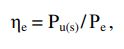
where: ηe – total efficiency;
Pu(s) – fan gas flow power determined in accordance with Clause 7 of these Requirements when the fan operates under optimal energy efficiency conditions;
Pe – electrical power consumption of the motor, measured at the motor terminals when the fan operates under optimal energy efficiency conditions;
b) for fans with speed control, the total efficiency is calculated using the following formula:
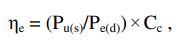
where:
he – total efficiency;
Pu(s) – fan gas flow power determined in accordance with Clause 7 of these Requirements when the fan operates under optimal energy efficiency conditions;
Pe(d) – electrical power consumption of the motor, measured at the terminals of the speed control device when the fan operates under optimal energy efficiency conditions;
Cc – part-load correction factor calculated using the following formula:

6. If the fan is supplied not ready for operation, the total efficiency of the impeller under optimal energy efficiency conditions is calculated using the following formula:

where: ηe – total efficiency;
ηr – impeller efficiency corresponding to Pu(s)/Pa ,
where:
Pu(s) – fan gas flow power determined under optimal impeller energy efficiency conditions in accordance with Clause 7 of these Requirements;
Pa – fan gas flow power under optimal impeller energy efficiency conditions; ηm – rated efficiency of the motor supplied as part of the fan, as provided for in Annex No. 3 to the Technical Regulation. If the motor is outside the scope of the said Annex or is not included in the fan supply, the rated efficiency (hm) of the motor is determined based on the following values:
if the recommended electrical power consumption of the motor Pe ≥ 0,75 kW, the rated efficiency is calculated using the following formula:

where:
x = lg(Pe);
Pe – electrical power consumption of the motor, measured at the motor terminals when the fan operates under optimal energy efficiency conditions;
if the recommended electrical power consumption of the motor Pe < 0,75 kW, the rated efficiency is calculated using the following formula:

where:
Pe – electrical power consumption of the motor, measured at the motor terminals when the fan operates under optimal energy efficiency conditions. The electrical power consumption of the motor (Pe) recommended by the fan manufacturer must be sufficient for the fan to achieve its optimal energy efficiency, taking drive-related losses into account where necessary;
ηT – efficiency of the drive mechanism, for which the following rated values are used:
for direct drive: ηT = 1,0;
if the drive mechanism is a low-efficiency drive:
for Pa ≥ 5 kW – ηT = 0,96;
for 1 kW <Pa< 5 kW – ηT = 0,0175 × Pa + 0,8725;
for Pa ≤ 1 kW – ηT = 0,89;
if the drive mechanism is a high-efficiency drive:
for Pa ≥ 5 kW – ηT = 0,98;
for 1 kW <Pa< 5 kW – ηT = 0,01 × Pa + 0,93;
for Pa ≤ 1 kW – ηT = 0,94;
Cm – correction factor accounting for the matching of components, equal to 0,9;
Cc – part-load correction factor equal to:
if the motor has no speed control – Cc = 1,0;
if the motor has speed control and Pe(d) ≥ 5 kW – Cc = 1,04;
if the motor has speed control and Pe(d) < 5 kW – Cc = – 0,03 ln(Pe(d)) + 1,088.
7. The fan gas flow power Pu(s) in kW is calculated according to the control method selected by the manufacturer for the measurement category:
a) if measurements on the fan were performed according to measurement category A or C, the static fan gas flow power calculated using the following formula is applied:
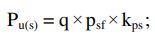
b) if measurements on the fan were performed according to measurement category B or D, the total fan gas flow power calculated using the following formula is applied:
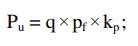
8. The following methods for determining reference energy efficiency are applied depending on the fan design:
a) for axial fans, centrifugal fans with forward-curved blades and centrifugal fans with straight radial blades (with an integrated axial fan), the reference energy efficiency is calculated using the following formulas:

where:
P – electrical power consumption of the motor Pe(d);
N – integer corresponding to the required energy efficiency level;
b) for centrifugal fans with backward-curved blades without a housing, centrifugal fans with backward-curved blades with a housing and mixed-flow fans, the reference energy efficiency is calculated using the following formulas:

where:
P – electrical power consumption of the motor Pe(d);
N – integer corresponding to the required energy efficiency level;
c) for cross-flow fans, the reference energy efficiency is calculated using the following formulas:

where:
P – electrical power consumption of the motor Pe(d);
N – integer corresponding to the required energy efficiency level.
9. The fan marking provided for in Clause 10 of the Technical Regulation must contain the following parameters and characteristics of its energy efficiency:
value of the total energy efficiency (he,) (rounded to 1 decimal place);
measurement category (A – D) used to determine energy efficiency;
energy efficiency category (static or total efficiency);
if speed control is available, the statement "A speed control device must be installed together with the fan" or the statement "A speed control device is integrated into the fan".
10. The operating documents accompanying the fans, as provided for in Clause 13 of the Technical Regulation, must contain the following information about their characteristics and parameters:
a) the value of the total energy efficiency ( ηe) (rounded to 1 decimal place);
b) measurement category (A – D) used to determine energy efficiency;
c) energy efficiency category (static or total efficiency);
d) if speed control is available, the statement "A speed control device must be installed together with the fan" or the statement "A speed control device is integrated into the fan";
e) efficiency level under optimal energy efficiency conditions;
f) revolutions per minute under optimal energy efficiency conditions;
g) information on the rated motor power consumption value(s) in kW, flow rate(s) and pressure(s) under optimal energy efficiency conditions;
h) pressure ratio;
i) information necessary to ensure the optimal service life of fans during their installation, operation and maintenance;
k) information on the disassembly, recycling and disposal of fans and on minimising their impact on the environment.
11. The set of documents for fans specified, taking into account the conformity assessment scheme selected by the applicant, in subparagraph "a" of paragraph 28 or subparagraph "a" of paragraph 29 of the Technical Regulation, must additionally include information on such parts and equipment components used to determine the energy efficiency of fans as air ducts, which are not specified in the measurement category and are not supplied together with the fan.
IV. Permissible deviations of the energy efficiency parameters of fans during tests (measurements) after their placing on the market
12. If tests (measurements) of fans are conducted after their placing on the market in the customs territory of the Union, tests (measurements) are conducted on 1 representative sample of each fan model.
A fan model is considered to comply with these Requirements if the total efficiency (he) of the fan is at least 90 % of the reference energy efficiency determined in accordance with paragraphs 3 – 8 of these Requirements at the relevant efficiency levels.
In other cases:
for fans manufactured in quantities of less than 5 units per year, the fan model is considered not to comply with the requirements of the Technical Regulation;
for fans manufactured in quantities of 5 or more than 5 per year, 3 other randomly selected representative samples of each model are subjected to tests (measurements).
A fan model is considered to comply with these Requirements if the average value of the measurement results for the total efficiency (he) of these 3 representative samples of the fan is not less than the value specified in the second paragraph of this clause.
In other cases, the fan model in question shall be considered not to comply with the requirements of the Technical Regulation.
ANNEX No. 13
to the Technical Regulation
of the Eurasian Economic Union
"On the Requirements for the Energy Efficiency of Energy‑Consuming Devices" (TR EAEU 048/2019)
REQUIREMENTS
for the energy efficiency of fluorescent lamps
without integrated control gear, high‑pressure gas‑discharge lamps, control gear and luminaires for such lamps
Note. Annex 13 as amended by Decisions of the Council of the Eurasian Economic Commission dated 15.04.2022 No. 50 (enters into force upon the expiry of 10 calendar days from the date of its official publication); dated 08.07.2025 No. 54 (enters into force upon the expiry of 10 calendar days from the date of its official publication).
I. Scope of Application
1. These Requirements apply to fluorescent lamps without integrated control gear, high-pressure gas-discharge lamps, control gear and luminaires for such lamps placed on the market in the customs territory of the Eurasian Economic Union (hereinafter referred to as the Union), including where they are integrated into other energy-consuming products, except for:
а) lamps (except high-pressure sodium lamps) that are not white-light sources;
b) sodium lamps for greenhouse lighting;
c) directional lamps;
d) high-pressure gas-discharge mixed-light lamps in which:
at least 6 % of the total radiation in the range between 250 and 780 nm is in the range between 250 and 400 nm;
at least 11 % of the total radiation in the range between 250 and 780 nm is in the range between 630 and 780 nm;
at least 5 % of the total radiation in the range between 250 and 780 nm is in the range between 640 and 700 nm;
the radiation peak is in the range between 315 and 400 nm (UVA –type A ultraviolet radiation) or 280 and 315 nm (UVB –type B ultraviolet radiation);
e) double-capped fluorescent lamps with the following characteristics:
diameter not exceeding 7 mm (T2);
diameter 16 mm (T5) and lamp power Pл ≤ 13 W or > 80 W;
diameter 38 mm (T12), G-13 two-pin cap, limiting values of the colour filter 5м (+ purple colour, – green), colour coordinates x = 0,330, y = 0,335 and x = 0,415, y = 0,377;
diameter 38 mm (T12) and external ignition strips;
f) single-capped fluorescent lamps with the following characteristics:
diameter 16 mm (T5), four-pin 2G11 cap, Tc = 5 500 K, chromaticity coordinates x = 0,330 and y = 0,335 and Tс = 3 200 with chromaticity coordinates х = 0,415 and у = 0,377;
g) high-pressure gas-discharge lamps having a colour temperature Tс > 7 000 K;
h) high-pressure gas-discharge lamps with UV power > 2 mW/klm;
i) high-pressure gas-discharge lamps with a cap other than E27, E40 or PGZ12 caps;
j) lamps used in computers, photocopying machines, tanning equipment, terrarium lighting, and lamps for similar applications;
k) products not intended for general lighting or intended for use with the lamps specified in subparagraphs "c" – "e" of this clause, and integrated into other products not intended for general lighting;
l) luminaires for emergency lighting and luminaires used as signal lights;
m) control gear intended for use with the luminaires specified in subparagraph "l" of this clause and designed for operation with lamps in emergency situations.
II. Terms and Definitions
2. For the purposes of applying these Requirements, the following terms are used with the following meanings:
"external lamp envelope" – the second (external) lamp envelope, which is not required for light generation (for example, an external bulb that must ensure optimum operating conditions for the burner, prevent ultraviolet radiation from escaping and/or diffuse light, and prevent mercury and glass from entering the environment if the burner breaks);
"gas-discharge lamp" – a discharge lamp in which optical radiation is generated as a result of an electrical discharge in gas;
"high-pressure gas-discharge lamp" – a gas-discharge lamp in which the light-emitting electric arc is stabilised by the temperature of the burner walls and the thermal load on the bulb walls exceeds 3 W/cm2;
"excess light" – the part of the light from a lighting device that does not serve the intended purpose, namely:
light that illuminates an area not requiring illumination;
scattered light in the vicinity of the lighting device;
sky glow, meaning illumination of the night sky caused by the direct or indirect reflection of radiation (visible and invisible) scattered by atmospheric components (gas molecules, aerosols and particles) in the direction of observation;
"colour rendering index (Ra)" – a measure of the conformity of visual perceptions of a coloured object illuminated by the test and standard light sources under specified viewing conditions;
"white-light source" – a light source whose chromaticity coordinates comply with the following requirements:
0,270 < x < 0,530;
– 2,3172 x2 + 2,3653 x – 0,2199 < y < – 2,3172 x2 + 2,3653 x – 0,1595;
"correlated colour temperature (Tс [K])" – the temperature of a Planckian (black-body) radiator whose perceived colour most closely resembles that of the given stimulus at the same luminance and under specified viewing conditions;
"lamp lumen maintenance factor (LLMF)" – the ratio of the luminous flux of a lamp at a specified point in its service life (life cycle) to the initial luminous flux of that lamp;
"lamp survival factor (LSF)" – the proportion of lamps still functioning at a given time under specified conditions and at a specified switching frequency out of the total number of lamps;
"efficiency of control gear ( ηпра)" – the ratio of the lamp power consumption (control gear output power) to the input power of the control gear electrical circuit, with any possible sensor devices, network connections and other additional consumers disconnected;
"directional lamp" – a lamp that emits at least 80% of its luminous flux within a solid angle of 3,14 steradians (corresponding to a cone with an apex angle of 120 º);
"non-directional lamp" – a lamp that is not a directional light-emitting lamp;
"clear-lamp envelope" – a high-pressure gas-discharge lamp with a clear external envelope or outer tube in which the light-emitting electric arc tube is clearly visible (for example, a clear glass lamp);
"mixed-light lamp" – a lamp that contains, in a single bulb, a mercury lamp and a filament connected in series;
"fluorescent lamp" – a low-pressure mercury lamp in which light is emitted by one or more layers of phosphor excited by ultraviolet radiation from an electrical discharge;
"metal halide lamp" – a lamp in which light is emitted by a mixture of metal vapours, metal halide compounds and decomposition products of halide compounds;
"high-pressure sodium lamp" – a lamp in which light is emitted by sodium vapour whose partial pressure in steady-state operation reaches 10 kPa (75 mm рт. ст.);
"nominal value" – the quantitative value of a parameter under specified operating conditions, used to designate or identify a product and stated by the manufacturer in the operating documents;
"general lighting" – essentially uniform illumination of an area without regard to special local requirements;
"power consumption" – the power consumed at the rated supply voltage and maximum load;
"control gear" – a device connected between the mains and one or more discharge lamps that, by means of inductance, capacitance or a combination thereof, primarily limits the lamp current to the required value. Control gear (hereinafter referred to as CG) may consist of one or more units. CG may also contain means for transforming the mains voltage and devices assisting in providing the voltage for lamp ignition, preventing cold ignition, reducing the stroboscopic effect, correcting the power factor and/or suppressing conducted radio interference. Control gear may be integrated into the lamp or separate from it;
"calculated value" – the quantitative value of a parameter under specified (given) conditions. The values and conditions are specified in the relevant standards or communicated by the manufacturer (supplier). Unless otherwise specified, all requirements are expressed as calculated values. A calculated value is obtained by calculation, i.e. by a non-experimental method;
"light source control device" – one or more structural elements between the power supply unit and one or more light sources, which may serve to convert the supply voltage, limit the lamp power supply to the required value, bring the ignition voltage and preheating current into a ready state, prevent cold starting, correct the power factor or reduce radio interference. Light source control devices include, for example, control gear, converters and transformers for halogen lamps, as well as drivers for light-emitting diodes (LEDs);
"dimmable control gear" – control gear that provides regulation of the luminous flux of lamps to achieve the required illuminance;
"high-pressure mercury lamp" – a lamp in which the partial pressure of mercury vapour in steady-state operation ranges from 3 ×10⁴ to 106 Pa (from 225 to 7 500 mm рт. ст.);
"luminaire" – a device that distributes, filters or transforms the light emitted by one or more lamps and that includes all parts necessary for holding, fixing and protecting the lamp and, where necessary, auxiliary circuits together with means for connecting the power supply;
"luminous efficacy ( ηл)" – the ratio of the luminous flux emitted by a light source to its power consumption, expressed in lumens per watt (лм/Вт). Luminous efficacy is an indicator of the efficiency and economy of light sources and is calculated using the formula:
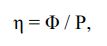
where:
F – luminous flux emitted by the light source;
Р – its power consumption.
Additional devices, such as control gear, transformers and power supply units, are not taken into account in the lamp power consumption (Р);
"light pollution" – the sum of all adverse effects of artificial light on the environment, including the effects of excess light;
"luminous flux (F)" – the energy of visible radiation carried by a radiation flow per unit of time;
"dimmer" – a device intended to regulate the brightness of lamps;
"efficiency of basic control gear (EBb)" – the ratio of the calculated lamp power (Pл) to the efficiency of the control gear. The corresponding control gear efficiency for single-capped and double-capped fluorescent lamps with control gear is calculated according to the following scheme:
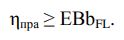
If Pл ≤ 5 W – the value EBb FL = 0,71.

"lamp life" – the operating time after which the proportion of functioning lamps out of the total number of lamps under specified conditions and at a specified switching frequency corresponds to the lamp survival factor;
"chromaticity" – a characteristic of the colour quality of a lamp, determined by its chromaticity coordinates;
"UV radiation efficacy" – the effective intensity of UV radiation from a lamp relative to its luminous flux (in mW/klm);
"electronic or high-frequency control gear" – an AC power supply unit operating from the mains, including stabilising starting components, for operating, usually at high frequency, one or more tubular fluorescent lamps.
III. Energy Efficiency Requirements and Rules for Determining Energy Efficiency Indicators
1. Energy Efficiency Requirements for Lamps
3. Double-capped fluorescent lamps with diameters of 16 and 26 mm (T5 and T8) at a temperature of 25 ºC shall have calculated luminous efficacy values of not less than those specified in Table 1.
If the rated power differs from that specified in Table 1, the lamps shall achieve the luminous efficacy specified for lamps with the nearest rated power, except for T8 lamps with a power exceeding 50 W, which shall achieve a luminous efficacy of 83 lm/W. If the rated power value falls exactly halfway between two values given in Table 1, the relevant lamp shall comply with the higher luminous efficacy value. If the rated power of a lamp exceeds the maximum power specified in Table 1, the relevant lamp shall have the luminous efficacy value specified for that maximum power.
Table 1
Calculated luminous efficacy values for T8 and T5 lamps
T8 (diameter 26 mm) | T5 (diameter 16 mm) high efficiency | T5 (diameter 16 mm) high power | |||
Rated power, W | Calculated luminous efficacy (lm/W), after 100 h of operation | Rated power, W | Calculated luminous efficacy (lm/W), after 100 h of operation | Rated power, W | Calculated luminous efficacy (lm/W), after 100 h of operation |
15 | 63 | 14 | 86 | 24 | 73 |
18 | 75 | 21 | 90 | 39 | 79 |
25 | 76 | 28 | 93 | 49 | 88 |
30 | 80 | 35 | 94 | 54 | 82 |
36 | 93 | – | – | 80 | 77 |
38 | 87 | – | – | – | – |
58 | 90 | – | – | – | – |
70 | 89 | – | – | – | – |
When calculating lm/W, decimal fractions may be rounded up to the nearest whole number.
These requirements for double-capped fluorescent lamps with a G13 cap shall apply from 1 September 2021.
Single-capped fluorescent lamps at a temperature of 25 ºC shall have calculated luminous efficacy values not lower than those specified in Table 2.
If the rated power or shape of a lamp differs from the power or shapes of the lamps specified in Tables 2–5, the lamps shall achieve the luminous efficacy corresponding to the nearest rated power or shape. If the rated power value falls exactly halfway between two values specified in the table, the corresponding lamp shall meet the higher of the luminous efficacy values. If the rated power exceeds the maximum power specified in Table 2, the corresponding lamp shall have the luminous efficacy value specified for that maximum power.
Spiral-shaped double-capped fluorescent lamps of all diameters equal to or greater than 16 mm shall comply with the requirements for T9 ring-shaped lamps in Table 5.
Table 2
Calculated luminous efficacy values for single‑capped fluorescent lamps operating with electromagnetic and electronic control gear
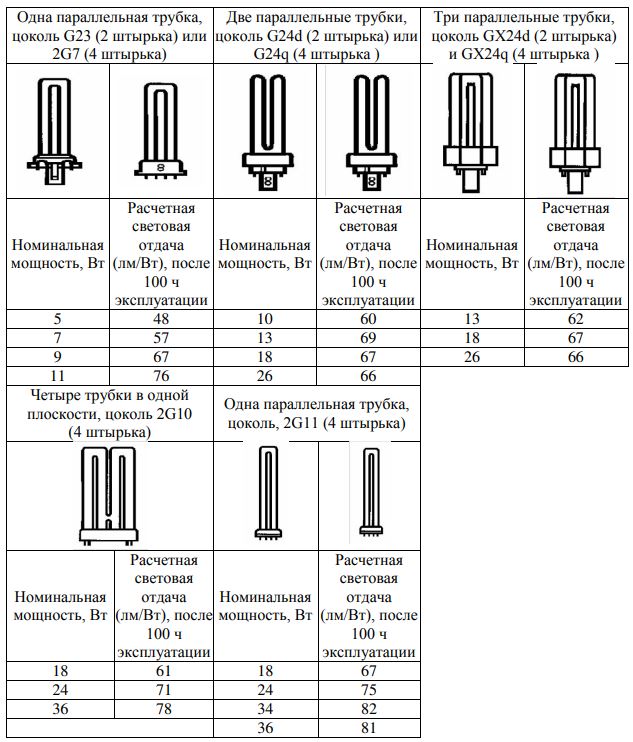
When calculating lm/W, decimal fractions may be rounded up to the nearest whole number.
Table 3
Calculated luminous efficacy values for single‑capped fluorescent lamps operating only with electronic control gear
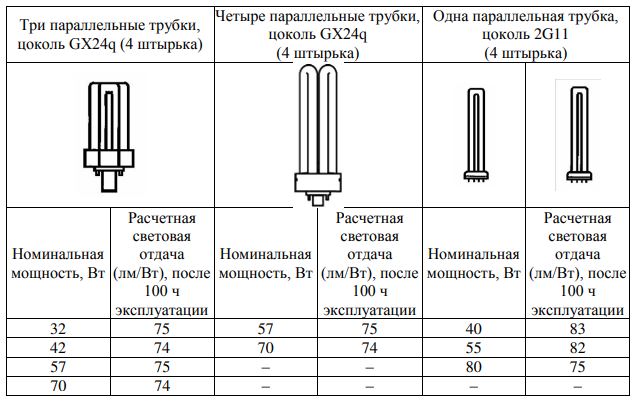
When calculating lm/W, decimal fractions may be rounded up to the nearest whole number.
Table 4
Calculated luminous efficacy values for single‑capped fluorescent lamps with a pretzel‑shaped design or high rated power
One square-shaped tube, GR8 cap (2 pins), GR10q cap (4 pins) and GRY10q3 cap (4 pins) |
Four parallel 2G8 tubes | ||
|
| ||
Rated power, W | Calculated luminous efficacy (lm/W), after 100 h of operation | Rated power, W | Calculated luminous efficacy (lm/W), after 100 h of operation |
10 | 65 | 60 | 67 |
16 | 66 | 82 | 75 |
21 | 64 | 85 | 71 |
28 | 73 | 120 | 75 |
38 | 71 | ||
55 | 71 | ||
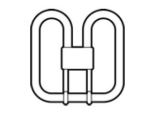
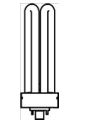
When calculating lm/W, decimal fractions may be rounded up to the nearest whole number.
Table 5
Calculated minimum luminous efficacy values for T9 and T5 ring‑shaped lamps
T9 ring-shaped tube with a diameter of |
T5 ring-shaped tube with a diameter of | ||
|
| ||
Rated power, W | Calculated luminous efficacy (lm/W), after 100 h of operation | Rated power, W | Calculated luminous efficacy (lm/W), after 100 h of operation |
22 | 52 | 22 | 77 |
32 | 64 | 40 | 78 |
40 | 70 | 55 | 75 |
60 | 60 | 60 | 80 |


When calculating lm/W, decimal fractions may be rounded up to the nearest whole number.
For single-capped and double-capped fluorescent lamps with certain parameters, a reduction in the calculated minimum luminous efficacy values is permitted. The luminous efficacy may be lower for lamps with the parameters specified in Table 6.
Table 6
Permissible reduction in the minimum luminous efficacy values of fluorescent lamps with high colour temperature, high colour rendering index, a second envelope or extended service life
Lamp parameters | Permissible reduction in luminous efficacy at 25 ºC |
Tc ≥ 5 000 K | – 10 % |
95 ≥ Ra > 90 | – 20 % |
Ra > 95 | – 30 % |
With a second envelope | – 10 % |
Lamp survival factor ≥ 0,50 after 40 000 hours of operation | – 5 % |
The specified permissible reductions (in %) are cumulative.
Single-capped and double-capped fluorescent lamps whose optimum operating temperature differs from 25º C shall comply with the luminous efficacy requirements in Tables 1–6 also at their optimum operating temperature.
High-pressure gas-discharge lamps with Tc ≥ 5 000 K or with a second envelope shall comply with the luminous efficacy requirements specified in Tables 7–9 at a minimum of 90 %.
High-pressure sodium lamps with Ra ≤ 60 shall have calculated luminous efficacy values not lower than those specified in Table 7.
Table 7
Calculated luminous efficacy values for high‑pressure sodium lamps with Ra ≤ 60
Rated lamp power, W, W | Calculated luminous efficacy of a lamp with a clear bulb, lm/W | Calculated luminous efficacy of a lamp with an opaque bulb, lm/W |
W ≤ 45 | ≥ 60 | ≥ 60 |
45 < W ≤ 55 | ≥ 80 | ≥ 70 |
55 < W ≤ 75 | ≥ 90 | ≥ 80 |
75 < W ≤ 105 | ≥ 100 | ≥ 95 |
105 < W ≤ 155 | ≥ 110 | ≥ 105 |
155 < W ≤ 255 | ≥ 125 | ≥ 115 |
255 < W ≤ 605 | ≥ 135 | ≥ 130 |
The requirements specified in Table 7 apply to high-pressure sodium lamps.
For sodium lamps intended as direct replacements for mercury lamps (operating on control gear for mercury lamps), these requirements shall apply from 1 September 2029.
Metal halide lamps with Ra ≤ 80 and high-pressure sodium lamps with Ra > 60 shall have calculated luminous efficacy values not lower than those specified in Table 8.
Table 8
Calculated minimum luminous efficacy values for metal halide lamps with Ra ≤ 80 and high‑pressure sodium lamps with Ra > 60
Rated lamp power, W, W | Calculated luminous efficacy of a lamp with a clear bulb, lm/W | Calculated luminous efficacy of a lamp with an opaque bulb, lm/W |
W ≤ 55 | ≥ 60 | ≥ 60 |
55 < W ≤ 75 | ≥ 75 | ≥ 70 |
75 < W ≤ 105 | ≥ 80 | ≥ 75 |
105 < W ≤ 155 | ≥ 80 | ≥ 75 |
155 < W ≤ 255 | ≥ 80 | ≥ 75 |
255 < W ≤ 405 | ≥ 85 | ≥ 75 |
Other high-pressure gas-discharge lamps shall have calculated luminous efficacy values not lower than those specified in Table 9.
These requirements shall apply from 1 September 2029.
Table 9
Calculated values of the minimum luminous efficacy of other high‑pressure gas‑discharge lamps
Rated lamp power, W, W | Calculated luminous efficacy, lm/W |
W ≤ 40 | 50 |
40 < W ≤ 50 | 55 |
50 < W ≤ 70 | 65 |
70 < W ≤ 125 | 70 |
125 < W | 75 |
From 1 September 2023:
the operation of fluorescent lamps without integrated control gear with control gear of energy efficiency class A2 or more efficient control gear shall be provided for. Their operation with control gear falling within a lower energy efficiency class than A2 shall also be provided for;
lamps with a colour temperature Tc ≥ 5 000 K or a second envelope shall meet the applicable luminous efficacy requirements by at least 90%;
the calculated luminous efficacy values of metal halide lamps shall be not less than those specified in Table 10.
Table 10
Calculated luminous efficacy values of metal halide lamps
Rated lamp power, W, W | Calculated luminous efficacy of a lamp with a transparent envelope, lm/W | Calculated luminous efficacy of a lamp with an opaque envelope, lm/W |
W ≤ 55 | ≥ 70 | ≥ 65 |
55 < W ≤ 75 | ≥ 80 | ≥ 75 |
75 < W ≤ 105 | ≥ 85 | ≥ 80 |
105 < W ≤ 155 | ≥ 85 | ≥ 80 |
155 < W ≤ 255 | ≥ 85 | ≥ 80 |
255 < W ≤ 405 | ≥ 90 | ≥ 85 |
2. Requirements for the performance characteristics of lamps
4. Fluorescent lamps without integrated control gear shall have a colour rendering index (Ra) of at least 80 and lamp lumen maintenance factor values not lower than those specified in Table 11. These requirements shall apply from 1 September 2021.
Table 11
Lamp lumen maintenance factor values for single‑cap and double‑cap fluorescent lamps
Lamp type | Operating time, h | |||
2 000 | 4 000 | 8 000 | 16 000 | |
Lamp lumen maintenance factor | ||||
Double-cap fluorescent lamps operated with non-electronic control gear | 0,95 | 0,92 | 0,90 | – |
T8 double-cap fluorescent lamps operated with non-electronic control gear with preheating of the electrodes | 0,96 | 0,92 | 0,91 | 0,90 |
Other double-cap fluorescent lamps operated with electronic control gear with preheated starting | 0,95 | 0,92 | 0,90 | 0,90 |
Ring-shaped single-cap fluorescent lamps operated with non-electronic control gear, U-shaped T8 double-cap fluorescent lamps and spiral-shaped double-cap fluorescent lamps (T5) with a diameter of 16 mm or more | 0,80 | 0,74 | – | – |
0,72 at 5 000 h of operation | ||||
Ring-shaped single-cap fluorescent lamps operated with electronic control gear | 0,85 | 0,83 | 0,80 | – |
0,75 at 12 000 h of operation | ||||
Other single-cap fluorescent lamps operated with non-electronic control gear | 0,85 | 0,78 | 0,75 | – |
Other single-cap fluorescent lamps operated with electronic control gear with preheating of the electrodes | 0,90 | 0,84 | 0,81 | 0,78 |
The permissible reductions applicable to the values specified in Table 11 for the lamp lumen maintenance factor requirements are given in Table 12.
Table 12
Permissible reduction values for the lamp lumen maintenance factor requirements for fluorescent lamps
Lamp parameters |
Permissible reduction of the requirements |
Lamps with 95 ≥ Ra> 90 |
operation ≤ 8 000 h – 5 % |
Lamps with Ra > 95 |
operation ≤ 4 000 h – 10 % |
Lamps with a colour temperature ≥ 5 000 K | – 10 % |
Fluorescent lamps without integrated control gear shall have lamp survival factor values not lower than those specified in Table 13. These requirements shall apply from 1 September 2021.
Table 13
Lamp survival factors for single‑cap and double‑cap fluorescent lamps
Lamp type | Operating time, h | |||
2 000 | 4 000 | 8 000 | 16 000 | |
Lamp survival factor | ||||
Double-cap fluorescent lamps operated with non-electronic control gear | 0,99 | 0,97 | 0,90 | – |
Double-cap fluorescent lamps operated with electronic control gear with preheated starting | 0,99 | 0,97 | 0,92 | 0,90 |
Ring-shaped single-cap fluorescent lamps operated with non-electronic control gear, U-shaped T8 double-cap fluorescent lamps and spiral-shaped double-cap fluorescent lamps (T5) with a diameter of 16 mm or more | 0,98 | 0,77 | – | – |
0,50 at 5 000 h of operation | ||||
Ring-shaped single-cap fluorescent lamps operated with electronic control gear | 0,99 | 0,97 | 0,85 | – |
0,50 at 12 000 h of operation | ||||
Other single-cap fluorescent lamps operated with non-electronic control gear | 0,98 | 0,90 | 0,50 | – |
Other single-cap fluorescent lamps operated with electronic control gear with preheating of the electrodes | 0,99 | 0,98 | 0,88 | – |
High-pressure sodium lamps shall have lamp lumen maintenance factor and lamp survival factor values not lower than those specified in Table 14.
Table 14
Lamp lumen maintenance factor and lamp survival factor values for high‑pressure sodium lamps
Category of high-pressure sodium lamps | Lamp lumen maintenance factor | Lamp survival factor | |
Pл ≤ 75 W | Ra ≤ 60 | > 0,80 | > 0,90 |
Ra > 60 | > 0,75 | > 0,75 | |
all retrofitted lamps intended for operation with control gear for high-pressure mercury lamps | > 0,75 | > 0,80 | |
Pл > 75 W | Ra ≤ 60 | > 0,85 | > 0,90 |
Ra > 60 | > 0,70 | > 0,65 | |
all retrofitted lamps intended for operation with control gear for high-pressure mercury lamps | > 0,75 | > 0,55 | |
Metal halide lamps shall have lamp lumen maintenance factor and lamp survival factor values not lower than those specified in Table 15.
These requirements shall apply from 1 September 2028.
Table 15
Lamp lumen maintenance factor and lamp survival factor values for metal halide lamps with a ceramic burner
Operating time, h 12 000 | Lamp lumen maintenance factor > 0,80 | Lamp survival factor > 0,80 |
3. Requirements for non‑integrated control gear for fluorescent lamps and high‑pressure gas‑discharge lamps
5. Wide-range control gear (capable of operating with lamps of different power ratings) shall comply with the requirements for each of the power ratings at which it can be operated.
The placing on the market of electromagnetic control gear for single-capped and double-capped fluorescent lamps of energy efficiency class D shall be prohibited from 1 September 2021.
Control gear specified in Table 16 shall have an energy efficiency class of not lower than B2; control gear specified in Table 17 shall have a class of not lower than A3; and control gear specified in Table 18 shall have a class of not lower than A1.
At 25 % of the luminous output of the lamp in operation, the input power (Pвкл) of the control gear circuit shall not exceed:
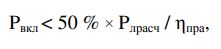
where:
Pлрасч – for the calculated value of the lamp power; ηпра – for the lower limit value of the energy efficiency of the relevant class.
The energy consumption of control gear for fluorescent lamps shall not exceed 1,0 W if the lamps in operation emit no light under normal operating conditions and any other connected structural elements (mains connections, sensors, etc.) are disconnected. If disconnection is not possible, their power shall be measured and subtracted from the result.
Control gear for high-pressure gas-discharge lamps shall have efficiency values not lower than those specified in Table 19.
Table 16
Energy efficiency index of non‑dimmable ballasts for fluorescent lamps
Lamp technical characteristics | Ballast efficiency (Pл/Pвход) | ||||||||
нерегулируемый | |||||||||
Тип лампы | Номинальная мощность | ILCOS-code | Rated/standard power | A2 BAT | A2 | A3 | B1 | B2 | |
50 Гц | ВЧ | ||||||||
Вт | Вт | Вт | |||||||
T8 | 15 | FD-15-E-G13-26/450 | 15 | 13,5 | 87,8 % | 84,4 % | 75,0 % | 67,9 % | 62,0 % |
T8 | 18 | FD-18-E-G13-26/600 | 18 | 16 | 87,7 % | 84,2 % | 76,2 % | 71,3 % | 65,8 % |
T8 | 30 | FD-30-E-G13-26/900 | 30 | 24 | 82,1 % | 77,4 % | 72,7 % | 79,2 % | 75,0 % |
T8 | 36 | FD-36-E-G13-26/1200 | 36 | 32 | 91,4 % | 88,9 % | 84,2 % | 83,4 % | 79,5 % |
T8 | 38 | FD-38-E-G13-26/1050 | 38,5 | 32 | 87,7 % | 84,2 % | 80,0 % | 84,1 % | 80,4 % |
T8 | 58 | FD-58-E-G13-26/1500 | 58 | 50 | 93,0 % | 90,9 % | 84,7 % | 86,1 % | 82,2 % |
T8 | 70 | FD-70-E-G13-26/1800 | 69,5 | 60 | 90,9 % | 88,2 % | 83,3 % | 86,3 % | 83,1 % |
TC-L | 18 | FSD-18-E-2G11 | 18 | 16 | 87,7 % | 84,2 % | 76,2 % | 71,3 % | 65,8 % |
TC-L | 24 | FSD-24-E-2G11 | 24 | 22 | 90,7 % | 88,0 % | 81,5 % | 76,0 % | 71,3 % |
TC-L | 36 | FSD-36-E-2G11 | 36 | 32 | 91,4 % | 88,9 % | 84,2 % | 83,4 % | 79,5 % |
TCF | 18 | FSS-18-E-2G10 | 18 | 16 | 87,7 % | 84,2 % | 76,2 % | 71,3 % | 65,8 % |
TCF | 24 | FSS-24-E-2G10 | 24 | 22 | 90,7 % | 88,0 % | 81,5 % | 76,0 % | 71,3 % |
TCF | 36 | FSS-36-E-2G10 | 36 | 32 | 91,4 % | 88,9 % | 84,2 % | 83,4 % | 79,5 % |
TC-D/ DE | 10 |
FSQ-10-E-G24q=1 | 10 | 9,5 | 89,4 % | 86,4 % | 73,1 % | 67,9 % | 59,4 % |
TC-D/ DE | 13 |
FSQ-13-E-G24q=1 | 13 | 12,5 | 91,7 % | 89,3 % | 78,1 % | 72,6 % | 65,0 % |
TC-D/ DE | 18 |
FSQ-18-E-G24q=2 | 18 | 16,5 | 89,8 % | 86,8 % | 78,6 % | 71,3 % | 65,8 % |
TC-D/ DE | 26 |
FSQ-26-E-G24q=3 | 26 | 24 | 91,4 % | 88,9 % | 82,8 % | 77,2 % | 72,6 % |
TC-T/ TE | 13 |
FSM-13-E-GX24q=1 | 13 | 12,5 | 91,7 % | 89,3 % | 78,1 % | 72,6 % | 65,0 % |
TC-T/ TE | 18 |
FSM-18-E-GX24q=2 | 18 | 16,5 | 89,8 % | 86,8 % | 78,6 % | 71,3 % | 65,8 % |
TC-T/ TC-TE | 26 |
FSM-26-E-GX24q=3 | 26,5 | 24 | 91,4 % | 88,9 % | 82,8 % | 77,5 % | 73,0 % |
TC-DD/ DDE | 10 |
FSS-10-E-GR10q | 10,5 | 9,5 | 86,4 % | 82,6 % | 70,4 % | 68,8 % | 60,5 % |
TC-DD/ DDE | 16 |
FSS-16-E-GR10q | 16 | 15 | 87,0 % | 83,3 % | 75,0 % | 72,4 % | 66,1 % |
TC-DD/ DDE | 21 |
FSS-21-E-GR10q | 21 | 19,5 | 89,7 % | 86,7 % | 78,0 % | 73,9 % | 68,8 % |
TC-DD/ DDE | 28 |
FSS-28-E-GR10q | 28 | 24,5 | 89,1 % | 86,0 % | 80,3 % | 78,2 % | 73,9 % |
TC-DD/ DDE | 38 |
FSS-38-E-GR10q | 38,5 | 34,5 | 92,0 % | 89,6 % | 85,2 % | 84,1 % | 80,4 % |
TC | 5 |
FSD-5-I-G23 | 5,4 | 5 | 72,7 % | 66,7 % | 58,8 % | 49,3 % | 41,4 % |
TC | 7 |
FSD-7-I-G23 | 7,1 | 6,5 | 77,6 % | 72,2 % | 65,0 % | 55,7 % | 47,8 % |
TC | 9 |
FSD-9-I-G23 | 8,7 | 8 | 78,0 % | 72,7 % | 66,7 % | 60,3 % | 52,6 % |
TC | 11 |
FSD-11-I-G23 | 11,8 | 11 | 83,0 % | 78,6 % | 73,3 % | 66,7 % | 59,6 % |
T5 | 4 | FD-4-E-G5-16/150 | 4,5 | 3,6 | 64,9 % | 58,1 % | 50,0 % | 45,0 % | 37,2 % |
T5 | 6 | FD-6-E-G5-16/225 | 6 | 5,4 | 71,3 % | 65,1 % | 58,1 % | 51,8 % | 43,8 % |
T5 | 8 | FD-8-E-G5-16/300 | 7,1 | 7,5 | 69,9 % | 63,6 % | 58,6 % | 48,9 % | 42,7 % |
T5 | 13 | FD-13-E-G5-16/525 | 13 | 12,8 | 84,2 % | 80,0 % | 75,3 % | 72,6 % | 65,0 % |
T9-C | 22 | FSC-22-E-G10q-29/200 | 22 | 19 | 89,4 % | 86,4 % | 79,2 % | 74,6 % | 69,7 % |
T9-C | 32 | FSC-32-E-G10q-29/300 | 32 | 30 | 88,9 % | 85,7 % | 81,1 % | 80,0 % | 76,0 % |
T9-C | 40 | FSC-40-E-G10q-29/400 | 40 | 32 | 89,5 % | 86,5 % | 82,1 % | 82,6 % | 79,2 % |
T2 | 6 | FDH-6-L/P-W4,3x8,5d-7/220 | – | 5 | 72,7 % | 66,7 % | 58,8 % | – | – |
T2 | 8 | FDH-8-L/P-W4,3x8,5d-7/320 | – | 7,8 | 76,5 % | 70,9 % | 65,0 % | – | – |
T2 | 11 | FDH-11-L/P-W4,3x8,5d-7/420 | – | 10,8 | 81,8 % | 77,1 % | 72,0 % | – | – |
T2 | 13 | FDH-13-L/P-W4,3x8,5d-7/520 | – | 13,3 | 84,7 % | 80,6 % | 76,0 % | – | – |
T2 | 21 | FDH-21-L/P-W4,3x8,5d-7/ | – | 21 | 88,9 % | 85,7 % | 79,2 % | – | – |
T2 | 23 | FDH-23-L/P-W4,3x8,5d-7/ | – | 23 | 89,8 % | 86,8 % | 80,7 % | – | – |
T5-E | 14 | FDH-14-G5-L/P-16/550 | – | 13,7 | 84,7 % | 80,6 % | 72,1 % | – | – |
T5-E | 21 | FDH-21-G5-L/P-16/850 | – | 20,7 | 89,3 % | 86,3 % | 79,6 % | – | – |
T5-E | 24 | FDH-24-G5-L/P-16/550 | – | 22,5 | 89,6 % | 86,5 % | 80,4 % | – | – |
T5-E | 28 | FDH-28-G5-L/P-16/1150 | – | 27,8 | 89,8 % | 86,9 % | 81,8 % | – | – |
T5-E | 35 | FDH-35-G5-L/P-16/1450 | – | 34,7 | 91,5 % | 89,0 % | 82,6 % | – | – |
T5-E | 39 | FDH-39-G5-L/P-16/850 | – | 38 | 91,0 % | 88,4 % | 82,6 % | – | – |
T5-E | 49 | FDH-49-G5-L/P-16/1450 | – | 49,3 | 91,6 % | 89,2 % | 84,6 % | – | – |
T5-E | 54 | FDH-54-G5-L/P-16/1150 | – | 53,8 | 92,0 % | 89,7 % | 85,4 % | – | – |
T5-E | 80 | FDH-80-G5-L/P-16/1150 | – | 80 | 93,0 % | 90,9 % | 87,0 % | – | – |
T5-E | 95 | FDH-95-G5-L/P-16/1150 | – | 95 | 92,7 % | 90,5 % | 84,1 % | – | – |
T5-E | 120 | FDH-120-G5-L/P-16/1450 | – | 120 | 92,5 % | 90,2 % | 84,5 % | – | – |
T5-C | 22 | FSCH-22-L/P-2GX13-16/225 | – | 22,3 | 88,1 % | 84,8 % | 78,8 % | – | – |
T5-C | 40 | FSCH-40-L/P-2GX13-16/300 | – | 39,9 | 91,4 % | 88,9 % | 83,3 % | – | – |
T5-C | 55 | FSCH-55-L/P-2GX13-16/300 | – | 55 | 92,4 % | 90,2 % | 84,6 % | – | – |
T5-C | 60 | FSCH-60-L/P-2GX13-16/375 | – | 60 | 93,0 % | 90,9 % | 85,7 % | – | – |
TC-LE | 40 | FSDH-40-L/P-2G11 | – | 40 | 91,4 % | 88,9 % | 83,3 % | – | – |
TC-LE | 55 | FSDH-55-L/P-2G11 | – | 55 | 92,4 % | 90,2 % | 84,6 % | – | – |
TC-LE | 80 | FSDH-80-L/P-2G11 | – | 80 | 93,0 % | 90,9 % | 87,0 % | – | – |
TC-TE | 32 | FSMH-32-L/P-2GX24q=3 | – | 32 | 91,4 % | 88,9 % | 82,1 % | – | – |
TC-TE | 42 | FSMH-42-L/P-2GX24q=4 | – | 43 | 93,5 % | 91,5 % | 86,0 % | – | – |
TC-TE | 57 |
FSM6H-57-L/P-2GX24q=5 | – | 56 | 91,4 % | 88,9 % | 83,6 % | – | – |
TC-TE | 70 |
FSM6H-70-L/P-2GX24q=6 | – | 70 | 93,0 % | 90,9 % | 85,4 % | – | – |
TC-TE | 60 | FSM6H-60-L/P-2G8=1 | – | 63 | 92,3 % | 90,0 % | 84,0 % | – | – |
TC-TE | 62 | FSM8H-62-L/P-2G8=2 | – | 62 | 92,2 % | 89,9 % | 83,8 % | – | – |
TC-TE | 82 | FSM8H-82-L/P-2G8=2 | – | 82 | 92,4 % | 90,1 % | 83,7 % | – | – |
TC-TE | 85 | FSM6H-85-L/P-2G8=1 | – | 87 | 92,8 % | 90,6 % | 84,5 % | – | – |
TC-TE | 120 |
FSM6H-120-L/P-2G8=1 | – | 122 | 92,6 % | 90,4 % | 84,7 % | – | – |
TC-DD | 55 | FSSH-55-L/P-GRY10q3 | – | 55 | 92,4 % | 90,2 % | 84,6 % | – | – |
Таблица 17
Energy efficiency index of non‑regulating control gear for fluorescent lamps not specified in Table 16
ηпра | Energy efficiency index |
≥ 0,94 × EBbFL | A3 |
≥ EBbFL | A2 |
≥ 1 – 0,75 × (1 – EBbFL) | A2 BAT |
Table 18
Energy efficiency index of regulating control gear for fluorescent lamps
Class achieved at 100 % luminous output A3 A2 | Energy efficiency index of regulating control gear A1 A1 BAT |
Table 19
Efficiency of control gear for high‑pressure gas‑discharge lamps
Lamp power consumption (Pл), W |
Minimum efficiency of control gear ( ηпра), % |
Pл ≤ 30 | 65 |
30 < Pл ≤ 75 | 75 |
75 < Pл ≤ 105 | 80 |
105 < P ≤ 405 | 85 |
Pл > 405 | 90 |
The energy consumption of control gear for operation with fluorescent lamps shall not exceed 0,5 W if the lamps in operation emit no light under normal operating conditions. This requirement applies to control gear if any other possibly connected structural elements (mains connections, sensors, etc.) are disconnected. If disconnection is not possible, their power shall be measured and subtracted from the result.
The stated requirements shall apply from 1 September 2021.
Control gear for high-pressure gas-discharge lamps shall have efficiency values not lower than those specified in Table 20. This requirement shall apply from 1 September 2021.
Table 20
Efficiency of control gear for high‑pressure gas‑discharge lamps
Lamp power consumption (Pл), W |
Minimum efficiency of the control gear ( ηпра), % |
Pл ≤ 30 | 78 |
30 < Pл ≤ 75 | 85 |
75 < Pл ≤ 105 | 87 |
105 < Pл ≤ 405 | 90 |
Pл > 405 | 92 |
The Energy Efficiency Index (ЕЕI) means the classification system for control gear for fluorescent lamps without integrated control gear according to the efficiency limit values. The classes for non-dimmable control gear are A2 BAT, A2, A3, B1 and B2 (classified in descending order according to efficiency), while those for dimmable control gear are A1 BAT and A1.
Table 16 specifies the Energy Efficiency Indices for control gear intended for operation with the specified lamps or other lamps designed for operation with similar control gear (lamps with identical reference control gear data).
Additional requirements for non-dimmable control gear not specified in Table 16 are given in Table 17.
Dimmable control gear for fluorescent lamps is classified according to the Energy Efficiency Index in accordance with Table 18, based on the class into which the control gear would fall when operated with 100 % luminous efficacy.
Switchable control gear is classified according to the lowest (worst) efficiency, or the class is specified for each lamp with which it is operated.
6. The Energy Efficiency Index (EEI) of an electric lamp model is calculated by comparing its power consumption, adjusted for possible losses in the control gear, with its rated power consumption. Rated power consumption is derived from the useful luminous flux (Fuse), which is the total luminous flux for lamps with non-directional light emission and the luminous flux within a 90° or 120° cone for lamps with directional light emission.
The EEI is calculated as follows (rounded to two decimal places):
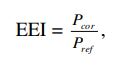
where:
Pcor – the measured power consumption (Prated) for lamp models without external control gear and the measured power consumption (Prated), adjusted for possible losses in accordance with Table 6, for lamp models with external control gear. Prated is measured at the rated input voltage of the lamp;
Pref – the calculated power consumption, which is calculated using the following formulas:

Table 21
Lamp type | Power consumption adjusted for possible losses in the control gear (Pcor) |
Lamps operated with external control gear | Prated × 1,06 |
Lamps operated with external control gear for LED lamps | Prated × 1,10 |
Fluorescent lamps with a diameter of 16 mm (T5 lamps) and single-cap fluorescent lamps with four terminals operated with external control gear for fluorescent lamps | Prated × 1,10 |
Other lamps operated with external control gear for fluorescent lamps | Prated × 0,24Fuse + 0,0103Fuse0,15Fuse + 0,0097Fuse |
Lamps operated with external control gear for high-pressure gas-discharge lamps | Prated × 1,10 |
Lamps operated with external control gear for low-pressure sodium gas-discharge lamps | Prated × 1,15 |
Useful luminous flux is determined in accordance with Table 7.
Table 22
Model | Useful luminous flux (Fuse) |
Non-directional lamps | Total rated luminous flux (Ф) |
Lamps with directional light emission and a beam angle ≥90°, except incandescent lamps whose packaging bears a warning in textual or graphic form stating that they are unsuitable for directional lighting/illumination | Measured luminous flux in a 120° cone (Ф120°) |
Other lamps with directional light emission | Measured luminous flux in a 90° cone (Ф90°) |
Weighted energy consumption (EC) is calculated in kWh/1000 h as follows (rounded to two decimal places):
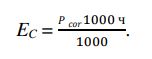
7. The energy consumption of luminaires for fluorescent lamps without integrated control gear and luminaires for high-pressure gas-discharge lamps must not exceed the total energy consumption of the integrated control gear when the lamps emit no light under normal operating conditions and other connected structural elements (mains connections, sensors, etc.) are disconnected. If disconnection is not possible, their power shall be measured and subtracted from the result.
Luminaires for fluorescent lamps without integrated control gear and for high-pressure gas-discharge lamps must be compatible with control gear that complies with the requirements applicable to such gear. This requirement shall apply from 1 September 2028.
8. In addition to the requirements specified in Section IV of the Union Technical Regulation “On Requirements for the Energy Efficiency of Energy-Consuming Devices” (TR EAEU 048/2019) (hereinafter, the Technical Regulation), the packaging or operating documents shall contain the following information:
a) requirements for the technical description of lamps in the operating documents:
rated and calculated lamp power;
rated and calculated lamp luminous flux;
calculated luminous efficacy of the lamp after 100 h of operation under standard conditions (operating temperature 25 °C, 35 °C for T5 lamps);
for fluorescent lamps, where the measured luminous flux is identical in all cases, for operation at high frequency (> 50 Hz), the calibration current for the test conditions and/or the calculated voltage of the high-frequency generator with resistance shall be specified. It shall also be stated that the power consumption of the light source does not include power losses resulting from the use of auxiliary devices such as control gear;
calculated lamp lumen maintenance factor for 2 000, 4 000, 6 000, 8 000, 12 000, 16 000 and 20 000 h of operation (up to 8 000 h only for new lamps on the market for which data are not yet available), indicating which lamp operating mode was used for testing if operation is possible both at a frequency of 50 Hz and at high frequency;
calculated lamp survival factor for 2 000, 4 000, 6 000, 8000, 12 000, 16 000 and 20 000 h of operation (up to 8000 h only for new lamps on the market for which data are not yet available), indicating which lamp operating mode was used for testing if operation is possible both at a frequency of 50 Hz and at high frequency;
ambient temperature in the luminaire at which the lamp was designed to maximize its luminous flux. If the temperature is 0 °C or lower, or 50 °C or higher, it shall be stated that the lamp is unsuitable for use
in rooms at standard temperature;
for lamps containing mercury, instructions for cleaning the room in the event of damage (breakage) to the lamp, as well as recommendations for lamp disposal;
colour rendering index (Ra) of the lamp;
colour temperature of the lamp;
for fluorescent lamps without integrated control gear, the class of control gear with which the lamp may be operated;
b) requirements for the technical description of control gear in the operating documents:
the energy efficiency class shall be specified for each model of control gear for fluorescent lamps (provided in a clearly visible and durable form on the control gear);
the efficiency shall be specified for each model of control gear for high-pressure gas-discharge lamps (provided in a clearly visible and durable form on the control gear);
c) requirements for the technical description of luminaires in the operating documents for each luminaire model for fluorescent lamps without integrated control gear with a total luminous flux exceeding 2 000 lm and for luminaires for high-intensity discharge lamps with a total lamp luminous flux exceeding 2 000 lm:
if the luminaire is supplied with control gear, information on the efficiency of the control gear in accordance with the manufacturer's data shall be specified;
if the luminaire is supplied with a lamp, the luminous efficacy of the lamp (lm/W) according to the manufacturer's data shall be specified.
if the control gear or lamp is not supplied with the luminaire, information on the types of lamps and control gear compatible with the luminaire shall be provided from manufacturers' catalogues (for example, the international lamp designation system ILCOS);
instructions for maintaining the luminaire to ensure that its original quality is preserved throughout its service life;
disassembly instructions;
for high-intensity discharge lamps, it shall be stated that they are designed for lamps with a transparent glass envelope and/or coated lamps.
9. The set of documents specified in subparagraph "a" of paragraph 23 of the Technical Regulation shall additionally include the following information:
a) for lamps:
calculated lamp power;
calculated lamp luminous flux;
for fluorescent lamps, where the measured luminous flux is identical in all cases, for operation at high frequency (> 50 Hz), the calibration current for the test conditions and/or the calculated voltage of the high-frequency generator with resistance shall be specified. It shall also be stated that the power consumption of the light source does not include power losses resulting from the use of auxiliary devices such as control gear;
calculated lamp lumen maintenance factor at 2 000 h, 4 000 h, 6 000 h, 8 000 h, 12 000 h, 16 000 h and 20 000 h (for new lamps for which information is unavailable, only up to 8 000 h), while, for lamps that may be operated at a frequency of 50 Hz or higher, the operating frequency shall be specified;
calculated lamp survival factor at 2 000 h, 4 000 h, 6 000 h, 8 000 h, 12 000 h, 16 000 h and 20 000 h (for new lamps for which information is unavailable, only up to 8 000 h), while, for lamps that may be operated both at a frequency of 50 Hz and at a higher frequency, the operating frequency shall be specified;
ambient temperature at which the lamp in the luminaire is to produce its maximum luminous flux. If the temperature is below 0 °C or above 50 °C, it shall be stated that the lamp is unsuitable for use indoors;
b) for luminaires:
if the control gear or lamp is not supplied with the luminaire, information on the types of lamps and control gear compatible with the luminaire shall be provided from manufacturers' catalogues (for example, the international lamp designation system ILCOS);
instructions for maintaining the luminaire to ensure that its original quality is preserved throughout its service life;
installation instructions;
for all luminaires for high-pressure gas-discharge lamps, information on whether they are designed to operate with a lamp having a transparent and/or opaque glass envelope.
IV. Permissible deviations of the energy efficiency parameters of fluorescent lamps without integrated control gear, high‑pressure gas‑discharge lamps, control gear and luminaires for such lamps during tests (measurements) after their placing on the market
10. Where electric lamps are tested (measured) after their placing on the market in the customs territory of the Union, a batch consisting of at least 20 samples of one model and one manufacturer shall be tested (measured). The measured power consumption shall not exceed the nominal (declared) value by more than 10%, and the measured luminous flux shall not be less than the nominal (declared) value by more than 10%.
In other cases, this model of electric lamp shall be considered not to comply with the requirements of the Technical Regulation.
11. Where control gear and luminaires are tested (measured) after their placing on the market in the customs territory of the Union, one sample of a model from one manufacturer shall be tested (measured). The measured values of the parameters and characteristics of the sample shall correspond to the nominal values declared by the manufacturer.
In other cases, this model of control gear and luminaires shall be considered not to comply with the requirements of the Technical Regulation; in this case, 3 other samples of this model shall be checked. If the values of the parameters and characteristics of the samples correspond to the nominal values declared by the manufacturer, this model shall be considered to comply with the requirements of the Technical Regulation.
V. Content of the energy efficiency label and technical sheet of electric lamps
12. The energy efficiency label of electric lamps shall contain the following information:
I. the name or trademark (if available) of the manufacturer;
II. model designation;
III. energy efficiency class;
IV. Ес – calculated electricity consumption in kW*h per 1000 hours of lamp operation (rounded to a whole number).
13. The energy efficiency label of luminaires shall contain the following information:
I. the name or trademark (if available) of the manufacturer.
II. model designation.
III. information about the luminaire (type, design, compatibility);
IV. energy efficiency class.
The energy efficiency pictogram shall be located at the same level as the arrow of the corresponding energy efficiency class.
V. information in accordance with one of the following design options:
1) the luminaire is intended to operate with lamps of the specified energy efficiency classes. The field shall indicate the class of the lamp included in the delivery set. If the lamp is not included in the luminaire delivery set, the field shall remain blank;
2) the luminaire has integrated LED modules (light sources) that cannot be replaced by the end user.
3) the luminaire is intended to operate with lamps of the specified energy efficiency classes and contains integrated LED modules (light sources) that cannot be replaced by the end user. The field shall indicate the class of the lamp included in the delivery set. If the lamp is not included in the luminaire delivery set, the field shall remain blank.
15. The technical sheet included in the operating documentation of electric lamps and luminaires shall contain a list of the characteristics provided for in paragraphs 13 and 14 of these Requirements, respectively.
VI. Determination of the energy efficiency classes of electric lamps
16. The energy efficiency class of electric lamps shall be determined in accordance with the Energy Efficiency Index (EEI) in accordance with Table 23.
Table 23
Energy efficiency classes of electric lamps
Energy efficiency class | Energy Efficiency Index |
For non-directional lamps (light sources) | |
A ++ | EEI ≤ 0,11 |
A + | 0,11 < EEI ≤ 0,17 |
A | 0,17 < EEI ≤ 0,24 |
B | 0,24 < EEI ≤ 0,60 |
C | 0,60 < EEI ≤ 0,80 |
D | 0,80 < EEI ≤ 0,95 |
E (least efficient) | EEI > 0,95 |
APPENDIX No. 14
to the Technical Regulation
of the Eurasian Economic Union
"On Requirements for the Energy
Efficiency of Energy‑Consuming
Devices" (TR EAEU 048/2019)
REQUIREMENTS
for the energy efficiency of directional lamps, LED lamps and associated equipment
Note. Appendix 14 as amended by Decision of the Council of the Eurasian Economic Commission No. 50 dated 15.04.2022 (enters into force upon the expiry of 10 calendar days from the date of its official publication).
I. Scope of Application
1. These Requirements apply to directional lamps, LED lamps (LED lamps), and associated equipment intended for installation between the power supply network and the lamps, including lamp control gear (hereinafter referred to as control gear), control devices and luminaires, placed on the market in the customs territory of the Eurasian Economic Union (hereinafter referred to as the Union), both separately and integrated into other products, except for:
a) special-purpose lamps not intended for lighting;
b) control gear and luminaires for fluorescent lamps and high-intensity discharge lamps;
c) LED modules declared as part of luminaires where the batch size does not exceed 200 units per year.
II. Terms and Definitions
2. For the purposes of applying these Requirements, the following terms are used:
"anti-glare shield" − a mechanical or optical reflecting or non-reflecting opaque partition intended to block direct visible radiation from a light source, i.e. a directional lamp, making it possible to prevent temporary blinding (disability glare) when the observer looks directly at the light source. This does not include the coating of the light source surface in a directional lamp;
"ballast" − control gear connected between the electrical power source and one or more discharge lamps, which, by means of inductance, capacitance or a combination of inductance and capacitance, serves mainly to limit the lamp current to the required value;
"external control gear" − non-integrated control gear intended for installation outside the housing of a lamp or luminaire, or which can be removed from the housing without significant damage to the lamp or luminaire;
"tungsten halogen incandescent lamp" − an incandescent lamp whose filament consists of tungsten and is surrounded by an envelope filled with halogens or halogen compounds;
"start-up time" − the time required for a lamp to light fully and continue operating after being connected to the mains;
"warm-up time" − the time during which 60 % of the rated luminous flux is reached after the lamp is connected to the mains;
"colour rendering index" (Ra) − a measure of the conformity of visual perceptions of a coloured object illuminated by the test and standard light sources under specified viewing conditions;
"light source" − a surface or object intended mainly to produce visible optical radiation resulting from energy conversion. The term "visible" refers to wavelengths of 380 – 780 nm;
"compact fluorescent lamp" − a fluorescent lamp in which ignition and stable operation are ensured by control gear integrated into the lamp cap and by other additional components;
"correlated colour temperature" (Tc [K]) – the temperature of a Planckian radiator (black body), the perceived colour of which most closely resembles that of the given stimulus at the same luminance and under specified viewing conditions;
"power factor" − the ratio of active (useful) power to apparent power during operation on alternating current;
"lamp lumen maintenance factor" (LLMF) − the ratio of the luminous flux of a lamp at a specified point in its service life (life cycle) to the initial luminous flux of that lamp;
"lamp survival factor" (LSF) − the proportion of lamps still functioning at a given time under specified conditions and at a specified switching frequency, relative to the total number of lamps;
"lamp" − a source of optical radiation produced as a result of the conversion of electrical energy;
"incandescent lamp" − a lamp with a sealed bulb in which light is emitted by an incandescent body (filament) when an electric current passes through it in a vacuum or inert-gas atmosphere;
"directional lamp" − a lamp that emits at least 80 % of its luminous flux within a solid angle of 3,14 steradians (corresponding to a cone with an apex angle of 120º);
"non-directional lamp" − a lamp that is not a directional lamp;
"fluorescent lamp" − a low-pressure mercury lamp in which light is emitted by one or more layers of phosphor excited by ultraviolet radiation from an electrical discharge. Fluorescent lamps are supplied with or without integrated control gear;
"fluorescent lamp without integrated ballast" − a single- or double-capped fluorescent lamp without integrated ballast;
"standby power" − the power consumed by control gear in standby mode;
"no-load power" − the power consumed by control gear in no-load mode;
"initial luminous flux" − the luminous flux of a lamp after a short operating period;
"nominal value" − the quantitative value of a parameter under specified operating conditions, used to designate or identify a product and indicated by the manufacturer in the operating documents;
"colour uniformity" − the maximum deviation of the chromaticity coordinates (x and y) of a lamp sample from the chromaticity centre (cx and cy), expressed in MacAdam ellipse size units (discrete units), constructed around the chromaticity centre (cx and cy);
"lighting" − the application of light to a place, object and the space surrounding them so that they can be seen by people;
"lampholder" − a device into which a lamp or starter is inserted, depending on its intended purpose, for securing it and connecting it to the electrical network;
"illumination" − a type of lighting in which light is directed so as to highlight an object or part of an area;
"useful luminous flux" (Fuse) − the part of the luminous flux of a lamp falling within the cone used to calculate the energy efficiency of the lamp in Clause 4 of these Requirements;
"premature failure" − failure of a lamp before expiry of the service life specified in the operating documents for the lamp;
"control gear" − a device connected between the mains and one or more lamps which, by means of inductance, capacitance or a combination thereof, mainly limits the lamp current to the required value. Control gear may consist of one or more units. Control gear may also contain means for transforming the mains voltage and devices assisting in providing the voltage required for lamp ignition, preventing cold ignition, reducing the stroboscopic effect, correcting the power factor and/or suppressing mains radio interference. Control gear may be integrated into the lamp or separate from it;
"halogen lamp control gear" − control gear that converts the mains voltage into extra-low voltage for supplying halogen lamps;
"discharge lamp" − a lamp in which optical radiation is produced as a result of an electrical discharge in a gas, metal vapours, halides or a mixture thereof;
"high-intensity discharge lamp" − an electric discharge lamp in which the light-emitting arc is stabilised by the wall temperature and for which the wall loading of the bulb for this arc is more than 3 W per square centimetre;
"calculated value" − the quantitative value of a parameter under specified conditions. The values and conditions are given in the relevant standards or communicated by the manufacturer (supplier). Unless otherwise specified, all requirements are expressed as calculated values. A calculated value is obtained by calculation, i.e. by a non-experimental method;
"no-load mode" − the state of control gear when it is connected to a power source and its output is disconnected during normal operation from all primary loads by a switch intended for this purpose (failure or absence of a lamp, or disconnection of the load when an emergency switch operates, do not constitute normal operation);
"standby mode" − the mode of control gear when the lamp is switched off by a control signal under normal operating conditions. The term applies to control gear with an integrated switching function that remains permanently connected to the power source under normal operating conditions;
"mercury-containing lamp" − a lamp containing mercury;
"luminaire" − a device that distributes, filters or transforms the light emitted by one or more lamps and that includes all parts necessary to hold, secure and protect the lamp and, where necessary, auxiliary circuits, together with means for connecting the power supply;
"luminous flux" (F) − the energy of visible radiation carried by the radiant flux per unit of time;
"light-emitting diode" (LED) − a semiconductor device with a p-n junction that emits incoherent visible radiation when an electrical voltage is applied to it;
"LED package" − an assembly consisting of one or more light-emitting diodes. The assembly may include an optical element and thermal, mechanical and electrical components;
"LED lamp (LED lamp)" − a lamp containing one or more LED packages. The lamp may be fitted with a lamp cap;
"LED module" − an assembly without a cover containing one or more LED packages on a printed circuit board. The assembly may include electrical, optical, mechanical and thermal components, interfaces and a control device;
"luminous intensity" (candela or cd) − the ratio of the luminous flux emitted by a source in a specified solid angle in a predetermined direction to the magnitude of that solid angle;
"compatibility" − means that, if a device is intended to be integrated into one piece of equipment, installed in another device or connected to it through a physical connector or by wireless connection, then:
installation, integration or connection is possible;
immediately after the start of their joint use, users will not detect a defect in any of the devices;
the safety of joint use of the devices is no lower than when the same devices are used separately together with other devices;
"special-purpose lamp" – a lamp which, on the basis of its technical characteristics or according to the operating documentation supplied with it, is not suitable for lighting spaces in households;
"lamp life" − the operating duration after which the proportion of the total number of lamps that continue to function meets the lamp life criterion under specified conditions and switching frequency. For LED lamps, lamp life means the operating time between the start of their use and the point when only 50 % of the total number of lamps remain operational or when the average luminous flux in the batch of lamps falls below 70 %, whichever occurs first;
"beam angle" − the angle between two imaginary straight lines in a plane passing through the optical axis of the beam; these lines pass through the centre of the front side of the lamp and the points at which the luminous intensity is 50 % of the luminous intensity at the centre of the beam, where the luminous intensity at the centre of the beam is the value measured on the optical axis of the beam;
"control signal" − an analogue or digital signal transmitted to control gear through a wireless or wired communication line, by voltage modulation in separate control cables or by means of a modulated signal superimposed on the mains voltage;
"control device" − an electronic or mechanical device for controlling and regulating the luminous flux of a lamp by means other than energy conversion, such as time switches, presence sensors, light sensors and daylight control devices. In addition, phase-cut dimmers are also considered control devices;
"chromaticity" − a characteristic of the colour quality of a lamp determined by its chromaticity coordinates;
"switching cycle" − a sequence of switching a lamp on and off at specified time intervals;
"lamp cap" − a component of an electric lamp used to secure it in a lampholder and ensure connection to the power supply network;
"electrical lighting product" − a product designed for use as electrical equipment and intended for lighting purposes.
III. Requirements for energy efficiency and rules for determining energy efficiency indicators
3. Directional lamps, LED lamps and associated equipment shall have the calculated value of the Energy Efficiency Index, the energy efficiency of the control gear and the characteristics specified in Tables 2, 3 and 4 of these Requirements.
The time limits for the stages of introducing the requirements are set out in Clause 10 of these Requirements.
1. Calculation of the Energy Efficiency Index of directional lamps
4. The Energy Efficiency Index (EEI) of a lamp is calculated using the following formula (rounded to two decimal places):
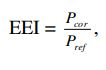
where:
Pcor − the measured value of power consumption (Prated) for lamp models without external control gear and the measured value of power consumption (Prated), adjusted for possible losses in accordance with Table 16 for lamp models with external control gear. Prated is measured at the rated input voltage of the lamp;
Table 1
Correction factors
Lamp type | Power consumption, adjusted for possible losses in the control gear (Pcor) |
Lamp operated with external control gear for halogen lamps | Prated x 1,06 |
Lamp operated with external control gear for LED lamps | Prated x 1,10 |
Fluorescent lamp with a diameter of | Prated x 1,10 |
Other lamps operated with external control gear for fluorescent lamps | Prated × 0,24Fuse + 0,0103Fuse0,15Fuse + 0,0097Fuse |
Lamp operated with external control gear for high-intensity discharge lamps | Prated x 1,10 |
Compact fluorescent lamp with a colour rendering index ≥ 90 | Prated x 0,85 |
Lamp with an anti-glare shield | Prated x 0,80 |
Pref – the calculated value of power consumption, calculated on the basis of the following formulas:

For Fuse ≥ 1300 lm: Pref = 0,07341Fuse
Fuse is determined as follows:
for directional lamps with a beam angle ≥ 90°, except incandescent lamps and lamps bearing a warning on the packaging in accordance with paragraphs 14 and 18 of subparagraph "a" of Clause 11 of these Requirements – the rated luminous flux in a 120° cone (F120°);
for other directional lamps – the rated luminous flux in a 90° cone (F90°).
2. Requirements for the energy efficiency of directional lamps
5. The maximum EEI values for directional lamps are given in Table 2. The time limits for introducing the stages are established in Clause 10 of these Requirements.
Table 2
Maximum values of the Energy Efficiency Index (EEI)
Stages | Maximum Energy Efficiency Index (EEI) | |||
Mains-operated incandescent lamps | Other incandescent lamps | High-intensity discharge lamps | Other lamps | |
Stage 1 | if Fuse > 450 lm: 1,75 |
if Fuse ≤ 450 lm: 1,20 | 0,50 | 0,50 |
Stage 2 | 1,75 | 0,95 | 0,50 | 0,50 |
Stage 3 | 0,95 | 0,95 | 0,36 | 0,20 |
3. Energy efficiency requirements for control gear
6. Starting from Stage 2, the no-load power of control gear intended for use between the mains and the switch for switching the lamp on (off) shall not exceed 1,0 W.
Starting from Stage 3, this limit shall be 0,50 W.
For lamp control gear with an output power (P) exceeding 250 W, the no-load power limits shall be multiplied by the factor P/250 W.
Starting from Stage 3, the steady-state power of lamp control gear shall not exceed 0,50 W.
Starting from Stage 2, the efficiency of halogen lamp control gear shall be at least 0,91 at 100 % load.
4. Requirements for lamp characteristics
7. Requirements for the characteristics of directional lamps other than LED lamps.
The requirements for lamp characteristics are specified in Table 3 for directional compact fluorescent lamps and in Table 4 for directional lamps other than compact fluorescent lamps, LED lamps and high-intensity discharge lamps.
Table 3
Requirements for the characteristics of directional compact fluorescent lamps
Characteristic | Stage 1 | Stage 3 |
Lamp survival rate after 6 000 h | ≥ 0,50 | ≥ 0,70 |
Luminous flux stability factor | at 2 000 h: ≥ 0,80 % |
at 2 000 h: ≥ 0,83 % |
Number of switching cycles before failure |
≥ half the lamp life in hours |
≥ the lamp life (in h) |
Start-up time | < 2,0 s |
< 1,5 s if P < 10 W |
Warm-up time to 60 %, F | < 40,0 s or < 100 s for lamps containing mercury in the form of amalgam | < 40 s or < 100 s for lamps containing mercury in the form of amalgam |
Premature failure rate | ≤ 5,0 % at 500 h | ≤ 5,0 % at 1 000 h |
Lamp power factor for lamps with integrated control gear |
≥ 0,50 if P < 25 W |
≥ 0,55 if P < 25 W |
Colour rendering index (Ra) |
≥ 80 |
≥ 80 |
If the lamp cap is of a standard type and is also used with incandescent lamps, then, starting from Stage 2, the lamp shall comply with the current level of requirements for compatibility with equipment intended for installation between the mains and incandescent lamps.
Table 4
Requirements for the characteristics of other directional lamps (except LED lamps, compact fluorescent lamps and high‑intensity discharge lamps)
Characteristic | Stages 1 and 2 | Stage 3 |
Rated lamp life at a lamp survival rate of 50 % |
≥ 1 000 h ( ≥ 2 000 h in Stage 2) |
≥ 2 000 h |
Luminous flux stability factor | ≥ 80 % at 75 % of the rated average lamp life | ≥ 80 % at 75 % of the rated average lamp life |
Number of switching cycles | ≥ four times the rated lamp life (in h) | ≥ four times the rated lamp life (in h) |
Start-up time | < 0,2 s | < 0,2 s |
Lamp warm-up time to 60 %, F | ≤ 1,0 s | ≤ 1,0 s |
Premature failure rate | ≤ 5,0 % at 100 h | ≤ 5,0 % at 200 h |
Power factor of lamps with integrated control gear |
power > 25 W: ≥ 0,9 |
power > 25 W: ≥ 0,9 |
8. Requirements for the characteristics of non‑directional and directional LED lamps.
The requirements for the technical characteristics of non-directional and directional LED lamps are specified in Table 5.
Table 5
Requirements for the characteristics of non‑directional and directional LED lamps
Characteristic | Requirements at stage 1 |
Lamp survival rate | ≥ 0,90 |
Luminous flux stability factor at 6 000 h of operation | ≥ 0,80 |
Number of switching cycles before failure | ≥ 15 000, if the rated service life of the lamp is ≥ 30 000 h, then not less than half of the rated service life (in h) |
Start-up time | < 0,5 s |
Lamp warm-up time to 95 %, F | < 2 s |
Premature failure rate | ≤ 5% at 1 000 h |
Colour rendering index (Ra) |
≥80 |
Colour uniformity | Variation of chromaticity coordinates within six MacAdam ellipse units or less |
Lamp power factor (PF) for lamps with integrated control gear |
P ≤ 2 W: no requirements |
If the lamp cap is of a standard type and is also used with incandescent lamps, then, starting from stage 2, the lamp shall comply with the current level of compatibility requirements for equipment intended for installation between the mains and incandescent lamps.
9. Requirements for the characteristics of equipment intended for installation between the mains and lamps.
Starting from stage 2, equipment intended for installation between the mains and lamps shall comply with the current level of compatibility requirements for lamps with an Energy Efficiency Index (calculated for directional and non-directional lamps in accordance with the method specified in Clause 4 of these Requirements) of not more than:
0,24 – for non-directional lamps (it is assumed that Fuse = the full rated luminous flux);
0,40 – for directional lamps.
If the dimmer is set to the minimum brightness level at which the operating lamps still consume energy, these operating lamps shall emit at least 1 % of their luminous flux at full power.
If the luminaire is intended for use by the user and its design allows the user to replace the lamps, the lamps compatible with this luminaire shall belong to one of the 2 highest Energy Efficiency Index classes.
10. The dates for introducing the stages for EEI values shall correspond to those specified below:
stage 1 – from 1 September 2028;
stage 2 – from 1 September 2029;
stage 3 – from 11 September 2030.
Unless the requirement is replaced or otherwise specified, they shall be fulfilled together with other requirements introduced at later stages.
Note. Clause 10 as amended by Decision of the Council of the Eurasian Economic Commission No. 54 dated 08.07.2025 (enters into force upon the expiry of 10 calendar days from the date of its official publication).11. In addition to the requirements specified in Section V of the Technical Regulation of the Eurasian Economic Union "On Requirements for the Energy Efficiency of Energy-Consuming Devices" (TR EAEU 048/2019), the packaging or operating documents shall contain the following information:
a) requirements for product information for directional lamps.
The requirements do not apply to:
incandescent lamps that do not meet the energy efficiency requirements of stage 2;
LED modules supplied as part of a luminaire for which they are not intended to be replaced by the user.
Starting from stage 1, the following information shall be provided (unless otherwise specified), whereas the term "energy-saving lamp" may be used if the Energy Efficiency Index of the lamp (calculated in accordance with the method set out in Section III of these Requirements) is equal to or below 0,40:
information applied to the surface of the lamp (except for high-intensity discharge lamps) in legible type – the value and unit of measurement ("lm", "K" and "o") of the rated useful luminous flux, colour temperature and rated beam angle, if, after the safety-related information, such as power and voltage, has been applied, sufficient space remains on the lamp without excessive shading of the light emitted by the lamp.
If there is sufficient space for only 1 of the 3 values, the rated useful luminous flux shall be indicated. If there is space for 2 values, the rated useful luminous flux and colour temperature shall be indicated.
information applied to the packaging – the product information shall be clear and legible and need not contain the exact wording from the specified list; it may be presented in the form of graphs, drawings or symbols:
rated useful luminous flux displayed in a type at least twice as large as the type used to display the rated power of the lamp;
rated service life of the lamp in hours (not exceeding the calculated service life);
colour temperature, expressed in degrees Kelvin, and also graphically or in words;
number of switching cycles before premature failure;
warm-up time to 60 % of the full luminous flux (it may be designated as "instant full light" if it is less than 1 second);
a warning if the lamp does not permit dimming or if only specific dimmers are permitted for dimming; (in the latter case, the list of dimmers shall be provided on the manufacturer's (supplier's) website in the information and telecommunications network "Internet");
if the lamp is intended for optimum use under non-standard conditions (for example, at an ambient temperature Ta ≠25 °C or if special temperature control is required) – information on these conditions;
dimensions of the lamp in mm (length and maximum diameter);
rated beam angle in degrees;
if the beam angle of the lamp is ≥ 90° and its useful luminous flux, determined in accordance with Subsection 1 of this Section, is to be measured in a 120° cone, a warning shall be provided that the lamp is not suitable for directional lighting;
if the lamp cap is of a standardised type also used with incandescent lamps, and if the dimensions of the lamp differ from those of the incandescent lamp it is intended to replace – a drawing comparing the dimensions of this lamp and the replaceable incandescent lamp;
information on the type to which the lamp belongs, specified in the first column of Table 6, shall be provided if the luminous flux of the lamp in a 90° cone (F90°) is not lower than the reference luminous flux specified in Table 6 for the lamp with the lowest power among lamps of the respective type. The reference luminous flux shall be multiplied by the correction factor specified in Table 7; for LED lamps, it shall additionally be multiplied by the correction factor specified in Table 8;
equivalence information, including the power of the lamp of the replaceable type – only if the lamp belongs to the type specified in Table 6 and if the luminous flux of the lamp in a 90° cone (F90°) is not lower than the corresponding reference luminous flux specified in Table 6. The reference luminous flux shall be multiplied by the correction factor from Table 7. For LED lamps, it shall additionally be multiplied by the correction factor from Table 8. Intermediate values of luminous flux and declared equivalent lamp power (rounded to the nearest whole 1 W) shall be calculated by linear interpolation between 2 adjacent values.
Table 6
Reference luminous flux for equivalence information
Lamp type | Power, W | Reference F90°, lm | ||
Extra-low-voltage reflector lamp | ||||
MR11 GU4 | 20 | 160 | ||
35 | 300 | |||
MR16 GU 5.3 | 20 | 180 | ||
35 | 300 | |||
50 | 540 | |||
AR111 | 35 | 250 | ||
50 | 390 | |||
75 | 640 | |||
100 | 785 | |||
Mains-voltage reflector lamp with blown glass bulb | ||||
R50 / NR50 | 25 | 90 | ||
40 | 170 | |||
R63 / NR63 | 40 | 180 | ||
60 | 300 | |||
R80 / NR80 | 60 | 300 | ||
75 | 350 | |||
100 | 580 | |||
R95 / NR95 | 75 | 350 | ||
100 | 540 | |||
R125 | 100 | 580 | ||
150 | 1000 | |||
Mains-voltage reflector lamp with pressed-glass bulb | ||||
PAR16 | 20 | 90 | ||
25 | 125 | |||
35 | 200 | |||
50 | 300 | |||
PAR20 | 35 | 200 | ||
50 | 300 | |||
75 | 500 | |||
PAR25 | 50 | 350 | ||
75 | 550 | |||
PAR30S | 50 | 350 | ||
75 | 550 | |||
100 | 750 | |||
PAR36 | 50 | 350 | ||
75 | 550 | |||
100 | 720 | |||
PAR38 | 60 | 400 | ||
75 | 555 | |||
80 | 600 | |||
100 | 760 | |||
120 | 900 | |||
Table 7
Correction factors for luminous flux stability
Lamp type | Correction factor for luminous flux stability |
Halogen lamp | 1 |
Compact fluorescent lamp | 1,08 |
LED lamp |
1 + 0,5 × (1 – LLMF), where |
Table 8
Correction factors for LED lamps
Beam angle of the LED lamp | Correction factor for luminous flux |
beam angle ≥ 20o | 1 |
15о ≤ beam angle < 20о | 0,9 |
10о ≤ beam angle < 25о | 0,85 |
beam angle < 10о | 0,80 |
spectral power distribution in the range of 180-800 nm;
information to be included in the technical documentation:
information specified in paragraphs eight – twenty-two of subparagraph "a" of this clause;
rated power (to the nearest 0,1 W);
rated useful luminous flux;
rated service life of the lamp;
lamp power factor;
luminous flux stability factor at the end of the rated service life (except for incandescent lamps);
start-up time (in the form X, X s);
colour rendering index;
colour uniformity (only for LED lamps);
rated peak luminous intensity in candelas (cd);
rated beam angle;
information on whether the lamp is intended for outdoor lighting or industrial use (if applicable);
if the lamp contains mercury:
instructions for cleaning the premises in the event of damage (breakage) of the lamp, as well as recommendations for disposal of the lamp;
b) additional information for LED products replacing fluorescent lamps without integrated ballast:
information that the overall energy efficiency and light distribution of any device in which such lamps are used are determined by the design of the device (specified by the manufacturer);
information that an LED lamp may be declared to replace a fluorescent lamp without integrated ballast of a specified power if:
the luminous intensity in any direction around the tube axis does not deviate by more than 25 % from the average luminous intensity around the tube;
the luminous flux of the LED lamp is not lower than the luminous flux of a fluorescent lamp of the rated power. The luminous flux of the fluorescent lamp is obtained by multiplying the declared power by the minimum efficiency value of the relevant fluorescent lamp;
the power of the LED lamp does not exceed the power of the fluorescent lamp declared as being replaced.
The technical documentation shall contain information confirming compliance with these requirements;
в) requirements for product information for equipment, other than luminaires, intended for installation between the mains and lamps: starting from stage 2, the manufacturer shall apply a warning concerning equipment incompatibility with energy-saving lamps if the equipment does not ensure compatibility with any energy-saving lamp;
г) requirements for product information for control gear: starting from stage 2, information shall be provided that the device is intended for use as control gear and that the control gear may operate in no-load mode (if applicable);
д) requirements for product information for special-purpose products: for all special-purpose products, warning information on the intended purpose shall be provided, as well as warning information that special-purpose products are not intended for other purposes.
е) other information provided for by the relevant Technical Regulations of the Union (Customs Union).
IV. Permissible deviations of the energy efficiency parameters of directional lamps, LED lamps and associated equipment during tests (measurements) after their placing on the market
12. Where tests (measurements) of directional lamps, LED lamps and associated equipment are conducted after their placing on the market in the customs territory of the Union, tests (measurements) shall be conducted on at least 20 samples of lamps and equipment of the same model and the same manufacturer. The measured values of the parameters and characteristics of the specified lamps and equipment shall comply with these Requirements and the nominal values declared by the manufacturer within the permissible deviations specified in Table 9.
The products shall be considered compliant with the requirements specified in this document if:
the lamps in the batch are accompanied by the necessary and correct information;
testing of the batch parameters specified in Table 9 did not reveal non-compliance for any parameter within the permissible deviations.
Table 9
Permissible deviations
Measured parameter | Permissible deviations |
Lamp survival factor after 6 000 h (for LED lamps) | a maximum of 2 of 20 lamps of the tested batch may fail before the required number of hours |
Number of switching cycles before failure | 19 of 20 lamps of the batch must not fail after reaching the required number of switching cycles |
Start-up time | the value of the measured parameter must not exceed the nominal value by more than 10 % and no lamp in the batch must have a value exceeding the required value by more than 2 times |
Warm-up time of the lamp to 60 %, F | the value of the measured parameter must not exceed the nominal value by more than 10 % and no lamp in the batch must have a value exceeding the required value by more than 1,5 times |
Premature failure rate |
depending on which occurs earlier, the test is terminated if: |
Colour rendering index (Ra) |
the value of the measured parameter |
Luminous flux at the end of service life | "End of service life" means the point in time when presumably only 50 % of lamps remain in operation or when the average value of luminous flux stability of the batch drops below 70 %, depending on which occurs earlier. Conformity: luminous flux stability at the end of service life and throughout its duration, obtained by extrapolation of the lamp survival factor and the average value of luminous flux stability of lamps in the tested batch and equal to 6 000 h, must be not lower than, respectively, the luminous flux stability values and nominal values during the service life declared by the product manufacturer minus 10 %. Non-conformity: in other cases |
Lamp equivalence |
10 lamp samples are checked. |
Beam angle | the average results of the lamps of the tested batch deviate by not more than 25 % from the specified beam angle, and the value for the beam angle of each individual lamp of the tested batch deviates by not more than 25 % from the measured value |
Maximum intensity |
the value of the measured parameter of each individual lamp of the tested batch |
Other parameters (including Energy Efficiency Index) | the values of the measured parameters must not deviate from the nominal values by more than 10 % |
13. Verification procedure for LED modules not intended for removal from the luminaire by the user.
In the case of carrying out tests (measurements) of LED modules not intended for removal from the luminaire by the user after their placing on the market in the customs territory of the Union, tests (measurements) are carried out in the following order:
- a number of samples (LED modules or luminaires) of one model and one manufacturer is taken, if possible in equal proportion, from several sources using a random sampling method. For sub-items 13.1, 13.3 and 13.4 of item 13 of these Requirements, the number of sources must be at least 4, if possible;
- For the paragraph of sub-item 13.2 of item 13 of these Requirements, the number of sources must be at least 4, if possible, and if the number of luminaires required to extract 20 LED modules of 1 and the same model from them is not less than 4; in other cases, the number of sources is taken equal to the number of required luminaires.
Tests (measurements) are carried out in the following order.
The term "luminaire" means a luminaire containing LED modules, and the term "test" means the procedure described in item 7 of these Requirements. If the technical documentation provides for conducting tests according to sub-items 13.1 and 13.2 of item 13 of these Requirements, it is permitted to select the most appropriate method.
13.1. If the technical documentation for the luminaire provides for testing the luminaire as a whole as a lamp, then 20 luminaires must be tested. If the luminaire model complies with these Requirements, then the LED modules of this model are deemed to comply with them.
13.2. In other cases, if the technical documentation for the luminaire provides for the extraction of LED modules from it for testing, then a sufficient number of luminaires must be selected to obtain 20 samples of LED modules. In this case, the instructions of the technical documentation for dismantling the luminaires must be followed, and tests of each LED module must be carried out separately.
13.3. In other cases, if, according to the technical documentation for the luminaire, the manufacturer manufactures LED modules as a separate product, it is necessary to select 20 samples of LED modules of this model for testing and test each LED module separately.
13.4. If carrying out tests in accordance with sub-items "a" – "c" of item 7 of these Requirements of the section is not possible, that is, the LED modules cannot be extracted from the luminaire for separate checking, then switching cycles, premature failure, start-up time and warm-up time must be verified for compliance with the requirements of Table 5 on 1 luminaire. If the test results differ from the limit values by more than 10 %, or the luminaire has failed prematurely, then 3 additional luminaires must be tested. If the average results of the subsequent tests of the 3 samples (except those that failed prematurely) do not differ from the limit values by more than 10 %, and not 1 of the luminaires has failed, then the LED modules of this model are deemed to comply with these Requirements.
14. Verification procedures for equipment intended for installation between the mains and lamps.
In addition to the compatibility requirement, control gear must also be checked for compliance with energy efficiency requirements in accordance with item 4 of these Requirements. Tests are carried out on 1 control gear sample, even if the model is intended to operate together with other control gear in the equipment. A control gear model must be considered compliant with the requirements if the test results do not deviate from the limit values by more than 2,5 %.
If the results deviate from the limit values by more than 2,5 %, then 3 additional samples must be tested. The model is considered compliant with these Requirements if the average value of the test results of these 3 samples does not differ from the limit values by more than 2,5 %.
15. Luminaires must also be checked for the presence of lamps in their packaging. The model is deemed compliant if lamps are not present or if the lamps that are present have the Energy Efficiency Index required in accordance with item 3.2 of these Requirements.
16. In addition, the dimmer included with incandescent lamps must be checked when this control device is in the minimum brightness position. The model is deemed compliant with the Requirements if, when installed in accordance with the manufacturer's instructions, the lamps provide at least 1 % of their full-load luminous flux.
V. Content of the energy efficiency label and technical sheet of electric lamps
17. The energy efficiency label of electric lamps must contain the following information:
I. name or trademark (if any) of the manufacturer.
II. model designation.
III. energy efficiency class.
The energy efficiency pictogram is placed at the same level as the arrow of the corresponding energy efficiency class.
IV. Ес - calculated electricity consumption in kWh per 1000 hours of lamp operation (rounded to the nearest whole number).
18. The energy efficiency label of luminaires must contain the following information:
I. name or trademark (if any) of the manufacturer;
II. model designation;
III. information on the luminaire (type, design version, compatibility);
IV. energy efficiency class;
V. information in accordance with one of the following design versions:
1) the luminaire is intended for operation with lamps of the specified energy efficiency classes. The field indicates the class of the lamp included in the scope of delivery. If a lamp is not included in the scope of delivery of the luminaire, the field is left blank;
2) the luminaire has integrated LED modules (light sources) without the possibility of their replacement by the end user;
3) the luminaire is intended for operation with lamps of the specified energy efficiency classes and contains integrated LED modules (light sources) without the possibility of replacement by the end user. The field indicates the class of the lamp included in the scope of delivery. If a lamp is not included in the scope of delivery of the luminaire, the field is left blank.
19. The technical sheet included in the operating documentation of electric lamps and luminaires must contain the list of characteristics provided for in items 17 and 18 of these Requirements, respectively.
VI. Determination of energy efficiency classes of electric lamps
20. The energy efficiency class of electric lamps is determined in accordance with the Energy Efficiency Index (EEI) according to Table 1.
Table 1
Energy Efficiency Classes of Electric Lamps
Energy Efficiency Class | Energy Efficiency Index | |
For non-directional lamps (light sources) | For directional lamps (light sources) | |
A ++ | EEI≤ 0,11 | EEI ≤ 0,13 |
A + | 0,11 < EEI ≤ 0,17 | 0,13 < EEI ≤ 0,18 |
A | 0,17 < EEI ≤ 0,24 | 0,18 < EEI ≤ 0,4 |
B | 0,24 < EEI ≤ 0,60 | 0,4 < EEI ≤ 0,95 |
C | 0,60 < EEI ≤ 0,80 | 0,95 < EEI ≤ 1,20 |
D | 0,80 < EEI ≤ 0,95 | 1,20< EEI ≤ 1,75 |
E (least efficient) | EEI > 0,95 | EEI > 1,75 |
APPENDIX No. 15
to the Technical Regulation
of the Eurasian Economic Union
"On Requirements for the Energy
Efficiency of Energy‑Consuming
Devices" (TR EAEU 048/2019)
REQUIREMENTS
for the energy efficiency of tumble dryers
I. Scope of Application
1. These Requirements apply to household tumble dryers for textile products powered by the AC mains and placed on the market in the customs territory of the Eurasian Economic Union (hereinafter, the Union),
which may also be used for commercial purposes (in manufacturing, trade and the service sector), with electric or gas air heating, including built-in tumble dryers, except for centrifuges and tumble dryers incorporated into washer-dryers.
II. Terms and Definitions
2. For the purposes of applying these Requirements, the following terms are used with the meanings set out below:
"automatic tumble dryer" − a tumble dryer in which the drying process is switched off by an automatic device when a specified moisture content is reached (for example, by means of a conductivity sensor or temperature sensor);
"household washer-dryer" − a household washing machine combining the function of washing and spinning textile products in a centrifuge with the function of heated drying;
"household tumble dryer" − a household appliance intended for drying textile products in a rotating drum by passing heated air through them;
"household centrifuge" − a household appliance in which water is removed from textile products by centrifugal force in a rotating drum and is then pumped out by an automatic pump;
"built-in household tumble dryer" − a household tumble dryer intended for installation in a cabinet, other furniture, a special recess or another similar location using a decorative covering (screen);
"condenser tumble dryer" − a tumble dryer equipped with a device for removing moisture from the air used for drying by condensing it;
"vented tumble dryer" − a tumble dryer into which air is supplied from the surrounding space, then passes through the textile products and is discharged into the room or outside it;
"non-automatic tumble dryer" − a tumble dryer in which the drying process is switched off after a predetermined period of time, usually controlled by a timer, but which may also be switched off manually;
"rated capacity" − the maximum mass, in kilograms and in increments of 0,5 kg, of dry textile products of a specified type indicated in the manufacturer's instructions and which may be loaded into a household tumble dryer with the selected programme;
"programme" − a set of operations that are preset and declared by the manufacturer as suitable for drying specific types of textile products;
"programme duration" − the length of the time interval from the start of the programme to its completion, excluding any delay in programme operation entered by the user;
"off mode" − a condition in which the tumble dryer is switched off by means of a control device or switch accessible to the user during normal operation in order to achieve low power consumption, and which may be maintained for an extended period while the household tumble dryer remains connected to the electricity supply and is used in accordance with the manufacturer's instructions;
"left-on mode" − the mode with the lowest electricity consumption that may be maintained for an indefinite period after completion of the programme without requiring user intervention, except for unloading the textile products from the tumble dryer;
"standard Cotton programme" − a drying cycle for cotton textile products after washing, with an initial moisture content in the products of 60 % and a residual moisture content of approximately 0 %;
"cycle" − the complete drying process established for the relevant programme;
"partial load" − half the rated load of the household tumble dryer for a specified programme;
"condensation efficiency" − the ratio of the mass of moisture condensed in the condenser of the tumble dryer to the mass of moisture extracted from the clothing during the cycle.
III. Requirements for the Energy Efficiency of Tumble Dryers and Specifics of Determining Energy Efficiency Indicators
3. The relevant tests (measurements) shall be carried out for the tumble dryer, and the values of the Energy Efficiency Index (EEI) and condensation efficiency shall be determined.
The standard Cotton programme shall be used to calculate the electricity consumption and other parameters of tumble dryers. This programme shall be indicated on the programme selector(s) of the tumble dryer, on its display (if available), or in both places, by one symbol or a combination of symbols, and shall be set by default as the operating cycle of a tumble dryer equipped with automatic programme selection or any function for automatic selection of drying programmes or for maintaining the programme selection. If the tumble dryer is automatic, the standard Cotton programme shall also be automatic.
4. The Energy Efficiency Index of the tumble dryer shall be calculated using the following formula (rounded to 1 decimal place):
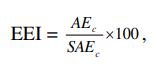
where:
AEC − annual electricity consumption of the tumble dryer;
SAEC − standard annual electricity consumption of the tumble dryer.
SAEC shall be calculated (in kWh/year) as follows (with the result rounded to 2 decimal places):
for vented tumble dryers:
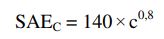
for condenser tumble dryers:
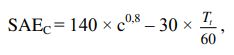
where:
c − rated capacity of the tumble dryer for the standard Cotton programme;
Tt − programme duration for the standard Cotton programme.
Annual electricity consumption (AEC) (in kWh/year) shall be calculated using the following formula (with the result rounded to 2 decimal places):

where:
Et − weighted electricity consumption (in kWh) (rounded to 2 decimal places);
P0 − power value (in W) in off mode for the standard Cotton programme at full load (rounded to 2 decimal places);
Pl − power consumption value (in W) in left-on mode for the standard Cotton programme at full load (rounded to 2 decimal places);
Tt − weighted programme duration in minutes (rounded to the nearest whole number);
160 − total number of drying cycles per year.
If the tumble dryer is equipped with a power management system with a function for automatically returning the tumble dryer to off mode after the end of the programme, weighted annual electricity consumption (AEC) shall be calculated taking into account the effective duration of left-on mode using the following formula:

where Tl − duration of left-on mode in minutes for the standard Cotton programme at full load (rounded to the nearest whole number).
Programme duration Tt for the standard Cotton programme shall be calculated using the following formula (rounded to the nearest whole number):

where:
Tdry − duration of the standard Cotton programme at full load in minutes (rounded to the nearest whole number);
Tdry1/2 − duration of the standard Cotton programme at partial load in minutes (rounded to the nearest whole number).
Weighted electricity consumption (Et) (in kWh) for tumble dryers shall be calculated using the following formula (with the result rounded to 2 decimal places):

where:
Edry − energy consumption for the standard Cotton programme at full load (in kWh) (rounded to 2 decimal places);
Edry1/2 – energy consumption for the standard Cotton programme at partial load (in kWh) (rounded to 2 decimal places).
For tumble dryers with an electric air-heating device, energy consumption Edry and Edry1/2 shall be measured directly as the electricity consumed. For tumble dryers with an air-heating device operating on gaseous fuel, energy consumption Edry and Edry1/2 shall be calculated using the following formulas (in kWh) (with the result rounded to 2 decimal places):
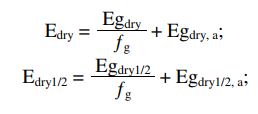
where:
Egdry − gas energy consumption (in kWh) for the standard Cotton programme at full load (rounded to 2 decimal places);
Egdry1/2 − gas energy consumption (in kWh) for the standard Cotton programme at partial load (rounded to 2 decimal places);
Egdry, a − additional (auxiliary) electricity consumption (in kWh) for the standard Cotton programme at full load (rounded to 2 decimal places);
Egdry1/2, a − additional (auxiliary) electricity consumption (in kWh) for the standard Cotton programme at partial load (rounded to 2 decimal places);
ƒg = 2,5.
For gas tumble dryers, gas energy consumption (AEC(GAS)) (in kWhGAS) for the standard Cotton programme at full and partial load shall be calculated using the following formula (with the result rounded to 2 decimal places):

For gas tumble dryers, electricity consumption (AEC(GAS)el) (in kWh) for the standard Cotton programme at full and partial load shall be calculated using the following formula (with the result rounded to 2 decimal places):

5. To calculate condensation efficiency, the average condensation efficiency shall be determined for the standard Cotton programme at full and partial load.
Condensation efficiency (Сt) shall be calculated as a percentage using the following formula (rounded to the nearest whole number):

where:
Сdry − average condensation efficiency for the standard Cotton programme at full load;
Сdry1/2 − average condensation efficiency for the standard Cotton programme at partial load.
Average condensation efficiency (C) shall be calculated based on the results of determining condensation efficiency in test cycles and expressed as a percentage:
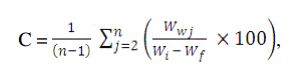
where:
n − number of test cycles, including at least 4 actual test cycles for the selected programme;
j − test cycle number;
Wwj − mass of water collected in the condenser during test j;
Wi − mass of the wet test load before drying;
Wf − mass of the test load after drying.
6. Tumble dryers shall comply with the following Requirements:
a) the Energy Efficiency Index (EEI) of tumble dryers, calculated in accordance with Clause 4 of these Requirements, shall be less than 85;
b) for condenser tumble dryers:
the Energy Efficiency Index (EEI), calculated in accordance with Clause 4 of these Requirements, shall be less than 76;
the condensation efficiency determined in accordance with Clause 5 of these Requirements shall be at least 70 %.
7. The operating documents accompanying tumble dryers, provided for in Clause 13 of the Technical Regulation of the Eurasian Economic Union “On Requirements for the Energy Efficiency of Energy-Consuming Devices” (TR EAEU 048/2019) (hereinafter referred to as the Technical Regulation), shall contain the following information on their characteristics and parameters:
a) the value of the Energy Efficiency Index (EEI);
b) the condensation efficiency value for condenser tumble dryers;
c) information on the standard Cotton programme and an indication that it is suitable for drying cotton textile products with standard moisture content after washing and is the most energy-efficient programme;
d) information on electricity consumption in off mode and left-on mode;
e) information on the approximate programme duration and electricity consumption for the main drying programmes at both full and partial load.
IV. Permissible Deviations of the Energy Efficiency Parameters of Tumble Dryers during Tests (Measurements) after Their Placing on the Market
8. If tests (measurements) of tumble dryers are carried out after their placing on the market in the customs territory of the Union, tests (measurements) shall be carried out on 1 representative sample (specimen) of each tumble dryer model.
A tumble dryer model shall be considered compliant with these Requirements if the measured values of the parameters and characteristics of the representative specimen (sample) of the tumble dryer comply with the requirements of Section III of these Requirements and the nominal values declared by the manufacturer, within the permissible deviations specified in Table 1.
Table 1
Permissible deviations
Measured parameter | Permissible deviations |
Weighted annual energy consumption | The measured value must not exceed the nominal value for AEC by more than 6 % |
Weighted energy consumption | The measured value must not exceed the nominal value for Et by more than 6 % |
Weighted condensation efficiency | The measured value must not be lower than the nominal value for Ct by more than 6 % |
Weighted programme duration | The measured value must not exceed the nominal value for Tt by more than 6 % |
Power consumption | The measured power consumption values Po and Pl must not exceed the nominal values by more than 6 % or 0,10 W for power consumption control where the power consumption is respectively greater than or not greater than 1,00 W |
Duration of left-on mode" | The measured value must not exceed the nominal value for Tl by more than 6 % |
The nominal value means the value declared by the manufacturer. | |
In other cases, measurements shall be performed on 3 additional specimens of each model of tumble dryer. The model of tumble dryer is considered to comply with these Requirements if the average values of the measurement results for these 3 additional specimens of tumble dryers comply with the requirements specified in Section III of these Requirements.
In other cases, this model of tumble dryer shall be considered not to comply with the requirements of the Technical Regulation.
V. Content of the label and technical sheet of tumble dryers
9. The label of tumble dryers shall contain the following information:
I. the name or trademark (if available) of the manufacturer;
II. the model designation;
III. the energy efficiency class;
IV. annual energy consumption (АЕС) (in kWh/year) (rounded to the nearest whole number);
V. the type of tumble dryer;
VI.the cycle duration corresponding to the standard Cotton programme at full load (in min) (rounded to the nearest whole number);
VII. the rated capacity for the standard Cotton programme at full load (in kg);
VIII. the acoustic noise value (weighted average value Lwa) for the standard cotton drying mode at full load (in dB), rounded to the nearest whole number.
IX. the condensation efficiency class (for condenser tumble dryers).
10. The technical sheet included in the operating documentation for tumble dryers shall contain the following information:
a) the name or trademark (if available) of the manufacturer;
b) the manufacturer's model identification number (as a rule, an alphanumeric code that distinguishes a specific model of tumble dryer from other models of the same trademark or manufacturer bearing the same name);
c) the rated capacity for the standard Cotton programme at full load (in kg);
d) the type of tumble dryer (vented, condenser or gas);
e) the energy efficiency class;
f) for a tumble dryer powered from the mains:
– annual energy consumption (АЕС), rounded to the first decimal place. It shall be stated as follows: "Energy consumption "X", kWh/year, based on 160 cycles of the standard Cotton programme at full and partial load, and energy consumption in left-on mode. Actual energy consumption per cycle depends on how the tumble dryer is used";
g) for a gas tumble dryer:
– annual gas energy consumption (АЕС(Gas)) (rounded to 1 decimal place). It shall be stated as follows: "Energy consumption "X", kWh of gas/year, based on 160 cycles of the standard Cotton programme at full and partial load. Actual energy consumption per cycle depends on how the tumble dryer is used";
– annual electricity consumption (AEC(Gas)el) (rounded to 1 decimal place). It shall be stated as follows: "Energy consumption "X", kWh/year, based on 160 cycles of the standard Cotton programme at full and partial load, and energy consumption in left-on mode. Actual energy consumption per cycle depends on how the tumble dryer is used";
h) an automatic or non-automatic tumble dryer;
i) energy consumption Еdry, Edry1/2, Еgdry, Egdry1/2, Egdry,a, Egdry1/2,a for the standard Cotton programme at full and partial load;
j) power consumption in off mode (Рo) and left-on mode (Рl) for the standard Cotton programme at full load;
k) the duration of left-on mode, if the tumble dryer is equipped with a power management system;
l) an indication that the standard Cotton programme at full and partial load is the standard drying programme to which the information on the label and in the technical sheet relates, that this programme is suitable for drying normally damp cotton products after washing, and that it is the most efficient programme in terms of energy consumption for drying cotton products;
m) the duration of the standard Cotton programme at full and partial load (Tt) (in minutes) (rounded to the nearest whole number), as well as the duration of the standard Cotton programme at full load (Тdry) and the duration of the standard Cotton programme at partial load (Tdry1/2), (in minutes) (rounded to the nearest whole number);
n) for a condenser tumble dryer – the condensation efficiency class. It shall be stated as follows: "Condensation efficiency class "X" on a scale from G (least efficient) to A (most efficient)"; it may be expressed in other ways provided that the scale starts with G (least efficient) and ends with A (most efficient);
o) for a condenser tumble dryer, the condensation efficiency for the standard Cotton programme at full and partial load (Cdry), (Cdry1/2) and the condensation efficiency for the standard Cotton programme at full and partial load (Ct) (in %) (rounded to the nearest whole number);
p) the acoustic noise value (measured average value (LWA)) for the standard Cotton programme at full load (in dB) (rounded to the nearest whole number);
q) an indication that the tumble dryer is intended for built-in installation (if applicable).
11. One technical sheet for a tumble dryer may contain information on a range of models of tumble dryers supplied by the same manufacturer.
12. The information contained in the technical sheet for a tumble dryer may be provided as a colour or black-and-white copy of the label. In this case, the information specified in Clause 10 of these Requirements and not present on the label shall also be indicated.
VI. Determination of the energy efficiency classes of tumble dryers
13. The energy efficiency class of a tumble dryer is determined in accordance with its Energy Efficiency Index (EEI) and Table 2.
Table 2
Energy efficiency class of a tumble dryer
Energy efficiency class | Energy Efficiency Index |
A +++ (most efficient) | EEI < 24 |
A ++ | 24 ≤ EEI < 32 |
A + | 32 ≤ EEI < 42 |
A | 42 ≤ EEI < 65 |
В | 65 ≤ EEI < 76 |
С | 76 ≤ EEI < 85 |
D (least efficient) | EEI ≥ 85 |
12. The condensation efficiency class of tumble dryers is determined on the basis of weighted condensation efficiency in accordance with Table 3.
Table 3
Condensation efficiency classes of household tumble dryers
Condensation efficiency class | Residual moisture content (%) |
A (most efficient) | Сt >90 |
В | 80 < Сt ≤ 90 |
С | 70 < Сt ≤ 80 |
D | 60 < Сt ≤ 70 |
E | 50 < Сt ≤ 60 |
F | 40 < Сt ≤ 50 |
G (least efficient) | Сt ≤ 40 |
ANNEX No. 16
to the Technical Regulation
of the Eurasian Economic Union
"On Requirements for the
Energy Efficiency of Energy‑Consuming
Devices" (TR EAEU 048/2019)
REQUIREMENTS
for the energy efficiency of vacuum cleaners
I. Scope of Application
1. These Requirements apply to household vacuum cleaners (hereinafter referred to as vacuum cleaners) placed on the market in the customs territory of the Eurasian Economic Union (hereinafter referred to as the Union), which may be used for commercial purposes (in manufacturing, trade and services), powered from an AC mains supply with a rated voltage of up to and including 250 V, or hybrid vacuum cleaners, with the exception of vacuum cleaners:
a) for wet cleaning;
b) for wet-and-dry cleaning;
c) powered by electric batteries and/or rechargeable batteries;
d) robot vacuum cleaners;
e) industrial or central vacuum cleaners;
f) floor polishers;
g) intended for outdoor use.
II. Terms and Definitions
2. For the purposes of applying these Requirements, the following terms are used:
"battery-powered active nozzle head (active nozzle head)" − a cleaning nozzle equipped with a battery- and/or accumulator-powered device for raising the pile (moving brush), which assists in removing dirt;
"household vacuum cleaner" − a vacuum cleaner intended solely for household or domestic use and declared by the manufacturer as such;
"dust re-emission" − the ratio, expressed as a percentage to 2 decimal places, of the total number of dust particles from 0,3 μm to 10 μm emitted by the vacuum cleaner to the total number of dust particles of the same sizes captured by the suction device when a specified quantity of dust with particles of the specified sizes enters it, including dust measured at the vacuum cleaner outlet and dust emitted due to any leaks and generated by the vacuum cleaner itself;
"hybrid vacuum cleaner" − a vacuum cleaner that can be powered both from the mains and from electric batteries and (or) accumulators;
"double pass" − 1 forward movement of the cleaning nozzle and 1 backward movement in the parallel direction, performed at the test pass speed over the specified test pass length;
"test pass length" − the length of the test area in metres, including the distance travelled by the centre of the cleaning nozzle with acceleration through the respective areas before and after the test area;
"carpet test" − a test comprising the specified number of cleaning cycles on a Wilton test carpet, during which the cleaning nozzle, operating at the maximum power of the vacuum cleaner, passes over a section of the test area of the specified length and with a width equal to the width of the cleaning nozzle, on which test dust of the appropriate composition is uniformly distributed and suitably embedded, with the time elapsed, the position of the centre of the cleaning nozzle relative to the test area, electricity consumption and the increase in the mass of the dust receptacle at the end of each cleaning cycle being measured and recorded;
"hard-floor test" − a test comprising 2 cleaning cycles, during which the cleaning nozzle of the vacuum cleaner operating at maximum power passes over a wooden test plate equipped with a diagonal (at an angle of 45 º) test slot, over a section of the test area of the specified length and with a width equal to the width of the cleaning nozzle, with the time elapsed, the position of the centre of the cleaning nozzle relative to the test area, electricity consumption and the reduction in the mass of the test slot at the end of each cleaning cycle being measured and recorded;
"test pass speed" − the speed of movement of the cleaning nozzle in m/h during the test, preferably achieved using an electromechanical drive (for a vacuum cleaner with a self-propelled cleaning nozzle, it must be ensured that its speed is as close as possible to the relevant test speed, although deviations are permissible if they are clearly specified in the operating documents);
"test slot" − a removable U-shaped insert of the appropriate dimensions, filled with the appropriate artificial dust at the beginning of the cleaning cycle;
"rated input power" − the input power in W declared by the manufacturer (for appliances intended to perform functions other than vacuum cleaning in addition to the vacuum-cleaning function, only the electrical power consumed for vacuum cleaning is taken into account);
"full-size battery-powered vacuum cleaner" − a battery-powered vacuum cleaner capable, when fully charged and without additional recharging, of cleaning 15 m2 of floor with 2 double passes over the entire cleaned surface;
"floor polisher" − an electrical appliance intended to protect, smooth and (or) polish a particular type of floor, generally operating with polishing agents applied by the appliance to the floor surface, and usually also capable of performing the function of a vacuum cleaner;
"industrial vacuum cleaner" − a commercial vacuum cleaner with a nozzle having a width exceeding 0,50 m, or a vacuum cleaner designed as part of a production process, machine or tool, intended for removing hazardous materials, heavy construction dust, and industrial dust from foundry, mining, food and other industrial equipment;
"vacuum cleaner" − an appliance intended to remove debris from a surface to be cleaned by means of an airflow generated by reduced pressure formed in the appliance;
"wet-and-dry vacuum cleaner" − a vacuum cleaner intended to remove more than 2,5 litres of liquid and also capable of performing the function of a dry vacuum cleaner;
"wet vacuum cleaner" − an appliance that removes dry and (or) wet debris and dirt, while applying a water-based cleaning agent to the surface to be cleaned or using steam, with the resulting moisture being removed together with the debris by an airflow generated by reduced pressure formed in the appliance (including appliance types widely known as wet vacuum cleaners);
"commercial vacuum cleaner" − a vacuum cleaner intended for use by non-specialists (cleaners or other personnel) in an office, shop, hospital or hotel, declared by the manufacturer as such;
"outdoor vacuum cleaner" − a device intended for outdoor use to collect debris (for example, cut grass and leaves) in a collector by means of an airflow generated by suction created by reduced pressure formed in the device, and which may include shredding devices and perform the function of a blower;
"dry vacuum cleaner" − a vacuum cleaner intended to remove debris that is mainly dry (dust, fibres, threads), including a vacuum cleaner equipped with a battery-powered active nozzle head;
"hard-floor vacuum cleaner" − a vacuum cleaner equipped with a fixed nozzle head designed specifically for cleaning hard surfaces, or supplied with 1 or more detachable nozzle heads intended for cleaning hard floors;
"carpet vacuum cleaner" − a vacuum cleaner equipped with a fixed nozzle head designed specifically for cleaning carpets, or supplied with 1 or more detachable nozzle heads intended for cleaning carpets;
"general-purpose vacuum cleaner" − a vacuum cleaner supplied with 1 fixed or 1 or more detachable nozzle heads for cleaning carpets and hard floors, or supplied with detachable nozzle heads, of which at least 1 is specifically intended for cleaning carpets and at least 1 for cleaning hard floors;
"robot vacuum cleaner" − a vacuum cleaner powered by electric batteries and (or) accumulators, capable of operating without human intervention within a defined area, consisting of a mobile part, docking station and (or) other accessories ensuring its operation;
"water-filter vacuum cleaner" − a vacuum cleaner in which more than 0,5 litres of water is used as the primary filtering medium, with intake air passing through it to capture dust;
"vacuum cleaner powered by electric batteries and (or) accumulators" − a vacuum cleaner operating solely from electric batteries and (or) accumulators;
"sound power level" − the level of emitted acoustic noise, expressed in dB (A) at 1 pW and rounded to the nearest whole number;
"central vacuum cleaner" − a vacuum cleaner with a stationary (non-mobile) location of the reduced-pressure source and hose connections located at fixed points in the premises;
"cleaning cycle" − a sequence of 5 double passes of the vacuum cleaner over a specific test area on a carpet or hard floor;
"cleaning nozzle width" − the maximum external width of the cleaning nozzle in metres, accurate to 3 decimal places;
"reference vacuum cleaner system" − laboratory electrical equipment used to measure calibrated and reference dust pick-up on carpet coverings under specified air parameters in order to improve the reproducibility of test results;
"dust pick-up performance" − the ratio, calculated after several cycles of double passes of the cleaning nozzle and rounded to 3 decimal places, of the mass of artificial dust removed, determined for a carpet from the increase in the mass of the dust receptacle and for a hard floor from the reduction in the mass of the test slot, to the mass of artificial dust initially placed in the test area, adjusted for the specific test conditions for the carpet and for the length and position of the test slot for the hard floor.
III. Requirements for the Energy Efficiency of Vacuum Cleaners and Specifics of Determining Energy Efficiency Indicators
3. The following tests (measurements) shall be performed for a vacuum cleaner, and the values of the following indicators shall be determined:
a) annual energy consumption (AE);
b) rated input power;
c) carpet dust pickup efficiency;
d) hard-floor dust pickup efficiency;
e) dust re-emission;
f) flexible hose durability (if applicable);
g) sound power level;
h) motor service life.
4. Annual electricity consumption (AE) (in kWh/year) (rounded to 1 decimal place) shall be calculated using the following formulas for vacuum cleaners:
for carpets:

for hard floors

general-purpose:

where:
ASEC – average specific energy consumption (in Wh/m2) during tests of a carpet vacuum cleaner;
ASEhf – average specific energy consumption (in Wh/m2) during tests of a hard-floor vacuum cleaner;
dpuC – carpet dust pickup efficiency;
dpuhf – hard-floor dust pickup efficiency;
50 – standard number of one-hour vacuum-cleaning sessions per year;
87 – standard surface area of the residential premises to be cleaned, in m2;
4 – standard number of vacuum cleaner nozzle passes over each point on the floor (2 double passes);
0,001 – conversion factor from Wh to kWh;
1 – standard dust pickup efficiency;
0,20 – standard difference between dust pickup efficiency after 5 and after 2 double passes.
5. The average specific energy consumption during carpet tests ASEС and hard-floor tests ASEhf shall be determined as the average specific energy consumption SE for the number of cleaning cycles constituting the carpet test and hard-floor test, respectively. ASEС and ASEhf for general-purpose vacuum cleaners shall be calculated using the following general formula (in Wh/m2) (rounded to 3 decimal places):
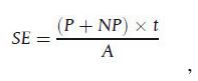
,
where:
Р – average power during the cleaning cycle when the centre of the cleaning nozzle moves over the test area (in W) (rounded to 2 decimal places);
NP – average equivalent power of the active nozzle head operating from electric batteries and/or rechargeable batteries (in W) (rounded to 2 decimal places);
t – total duration of the cleaning cycle during which the centre of the cleaning nozzle, i.e. the point halfway between the front and rear edges of the cleaning nozzle, moves through the test area (in hours) (rounded to 4 decimal places);
A – surface area covered by the cleaning nozzle during the cleaning cycle, calculated as 10 times the product of the nozzle width and the corresponding length of the test area (in m2) (rounded to 3 decimal places). If the cleaning nozzle of a household vacuum cleaner is more than 0,320 m wide, the width of the cleaning nozzle shall be replaced by 0,320 for this calculation.
For hard-floor tests, the index "hf" and the parameter designations SEhf , Phf , NPhf , thf and Аhf shall be used in the above formula. For carpet tests, the index "с" and the parameter designations SEс , Pс , NPс , tc and Ас shall be used in the above formula.
The average equivalent power of the nozzle head powered by rechargeable batteries, NP with the relevant index referring to carpet, hard-floor and general-purpose vacuum cleaners, shall be calculated using the following formula (in W) (to 2 decimal places):
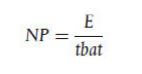
where:
E – energy consumption from the electric battery, equal to the energy required to recharge the battery after the cleaning cycle in order to restore it to its initial fully charged state (in Wh) (rounded to 3 decimal places);
tbat – total duration of the cleaning cycle during which the active nozzle head of the vacuum cleaner is activated, in accordance with the manufacturer's instructions (in hours) (rounded to 4 decimal places).
If the vacuum cleaner is not equipped with active nozzle heads, the value of NP shall be 0.
For hard-floor tests, the index "hf" and the parameter designations NPhf , Ehf , and tbathf shall be used in the above formula. For carpet tests, the index "с" and the parameter designations NPс , Ec , tbatc shall be used in the above formula.
6. Hard-floor dust pickup efficiency dpuhf shall be determined as the average value based on the results of 2 cleaning cycles in the hard-floor test.
7. Carpet dust pickup efficiency dpuс shall be determined as the average value based on the results of 2 cleaning cycles in the carpet test. To correct deviations from the initial properties of the test carpet, dpuс shall be calculated using the following formula:
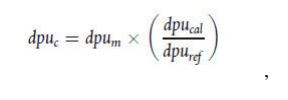
where:
dpum – dust pickup efficiency of the vacuum cleaner;
dpucal – dust pickup efficiency of the reference vacuum cleaner system, measured when the test carpet is in its initial condition;
dpuref – dust pickup efficiency of the reference vacuum cleaner system.
8. Dust re-emission shall be determined while the vacuum cleaner is operating at maximum airflow.
9. Sound power level shall be determined during operation on a carpet.
10. During testing (measurement) of the flexible hose, it shall be subjected to bending with a force applied by means of a 2,5 kg weight.
11. During testing (measurement) of the motor service life, the vacuum cleaner shall operate with the dust container half full, with a shutdown for 30 seconds after every 14 minutes and 30 seconds of operation. The dust container and filters shall be replaced at the relevant intervals. The test may be stopped after 500 hours and shall be terminated after 600 hours of operation. Motor operability shall be monitored by varying the airflow, degree of vacuum and input power during each operating interval.
12. For hybrid vacuum cleaners, all tests (measurements) shall be performed with the vacuum cleaner powered from the mains, except for the active nozzle head (if applicable), which is powered by an electric battery.
13. Vacuum cleaners shall comply with the following Requirements:
a) annual energy consumption AE shall not exceed 43,0 kWh/year;
b) rated input power shall not exceed 900 W;
c) carpet dust pickup efficiency (dpuc) shall be at least 0,75 (this requirement does not apply to hard-floor vacuum cleaners);
d) hard-floor dust pickup efficiency (dpuhf) shall be at least 0,98 (this requirement does not apply to carpet vacuum cleaners);
e) dust re-emission shall not exceed 1,00 %;
f) sound power level shall not exceed 80 dB(A);
g) the flexible hose (if applicable) shall remain fit for use after 40 000 bends;
h) the motor service life of the vacuum cleaner shall be at least 500 hours.
14. The operating documents accompanying vacuum cleaners, provided for in Clause 13 of the Technical Regulation of the Eurasian Economic Union "On Requirements for the Energy Efficiency of Energy-Consuming Devices" (TR EAEU 048/2019) (hereinafter referred to as the Technical Regulation), shall also contain the following information on the characteristics and parameters of vacuum cleaners:
b) for a vacuum cleaner intended for cleaning hard floors, it shall be specified that, with the supplied nozzle heads, it is not suitable for cleaning carpets;
c) for a vacuum cleaner intended for cleaning carpets, it shall be specified that, with the supplied nozzle heads, it is not suitable for cleaning hard floors;
d) for an appliance capable of performing functions other than vacuum cleaning, the electrical power consumed when operating in vacuum-cleaning mode shall be specified if it is lower than the rated input power of the appliance;
e) it shall be specified to which of the following 3 groups the vacuum cleaner is to be assigned during testing: general-purpose vacuum cleaner, hard-floor vacuum cleaner or carpet vacuum cleaner;
f) a short title or reference to the measurement and calculation methods used to establish compliance with these Requirements.
15. The set of documents accompanying vacuum cleaners, specified in subparagraph "a" of paragraph 28 or subparagraph "a" of paragraph 29 of the Technical Regulation, taking into account the declaration of conformity scheme selected by the applicant, shall additionally include the following information for vacuum cleaners:
a) the values of SEhf , Phf , NPhf , thf and Аhf and/or SEс , Pс , NPс , tc and Ас for each cleaning cycle, determined during tests of average specific electricity consumption in accordance with Clause 5 of these Requirements;
b) the values of dpum for each cleaning cycle, dpuc , dpucal and dpuref , determined during tests of carpet dust pickup efficiency in accordance with Clause 7 of these Requirements;
c) the total operating time, measured airflow, degree of vacuum and input power during testing of motor service life in accordance with Clause 11 of these Requirements.
VI. Permissible Deviations of Vacuum Cleaner Energy Efficiency Parameters during Tests (Measurements) after Placing on the Market
16. If tests (measurements) of vacuum cleaners are performed after their placing on the market in the customs territory of the Union, tests (measurements) shall be performed on 1 representative sample (unit) of each vacuum cleaner model.
A vacuum cleaner model shall be considered compliant with these Requirements if the measured values of the vacuum cleaner's parameters and characteristics comply with the requirements of Section III of these Requirements and with the nominal values declared by the manufacturer, within the permissible deviations specified in the table.
Table 1
Permissible deviations
Measured parameter | Permissible deviations* |
Annual electricity consumption | the measured value must not exceed the nominal AE value by more than 10 % |
Carpet dust pickup efficiency | the measured value must not be lower than the nominal value by more than 0,03 |
Hard-floor dust pickup efficiency | the measured value must not be lower than the nominal value by more than 0,03 |
Dust re-emission | the measured value must not exceed the nominal value by more than 15 % |
Sound power level | the measured value must not exceed the nominal value |
Motor service life | the measured value must not be lower than the nominal value by more than 5 % |
The nominal value means the value declared by the manufacturer | |
In other cases, tests (measurements) shall be performed on three additional specimens of the vacuum cleaner of this model. The vacuum cleaner model is considered to comply with these Requirements if the mean values of the measured parameters of these three additional specimens of the vacuum cleaner comply with the requirements specified in the first paragraph of this clause.
In other cases, this vacuum cleaner model shall be considered not to comply with the requirements of the Technical Regulation.
VII. Content of the vacuum cleaner label and technical sheet
17. The vacuum cleaner label shall contain the following information:
I. name or trademark (if available) of the manufacturer;
II. model designation;
III. energy efficiency class;
IV. average annual energy consumption (in kWh/year);
V. secondary filtration efficiency class;
VI. carpet cleaning efficiency class;
If the vacuum cleaner is intended for hard-floor cleaning, the exclusion symbol is displayed;
VII. hard-floor cleaning efficiency class;
If the vacuum cleaner is intended for carpet cleaning, the exclusion symbol is displayed;
VIII. adjusted sound power level, expressed in dB (A) relative to 1 pW (rounded to the nearest whole number) (specified in dB). It is determined during operation on a carpet.
18. The technical sheet included in the operating documents of the vacuum cleaner shall contain the following information:
a) name or trademark (if available) of the manufacturer;
b) manufacturer's model identification number (as a rule, an alphanumeric code that distinguishes a specific vacuum cleaner model from other models of the same trademark or manufacturer bearing the same name);
c) energy efficiency class;
d) average annual energy consumption (in kWh/year) (rounded to 1 decimal place). Actual energy consumption will depend on how the vacuum cleaner is used;
e) secondary filtration efficiency class;
f) carpet cleaning efficiency class;
g) if the vacuum cleaner is intended for hard-floor cleaning, the exclusion symbol is displayed;
h) hard-floor cleaning efficiency class;
i) if the vacuum cleaner is intended for carpet cleaning, the exclusion symbol is displayed;
j) adjusted sound power level, expressed in dB (A) relative to 1 pW (rounded to the nearest whole number) (specified in dB). It is determined during operation on a carpet;
k) rated input power.
19. One technical sheet for a vacuum cleaner may cover a range of certain vacuum cleaner models supplied by the same manufacturer.
20. The information contained in the vacuum cleaner technical sheet may be presented as a colour or black-and-white copy of the label. In this case, the information specified in clause 18 of these Requirements and absent from the label shall also be provided.
VIII. Determination of the energy efficiency, cleaning efficiency and secondary dust filtration efficiency classes of vacuum cleaners
21. The energy efficiency class of vacuum cleaners is determined according to their annual energy consumption (AE) in accordance with Table 2.
Table 2
Energy efficiency classes of vacuum cleaners
Energy efficiency class | Annual energy consumption, kWh/year |
A +++ | AE ≤ 10,0 |
A ++ | 10,0 < AE ≤ 16,0 |
A + | 16,0 < AE ≤ 22,0 |
A | 22,0 < AE ≤ 28,0 |
B | 28,0 < AE ≤ 34,0 |
C | 34,0 < AE ≤ 40,0 |
D | AE > 40,0 |
22. The cleaning efficiency class of a vacuum cleaner is determined in accordance with Table 3.
Table 3
Cleaning efficiency classes of vacuum cleaners
Cleaning efficiency class | Carpet cleaning efficiency index | Hard-floor cleaning efficiency index |
A | dpuc ≥ 0.91 | dpuhf ≥ 1,11 |
B | 0,87 ≤ dpuc < 0,91 | 1,08 ≤ dpuhf < 1,11 |
C | 0,83 ≤ dpuc < 0,87 | 1,05 ≤ dpuhf < 1,08 |
D | 0,79 ≤ dpuc < 0,83 | 1,02 ≤ dpuhf < 1,05 |
E | 0,75 ≤ dpuc < 0,79 | 0.99 ≤ dpuhf < 1,02 |
F | 0,71 ≤ dpuc < 0,75 | 0.96 ≤ dpuhf < 0.99 |
G | dpuc < 0,71 | dpuhf < 0.96 |
23. The secondary filtration efficiency class is determined in accordance with Table 4.
Table 4
Secondary dust filtration efficiency classes of vacuum cleaners
Secondary filtration efficiency class | Dust re-emission, % |
A | dre ≤ 0,02 |
B | 0,02 < dre ≤ 0,08 |
C | 0,08 < dre ≤ 0,20 |
D | 0,20 < dre ≤ 0,35 |
E | 0,35 < dre ≤ 0,60 |
F | 0,60 < dre ≤ 1,00 |
G | dre > 1,00 |
ANNEX No. 17
to the Technical Regulation
of the Eurasian Economic Union
"On Requirements for the Energy
Efficiency of Energy‑Consuming
Devices" (TR EAEU 048/2019)
REQUIREMENTS
for the Energy Efficiency of Computers and Servers
I. Scope of Application
1. These Requirements apply to computers and servers placed on the market in the customs territory of the Eurasian Economic Union (hereinafter referred to as the Union) and intended to be powered directly from an alternating-current mains supply (hereinafter referred to as computers and servers), including through an external or internal power supply:
a) desktop computers;
b) all-in-one desktop computers;
c) notebook computers (including tablet computers, compact tablet computers and mobile "thin clients");
d) desktop "thin clients";
e) workstations;
f) mobile workstations;
g) small servers;
h) computer servers.
These Requirements do not apply to the following types of products:
a) blade systems and their components;
b) application servers;
c) multi-node servers;
d) computer servers with more than 4 processor sockets;
e) game consoles;
f) docking stations.
II. Terms and Definitions
2. For the purposes of applying these Requirements, the following terms are used:
"wake event" – an event initiated by the user, an external event or action, or occurring according to a schedule, which causes the computer to transition from sleep mode or off mode to active mode. The "wake event" includes, but is not limited to, the following events:
mouse movement;
pressing a key on the keyboard;
controller input;
real-time clock event;
pressing a button on the enclosure;
external events that initiated signals transmitted by a remote control, network or modem;
"Wake-on-LAN (WOL)" – a function by which a computer is switched on by a command via an Ethernet local area network from sleep mode or off mode (or another similar low-power state);
"active mode" – a state in which the computer performs useful work in response to prior or simultaneous user input or to a command received previously or simultaneously via a network. This state includes active processing, searching for data on a disk, in system memory or cache memory, including idle time in a non-operating state while awaiting user input before transitioning to a low-power state;
"audio card (sound card)" – a discrete internal component that processes the computer's input and output audio signals;
"blade system and components" – a system consisting of an enclosure (blade chassis) in which various types of blade storage devices and servers are installed and which provides shared resources on which the operation of the servers and storage devices depends. Blade systems are designed as a scalable solution for combining several computer servers or several storage devices in a single enclosure and are intended to enable devices (for example, blade servers) to be added or replaced quickly (with hot swapping);
"external power supply" – a device that meets all of the following conditions:
intended to convert the input AC voltage of the mains power source into a lower output voltage;
capable of converting the input voltage into a DC or AC output voltage (external DC or AC power supplies);
intended for use with separate powered electrical equipment serving as the main load;
enclosed in a physical enclosure separately from the powered equipment constituting the main load;
connected to the powered equipment by means of a detachable or permanently attached plug-and-socket electrical connection, cable, cord, wire or other connecting device;
rated output power does not exceed 250 W;
falls within the scope of Appendix No. 10 to the Technical Regulation of the Eurasian Economic Union "On Requirements for the Energy Efficiency of Energy-Consuming Devices" (TR EAEU 048/2019) (hereinafter referred to as the Technical Regulation);
"internal storage device" – a computer component that provides non-volatile data storage;
"internal power supply" – a device intended to convert AC voltage from the mains into DC voltage for powering a computer or computer server and having the following characteristics:
located inside the enclosure of the computer or computer server, but separately from the main components of the computer or computer server;
connected to the mains by 1 cable with no intermediate circuits between the power supply and the electrical mains;
all power circuits from the power supply to the components of the computer or computer server, except for the DC circuit to the display in an all-in-one desktop computer, are located inside the computer enclosure;
internal DC-to-DC converters used to convert the DC voltage from an external power supply into several voltages used in the computer or computer server are not considered internal power supplies;
"hypervisor" – a programme that provides or enables the simultaneous parallel operation of several operating systems on a computer;
"annual electricity consumption (ETEC)" – the amount of electricity consumed by a device during specified periods in specified energy consumption modes and states;
"two-node server" – a server with a multi-node configuration consisting of 2 server nodes;
"discrete graphics card" (dGfx) – a discrete internal computer component containing 1 or more graphics processing units (GPU) with a local memory controller interface and local graphics memory, falling into one of the following categories:
G1 (FB_BW ≤ 16);
G2 (16 < FB_BW ≤ 32);
G3 (32 < FB_BW ≤ 64);
G4 (64 < FB_BW ≤ 96);
G5 (96 < FB_BW ≤ 128);
G6 (FB_BW > 128 (data bus width < 192 bits));
G7 (FB_BW > 128 (data bus width ≥ 192 bits));
where "FB_BW" means frame buffer bandwidth (GB/s), i.e. the volume of data processed per second by all graphics processing units of 1 discrete graphics card (dGfx), calculated using the following formula:

where:
data transfer rate – effective memory frequency, in MHz;
data bus width – width of the frame buffer data bus, in bits (b);
"8" – conversion factor to bytes;
"1 000" – conversion factor from megabytes to gigabytes;
"docking station" – a device intended to be connected to a computer to perform functions such as increasing the number of port connections, combining connections to peripheral devices and charging the internal battery packs of the connected computer;
"additional internal storage device" – all internal data storage devices, including hard disk drives (HDD), solid-state drives (SSD) and hybrid hard disk drives (HHD), included in the computer in addition to the main (first, basic) storage device;
"game console" – a mains-powered stand-alone device intended to provide video gaming as its primary function. A game console is intended to output signals to an external display that serves as the primary gaming screen. Game consoles usually include a central processing unit, system memory and one or more graphics processing units (GPU), and may also contain hard disk drives or other internal storage devices and reading devices. The primary input devices of game consoles are generally handheld controllers or interactive controllers, rather than an external keyboard or mouse. Game consoles do not have traditional personal computer operating systems, but are equipped with their own game console operating systems. Portable gaming devices with a built-in display serving as the primary gaming screen, which operate mainly from a built-in battery or another portable power source rather than being connected directly to the AC mains, are also considered game consoles;
"status indication (status information)" – a continuous function of providing information on or indicating the status of a computer on a display, including an indication of the exact time;
"compact tablet computer" – a type of notebook computer with a built-in touch display and no built-in physical keyboard;
"computer" – a device that performs logical operations and data processing, may use input and output devices to display information and usually includes a central processing unit (CPU) to perform operations. If there is no central processing unit, the device must function as a "client gateway" to a computer server that acts as the processing computing unit;
"computer server" – a computing device that manages network resources and provides services to client devices (desktop computers, notebook computers, desktop "thin clients", IP telephones or other computer servers), generally intended for use in data centres or corporate environments, accessed primarily via a communications network rather than by means of a direct input device such as a keyboard or mouse, and having the following characteristics:
intended to support server operating systems (OS) and/or hypervisors and to run enterprise applications installed by the user;
supports error-correcting code (ECC) and/or buffered memory, including buffered dual in-line memory modules (DIMM) and configurations with an on-board buffer (ВОВ);
equipped with 1 or more AC (DC) power supplies;
all processors have access to shared system memory and are independently visible in a single OS or hypervisor;
"computer server equipped with more than 4 processor sockets" – a computer server containing more than 4 interfaces intended for processor installation;
"small server" – a type of computer that usually uses desktop computer components in a desktop configuration, but is primarily intended to perform functions for other computers (for example, providing network infrastructure services and data storage), having the following features:
assembled in a tower-type enclosure or another form similar to a desktop computer, for processing, storage and networking in a single unit;
intended for continuous operation 7 days a week;
primarily intended for operation in a synchronous multi-user environment serving several users through a network client module;
if supplied with an installed operating system, that operating system is intended for a home server or basic server applications;
equipped with a discrete graphics card (dGfx) of category G1 only;
"multi-node server" – a system consisting of an enclosure containing 2 or more independent computer servers (or nodes) that share 1 or more power supplies. The total power consumption of all nodes is provided by the common power supply or supplies. A multi-node server is assembled as a single enclosure and is not intended for hot swapping;
"mobile workstation" – a high-performance personal computer used mainly for graphics, computer-aided design, software development, financial and scientific applications, and other resource-intensive tasks, excluding games, designed as a portable device capable of operating for an extended period with or without a direct connection to an AC power source. Mobile workstations use a built-in display and are capable of operating from a built-in battery or another portable power supply. Most mobile workstations use an external power supply, and most of them have a built-in keyboard and pointing device. A mobile workstation has the following characteristics:
has a mean time between failures (MTBF) of at least 13000 hours;
has at least 1 discrete graphics card (dGfx) meeting category G3 (data bus width greater than 128 bits), G4, G5, G6 or G7 according to the graphics card classification;
supports connection of three or more internal storage devices;
supports at least 32 GB of system memory;
"mobile thin client" – a type of notebook computer without a built-in storage device with a rotating disk, which connects to remote computing resources (for example, computer servers or remote workstations), where the main data processing is performed;
"all-in-one desktop computer" – a computer in which the system unit and monitor are designed as a single unit receiving power through a common cable and belonging to 1 of 2 possible types:
a device in which the display and computer are physically integrated into a single unit;
a device in which the display is separate from the computer but connected to the system unit by means of a DC power cord;
"desktop computer" – a computer not intended to be carried, with a main unit intended for stationary placement, used with an external display and such external peripheral devices as a keyboard and mouse;
"category A desktop computer or all-in-one desktop computer" – a desktop computer or all-in-one desktop computer that does not fall under the definition of categories B, C and D;
"category B desktop computer or all-in-one desktop computer" – a desktop computer or all-in-one desktop computer equipped with 2 physical cores in the processor and at least 2 gigabytes of system memory;
"category C desktop computer or all-in-one desktop computer" – a desktop computer or all-in-one desktop computer equipped with at least 3 physical cores in the processor and whose configuration includes one of the following: at least 2 gigabytes of system memory and (or) a discrete graphics card (dGfx);
"category D desktop computer or all-in-one desktop computer" – a desktop computer or all-in-one desktop computer equipped with at least 4 physical cores in the processor and whose configuration includes one of the following: at least 4 gigabytes of system memory and (or) a discrete graphics card (dGfx) meeting category G3 (data bus width > 128 bits), G4, G5, G6 or G7 according to the graphics card classification;
"desktop thin client" – a computer that connects to remote computing resources (for example, computer servers or remote workstations) to provide its main functional capabilities, does not have a built-in rotating storage medium, is intended for stationary placement (for example, on a desk and not as a mobile device), and is capable of displaying information on an external or built-in display (if available);
"notebook computer" – a portable computer with an all-in-one display having a screen diagonal of at least 22,86 cm (9 inches), intended to operate for extended periods from a built-in battery or another portable power supply, with the capability of direct connection to an AC power grid (devices meeting the characteristics of a notebook computer but having standby power consumption of less than 6 W are not classified as notebook computers and are outside the scope of the Technical Regulation);
"category A notebook computer" – a notebook computer that does not fall under the definition of categories B and C;
"category B notebook computer" – a notebook computer equipped with at least 1 discrete graphics card (dGfx);
"category C notebook computer" – a notebook computer equipped with 2 or more physical cores in the processor, at least 2 gigabytes of system memory, and a discrete graphics card (dGfx) meeting category G3 (data bus width > 128 bits), G4, G5, G6 or G7 according to the graphics card classification;
"tablet computer" – a type of notebook computer incorporating a touch-sensitive display and a built-in keyboard;
"workstation" – a high-performance personal computer used for processing graphical data, computer-aided design, software development, financial and scientific applications, and other resource-intensive tasks, characterized by the following properties:
has a mean time between failures (MTBF) of at least 15000 hours;
has error-correcting code (ECC) and (or) buffered memory;
meets at least three of the following five characteristics:
has an additional power supply to support a high-performance graphics card (i.e. an additional 6-pin PCI / PCI-E connector for connection of a 12 V peripheral power supply);
the motherboard has a routed x4 PCI-E slot in addition to the graphics slots and (or) supports PCI-X;
does not support unified memory access (UMA) graphics;
includes five or more PCI, PCI-E or PCI-X slots;
is capable of supporting multiprocessor operation for two or more central processing units (CPU) (physical processor sockets for several CPUs are required, rather than a socket for only one multi-core processor);
"off mode" – a low-power state that cannot be switched off by the user in any way other than by actuating a mechanical switch and that may continue indefinitely as long as the device is connected to a power source and used in accordance with the manufacturer's instructions. Under the Advanced Configuration and Power Management Interface (ACPI) standard, this state usually corresponds to level G2/S5 ("soft off") of the ACPI system;
"application server" – a computer server supplied with a pre-installed operating system and application software, used to perform a specific function or range of functions, providing services through one or more networks and managed through the information and telecommunications network "Internet" or a management interface line. The application server and software configuration are configured by the manufacturer to perform a specific task, including networking or storage, and are not intended to execute user application programs;
"low-power state" – the state of minimum power consumption of a computer, achieved by disconnecting power to the computer by means of a mechanical switch or an automatic device;
"idle state (rest state)" – the state of a computer in which the operating system and other software have completed loading, a user profile has been created, the computer is not in sleep mode, and its activity is limited to the basic applications that the operating system launches by default;
"sleep mode" – a reduced-power mode that a computer may enter automatically after a certain period of inactivity or by manual selection. In this mode, the computer is capable of responding to wake events. Where the Advanced Configuration and Power Management Interface (ACPI) standard applies, sleep mode usually corresponds to level G2/S3 (with retention in RAM) of the ACPI system;
"display sleep mode" – a power mode entered by a display device after receiving a signal from a connected device or an internal signal (for example, from a timer or presence sensor). This mode may also be set by a user command. The display must wake upon receiving a signal from a connected device, network, remote control and (or) internal signals. While the device is in this mode, no image is reproduced, except for functions such as device information or status indication, or the state of a functional sensor;
"television tuner (TV tuner)" – a discrete internal component that allows a computer to receive television signals;
"device type" – desktop computer, all-in-one desktop computer, notebook computer, desktop thin client, workstation, mobile workstation, small server, computer server, blade system and components, multi-node server, application server, game console, docking station, internal power supply or external power supply;
"central processing unit (CPU)" – a component in a computer that controls the decoding and execution of instructions. The central processing unit (CPU) may contain 1 or more physical processors known as "execution cores". An execution core means a processor that is physically present. Additional "virtual" or "logical" processors formed from 1 or more execution cores are not physical cores. A physical processor occupying one processor socket may contain several cores. The total number of execution cores in the central processing unit (CPU) is the sum of the execution cores of all devices connected to the processor sockets;
"UMA (Uniform Memory Access)" – uniform memory access.
III. Requirements for energy efficiency and specific features of determining the energy efficiency indicators of computers and servers
3. The relevant tests (measurements) shall be performed for computers and servers, and the values of the following parameters and characteristics shall be determined:
a) annual electricity consumption (ETEC);
b) power consumption in sleep mode (Psleep);
c) power consumption in the low-power state;
d) power consumption in off mode (Рoff);
e) efficiency of the internal power supply.
4. The annual electricity consumption (ETEC) (in kWh/year) of a desktop computer and an all-in-one desktop computer shall not exceed:
for category A – 94,00;
for category B – 112,00;
for category C – 134,00;
for category D – 150,00.
The annual electricity consumption (ETEC) of a desktop computer and an all-in-one desktop computer is calculated using the following formula (in kWh/year) (rounded to 2 decimal places):

Рoff – power consumption in off mode (in W);
Psleep – power consumption in sleep mode (in W);
Pidle – power consumption in the idle state (in W).
For computers without a sleep mode, in which power consumption in the idle state does not exceed 10,00 W, power consumption in the idle state (Pidle) may be used instead of power consumption in sleep mode (Psleep). In this case, the annual electricity consumption (ETEC) is calculated using the following formula (in kWh/year) (rounded to 2 decimal places):

The following electricity consumption values for computer components shall be applied when measuring Poff , Psleep and Pidle:
system memory – 1 kWh/year for each gigabyte (GB) above the basic capacity, which is 2 GB for category A, B and C computers and 4 GB for category D computers;
additional internal storage device – 25 kWh/year;
discrete television tuner (TV tuner) – 15 kWh/year;
discrete sound card – 15 kWh/year;
annual consumption for the first discrete graphics card (dGfx) and each additional discrete graphics card (dGfx) is given in Table 1.
The electricity consumption values specified in Table 1 for discrete graphics cards (dGfx), discrete television tuners and discrete sound cards apply only to cards and tuners that are activated during testing of desktop computers or all-in-one desktop computers.
Table 1
Annual electricity consumption for graphics cards
Graphics cards | dGfx category | Annual consumption (kWh/year) |
First discrete graphics card (dGfx) | G1 | 18 |
G2 | 30 | |
G3 | 38 | |
G4 | 54 | |
G5 | 72 | |
G6 | 90 | |
G7 | 122 | |
Each additional discrete graphics card (dGfx) | G1 | 11 |
G2 | 17 | |
G3 | 22 | |
G4 | 32 | |
G5 | 42 | |
G6 | 53 | |
G7 | 72 |
The permissible electricity consumption values for graphics cards specified in Table 1 do not apply to category D desktop computers and all-in-one desktop computers having the following technical characteristics:
at least 6 physical cores in the central processing unit (CPU);
the discrete graphics card (dGfx) provides total frame buffer bandwidth exceeding 320 GB/s;
system memory is at least 16 GB;
the power supply unit has a rated output power of at least 1000 W.
5. The annual electricity consumption of a notebook computer (ETEC) (in kWh/year) shall not exceed:
for category A – 27,00;
for category B – 36,00;
for category C – 60,50.
The annual electricity consumption (ETEC) of a notebook computer is calculated using the following formula (rounded to 2 decimal places):

The following electricity consumption values for notebook computer components shall be applied when measuring Poff , Psleep and Pidle:
system memory – 0,4 kWh/year for each gigabyte (GB) above the basic capacity, which is 4 GB for notebook computers;
additional internal storage – 3 kWh/year;
discrete television tuner (TV tuner) – 2,1 kWh/year;
consumption for the first discrete graphics card (dGfx) and each additional discrete graphics card (dGfx) is given in Table 2 (Stage I).
The electricity consumption values specified in Table 2 for discrete graphics cards (dGfx) and discrete television tuners apply only to graphics cards and tuners used during testing of notebook computers.
Table 2
Annual Electricity Consumption for Laptop Graphics Cards
Graphics Cards | dGfx Category | Annual Consumption (kWh/year) |
First Discrete Graphics Card (dGfx) | G1 | 7 |
G2 | 11 | |
G3 | 13 | |
G4 | 20 | |
G5 | 27 | |
G6 | 33 | |
G7 | 61 | |
Each Additional Discrete Graphics Card (dGfx) | G1 | 4 |
G2 | 6 | |
G3 | 8 | |
G4 | 12 | |
G5 | 16 | |
G6 | 20 | |
G7 | 36 |
The permissible electricity consumption values specified in Table 2 do not apply to Category C laptops with the following technical characteristics:
at least 4 physical cores in the central processing unit (CPU);
the discrete graphics card (dGfx) provides total frame buffer bandwidth exceeding 225 GB/s;
system memory of at least 16 GB.
6. The computer shall provide sleep mode and/or another state that provides sleep-mode functionality and in which the permissible power consumption does not exceed the requirements for sleep mode, including:
a) power consumption in sleep mode shall not exceed 5,00 W for desktop computers and all-in-one desktop computers and 3,00 W for notebook computers;
b) desktop computers and all-in-one desktop computers with power consumption less than or equal to 10,00 W are not required to have sleep mode;
c) if the computer is equipped with a WOL function operating in sleep mode, then:
an addition of 0,70 W to the permissible limit may be applied;
the computer shall be tested with the WOL function enabled and disabled and shall comply with these Requirements in both cases;
d) if the computer does not support an Ethernet local area network, it shall be tested with the WOL function disabled.
7. A desktop computer, all-in-one computer and notebook computer in the low-power state shall not consume more than 0,50 W.
The computer shall provide a state or power mode in which the permissible power consumption shall not exceed the requirements for the low-power state when it is connected to the mains power source.
If the computer includes an information display or status indicator, an addition of 0,50 W to the permissible limit may be applied.
8. A desktop computer, all-in-one desktop computer and notebook computer shall meet the following off-mode requirements:
a) power consumption in off mode shall not exceed 1,00 W;
b) the computer shall provide off mode and/or another state in which the permissible power shall not exceed the requirement for power consumption in off mode when it is connected to the power supply;
c) if the computer is equipped with a WOL function operating in off mode, then:
an addition of 0,70 W to the permissible limit may be applied;
the computer shall be tested with the WOL function enabled and disabled and shall comply with these Requirements in both cases;
d) if the computer does not support an Ethernet local area network, it shall be tested with the WOL function disabled.
9. All internal power supplies of a desktop computer, all-in-one desktop computer, desktop thin client, workstation and small server shall have efficiency and power factor not lower than the following values:
efficiency of 85 % at an output power of 50 % of the rated value;
efficiency of 82 % at an output power of 20 % and 100 % of the rated value;
power factor of 0,9 at an output power of 100 % of the rated value.
The power factor requirements do not apply to internal power supplies with a maximum rated output power of less than 75 W.
10. The following energy efficiency requirements shall apply to power supply units and power supplies of a computer server:
a) all power supply units with multiple output voltages (AC-DC type) shall have:
efficiency of at least:
85 % at an output power of 50 % of the rated value;
82 % at an output power of 20 % and 100 % of the rated value;
power factor of at least:
0,8 at an output power of 20 % of the rated value;
0,9 at an output power of 50 % of the rated value;
0,95 at an output power of 100 % of the rated value;
b) all single-output power supplies (AC-DC type) with a rated power of not more than 500 W shall have efficiency of at least:
70 % at an output power of 10 % of the rated value;
82 % at an output power of 20 % of the rated value;
89 % at an output power of 50 % of the rated value;
85 % at an output power of 100 % of the rated value;
c) all single-output power supplies (AC-DC type) with a rated power of not more than 500 W shall have a power factor of at least:
0,8 at an output power of 20 % of the rated value;
0,9 at an output power of 50 % of the rated value;
0,95 at an output power of 100 % of the rated value;
d) all single-output power supplies of the (AC-DC) type with a rated power of more than 500 W but not more than 1000 W shall have efficiency of at least:
75 % at an output power of 10 % of the rated value;
85 % at an output power of 20 % and 100 % of the rated value;
89 % at an output power of 50 % of the rated value;
e) all single-output power supplies (AC-DC type) with a rated power of more than 500 W but not more than 1000 W shall have a power factor of at least:
0,65 at an output power of 10 % of the rated value;
0,8 at an output power of 20 % of the rated value;
0,9 at an output power of 50 % of the rated value;
0,95 at an output power of 100 % of the rated value;
f) all single-output power supplies (AC-DC type) with a rated power of more than 1000 W shall have efficiency of at least:
80 % at an output power of 10 % of the rated value;
88 % at an output power of 20 % and 100 % of the rated value;
92 % at an output power of 50 % of the rated value;
g) all single-output power supplies (AC-DC type) with a rated power of more than 1000 W shall have a power factor of at least:
0,8 at an output power of 10 % of the rated value;
0,9 at an output power of 20 % and 50 % of the rated value;
0,95 at an output power of 100 % of the rated value.
11. A desktop computer, all-in-one desktop computer and notebook computer shall have a power management function or an equivalent function that, when the computer is not performing its primary function or when other energy-consuming devices do not depend on its operation, automatically switches the computer to a mode with lower electricity consumption than sleep mode, including:
a) a computer with a WOL function shall reduce the operating speed of all network connections to 1 gigabit per second (Gbit/s) when switching to sleep mode or off mode over an Ethernet local area network;
b) in sleep mode, the response to a "wake event" command after it is received via network connections or user interface devices shall occur with a delay of no more than 5 s from the beginning of receipt of the command until the system becomes fully ready for operation, including the display;
c) if the computer is equipped with a display, the display shall enter sleep mode after 10 minutes of user inactivity;
d) a computer supporting an Ethernet local area network shall provide the possibility to enable and disable the WOL function, where available, for sleep mode. An Ethernet computer shall provide the possibility to enable and disable the WOL function for off mode if WOL is supported in off mode;
e) if the computer can enter sleep mode or another state providing sleep-mode functionality, this mode shall be configured to activate after 30 minutes of user inactivity. This power management function shall be installed by the manufacturer before delivery;
f) users shall be able to enable or disable wireless network connections and shall be provided with clear information on symbols, light indicators or equivalent signals showing whether wireless network connections are enabled or disabled.
12. The operating documents accompanying computers and servers, as provided for in Clause 13 of the Technical Regulation, shall contain the following information on their characteristics and parameters:
a) for desktop computers, all-in-one desktop computers and notebook computers:
product category (A, B, C or D) determined in accordance with Clauses 4 and 5 of these Requirements;
ETEC value (in kWh) and power consumption when all discrete graphics cards (dGfx) are disabled and the system operates with UMA, which can be disabled in this state, controlling the display;
ETEC value (in kWh) and power consumption when all discrete graphics cards (dGfx) are enabled;
power consumption in the idle state (in W);
power consumption in sleep mode (in W);
power consumption in sleep mode with WOL function support (in W), where applicable;
power consumption in off mode (in W);
power consumption in off mode with WOL function support (in W), where applicable;
efficiency of the internal power supply at 10 %, 20 %, 50 % and 100 % of rated output power;
efficiency of the external power supply;
adjusted sound power level of the computer, expressed in dB (A) relative to 1 pW (rounded to the nearest whole number) (specified in dB);
minimum number of charging cycles that the batteries can withstand (for notebook computers only);
sequence of steps for achieving stable power consumption;
description of the procedure for selecting the programming of sleep mode and/or off mode;
sequence of events required to achieve the mode in which the equipment automatically enters sleep mode and/or off mode;
duration of the idle state (rest) before the computer automatically switches to sleep mode or another state in which power consumption does not exceed the power consumption required in sleep mode;
the period of user inactivity after which the computer automatically switches to a power mode with lower energy consumption than sleep mode;
the time before switching to sleep mode after a period of user inactivity;
information intended for the user on the energy-saving potential of the power management system;
information intended for the user on the power management functionality;
b) for notebook computers powered by one or more batteries that cannot be replaced by non-professional users, in addition to the information specified in subparagraph "a" of this paragraph, the operating documents and the external packaging of the notebook computer shall contain the following statement: "The battery of this device cannot be easily replaced by the user";
c) for workstations, mobile workstations, desktop "thin clients", small servers and computer servers:
efficiency of the internal (external) power supply;
maximum power consumption (in W);
power consumption in the idle state (in W);
power consumption in sleep mode (in W);
power consumption in off mode (in W);
adjusted sound power level of the computer, expressed in dB (A) relative to 1 pW (rounded to the nearest whole number) (specified in dB);.
13. If a computer and (or) server model has several configurations, the operating documents may contain the information specified in paragraph 12 of these Requirements only for the most complex configuration in the relevant category of computers and (or) servers. All configurations of the computer and (or) server model to which the specified information applies shall be listed.
14. The set of documents for computers and (or) servers specified in subparagraph "a" of paragraph 23 of the Technical Regulation shall additionally include the following information for computers and (or) servers:
a) for desktop computers, all-in-one desktop computers and notebook computers:
the measurement method used to determine the information specified in paragraphs 2–12 of subparagraph "a" of paragraph 12 of these Requirements;
values of the test parameters during the measurements;
values of the test voltage (in V) and frequency (in Hz);
values of total harmonic distortion in the power supply system;
information on the measuring instruments and test equipment used for electrical testing;
b) for workstations, mobile workstations, desktop "thin clients", small servers and computer servers:
values of the test parameters during the measurements;
values of the test voltage (in V) and frequency (in Hz);
values of total harmonic distortion in the power supply system;
documentation for the instruments, installations and circuits used for electrical testing;
the measurement method used to determine the information specified in subparagraph "c" of paragraph 12 of these Requirements.
V. Permissible deviations of the energy efficiency parameters of computers and servers during tests (measurements) after their placing on the market
15. If computers and servers are tested (measured) after their placing on the market in the customs territory of the Union, 1 representative sample (specimen) of each computer or server model (configuration) shall be tested (measured).
A computer or server model (configuration) shall be deemed to comply with the requirements of these Requirements if, for the list of requirements applicable to it:
a) the measured power consumption for the parameters specified in paragraphs 4–7 and subparagraph "b" of paragraph 8 of these Requirements does not exceed the permissible limit values by more than 7 %;
b) the measured power consumption for the parameters specified in subparagraphs "a" and "c" of paragraph 8 of these Requirements, with an addition to the permissible limit in the case of the WOL function being enabled and without such addition when the WOL function is disabled, does not exceed the permissible limit values by more than 7 %;
c) the measured power consumption for the parameters specified in the first and third paragraphs of paragraph 9 of these Requirements, with an addition to the permissible limit when an information display or status indicator is present, does not exceed the permissible limit values by more than 0,10 W;
d) the measured power consumption for the parameters specified in the first and third paragraphs of paragraph 9 of these Requirements, with an addition to the permissible limit when an information display or status indicator is present, does not exceed the permissible limit values by more than 0,10 W;
e) the measured power consumption for the parameters specified in subparagraphs "a" and "c" of paragraph 12 of these Requirements, with an addition to the permissible limit in the case of the WOL function being enabled and without such addition when the WOL function is disabled, does not exceed the permissible limit values by more than 0,10 W;
f) the average values of the measured energy efficiency parameters of power supply units and power supplies specified in paragraphs 9 and 10 of these Requirements are not lower than the permissible limit values by more than 2 % for efficiency and by more than 10 % for the power factor;
g) the reduction of the operating speed of all network connections to 1 gigabit per second (Gbit/s) when switching to sleep mode or shutdown via the Ethernet local network, the duration of the time intervals for switching to sleep mode and returning to operating mode, as well as other power management wake event parameters, comply with the requirements specified in paragraph 11 of these Requirements.
16. If a computer or server model (configuration) does not comply with the requirements specified in paragraph 15 of these Requirements, 3 randomly selected samples of the same computer or server model (configuration) shall be tested.
A computer or server model shall be deemed to comply with these Requirements if the average measurement result for these 3 samples complies with the requirements specified in subparagraphs "a"–"g" of paragraph 15 of these Requirements.
In other cases, the computer or server model (configuration) shall be considered non-compliant with the requirements of the Technical Regulation.
ANNEX No. 18
to the Technical Regulation
of the Eurasian Economic Union
"On Requirements for the Energy
Efficiency of Energy‑Consuming
Devices" (TR EAEU 048/2019)
REQUIREMENTS
for the Energy Efficiency of Water Pumps
I. Scope of Application
1. These Requirements apply to stand-alone and integrated (built into other equipment) pumps placed on the market in the customs territory of the Eurasian Economic Union (hereinafter referred to as the Union) and intended for pumping clean water (hereinafter referred to as water pumps), except for:
a) pumps intended exclusively for firefighting purposes;
b) pumps specially intended for pumping water at a temperature below minus 10 ºС or above 120 ºС, provided that this is specified in the operating documents referred to in paragraph 7 of these Requirements;
c) positive-displacement pumps;
d) self-priming water pumps.
II. Terms and Definitions
2. For the purposes of applying these Requirements, the following terms are used:
"close-coupled end-suction water pump (ESCC)" – a water pump with axial inlet, in which the extended motor shaft serves as the pump shaft;
"end-suction water pump" – a single-stage centrifugal water pump with a dry drive and axial inlet, intended for use at pressures of up to 16 bar, with a specific speed of 6 to 80 rpm, and having a rated flow rate of at least 6 m3/h (1,667 × 10-3 m3/s), a maximum shaft power of 150 kW, a maximum head at a rated rotational speed of 1 450 rpm of 90 m, and a maximum head at a rated rotational speed of 2 900 rpm of 140 m;
"end-suction own-bearing water pump (ESOB)" – a water pump with axial inlet and its own bearing assembly;
"constant C" – a constant value for specified types of water pumps that quantitatively determines the differences in the efficiency of these pump types;
"water pump efficiency ( η)" – the ratio of the mechanical energy transferred to the fluid as it passes through the pump to the mechanical power at the pump shaft;
"in-line close-coupled end-suction water pump (ESCCi)" – a close-coupled end-suction water pump in which the inlet and outlet connections are located along the same axis;
"Minimum Efficiency Index (MEI)" – a dimensionless value characterizing the efficiency of water pumps at the best efficiency point, under part-load and overload conditions;
"multistage vertical pump (MS-V)" – a multistage (i > 1) centrifugal pump with a sealless drive, in which the impellers are mounted on a vertically positioned shaft, designed for pressures of up to 25 bar at a rated rotational speed of 2900 rpm and a maximum water flow rate of 100 m3/h (27,78×10⁻³ m3/s);
"multistage submersible pump (MSS)" – a multistage (i > 1) centrifugal pump with a nominal outside diameter of 4 inches (10,16 cm) or 6 inches (15,24 cm), intended for use in a well at operating temperatures from 0 ºC to 90 ºC and a rated rotational speed of 2 900 rpm;
"sealless pump" – a pump in which the impeller cavity and the drive are isolated from each other, thereby preventing contact between the drive and the pumped liquid;
"part-load condition (PL)" – the operating point of a water pump at which the flow rate is 75 % of the flow rate at the best efficiency point;
"rated power" – the power specified by the manufacturer under normal flow-rate conditions and at a specified head;
"positive-displacement water pump" – a water pump in which clean water is moved to the pump outlet in defined portions;
"overload condition (OL)" – the operating point of a water pump at which the flow rate is 110 % of the flow rate at the best efficiency point;
"full-size impeller" – the impeller with the maximum diameter for a pump of a specified size;
"specific speed ns" – a value determined by the dimensions and shape of the pump impeller at specified values of head, flow rate and shaft rotational speed:
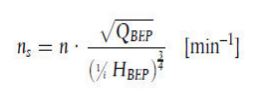
where:
head (Н) – the hydraulic energy of water acquired under the action of the pump (in metres of water column);
rotational speed (n) – the number of revolutions per minute of the pump shaft;
flow rate (Q) – the volumetric flow of water passing through the pump (in m3/s);
number of stages (і) – the number of impellers in the pump;
best efficiency point (BEP) – the operating point of a water pump at which the highest pump efficiency is achieved when pumping clean cold water;
"impeller" – the rotating part of a centrifugal pump that transfers energy to the pumped liquid;
"self-priming water pump" – a pump capable of operating when partially filled with water;
"centrifugal water pump" – a pump intended for pumping clean water by means of hydrodynamic forces acting on it;
"clean water" – water in which the content of free undissolved solid particles does not exceed 0,25 kg/m3 and the content of dissolved solids is not more than 50 kg/m3, provided that the total gas content in the water does not exceed the saturation volume (additives preventing water from freezing down to a temperature of minus 10 ºC are not taken into account);
"clean cold water" – clean water with a maximum kinematic viscosity of 1,5×10⁻⁶ m2/s, a maximum density of 1 050 kg/m3 and a maximum temperature of 40 ºC, used during pump testing.
III. Energy Efficiency Requirements and Specifics of Determining the Energy Efficiency Indicators of Water Pumps
3. The relevant tests (measurements) shall be carried out for water pumps, and the values of the Minimum Efficiency Index (MEI) shall be determined with the full-size impeller diameter when pumping clean cold water at the head and flow rate at the best efficiency point (BEP), under part-load (PL) and overload (OL) conditions.
4. The minimum required efficiency at the best efficiency point (BEP) is calculated using the following formula:

where:
х = ln(ns);
у = ln(Q);
ns – specific speed (in min-1);
Q – flow rate (in m3/h);
ln – natural logarithm symbol;
CPumpType, rpm – the values of constant C for the pump type (Pump Type), rotational speed (in rpm (rpm)) and Minimum Efficiency Index (MEI) are given in the table.
Table
Minimum Efficiency Indices (MEI) and the Corresponding Constant C Values Depending on the Pump Type and Its Speed
C value for MEI | MEI = 0,10 | MEI = 0,40 |
C (ESOB, 1 450) | 132,58 | 128,07 |
C (ESOB, 2 900) | 135,60 | 130,27 |
C (ESCC, 1 450) | 132,74 | 128,46 |
C (ESCC, 2 900) | 135,93 | 130,77 |
C (ESCCI, 1 450) | 136,67 | 132,30 |
C (ESCCI, 2 900) | 139,45 | 133,69 |
C (MS-V, 2 900) | 138,19 | 133,95 |
C (MSS, 2 900) | 134,31 | 128,79 |
The minimum required efficiency under part-load (PL) and overload (OL) conditions in relation to the requirements at 100-percent flow rate (hBER) is calculated using the following formulas:
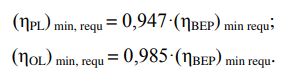
All efficiency values refer to the rated or full-size (without correction or trimming) impeller diameter. The multistage vertical water pump (MS-V) shall be tested in the three-stage version (i = 3). The multistage submersible pump (MSS) shall be tested in the 9-stage version (i = 9). If a pump cannot have the specified number of stages, a pump with the nearest number of stages shall be selected.
5. Water pumps shall comply with the following energy efficiency requirements:
а) efficiency h at the best efficiency point (BEP), when measured in accordance with Clause 4 of these Requirements with the value of C for MEI = 0,4, shall be not lower than the value ( ηBER) min, requ ;
б) efficiency η at part-load condition (PL), when measured in accordance with Clause 4 of these Requirements with the value of C for MEI = 0,4, shall be not lower than the value (ηPL) min, requ ;
в) efficiency h under overload condition (OL), when measured in accordance with Clause 4 of these Requirements with the value of C for MEI = 0,4, shall be not lower than the value ( ηOL) min, requ .
6. The marking of water pumps shall contain the following information about their characteristics:
а) Minimum Efficiency Index (MEI) in the following format: "MEI ≥ [x,xx]";
б) hydraulic efficiency of the water pump (in %) at the corrected impeller diameter [xx,x].
7. The operating documents accompanying water pumps and required by Clause 13 of the Union Technical Regulation "On Requirements for the Energy Efficiency of Energy-Consuming Devices" (TR EAEU 048/2019) (hereinafter referred to as the Technical Regulation) shall contain the information specified in Clause 6 of these Requirements, as well as the following information on the characteristics and parameters of water pumps:
а) one of the following statements: "reference MEI value of the water pump with the best efficiency ≥ 0,70" or "reference MEI value ≥ 0,70";
б) operating characteristics of the pump, including energy efficiency characteristics;
в) information on disassembly, reuse and disposal of the pump;
г) the statement: "The energy efficiency of a pump with a trimmed impeller is generally lower than that of a standard pump with a full-size impeller. By correcting (trimming) the impeller, the pump is adapted to operate at a specified operating point with reduced energy consumption. The Minimum Efficiency Index (MEI) refers to the full-size impeller diameter";
д) the statement: "The operation of this water pump during different operating periods may be efficient and economical if it is controlled (for example, by controlling the pump speed in the system)";
е) for pumps specifically intended only for pumping clean water at a temperature below minus 10 ºC, the statement: "For use only at temperatures below minus 10 ºC";
ж) for pumps specifically intended only for pumping clean water at a temperature above 120 ºC, the statement: "For use only at temperatures above 120 ºC";
з) for pumps intended for pumping clean water at a temperature below minus 10 ºC or above 120 ºC, the relevant technical parameters and characteristics shall be specified.
IV. Permissible deviations of the energy efficiency parameters of water pumps during tests (measurements) after their placing on the market
8. Where tests (measurements) of water pumps are conducted after their placing on the market in the customs territory of the Union, tests (measurements) are conducted on 1 representative sample (specimen) of each water pump model.
A water pump model is deemed to comply with these Requirements if the energy efficiency of the water pump ( ηBER, ηRL and ηOL), measured at the best efficiency point, under part-load condition and under overload condition, is not more than 5% below the values specified in Clause 5 of these Requirements.
If a water pump model is deemed not to comply with these Requirements specified in the first paragraph of this clause, 3 additional water pump samples (specimens) are tested. A water pump model is deemed to comply with these Requirements if the average value of the test (measurement) results for ηBER, ηRL and ηOL of these 3 samples (specimens) is not lower than the values specified in the second paragraph of this clause.
In other cases, the water pump model in question shall be regarded as not complying with the requirements of the Technical Regulation.
ANNEX No. 19
to the Technical Regulation
of the Eurasian Economic Union
"On Requirements for the Energy Efficiency
of Energy‑Consuming
Devices" (TR EAEU 048/2019)
REQUIREMENTS
for the energy efficiency of air conditioners and room fans
I. Scope of Application
1. These Requirements apply to mains-powered air conditioners placed on the market in the customs territory of the Eurasian Economic Union (hereinafter referred to as the Union), with a rated cooling and/or heating capacity of not more than 12 kW (hereinafter referred to as air conditioners), as well as room fans with a rated input power of not more than 125 W (hereinafter referred to as fans), except for:
a) air conditioners in which air is not used as the heat-transfer medium in the evaporator and/or condenser;
b) air conditioners and fans operating through the use of energy sources other than electricity.
II. Terms and Definitions
2. For the purposes of applying these Requirements, the following terms are used:
"active mode" – the operating mode of an air conditioner operating in cooling or heating mode, in which the air conditioner may switch on and off to ensure the required indoor air temperature;
"fan" – an appliance primarily intended to create an airflow directed at the human body or parts thereof for cooling purposes, including fans with additional functions (such as lighting and (or) illumination, remote control, presence sensor, timer, switch-off delay, humidity sensor, humidifier and (or) air ionizer, airflow oscillation mechanism, etc.);
"off-mode operating time (HOFF)" – the time dependent on the relevant season and specified function, representing the total operating period in hours per year (h/year) during which the energy-consuming device is in off mode;
"standby-mode operating time (HSB)" – the time dependent on the relevant season and specified function, representing the total operating period in hours per year (h/year) during which the energy-consuming device is in standby mode;
"thermostat-off-mode operating time (HTO)" – the time dependent on the relevant season and specified function, representing the total operating period in hours per year (h/year) during which the air conditioner is in thermostat-off mode;
"crankcase-heater-mode operating time (HCK)" – the total operating period in hours per year (h/year), dependent on the relevant season and specified function, during which the air conditioner is in crankcase-heater mode with the compressor crankcase heater switched on;
"fan operating time in active mode (HCE)" – the time dependent on the relevant season and specified function, representing the estimated expected total operating period in hours per year (h/year) during which the fan creates maximum airflow;
"annual electricity consumption for heating (QHE)" – the electricity consumption of an air conditioner (in kWh/year) to provide the standard annual energy consumption for heating during a specified heating season, equal to the sum of:
the standard annual energy consumption for heating divided by the seasonal energy efficiency in active heating mode (SCOPon);
the electricity consumption during the heating season in thermostat-off mode, standby mode and off mode, as well as in crankcase-heater mode;
"annual electricity consumption for cooling (QCE)" – the electricity consumption of an air conditioner (in kWh/year) to provide the standard annual energy consumption for cooling, equal to the sum of:
the standard annual energy consumption for cooling divided by the seasonal energy efficiency in active cooling mode (SEERon);
the electricity consumption during the cooling season in thermostat-off mode, standby mode and off mode, as well as in crankcase-heater mode;
"double-duct air conditioner" – an air conditioner located entirely inside the conditioned space near a wall, in which the air flowing over the condenser or evaporator during cooling or heating is supplied from outside through one duct and discharged outside the space through another duct;
"bin duration" – the number of hours hj during the season when outdoor air temperature Tj prevails in the temperature-time bin;
"declared capacity" – the air conditioner capacity specified by the manufacturer in kW and consumed to ensure operation of the vapour-compression cycle in cooling mode Pdc(Tj) or heating mode Pdh(Tj) at outdoor air temperature Tj and indoor air temperature Tin ;
"declared energy efficiency in heating mode (COPd(Tj))" – the air conditioner energy efficiency specified by the manufacturer in heating mode for a limited number of temperature-time bins with index j corresponding to outdoor air temperatures Tj;
"declared energy efficiency in cooling mode (EERd(Tj))" – the air conditioner energy efficiency specified by the manufacturer in cooling mode for a limited number of temperature-time bins with index j corresponding to outdoor air temperatures Tj;
"air conditioner" – a device for cooling and (or) heating indoor air through the use of a vapour-compression heat-pump cycle driven by an electric compressor, including air conditioners with additional functions such as ventilation, dehumidification and air purification, additional air heating by means of an electric heater, as well as air conditioners capable of evaporating water on the condenser (condensed on the evaporator or supplied from outside), provided that they are capable of operating only with air without an additional water supply;
"power factor" – the ratio of the total capacity declared by the manufacturer during cooling and (or) heating under standard rating conditions for all operating assemblies and devices of the indoor unit of an air conditioner to the same declared capacity for all assemblies and devices of the outdoor unit of the air conditioner;
"degradation coefficient" – the efficiency loss due to cyclic operation (switching the compressor on (off) in active mode), determined for cooling mode (Cdc) and (or) heating mode (Cdh) or, by default, assumed to be 0,25;
"part-load ratio (pl(Tj))" – the ratio of the outdoor air temperature less 16 C to the design reference temperature for cooling or heating modes less 16 C;
"maximum airflow (F)" – the airflow generated by the fan in m3/min at the maximum power setting, measured at the airflow outlet with the oscillation mechanism switched off (if available);
"oscillation mechanism" – a device for automatically changing the direction of the airflow by the fan while the fan is operating;
"power in cyclic (intermittent) operating mode" – the time-weighted average declared capacity during the cyclic test interval of an air conditioner (under cyclic loads caused by switching the compressor on and off) in cooling mode (PcycC) or heating mode (PcycH);
"rated input power in heating mode (PCOP)" – the electrical input power consumed by an air conditioner (in kW) in heating mode under standard rating conditions;
"rated input power in cooling mode (PEER)" – the electrical input power consumed by an air conditioner (in kW) in cooling mode under standard rating conditions;
"rated power (Рrated)" – the cooling or heating capacity of the vapour-compression cycle of an air conditioner under standard rating conditions;
"rated energy efficiency in cooling mode (EERrated)" – the ratio of the declared cooling capacity of an air conditioner (in kW) to its rated power consumption in cooling mode (in kW) under standard rating conditions;
"rated energy efficiency in heating mode (COPrated)" – the ratio of the declared heating capacity of an air conditioner (in kW) to its rated power consumption in heating mode (in kW) under standard rating conditions;
"rated airflow" – the airflow (in m3/h) measured at the outlet of the indoor or outdoor (if available) unit of an air conditioner under standard rating conditions in cooling mode (or in heating mode if the air conditioner does not have a cooling function);
"single-duct air conditioner" – an air conditioner in which, during cooling or heating, the air flowing over the condenser or evaporator is supplied from the space in which the air conditioner is located and discharged outside that space;
"Global Warming Potential (GWP)" – a coefficient determining the impact of one kilogram of a substance in terms of its contribution to the greenhouse effect (global warming) over a period of 100 years, numerically equal to the equivalent mass of carbon dioxide in kg producing the same greenhouse effect over 100 years (GWPсо2 = 1), introduced in accordance with the Kyoto Protocol of 11 December 1997 to the United Nations Framework Convention on Climate Change of 9 May 1992 and official publications (reports) of the Intergovernmental Panel on Climate Change (IPCC) issued within the framework of the United Nations Environment Programme (UNEP);
"power consumption in off mode (POFF)" – the power (in kW) consumed by an electrical energy-consuming device in off mode;
"power consumption in standby mode (PSB)" – the power (in kW) consumed by an electrical energy-consuming device in standby mode;
"power consumption in crankcase-heater mode (PCK)" – the power (in kW) consumed by an electrical energy-consuming device in crankcase-heater mode;
"power consumption in thermostat-off mode (PTO)" – the power (in kW) consumed by an electrical energy-consuming device in thermostat-off mode;
"operating limit temperature (Tol)" – the minimum outdoor air temperature (in C) specified by the manufacturer at which the air conditioner is capable of operating in heating mode (below this temperature, the declared heating capacity is zero);
"design load (capacity)" – the capacity (load) specified by the manufacturer (in kW) at the design reference temperature in cooling mode PdesignC (equal to the cooling-mode capacity at Tj = TdesignС ) and (or) heating mode PdesignH (equal to the part load in heating mode at Tj = TdesignH );
"reversible air conditioner" – an air conditioner intended for cooling and heating air;
"power control" – the ability of an appliance to change its capacity by changing the airflow rate (appliances are designated as "fixed power control" if the airflow cannot be adjusted, "stepwise power control" if two power settings are possible, and "variable power control" if the airflow varies across three or more steps);
"off mode" – a condition in which electrical equipment is connected to a power source but is not in active (operating) mode or standby mode and must comply with Electromagnetic Compatibility requirements and (or) provide an indication of off mode;
"standby mode" – a condition in which electrical equipment is connected to a power source and, for an unlimited period, performs a reactivation function (including indication of the ability (readiness) to reactivate) and (or) an information or status display function;
"thermostat-off mode" – the operating mode of an air conditioner with a compressor operating in cooling or heating mode, without feedback from the air temperature in the conditioned room (depending on the outdoor air temperature);
"crankcase-heater mode" – the operating mode of an air conditioner during the heating season, in which an electric heater is activated to prevent liquid refrigerant from entering the compressor and to avoid failures caused by solidification of the lubricant and boiling of the refrigerant in the compressor crankcase when it is switched on;
"backup electric capacity for supplementary heating elbu(Tj)" – the power consumed during heating (in kW) by an actual or assumed electric equivalent heater with an energy efficiency in heating mode of COP = 1, which is added to the rated input power in heating mode Pdh(Tj) to achieve the part load for heating Ph(Tj), if Pdh(Tj) is lower than Ph(Tj) at a specified outdoor air temperature Tj ;
"seasonal energy efficiency in active heating mode (SCOPon)" – the average energy efficiency of an air conditioner in active heating mode during a specified heating season, calculated from the part load, the capacity of the backup electric heater for supplementary heating (if required), and the energy efficiency at all temperature-time bins COPbin(Tj), weighted according to the duration of those temperature-time bins;
"seasonal energy efficiency in active cooling mode (SEERon)" – the average energy efficiency of an air conditioner in active cooling mode, calculated from the part load and the energy efficiency at all temperature-time bins (EERbin(Tj)), weighted according to the duration of those temperature-time bins;
"seasonal energy efficiency in cooling mode (SEER)" – the representative average efficiency of an air conditioner over the entire cooling season, equal to the ratio of the reference annual energy consumption in cooling mode to the measured annual electricity consumption in cooling mode;
"seasonal energy efficiency in heating mode (SCOP)" – the representative average efficiency of an air conditioner for the relevant heating season, equal to the ratio of the reference annual energy consumption for heating to the annual electricity consumption for heating;
"seasons" – 4 sets of operating conditions corresponding to four periods of the year (the cooling season and 3 heating seasons – average, colder (cold) and warmer (warm)), for each of which a division into temperature-time bins, measured in hours hj , is adopted when temperature Tj prevails;
"standard rating conditions" – a combination of indoor temperature Tin and outdoor air temperature Tj , which define the operating conditions for determining the sound power level, rated capacity, rated airflow, rated energy efficiency in cooling mode EERrated and/or rated energy efficiency in heating mode COPrated ;
"indoor air temperature (Tin)" – the dry-bulb indoor air temperature in C, with an indication, where necessary, of information on relative humidity by stating the corresponding wet-bulb temperature in parentheses;
"bivalent temperature (Tbiv)" – the outdoor air temperature Tj in C specified by the manufacturer in the heating mode of an air conditioner, at which the declared capacity corresponds to the part load, while at a lower temperature the backup electric heater must also be switched on;
"outdoor air temperature" (Tj) – the dry-bulb outdoor air temperature in C, with an indication, where necessary, of information on relative humidity by stating the corresponding wet-bulb temperature in parentheses;
"temperature-time bin j (bin with index j)" – a combination of the outdoor air temperature Tj and the duration of its prevalence in hours hj;
"air conditioner sound power level" – the A-weighted sound power level in dB(A), measured indoors or outdoors under the standard rating conditions for operation of the air conditioner in cooling mode (or heating mode if the air conditioner does not have a cooling function);
"fan sound power level (LWA)" – the A-weighted sound power level in dB(A), measured at the maximum rated airflow on the outlet-flow side;
"information or status display function" – a function that provides information or displays the status of equipment on an indicator, including time indication;
"reactivation function" – a function that, by means of remote-control devices, internal sensors or time-delay controllers (timers), enables transition from standby mode to on mode when activation occurs for the performance of the main functions or the main and additional functions of the equipment;
"part load" – the capacity in cooling mode Pc(Tj) or heating mode Ph(Tj) (in kW) at a specified outdoor air temperature Tj, equal to the product of the design load (capacity) and the part-load ratio pl(Tj);
"equivalent active heating period (HHE)" – the calculated (assumed) annual operating duration (in h/year) of an air conditioner at the design load (capacity) in heating mode (PdesignH), required to provide the reference annual energy consumption in heating mode;
"equivalent active cooling period (HCE)" – the calculated (assumed) annual operating duration (in h/year) of an air conditioner at the design load (capacity) in cooling mode (PdesignC), required to provide the reference annual energy consumption in cooling mode;
"performance indicator (SV)" – the ratio of the maximum airflow in m3/min to the power consumption of the fan in W, expressed in (m3/min)/W;
"fan energy consumption (PF)" – the power in W consumed by the fan, measured at the rated maximum speed of the airflow generated by the fan, with the oscillation mechanism switched on (if available);
"energy consumption of single-duct and double-duct appliances (QSD and QDD, respectively)" – the energy consumption of single-duct and double-duct air conditioners in cooling and/or heating mode, depending on the functions available (in kW·h/h for single-duct appliances and in kW·h/year for double-duct appliances);
"energy efficiency in heating mode for a temperature-time bin COPbin(Tj)" – the specific energy efficiency of an air conditioner in heating mode in temperature-time bin j at outdoor air temperature Tj , calculated taking into account the part load, rated capacity and rated energy efficiency in heating mode COPd(Tj) for individual temperature-time bins j, and the capacity and energy efficiency obtained by extrapolation for other temperature-time bins, applying the degradation coefficient where necessary;
"energy efficiency in cooling mode for a temperature-time bin (EERbin(Tj))" – the specific energy efficiency of an air conditioner in cooling mode in temperature-time bin j at outdoor air temperature Tj , calculated taking into account the part load, rated capacity and rated energy efficiency in cooling mode EERd(Tj) for individual temperature-time bins j, and the capacity and energy efficiency obtained by extrapolation for other temperature-time bins, applying the degradation coefficient where necessary;
"energy efficiency in cyclic (intermittent) heating mode (COPcyc)" – the average energy efficiency of an air conditioner during a cyclic test (measurement) interval in heating mode, equal to the ratio of the total power consumed during the cyclic interval in kW·h to the input electric power consumed during the same interval in W·h;
"energy efficiency in cyclic (intermittent) cooling mode (EERcyc)" – the average energy efficiency of an air conditioner during a cyclic test (measurement) interval in cooling mode, equal to the ratio of the total power consumed during the cyclic interval in kW·h to the input electric power consumed during the same interval in W·h;
"reference annual energy consumption in heating mode (QH)" – the energy consumption in heating mode in kW·h/year used to calculate SCOP and obtained by multiplying the design load (capacity) in heating mode (PdesignH) by the number of hours of operation of the air conditioner in active heating mode (HHE) during a specified heating season;
"reference annual energy consumption in cooling mode" (QC)" – the energy consumption in cooling mode (in kW·h/year) used to calculate SEER and obtained by multiplying the design load (capacity) in cooling mode (PdesignC) by the number of hours in the equivalent active cooling period (HCE);
"design reference temperature" – the outdoor air temperature in C when the air conditioner operates in cooling mode (TdesignC) or heating mode (TdesignH), at which the part-load ratio is equal to one and which is selected for a specific season depending on whether the air conditioner operates in cooling or heating mode;
"design reference conditions" – a combination of requirements concerning the design reference temperature, the maximum bivalent temperature and the maximum operating limit temperature.
III. Requirements for the energy efficiency and specific features of determining the energy efficiency indicators of air conditioners and fans
3. Seasonal energy efficiency in cooling mode (SEER), seasonal energy efficiency in heating mode (SCOP), rated energy efficiency in cooling mode (EERrated ), rated energy efficiency in heating mode (COPrated), power consumption in standby mode (PSB), power consumption in off mode (POFF) and the design features of air conditioners and fans shall comply with the requirements set out in Tables 1 – 3.
The requirements for the energy efficiency parameters of air conditioners, except for single-duct and double-duct air conditioners, are established for design reference conditions using, where necessary, the conditions of the average heating season.
The requirements for the energy efficiency of single-duct and double-duct air conditioners are established for standard rating conditions.
Table 1
Requirements for the minimum permissible energy efficiency levels of air conditioners
Рrated, | Refrigerant GWP | air conditioners, except for single-duct and double-duct air conditioners | single-duct air conditioners | double-duct air conditioners | |||
SEER |
SCOP | EERrated | COPrated | EERrated | COPrated | ||
less than 6 | more than 150 | 4,60 | 3,80 | 2,60 | 2,04 | 2,60 | 2,60 |
not more than 150 | 4,14 | 3,42 | 2,34 | 1,84 | 2,34 | 2,34 | |
6 ÷ 12 | more than 150 | 4,30 | 3,80 | 2,60 | 2,04 | 2,60 | 2,60 |
not more than 150 | 3,87 | 3,42 | 2,34 | 1,84 | 2,34 | 2,34 | |
Table 2
Requirements for the maximum permissible sound power level of air conditioners
Maximum permissible sound power level, dB(A) | |||
Рrated ≤ 6 kW | 6 kW < Рrated ≤ 12 kW | ||
indoors | outdoors | indoors | outdoors |
60 | 65 | 65 | 70 |
Table 3
Requirements for power consumption in off and standby modes for single‑duct and double‑duct air conditioners and fans
Modes | Requirements |
Off mode | power consumption in off mode shall not exceed 0,50 W. |
Standby mode | power consumption in the state in which only the reactivation function is provided, with or without an indication of the ability (readiness) to reactivate, shall not exceed 0,50 W |
power consumption in the state in which only the information or status display function is provided, or the reactivation function is provided in combination with the information or status display function, shall not exceed 1,00 W | |
Availability of standby and/or off mode | except where this is not appropriate due to the characteristics of the intended use, it shall be possible for a mains-connected appliance to switch to standby and/or off modes, and/or to another mode in which the limit values for power consumption in standby and/or off modes are not exceeded |
Power management |
the appliance shall have a power management function which, after the minimum time sufficient for the intended use, automatically switches the mains-connected appliance to standby and/or off mode or to another mode in which |
4. When determining the energy consumption and seasonal energy efficiency of air conditioners in active cooling mode SEER and active heating mode SCOP, the following shall be taken into account:
the cooling season and/or heating seasons of the temperature-time bins specified in Table 4;
the design reference conditions specified in Table 5;
the energy consumption for various operating modes of air conditioners, calculated depending on the operating time specified in Table 6;
the loss of efficiency due to on/off cycles, where applicable, depending on the type of power control in active cooling and/or heating mode;
the adjustment of seasonally dependent power coefficients in active heating mode under conditions in which the heating capacity is insufficient to provide the required heating load;
the contribution (share) of backup heating, where applicable, when calculating the seasonal energy efficiency of an air conditioner in active heating mode.
Table 4
Temperature‑time bins in active cooling and heating mode (j – bin index, hj – hours during the year for each bin,
Tj – outdoor air temperature according to the dry‑bulb thermometer)
Cooling season | Heating seasons | ||||||
bin index, j |
Tj , |
hj , | bin index, j |
Tj , | hj , h/year | ||
average | warmer | colder | |||||
1 | 17 | 205 | 1 ÷ 8 | – 30 ÷ 23 | 0 | 0 | 0 |
2 | 18 | 227 | 9 | – 22 | 0 | 0 | 1 |
3 | 19 | 225 | 10 | – 21 | 0 | 0 | 6 |
4 | 20 | 225 | 11 | – 20 | 0 | 0 | 13 |
5 | 21 | 216 | 12 | – 19 | 0 | 0 | 17 |
6 | 22 | 215 | 13 | – 18 | 0 | 0 | 19 |
7 | 23 | 218 | 14 | – 17 | 0 | 0 | 26 |
8 | 24 | 197 | 15 | – 16 | 0 | 0 | 39 |
9 | 25 | 178 | 16 | – 15 | 0 | 0 | 41 |
10 | 26 | 158 | 17 | 14 | 0 | 0 | 35 |
11 | 27 | 137 | 18 | 13 | 0 | 0 | 52 |
12 | 28 | 109 | 19 | 12 | 0 | 0 | 37 |
13 | 29 | 88 | 20 | 11 | 0 | 0 | 41 |
14 | 30 | 63 | 21 | 10 | 1 | 0 | 43 |
15 | 31 | 39 | 22 | 9 | 25 | 0 | 54 |
16 | 32 | 31 | 23 | 8 | 23 | 0 | 90 |
17 | 33 | 24 | 24 | 7 | 24 | 0 | 125 |
18 | 34 | 17 | 25 | 6 | 27 | 0 | 169 |
19 | 35 | 13 | 26 | 5 | 68 | 0 | 195 |
20 | 36 | 9 | 27 | 4 | 91 | 0 | 278 |
21 | 37 | 4 | 28 | 3 | 89 | 0 | 306 |
22 | 38 | 3 | 29 | 2 | 165 | 0 | 454 |
23 | 39 | 1 | 30 | 1 | 173 | 0 | 385 |
24 | 40 | 0 | 31 | 0 | 240 | 0 | 490 |
TOTAL: | 2 602 | 32 | 1 | 280 | 0 | 533 | |
33 | 2 | 320 | 3 | 380 | |||
34 | 3 | 357 | 22 | 228 | |||
35 | 4 | 356 | 63 | 261 | |||
36 | 5 | 303 | 63 | 279 | |||
37 | 6 | 330 | 175 | 229 | |||
38 | 7 | 326 | 162 | 269 | |||
39 | 8 | 348 | 259 | 233 | |||
40 | 9 | 335 | 360 | 230 | |||
41 | 10 | 315 | 428 | 243 | |||
42 | 11 | 215 | 430 | 191 | |||
43 | 12 | 169 | 503 | 146 | |||
44 | 13 | 151 | 444 | 150 | |||
45 | 14 | 105 | 384 | 97 | |||
46 | 15 | 74 | 294 | 61 | |||
TOTAL: | 4 910 | 3 590 | 6 446 | ||||
Table 5
Design reference conditions (dry‑bulb thermometer temperature; wet‑bulb thermometer temperature in brackets)
Function / season | Indoor air temperature, ºC Tin |
Outdoor air temperature, ºC |
Bivalent temperature, ºC |
Operating limit temperature, ºC |
Cooling | 27 (19) | TdesignC = 35 (24) | - | - |
Heating / average | 20 (15) | TdesignH = 10 (11) | max. 2 | max. 7 |
Heating / warmer | TdesignH = 2 (1) | max. 7 | max. 2 | |
Heating / colder | TdesignH = 22 (23) | max. 7 | max. 15 |
When calculating energy consumption in cooling and (or) heating mode, energy consumption in all relevant operating modes shall be taken into account in accordance with Table 5, taking into account the operating time for each mode given in Table 6.
The rated seasonal energy efficiency in cooling mode EERrated and, where necessary, in heating mode COPrated is determined for single-duct and double-duct air conditioners under the standard rating conditions given in Table 7.
Table 6
Operating time for each type of air conditioner and functions used for calculating energy consumption
Type of air conditioner/ |
Unit of |
Heating |
Active mode, | HTO 3) | HSB 4) | HOFF 5) | HCK 6) | |
1 | 2 | 3 | 4 | 5 | 6 | 7 | 8 | |
I. Air conditioners (excluding single-duct and double-duct air conditioners) | ||||||||
Mode HCE, if only HCE is available | h/year | 350 | 221 | 2142 | 5088 | 7760 | ||
Modes | HCE | h/year | 350 | 221 | 2142 | 0 | 2672 | |
HHE | h/year | average | 1400 | 179 | 0 | 0 | 179 | |
warmer | 1400 | 755 | 0 | 0 | 755 | |||
colder | 2100 | 131 | 0 | 0 | 131 | |||
Mode HHE, if only heating function is available | h/year | average | 1400 | 179 | 0 | 3672 | 3851 | |
warmer | 1400 | 755 | 0 | 4345 | 4476 | |||
colder | 2100 | 131 | 0 | 2189 | 2944 | |||
II. Double-duct air conditioners | ||||||||
Mode HCE, if only HCE is available |
h/ | 1 | – | – | – | – | ||
Modes | HCE |
h/ | 1 | – | – | – | – | |
HHE |
h/ | 1 | – | – | – | – | ||
Mode HHE, if only HHE is available |
h/ | 1 | – | – | – | – | ||
III. Single-duct air conditioners | ||||||||
Cooling mode |
h/ | 1 | – | – | – | – | ||
Heating mode |
h/ | 1 | – | – | – | – | ||
1) – Cooling mode.
2) – Heating mode;
3) – Standby mode.
4) – Off mode.
5) – Thermostat-off mode.
6) – Crankcase-heater mode.
Table 7
Standard rating conditions (dry‑bulb thermometer temperature, wet‑bulb thermometer temperature in brackets)
Appliance | Function |
Indoor air | Outdoor air temperature, ºC |
Air conditioners (excluding single-duct) | cooling | 27 (19) | 35 (24) |
heating | 20 (max. 15) | 7(6) | |
Single-duct air conditioners | cooling | 35 (24)* | 35 (24)* |
heating | 20 (12)* | 20 (12)* | |
* In single-duct air conditioners, the condenser or evaporator (during cooling or heating, respectively) is blown with indoor air rather than outdoor air | |||
Energy efficiency of fans is determined based on the ratio of the rated airflow generated by the fan to the rated input power.
5. The set of documents for air conditioners and fans specified, taking into account the declaration of conformity scheme chosen by the applicant, in sub-item "a" of item 28 or sub-item "a" of item 29 of the Technical Regulation "On Energy Efficiency Requirements for Energy-Consuming Devices" (TR EAEU 048/2019) (hereinafter – the Technical Regulation), shall additionally include the information given in Tables 8 – 10 for air conditioners and fans.
Table 8
Information on fans to be specified in operating documents depending on the availability of functions
Parameter | Designation | Value | Units of measurement |
Maximum airflow | F | x,x | m3/min |
Power consumption | P | x,x | W |
Service value | SV | x,x | (m3/min)/W |
Standby power consumption | PSB | x,x | W |
Fan sound power level | LWA | (x) | dB(A) |
Maximum airflow velocity | c | x,x | m/s |
*the number of decimal places "x" in the table cells corresponds to the required data accuracy
Table 9
Information on air conditioners to be specified in operating documents (excluding single‑duct and double‑duct air conditioners)
FUNCTION |
FOR THE HEATING FUNCTION | |||||||
parameter | sym. | value | unit | parameter | symbol | value | unit | |
Design (rated) capacity | Seasonal energy efficiency | |||||||
cooling | PdesignC | x,x | kW | cooling | SEER | x,x | – | |
heating/average | PdesignH | x,x | kW | heating/average | SCOPсредн. | x,x | – | |
heating/warmer | PdesignH | x,x | kW | heating/warmer | SCOPтепл. | x,x | – | |
heating/colder | PdesignH | x,x | kW | heating/colder | SCOPхол. | x,x | – | |
Declared capacity* in cooling mode at Tin = 27(19) ºC for the following Tj | Declared energy efficiency* in cooling mode at Tin = 27(19) ºC for the following Tj | |||||||
Tj = 35 ºC | Pdc | x,x | kW | Tj = 35 ºC | EERd | x,x | – | |
Tj j = 30 ºC | Pdc | x,x | kW | Tj j = 30 ºC | EERd | x,x | – | |
Tj = 25 ºC | Pdc | x,x | kW | Tj = 25 ºC | EERd | x,x | – | |
Tj = 20 ºC | Pdc | x,x | kW | Tj = 20 ºC | EERd | x,x | – | |
Declared capacity* in heating mode for the average heating season at Tin = 20 ºC for the following Tj | Declared energy efficiency in heating mode for the average heating season at Tin = 20 ºC for the following Tj | |||||||
Tj = – 7 ºC | Pdh | x,x | kW | Tj = – 7 ºC | COPd | x,x | – | |
Tj = 2 ºC | Pdh | x,x | kW | Tj = 2 ºC | COPd | x,x | – | |
Tj = 7 ºC | Pdh | x,x | kW | Tj = 7 ºC | COPd | x,x | – | |
Tj = 12 ºC | Pdh | x,x | kW | Tj = 12 ºC | COPd | x,x | – | |
Tj = Tbiv | Pdh | x,x | kW | Tj = Tbiv | COPd | x,x | – | |
Tj = Tol | Pdh | x,x | kW | Tj = Tol | COPd | x,x | – | |
Declared capacity* in heating mode for the warmer heating season (warmer) at Tin = 20 ºC for the following Tj | Declared energy efficiency in heating mode for the warmer heating season (warmer) at Tin = 20 ºC for the following Tj | |||||||
Tj = 2 ºC | Pdh | x,x | kW | Tj = 2 ºC | COPd | x,x | – | |
Tj = 7 ºC | Pdh | x,x | kW | Tj = 7 ºC | COPd | x,x | – | |
Tj = 12 ºC | Pdh | x,x | kW | Tj = 12 ºC | COPd | x,x | – | |
Tj = Tbiv | Pdh | x,x | kW | Tj = Tbiv | COPd | x,x | – | |
Tj = Tol | Pdh | x,x | kW | Tj = Tol | COPd | x,x | – | |
Declared capacity* in heating mode for the colder heating season (colder) at Tin = 20 ºC for the following.Tj | Declared energy efficiency in heating mode for the colder heating season (colder) at Tin = 20 ºC for the following Tj | |||||||
Tj = -7 ºC | Pdh | x,x | kW | Tj = -7 ºC | COPd | x,x | – | |
Tj = 2 ºC | Pdh | x,x | kW | Tj = 2 ºC | COPd | x,x | – | |
Tj = 7 ºC | Pdh | x,x | kW | Tj = 7 ºC | COPd | x,x | – | |
Tj = 12 ºC | Pdh | x,x | kW | Tj = 12 ºC | COPd | x,x | – | |
Tj = Tbiv | Pdh | x,x | kW | Tj = Tbiv | COPd | x,x | – | |
Tj = Tol | Pdh | x,x | kW | Tj = Tol | COPd | x,x | – | |
Tj = -15 ºC | Pdh | x,x | kW | Tj = -15 ºC | COPd | x,x | – | |
Bivalent temperature |
Operating limit | |||||||
heating/average | Tbiv | x | ºC | heating/average | Tol | x | ºC | |
heating/warmer | Tbiv | x | ºC | heating/warmer | Tol | x | ºC | |
heating/colder | Tbiv | x | ºC | heating/colder | Tol | x | ºC | |
Capacity in cyclic | Energy efficiency in cyclic (intermittent) operating mode | |||||||
in cooling mode | PcycC | x,x | kW | In cooling mode | EERcyc | x,x | – | |
in heating mode | PcycH | x,x | kW | In heating mode | COPcyc | x,x | – | |
Cooling degradation coefficient | Cdc | x,x | – | Heating degradation coefficient | Cdh | x,x | – | |
Power consumption in modes other than active mode | Annual energy consumption | |||||||
Off mode | POFF | x,x | kW | cooling | QCE | x | kWh/year | |
Standby mode | PSB | x,x | kW | heating/average | QHE | x | kWh/year | |
Thermostat-off mode | PTO | x,x | kW | heating/warmer | QHE | x | ||
Crankcase-heater mode | PCK | x,x | kW | heating/colder | QHE | x | kWh/year | |
Power control | Other | |||||||
Fixed | yes / no | Sound power level (***) | LWA | x,x/x,x | dB(A) | |||
Stepwise | yes / no | Global Warming Potential | GWP | x | kg CO2 | |||
Adjustable | yes / no | Rated airflow | - | x/x | m3/h | |||
Note:
The number of decimal places "x" in the table cells corresponds to the required data accuracy.
* For devices with stepwise power control, the EER and (or) COP values should be specified in each field of the "Declared capacity" and "Declared energy efficiency" sections, separated by a "/" sign for each of the two power control steps.
** If Cd = 0,25 is selected by default, testing in cyclic mode (and the results thereof) is not required. Otherwise, the value for cyclic testing in cooling and (or) heating mode shall be specified.
*** Indoor/outdoor sound power level.
Table 10
Information on single‑duct and double‑duct air conditioners (depending on the availability of functions)
Parameter | Designation | Parameter value |
Units |
Rated capacity in cooling mode | Prated in cooling mode | x,x | kW |
Rated capacity in heating mode | Prated in heating mode | x,x | kW |
Rated input power in cooling mode | PEER | x,x | kW |
Rated input power in heating mode | PCOP | x,x | kW |
Rated energy efficiency in cooling mode | EERd | x,x | – |
Rated energy efficiency in heating mode | COPd | x,x | – |
Power consumption in thermostat-off mode | PTO | x,x | W |
Power consumption in standby mode | PSB | x,x | W |
Energy consumption of single-duct and double-duct (SD and DD) air conditioners in cooling and heating mode |
for DD: QDD |
for DD: x |
for DD: kWh/year |
Sound power level | LWA | x | dB(A) |
Global Warming Potential | GWP | x | kg CO2 |
Single-duct air conditioners are marked as "local air conditioners".
6. If information for a specific model of air conditioner consisting of a combination of an indoor unit and an outdoor unit was obtained by calculations based on the design type and (or) extrapolation of other combinations, the set of documents specified in Clause 5 of these Requirements shall additionally include detailed information on the calculations and (or) extrapolations, as well as test reports verifying the correctness of the calculations (precise data for the mathematical model for calculating the capacity of such combinations and for measurements performed to verify the correctness of this model).
IV. Permissible deviations of the energy efficiency parameters of air conditioners and fans during tests (measurements) after their placing on the market
7. When tests (measurements) of the energy efficiency parameters of air conditioners are performed after their placing on the market in the customs territory of the Union, tests (measurements) are performed on 1 model specimen of the air conditioner.
A model of an air conditioner, except for single-duct and double-duct air conditioners, is considered to comply with these Requirements if the value of seasonal energy efficiency in cooling mode SEER and (or) heating mode SCOP (if available) obtained as a result of the measurements is not less than the value declared by the manufacturer at the specified capacity of the air conditioner minus 8 %.
A model of a single-duct and double-duct air conditioner is considered to comply with these Requirements if the values of energy consumption in standby and off modes obtained as a result of the measurements do not exceed the maximum permissible levels by more than 10 %, and if the rated energy efficiency in cooling mode EERrated and (or) heating mode COPrated (if available) is not less than the values declared by the manufacturer minus 10 %.
A model of an air conditioner is considered to comply with these Requirements if the maximum sound power level exceeds the declared value by no more than 2 dB(A).
8. If the result specified in Clause 7 of these Requirements is not achieved, 3 randomly selected model specimens of the air conditioner are tested.
A model of an air conditioner, except for single-duct and double-duct air conditioners, is considered to comply with these Requirements if the average value for the 3 tested specimens of seasonal energy efficiency in cooling mode SEER and heating mode SCOP (if available) is not less than the declared value at the specified capacity of the air conditioner minus 8 %.
In other cases, the model of the air conditioner shall be considered not to comply with the requirements of the Technical Regulation.
A model of a single-duct and double-duct air conditioner is considered to comply with these Requirements if the average values for the 3 tested specimens of energy consumption in standby and off modes do not exceed the maximum permissible values by more than 10 % and if the average value of the rated energy efficiency in cooling mode EERrated and heating mode COPrated (if available) is not less than the values declared by the manufacturer minus 10 %.
In other cases, the model of the air conditioner shall be considered not to comply with the requirements of the Technical Regulation.
A model of an air conditioner is considered to comply with these Requirements if the average value of the maximum sound power level of the 3 tested specimens exceeds the value declared by the manufacturer by no more than 2 dB(A).
In other cases, this model of the air conditioner shall be considered not to comply with the requirements of the Technical Regulation.
9. When tests (measurements) of the energy efficiency parameters of fans are performed after their placing on the market in the customs territory of the Union, tests (measurements) are performed on 1 model specimen of the fan.
A model of a fan is considered to comply with these Requirements if the measured values of the parameters and characteristics of the fan specimen specified in Table 3 of these Requirements do not differ from the nominal values declared by the manufacturer by more than 15 %.
In other cases, 3 additional fan specimens are tested. A model of a fan is considered to comply with these Requirements if the average value of the measurement results for these 3 specimens complies with the requirements specified in the second paragraph of this Clause.
In other cases, this model of the fan shall be considered not to comply with the requirements of the Technical Regulation.
V. Contents of the label and technical sheet of air conditioners
Contents of the energy efficiency label of air conditioners, except for single‑duct and double‑duct air conditioners
10. The energy efficiency label of reversible air conditioners shall contain the following information:
I. name or trademark (if available) of the manufacturer;
II. model designation;
III. the text "cooling mode" and the "blue fan" pictogram – characteristics for cooling mode.
the text "heating mode" and the "red fan" pictogram – characteristics for heating mode;
IV. energy efficiency class for cooling and heating mode.
The energy efficiency pictogram is positioned at the same level as the arrow of the corresponding energy efficiency class.
Energy efficiency for cooling and heating shall also be specified. For heating, energy efficiency for the average heating period shall be specified. Specifying energy efficiency for warmer and colder periods is optional;
V. rated capacity in cooling and heating mode (in kW) (rounded to 1 decimal place);
VI. seasonal energy efficiency in cooling and heating mode (rounded to 1 decimal place);
VII. annual energy consumption in cooling and heating mode (in kWh/year) (rounded to the nearest whole number);
VIII. adjusted sound power level for the indoor and outdoor units, expressed in dB (A) relative to 1 pW (rounded to the nearest whole number) (specified in dB).
11. The energy efficiency label of air conditioners for cooling air shall contain the following information:
I. name or trademark (if available) of the manufacturer;
II. model designation;
III. the text "cooling mode" and the "blue fan" pictogram – characteristics for cooling mode and the air-wave designation;
IV. energy efficiency class;
V. rated capacity (in kW) (rounded to 1 decimal place decimal place);
VI. rated energy efficiency (rounded to 1 decimal place decimal place);
VII. annual energy consumption (in kWh/year) for cooling (rounded to the nearest whole number);
VIII. adjusted sound power level for the indoor and outdoor units, expressed in dB (A) relative to 1 pW (rounded to the nearest whole number) (specified in dB).
12. The energy efficiency label of air conditioners for heating air shall contain the following information:
I. name or trademark (if available) of the manufacturer;
II. model designation;
III. the text "heating mode" and the "red fan" pictogram – characteristics for heating mode and the air-wave designation;
IV. energy efficiency class;
V. rated capacity (in kW) (rounded to 1 decimal place);
VI. seasonal energy efficiency (rounded to 1 decimal place);
VII. annual energy consumption (in kWh/year) (rounded to the nearest whole number);
VIII. adjusted sound power level for the indoor and outdoor units, expressed in dB (A) relative to 1 pW (rounded to the nearest whole number) (specified in dB).
Energy Efficiency Label Content for Single‑Duct and Double‑Duct Air Conditioners
13. The energy efficiency label of an air conditioner shall contain the following information:
I. the name or trademark (if available) of the manufacturer;
II. model designation;
III. the text "cooling mode" and the "blue fan" pictogram – characteristics for cooling mode with an airflow wave designation;
the text "heating mode" and the "red fan" pictogram – characteristics for heating mode;
IV. energy efficiency classes for cooling and heating modes;
V. rated capacity in cooling and heating mode (in kW) (rounded to one decimal place);
VI. rated energy efficiency for cooling and heating mode (rounded to one decimal place);
VII. hourly energy consumption (in kWh/h) for cooling and heating (rounded to one decimal place for single-duct air conditioners or to the nearest whole number for double-duct air conditioners);
VIII. adjusted sound power level for the indoor and outdoor units, expressed in dB (A) relative to 1 pW (rounded to the nearest whole number) (specified in dB).
14. The energy efficiency label of an air conditioner for cooling air shall contain the following information:
I. the name or trademark (if available) of the manufacturer;
II. model designation;
III. the text "cooling mode" and the "blue fan" pictogram – characteristics for cooling mode;
IV. energy efficiency class;
V. rated capacity (in kW) (rounded to one decimal place);
VI. rated energy efficiency in cooling mode (rounded to one decimal place);
VII. hourly energy consumption (in kWh/year) for cooling (rounded to one decimal place for single-duct air conditioners or to the nearest whole number for double-duct air conditioners);
VIII. adjusted sound power level for the indoor and outdoor units, expressed in dB (A) relative to 1 pW (rounded to the nearest whole number) (specified in dB).
15. The energy efficiency label of an air conditioner for heating air shall contain the following information:
I. the name or trademark (if available) of the manufacturer;
II. model designation;
III. the text "heating mode" and the "red fan" pictogram – characteristics for heating mode;
IV. energy efficiency class;
V. rated capacity (in kW) (rounded to one decimal place);
VI. rated energy efficiency (rounded to one decimal place)
VII. hourly energy consumption (in kWh/year) (rounded to the nearest whole number);
VIII. adjusted sound power level for the indoor and outdoor units, expressed in dB (A) relative to 1 pW (rounded to the nearest whole number) (specified in dB).
16. The technical sheet included in the operating documentation of air conditioners and fans shall contain the following information:
a) the name or trademark (if available) of the manufacturer;
b) the manufacturer's model identification number, where the model identification number means a code, generally alphanumeric, that distinguishes a specific air conditioner model from other models of the same trademark or manufacturer bearing the same name;
c) adjusted sound power level for the indoor and outdoor units, expressed in dB (A) relative to 1 pW (rounded to the nearest whole number) (specified in dB);
d) the name and Global Warming Potential (GWP) of the refrigerant used, as well as the following wording: "Refrigerant leakage affects climate change. A refrigerant with a low Global Warming Potential (GWP) will contribute less to global warming than a refrigerant with a higher GWP if it leaks into the atmosphere. This appliance contains a refrigerant with a GWP of [xxx]. This means that if 1 kg of this refrigerant enters the atmosphere, its impact on global warming will be [xxx] times higher than that of 1 kg of CO2 over a period of 100 years. Never attempt to alter the refrigerant circulation system yourself and do not disassemble the product yourself. Always contact professional specialists";
e) If efficiency is declared on the basis of SEER, the technical sheet of air conditioners shall also include the following information on cooling mode:
– SEER and the energy efficiency class of the model (the model of the appliance or combination of appliances) for cooling mode, as well as the class limits;
– annual electricity consumption for cooling (QCE) (in kWh/year) during the cooling period. It shall be stated as follows: "Energy consumption "XYZ" kWh per year, based on the results of standard tests. Actual energy consumption depends on how the appliance is used and where it is located".
– design load of the appliance (Pdesignc), kW, in cooling mode;
f) If efficiency is declared on the basis of SCOP, the technical sheet of air conditioners shall also include the following information on heating mode:
– SCOP and the energy efficiency class of the model (the model of the appliance or combination of appliances) in heating mode, as well as the class limits;
– annual energy consumption for the average heating period (QHE). It shall be stated as follows: "Energy consumption "XYZ" per year, based on the results of standard tests. Actual energy consumption depends on how the appliance is used and where it is located";
– other designated heating periods for which the appliance is declared to meet its intended purpose, with options for a warmer (optional) or colder (optional) period;
– design load of the appliance (Pdesignh) (in kW) in heating mode;
– declared capacity and an indication of the reserve heating capacity adopted for calculating SCOP under standard rating conditions;
g) If efficiency is declared on the basis of EER or COP, the technical sheet of air conditioners shall also include the following information:
– the energy efficiency class of the model, as well as the class limits;
– for double-duct air conditioners, indicative energy consumption (QDD) (in kWh/h). It shall be stated as follows: "Energy consumption "X,Y" kWh/h, based on the results of standard tests. Actual energy consumption depends on how the appliance is used and where it is located";
– for single-duct air conditioners, indicative energy consumption (QSD) (in kWh/h). It shall be stated as follows: "Energy consumption "X, Y" kWh/h, based on the results of standard tests. Actual energy consumption depends on how the appliance is used and where it is located";
– cooling capacity of the appliance (Prated), kW.
– heating capacity (Prated), kW.
18. A single technical sheet may cover a number of models supplied by the same manufacturer.
19. The information contained in the technical sheet may be provided as a colour or black-and-white copy of the label. In this case, the information specified in clauses 10–15 of these Requirements that is absent from the label shall also be provided.
VI. Determination of Energy Efficiency Classes of Air Conditioners
17. The energy efficiency class of air conditioners, except for single-duct and double-duct air conditioners, shall be determined in accordance with Table 11.
Table 11
Energy Efficiency Classes of Air Conditioners
Energy efficiency class | Energy efficiency in cooling mode | Energy efficiency in heating mode |
A +++ | SEER ≥ 8.50 | SCOP ≥ 5.10 |
A ++ | 6.10 ≤ SEER < 8.50 | 4.60 ≤ SCOP < 5.10 |
A + | 5.60 ≤ SEER < 6.10 | 4.00 ≤ SCOP < 4.60 |
A | 5.10 ≤ SEER < 5.60 | 3.40 ≤ SCOP < 4.00 |
B | 4.60 ≤ SEER < 5.10 | 3.10 ≤ SCOP < 3.40 |
C | 4.10 ≤ SEER < 4.60 | 2.80 ≤ SCOP < 3.10 |
D | 3.60 ≤ SEER < 4.10 | 2.50 ≤ SCOP < 2.80 |
E | 3.10 ≤ SEER < 3.60 | 2.20 ≤ SCOP < 2.50 |
F | 2.60 ≤ SEER < 3.10 | 1.90 ≤ SCOP < 2.20 |
G | SEER < 2.60 | SCOP < 1.90 |
18. The energy efficiency class of single-duct air conditioners shall be determined in accordance with Table 12.
Table 12
Energy Efficiency Classes of Single‑Duct Air Conditioners
Energy efficiency class | Rated energy efficiency in cooling mode | Rated energy efficiency in heating mode |
A +++ | EER ≥ 4.10 | COP≥ 3.60 |
A ++ | 3.60 ≤ EER < 4.10 | 3.10 ≤ COP< 3.60 |
A + | 3.10 ≤ EER < 3.60 | 2.60 ≤ COP< 3.10 |
A | 2.60 ≤ EER < 3.10 | 2.30 ≤ COP< 2.60 |
B | 2.40 ≤ EER < 2.60 | 2.00 ≤ COP< 2.30 |
C | 2.10 ≤ EER < 2.40 | 1.80 ≤ COP< 2.00 |
D | 1.80 ≤ EER < 2.10 | 1.60 ≤ COP< 1.80 |
E | 1.60 ≤ EER < 1.80 | 1.40 ≤ COP< 1.60 |
F | 1.40 ≤ EER < 1.60 | 1.20 ≤ COP< 1.40 |
G | EER < 1.40 | COP<1.20 |
13. The energy efficiency class of double-duct air conditioners shall be determined in accordance with Table 13.
Table 13
Energy Efficiency Classes of Double‑Duct Air Conditioners
Energy efficiency class | Rated energy efficiency in cooling mode | Rated energy efficiency in heating mode |
A +++ | EER≥ 4.10 | COP ≥ 4.60 |
A ++ | 3.60 ≤ EER< 4.10 | 4.10 ≤ COP < 4.60 |
A + | 3.10 ≤ EER< 3.60 | 3.60 ≤ COP < 4.10 |
A | 2.60 ≤ EER< 3.10 | 3.10 ≤ COP < 3.60 |
B | 2.40 ≤ EER< 2.60 | 2.60 ≤ COP < 3.10 |
C | 2.10 ≤ EER< 2.40 | 2.40 ≤ COP < 2.60 |
D | 1.80 ≤ EER< 2.10 | 2.00 ≤ COP < 2.40 |
E | 1.60 ≤ EER< 1.80 | 1.80 ≤ COP < 2.00 |
F | 1.40 ≤ EER< 1.60 | 1.60 ≤ COP < 1.80 |
G | EER< 1.40 | COP< 1.60 |


